VI
VI


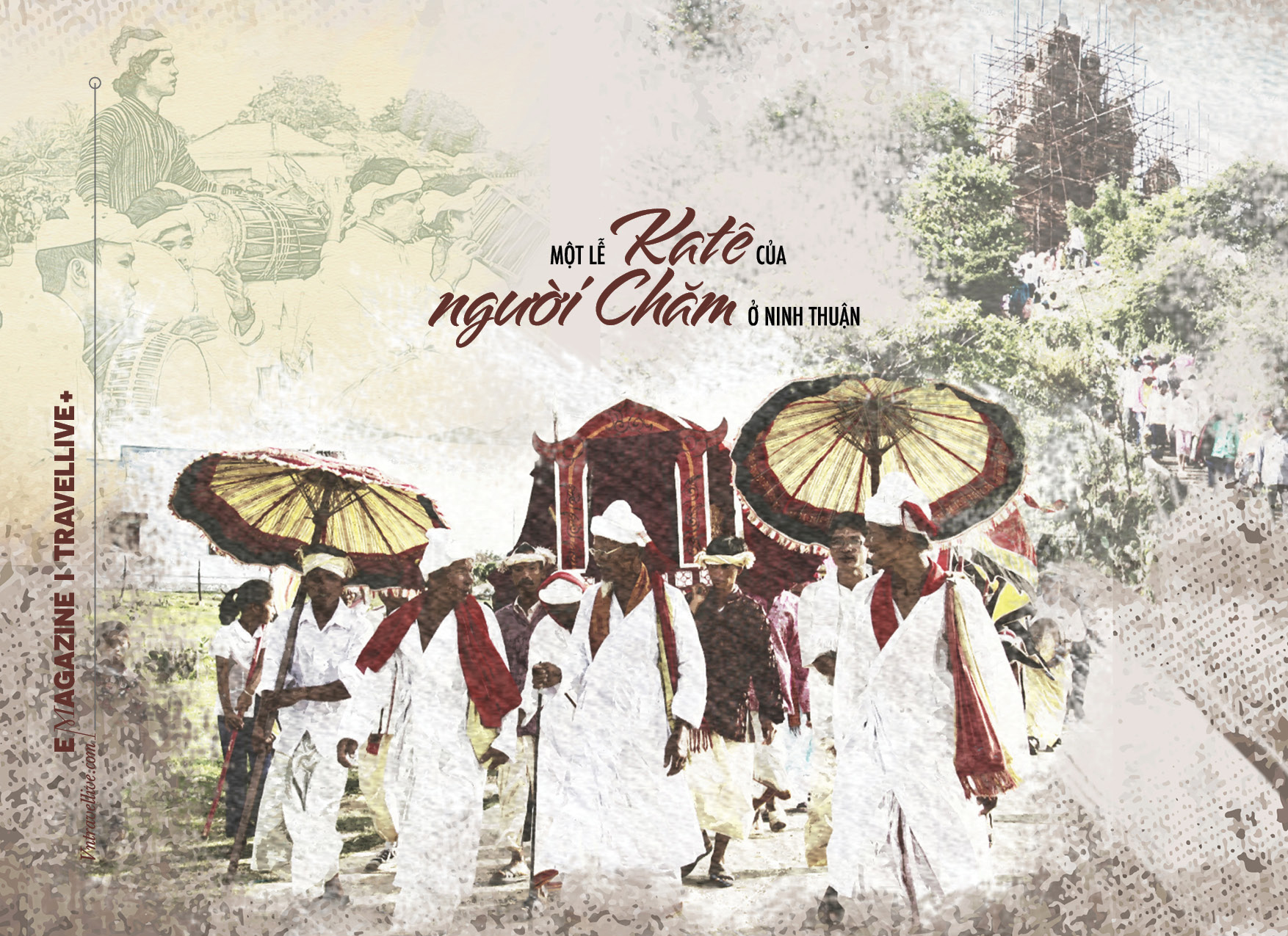
Every year, when the Katê festival arrives, Cham people, no matter where they are, return home to attend the ceremony and gather with their families. This year, due to the impact of the pandemic, the Katê festival was not held as usual but only within families. So, let's join Travellive in experiencing the atmosphere of the old festival through this article, with a Katê ceremony at Po Nagar Temple (Huu Duc village) and Po Rome Tower (Hau Sanh village), Phuoc Huu commune, Ninh Phuoc district, Ninh Thuan province - a place that still preserves many traditional aspects of Cham culture.

According to Cham legend, the ancient Champa kingdom comprised many ethnic groups: Cham, Churu, Ede, Raglai, etc., with the Cham being the "eldest sister" and the Raglai the "youngest sister". Cham society was matriarchal, and the youngest sister held the right to inherit and safeguard ancestral treasures; therefore...clothing(The clothing of the gods/kings) is kept by the Raglai people. On the day before the main Katê festival, the Cham people must perform a ceremony to welcome the Raglai people who bring the clothing to the Cham temples.
For various reasons, the royal robes of King Po Klaung Garai and King Po Rome have recently been stored in Cham villages in the area surrounding the towers, so the procession of their robes from the Raglai people no longer takes place in these two locations. Currently, only in the area of the Po Nagar temple does the goddess's robes remain, kept by the Raglai people of Phuoc Ha village (near Huu Duc village). Therefore, only in Huu Duc does the procession of the robes still take place.
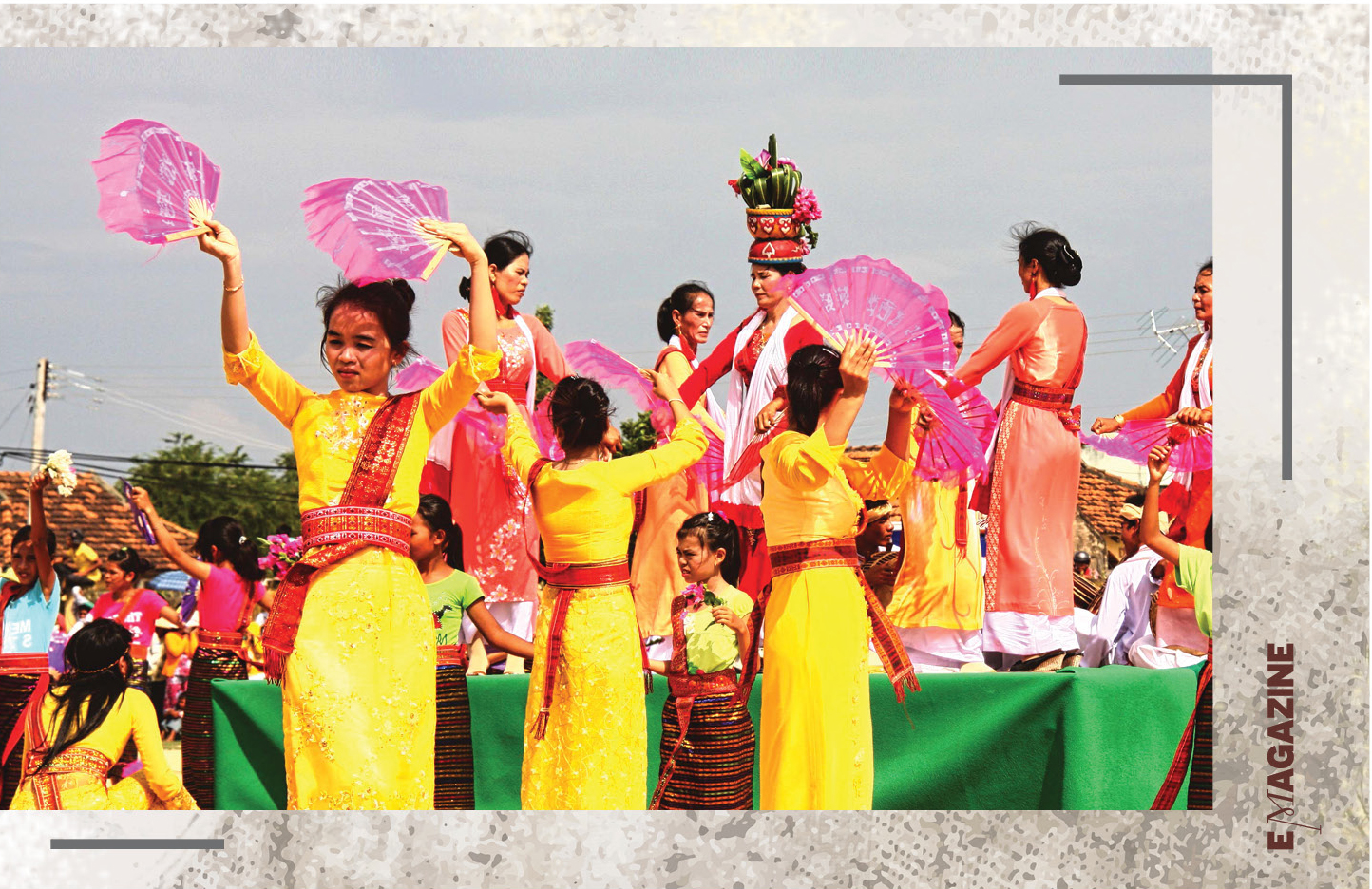
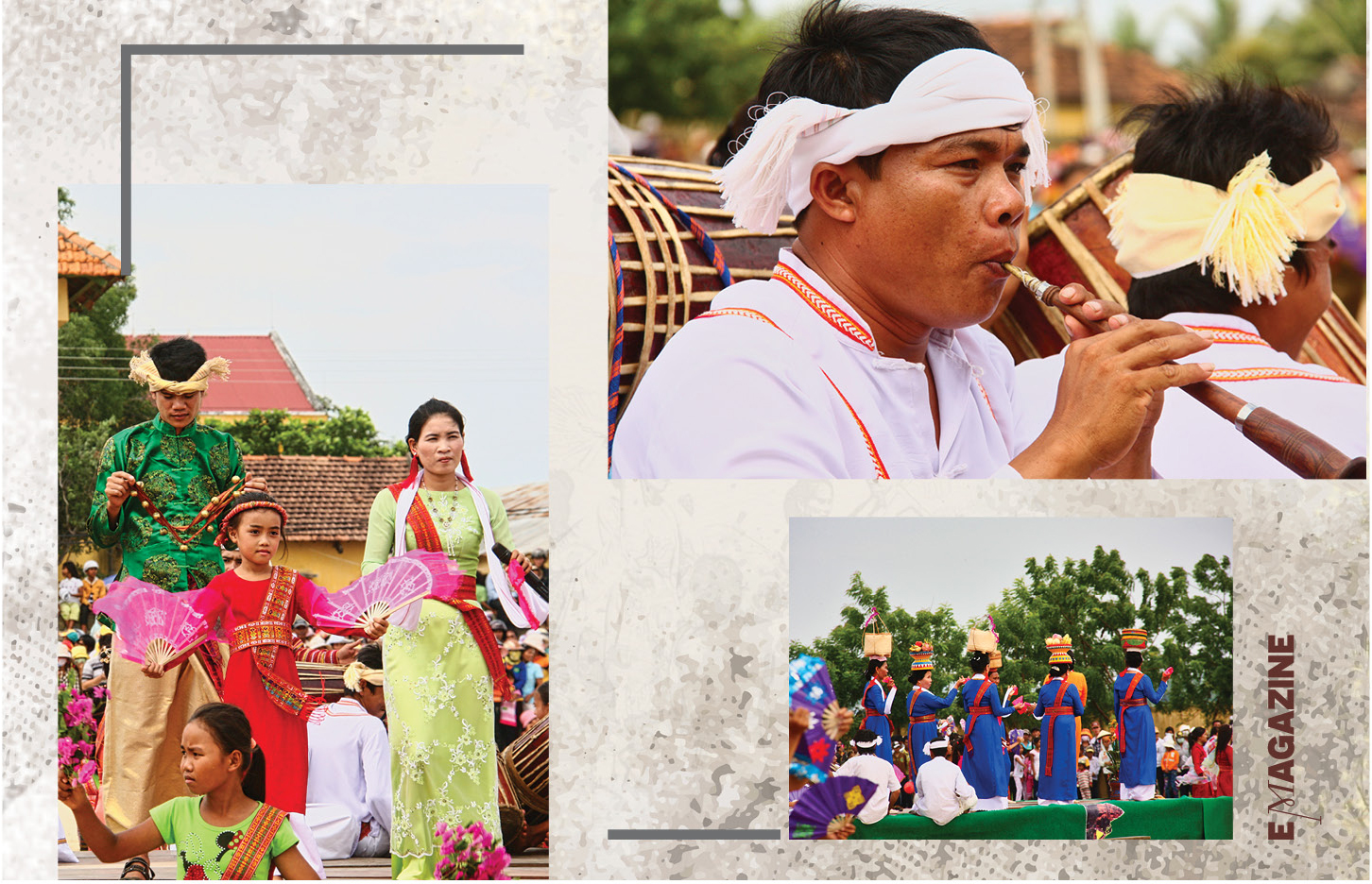
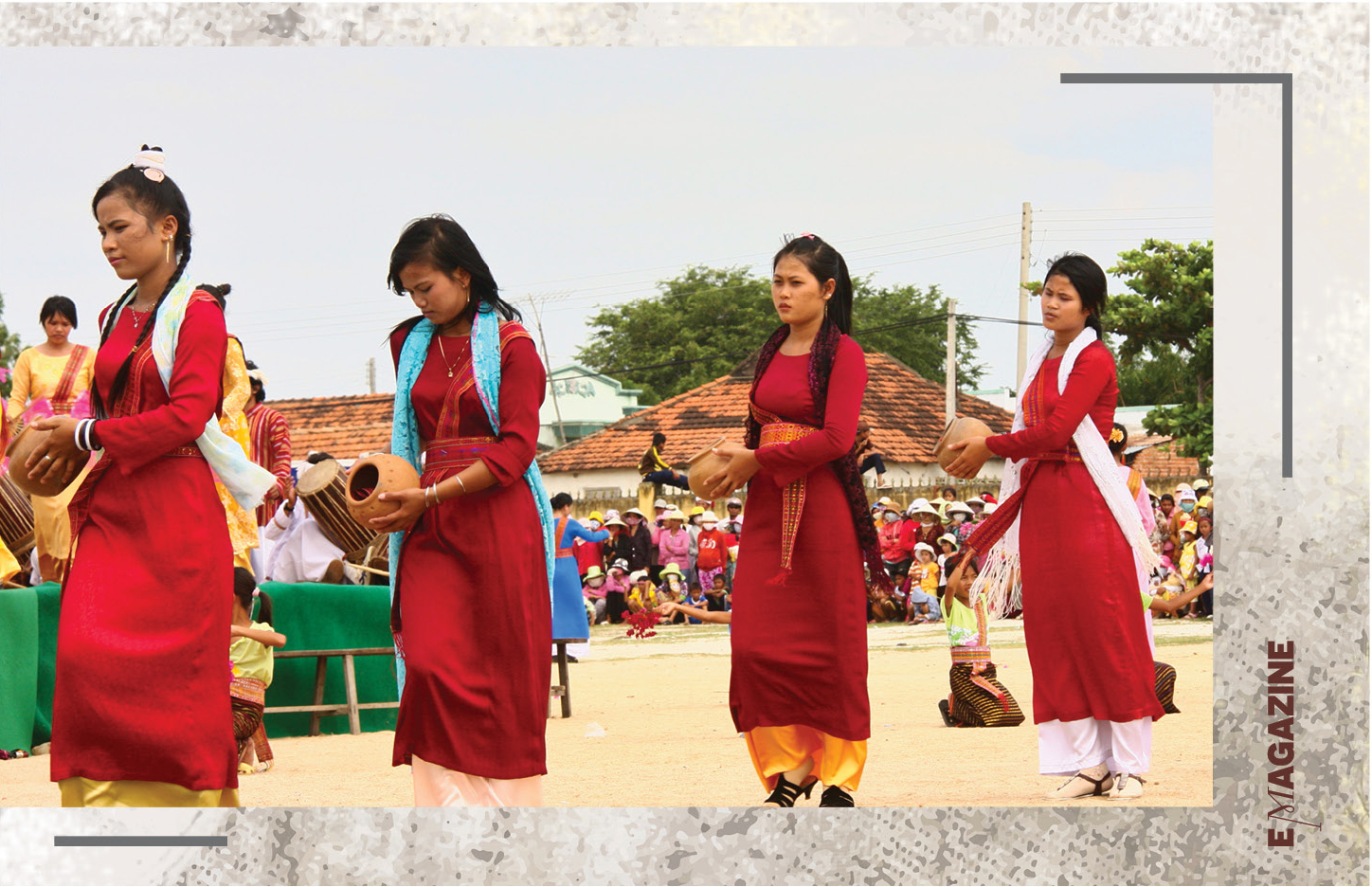
On this day, people from neighboring areas and tourists often flock to Huu Duc village to attend the procession and receive the attire of the goddess Po Nagar from the Raglai people to the Cham people. The procession returning from Phuoc Ha village is welcomed by the Cham people at the Huu Duc village stadium. A stage is erected in the middle of the stadium, with a Cham ceremonial orchestra and Cham dance troupes in traditional festival costumes gathered. When the palanquin carrying the attire arrives at the stadium, the ceremonial music begins to play loudly.
The three main musical instruments that give soul to Cham festivals are the Saranai horn, the Paranung drum, and the Ghinang drum – according to Cham beliefs, these instruments symbolize humanity, heaven, and earth in a complete and whole way. During performances, these three instruments must not be separated but always blend together, with the Saranai horn being the main instrument.
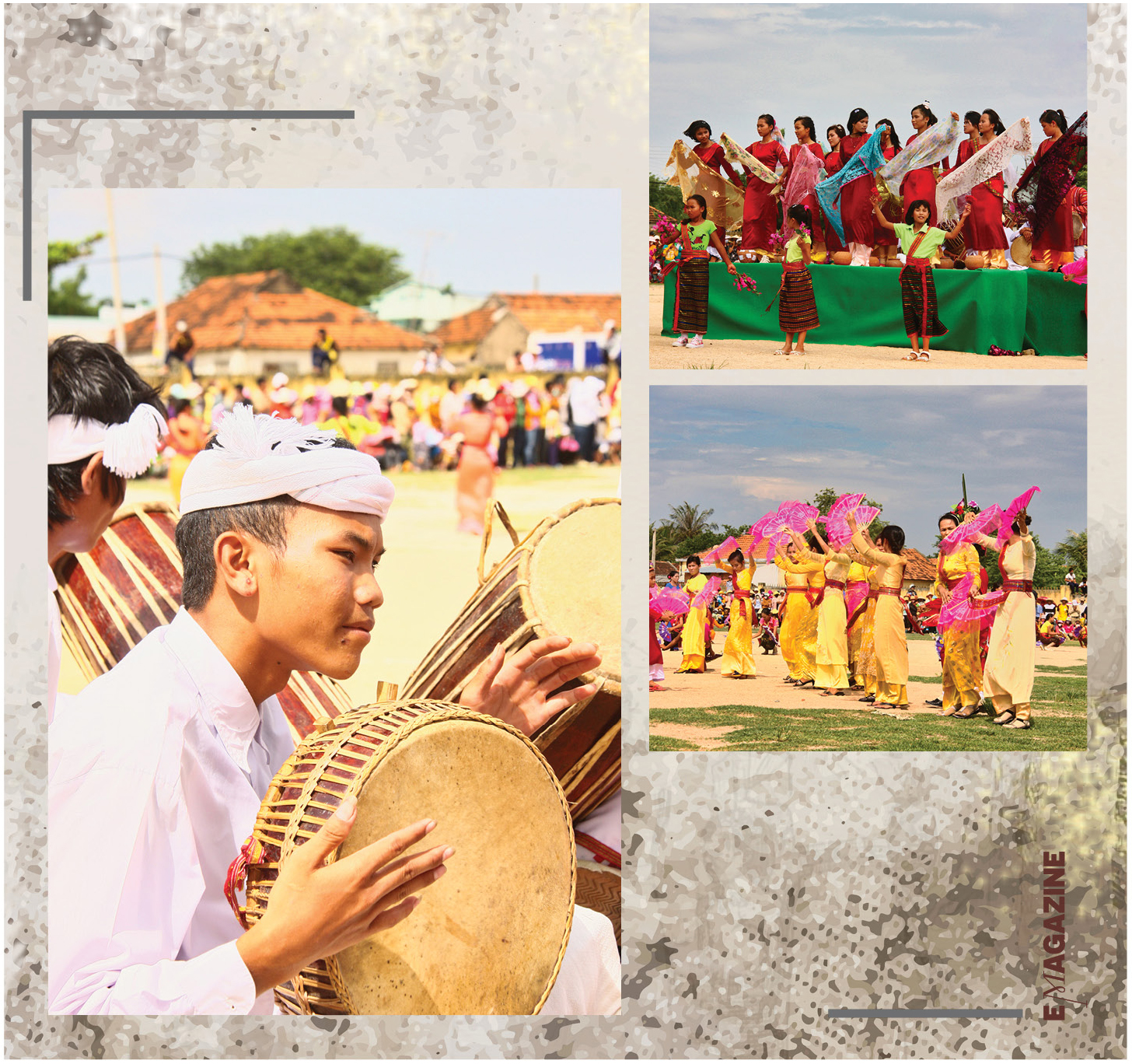
After the cultural performance welcoming the goddess Po Nagar's attire at Huu Duc Stadium ended, I returned to Hau Sanh village nearby. The old man...Camney(The tower caretaker) - whom I was fortunate enough to meet on previous visits to the tower - led me to a small temple in Hau Sanh village, where the robes of the god-king Po Rome are kept, to light incense.
That evening, there was a cultural performance in Hau Sanh village. After dinner with Mr. Camuney's family, I joined the excited crowd, carrying chairs to the open field in the middle of the village to quickly find a spot to watch the performance. The Cham people here are very hospitable; when they learned I was from far away, they happily gave me a good spot.
The band performing at the village cultural night, in addition to the Ghinang drums, Paranung drums, and Saranai horns, also used pre-recorded background music along with an electric guitar and an organ. The performers were entirely members of the village's cultural groups.
The village festival ended not too late because the most important ceremony would take place at the temples the following morning. That night, I stayed at Mr. Camuney's house right in Hau Sanh village.

Mr. Luong – the name of the Camuney people at the Po Rome tower – left the house while everyone was still asleep. Around 6 a.m., the whole family woke up, and his son invited me to the first shop in the village for breakfast and coffee. He had been working far away for many years and only returned to the village during the Katê festival, so he wanted to take the opportunity to meet everyone.
On the morning of the main festival day at the ancient towers, ceremonial robes are carried in procession from the temple to the towers for the ritual. The procession includes religious dignitaries in solemn ceremonial attire, girls performing ceremonial dances in colorful Cham ao dai (traditional Vietnamese dress), and a ceremonial music band performing throughout the journey.
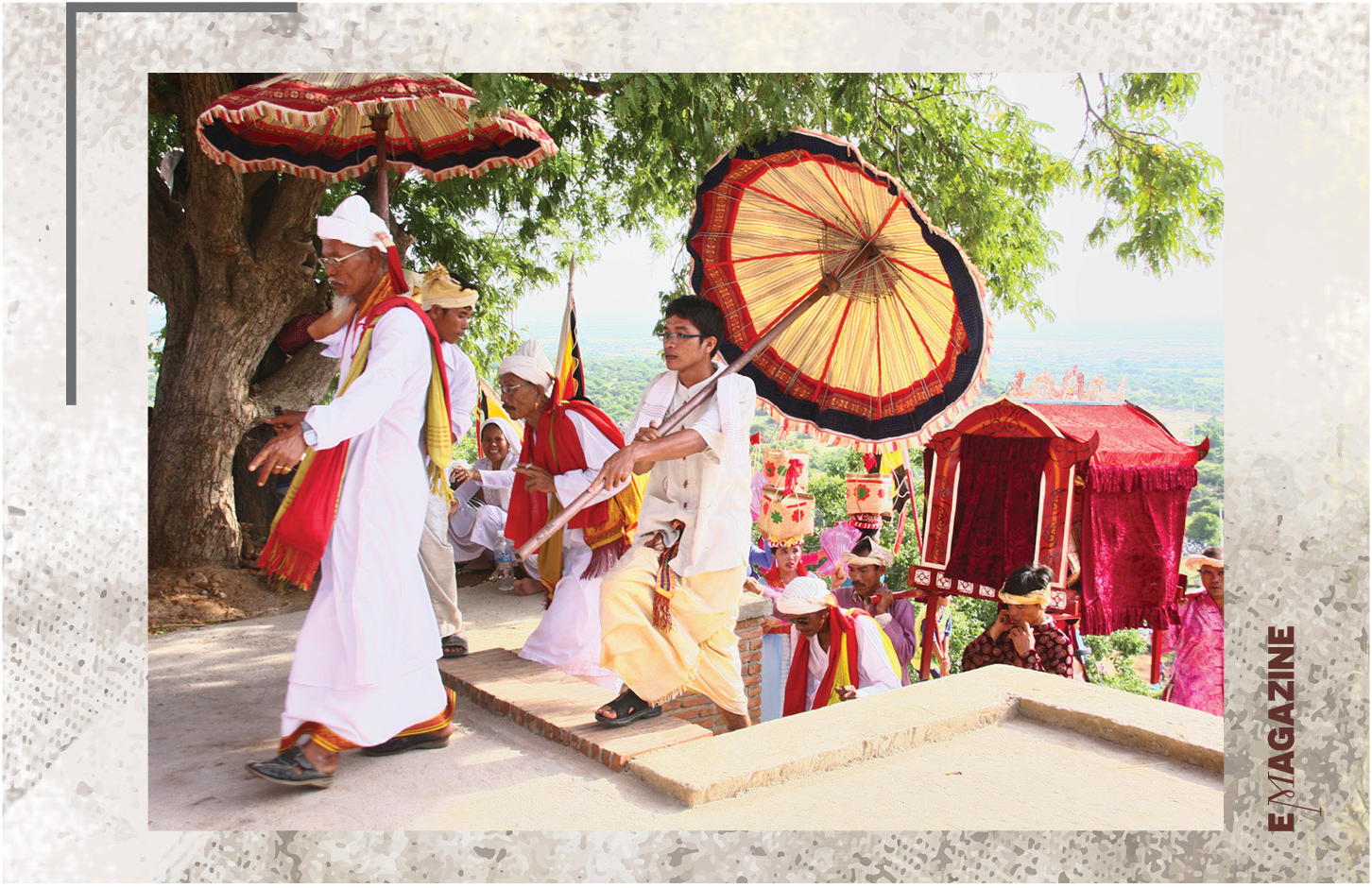
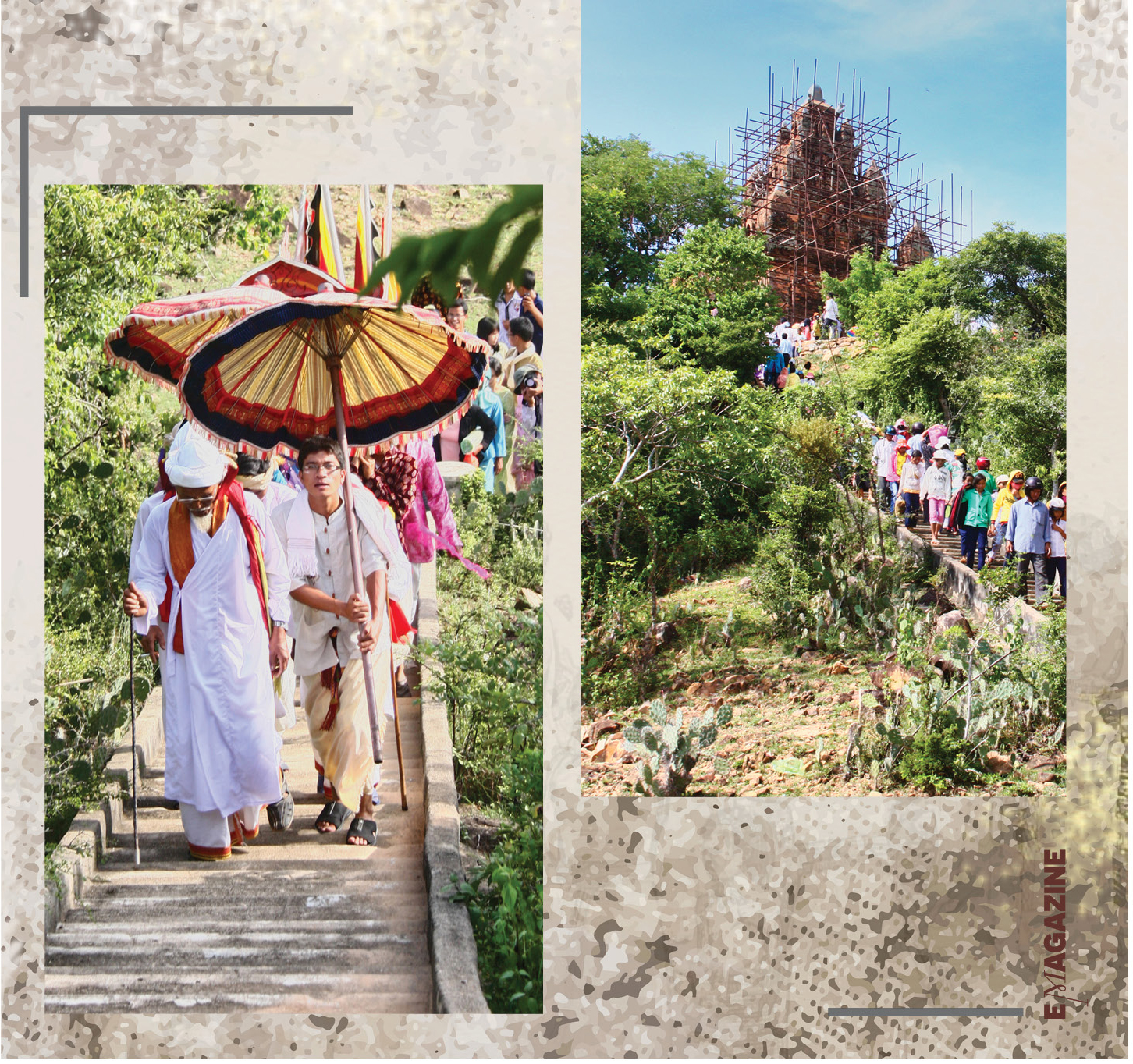
After accompanying Mr. Luong's son, I returned to the village temple just as the ceremonial music began, and the dance troupe performed the ritual dance to request the ceremonial robes be carried up to the tower. The palanquin containing the robes was decorated with red cloth, its wooden frame also painted red, and carried by four men in traditional festival attire. At the front of the procession were religious dignitaries, including a monk.Both monks- The highest-ranking religious figure in the region, wearing a cloak embroidered with red trim, walked between the two parasols.
Behind the palanquin were the young women carrying the palanquins.extract atâu(a bamboo basket containing offerings of the Cham people), followed by an orchestra, playing music as they walked along the route, then groups of ceremonial dancers in colorful festive costumes. Several teenagers carried banners on either side right behind the palanquin. Finally, a number of locals and tourists followed the procession.
Leaving the village gate, I managed to get a ride on a Cham motorbike to the foot of the mountain where the tower is located, just enough time to admire the festive atmosphere around the Po Rome tower before the procession arrived.
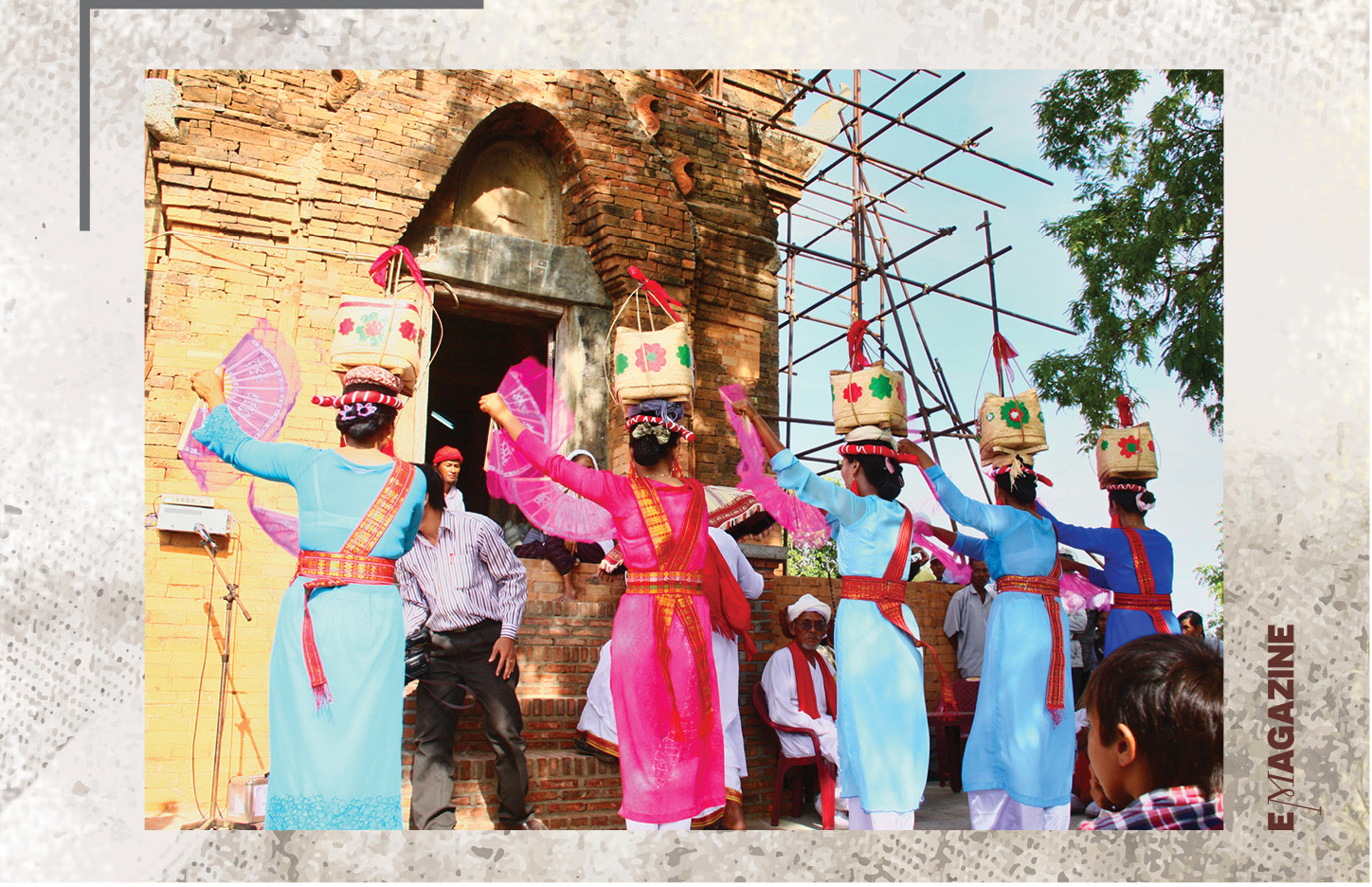
The Po Rome Tower was built around the 17th century, atop a small mountain called Mount Tro. This tower was built to worship King Po Rome (1627-1651), and it is perhaps the last tower built by the Cham people. Although small and simple, this ancient tower still serves a religious function for the inhabitants of the region. In areas outside Ninh Thuan and Binh Thuan provinces where there are no such towers, the Cham people have to travel to the Po Klaung Garai Tower, the Po Rome Tower, or even to the Po Sha Inu Tower in Phan Thiet to perform the Katê festival.
From early morning, local Cham people and those from neighboring areas gathered to lay out offerings all around the tower. Their offerings were very simple: fruit, rice, chicken, and later, beer and wine. They spread mats and plastic sheets and set up trays of offerings in every open space around the base of the tower.
After being lowered from the palanquin, theextract ataucontaining the teacher's medical suppliesKadhar- The religious leader performs the ritual of bathing and dressing the statue of the deity - then moves it inside the tower to prepare for the ceremony. Meanwhile, outside the tower, the opening ceremony and ceremonial dance begin.
I was very eager to witness the bathing and dressing of the Po Rome statue inside the tower, but the courtyard was small, and the ceremonial dance groups filled the space. Crossing it while they were performing would be impolite. Fortunately, as soon as the dances ended and a crowd surged towards the tower courtyard, Mr. Luong suddenly appeared, grabbed my hand, pulled me up the steps, pushed me inside, and said, "Hurry and watch, everyone will be crowding in!" I only had time to turn back and look at him gratefully, without saying a word, before I was swept into the narrow, already packed interior of the tower.
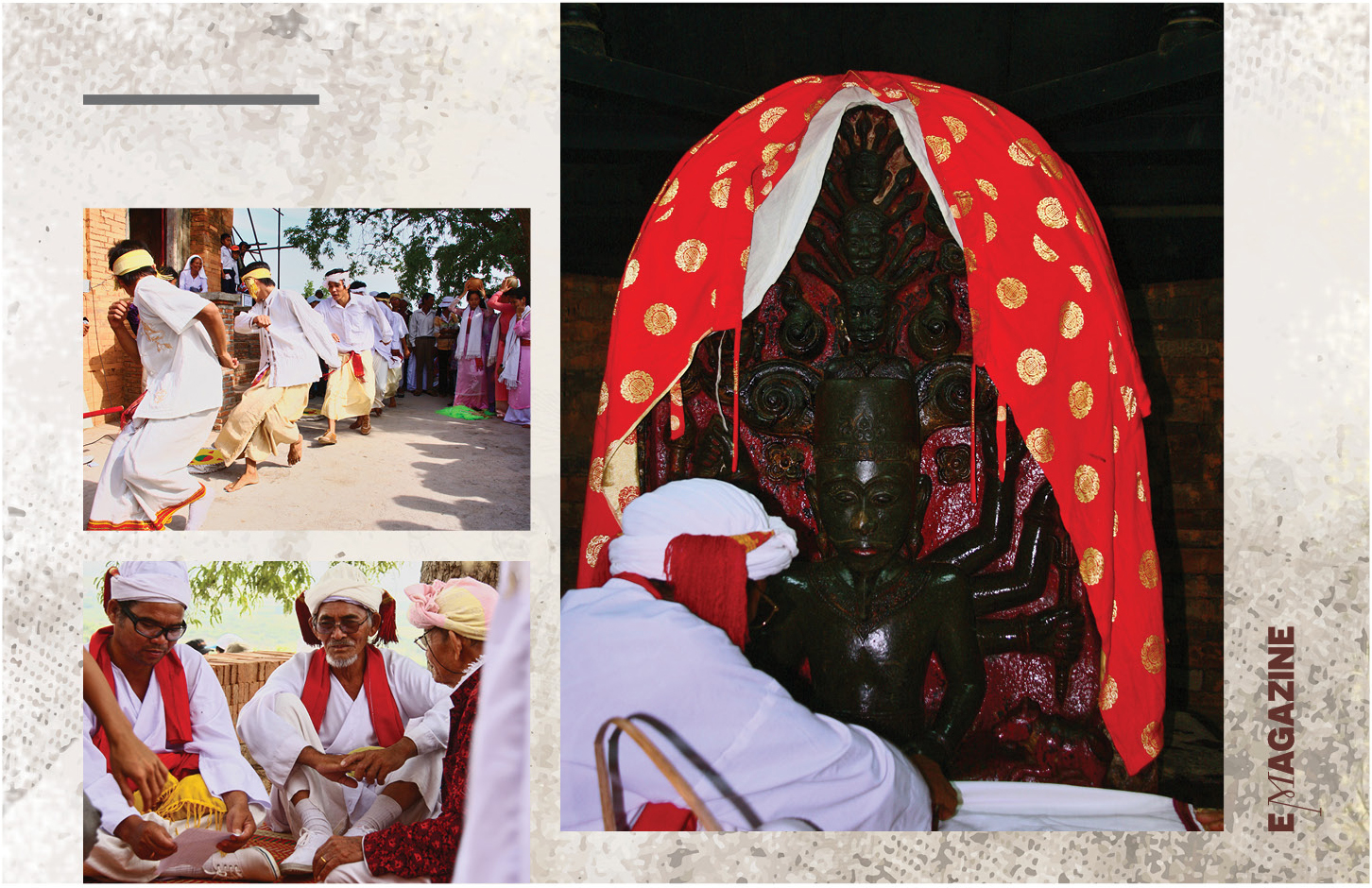
After the ceremony was over, I left the tower to greet Mr. Luong, then I went to greet his wife in the tower complex. She had also slipped me a bag of some cakes and a little fruit, saying, "Take these to eat on the way, it's lunchtime already, son."
Many years have passed, the tower has been renovated, and I've remained captivated by the ancient Champa towers in Central Vietnam, yet I haven't had the chance to return to Hau Sanh village and the Po Rome tower. I told myself I would definitely return this year for the Kate festival in Hau Sanh to celebrate "10 years of old friendship." But then the pandemic struck, all plans fell apart, and the 2021 Kate festival couldn't take place as usual. I also heard that a new caretaker has been appointed for the Po Rome tower; I wonder how Mr. Luong is doing? I'm determined that once the pandemic is under control, I must return to Hau Sanh to visit the respected elderly Camuney family and see the last remaining Champa tower.