VI
VI


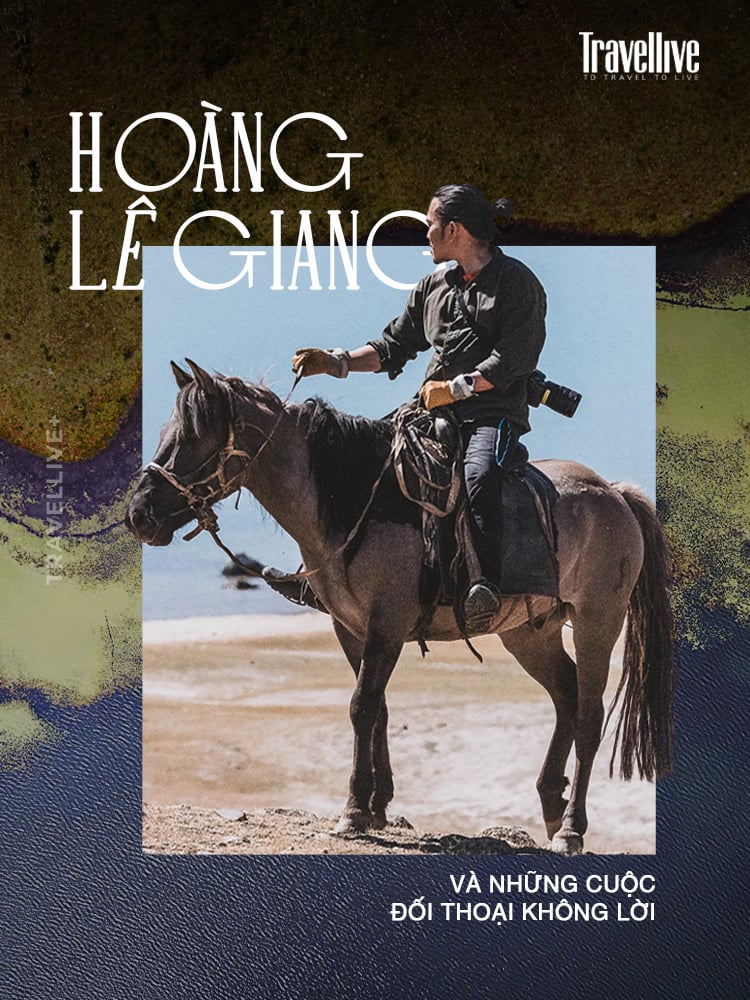
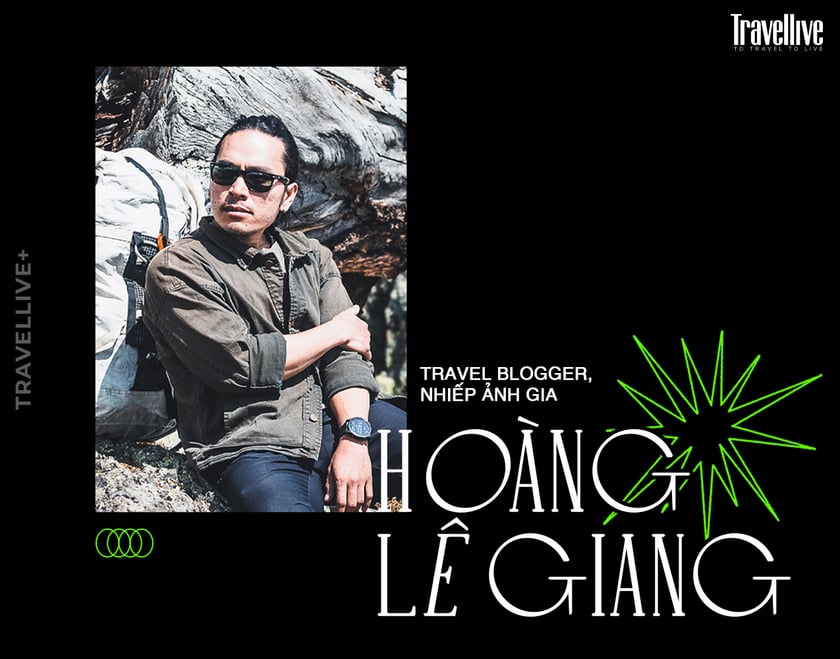
Hoang Le Giang is easy to talk to, with a friendly smile and a gentle energy. However, to have a truly deep conversation with him, perhaps one needs to be in the midst of nature, where silence can speak. As he shared, language is sometimes the limit of humankind. When people are quiet enough to listen, to dialogue with nature and contemplate, then ideas in their minds begin to emerge naturally. In that wordless dialogue, there is no misunderstanding, no distance, only a pure connection between humanity and the world around them.

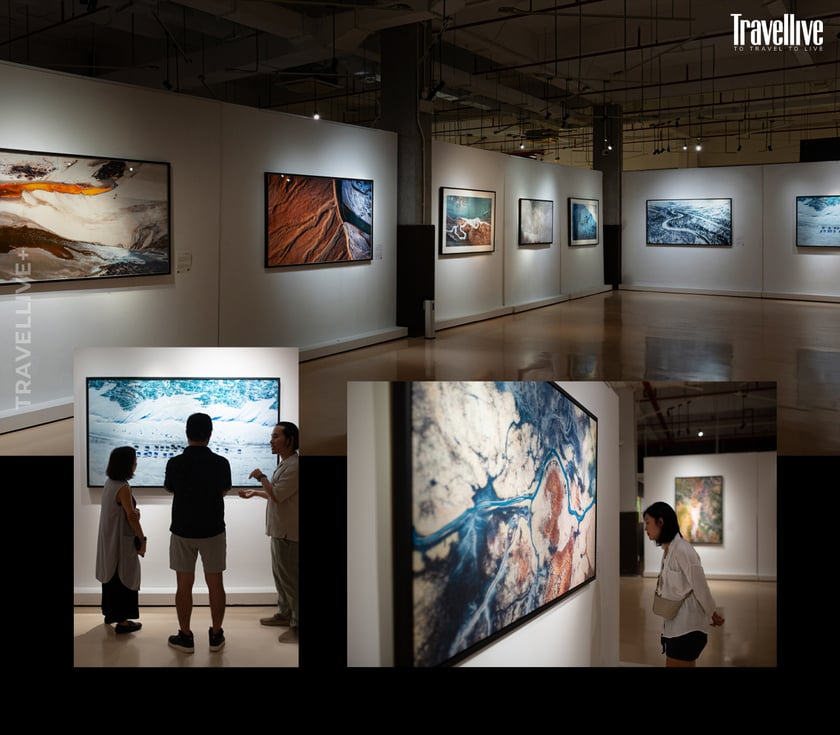
After a period of silence, the name Hoang Le Giang is being mentioned again. Not because of a trip across the Arctic or over the Himalayas like before, but this time because of his return with his first solo photo exhibition: Bardo – The Middle Realm of Transformation.
According to Tibetan Buddhist philosophy, "bardo" is the stillness between death and rebirth. For Giang, "bardo" is not found in the metaphysical realm, but exists in changing, melting lands, neither old nor new – where nature breathes, moves, and is eroded by time. It is the intermediate boundary between humanity and the world around it. And it is also a place where the artist no longer travels to conquer, but to listen.
Interestingly, Hoang Le Giang's photographs truly lie in the middle ground: not entirely photography, nor entirely painting, but rather an intersection between two worlds, between reality and feeling, between moment and concept. The photographic art Giang pursues is not simply about recording images, but about breathing life into space and light to tell an abstract, wordless story.
When applying for permission to hold an exhibition, even though it was a photo exhibition, it was granted as if it were a painting exhibition. This is because his photographs contain multiple layers of ideas, creating the feeling of admiring abstract paintings. There is no main character. There is no narration. Only space and light, like an empty space for viewers to step into and experience for themselves.
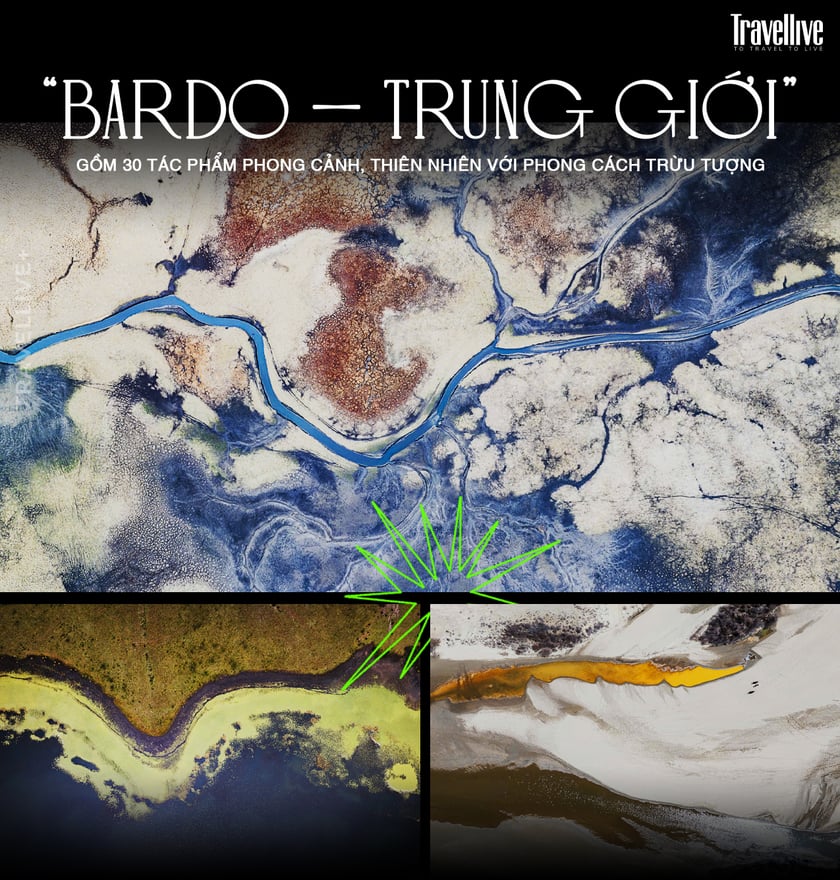
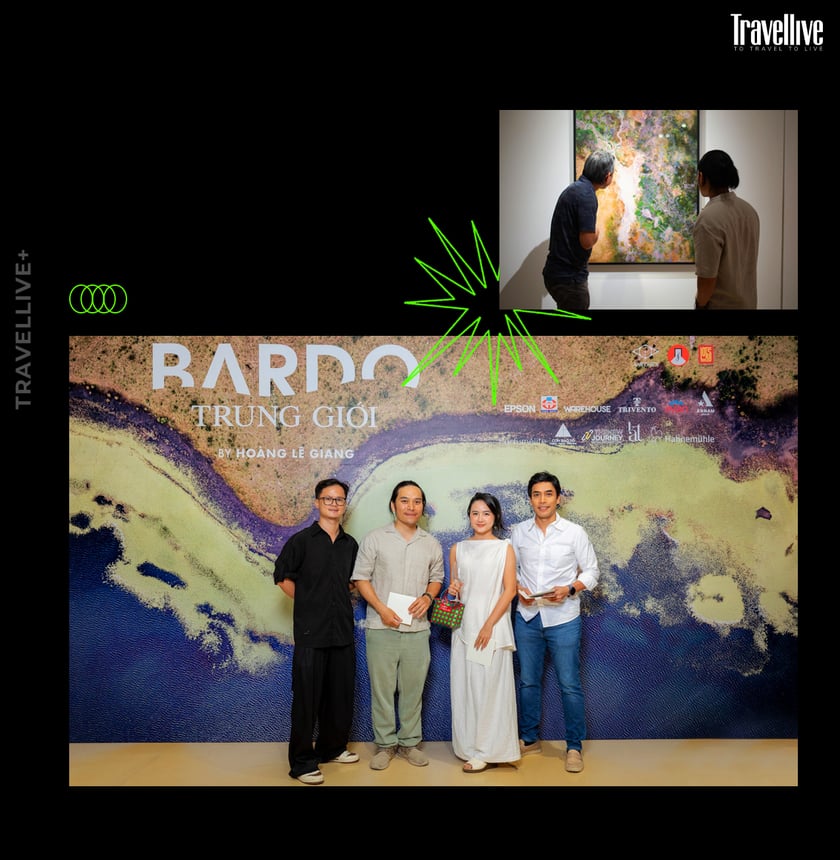
"Abstract" and "stillness" were the first two words that came to my mind when I first saw Giang's works. I lingered for a long time in front of a photograph taken in Norway, somewhere near Tromsø – the largest city in northern Norway, located within the Arctic Circle. There was a magical light there in March and April. When the sun was just barely rising above the horizon, every shadow stretched out, vibrant and poetic. The slender trees on the edge looked like diligent weavers, their shadows appearing as delicate blue threads weaving a soft tapestry. The river was also undergoing a transformation, displaying a unique picture with many interwoven layers: dark rocks, patches of ice that were sometimes transparent, sometimes opaque. All of this created a mystical world, veiled by a curtain of blue shadows.
The scene held a sense of ruggedness and loneliness, yet also warmth and vitality. I wondered how many times he had returned to this place, and how he managed to engage in a dialogue with nature to capture that vitality. Giang shared that he didn't photograph to preserve beauty, but to record the truth, the fragile, radiant, and silent moments. Before pressing the shutter, he stood still, observed, took a deep breath, and remained completely silent. Not chasing photos. Just waiting. If the moment arrived, he would seize it. Once. There would be no second chance.
It sounds simple, but in the face of vast nature, how do you know where to find solace? Giang says that whenever he returns to a location, he always listens to what the scenery is trying to tell him. That's how he communicates, not with words, but with his presence.
Photography differs from painting in that photography records reality. A beautiful scene emerges, and the photographer captures that moment among hundreds of thousands of moments experienced. Painting, on the other hand, is where the artist imbues their work with their own individuality. What appears in the painting isn't necessarily reality, but rather emotion, ideas, and the artist's perspective and feelings about the scene. The moments captured by Hoang Le Giang skillfully create a blurred line between them. They are both photographs and paintings; they offer Giang's own answers while opening a space for viewers to engage in self-dialogue.
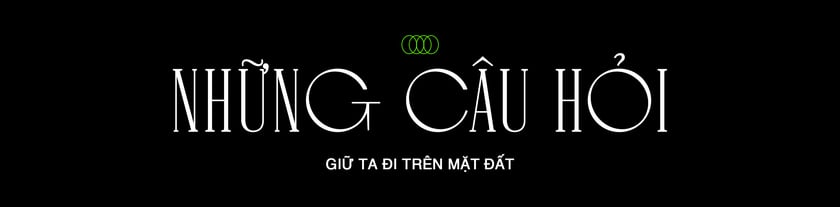
The middle ground is where ideas are not divided by fixed boundaries. In my conversation with Hoang Le Giang, I noticed a natural interplay between his roles: photographer, travel blogger, and tourism service provider. All coexist and develop in parallel, inseparable.
Giang's journey of exploring the world began with the questions: "Who am I?", "Why am I here in this life?", "What is the meaning of the things that happen to me?". After more than a decade of wandering through wild and unfamiliar lands, he has found clear answers. But now, the biggest question is: how to balance the roles of an artist and an ordinary person needing to survive in this world.
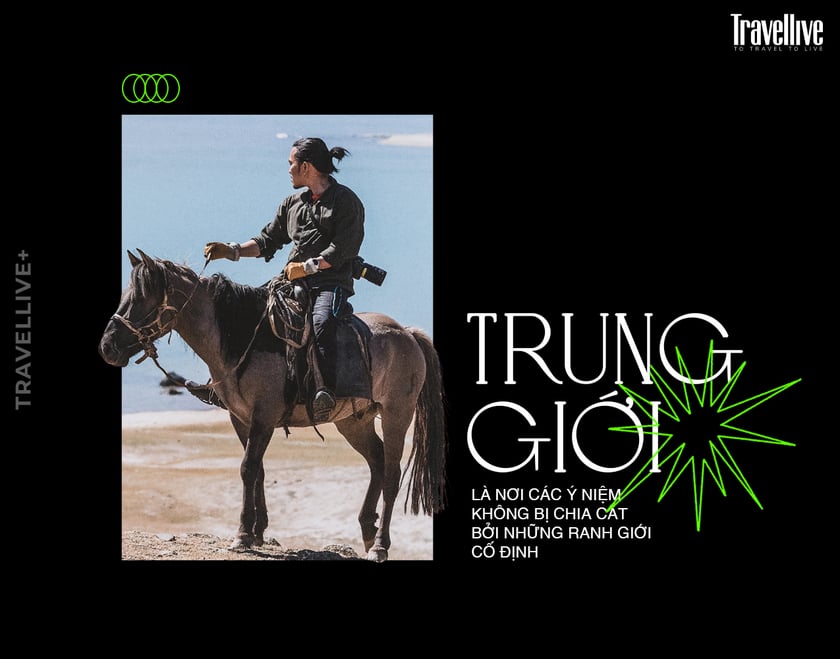
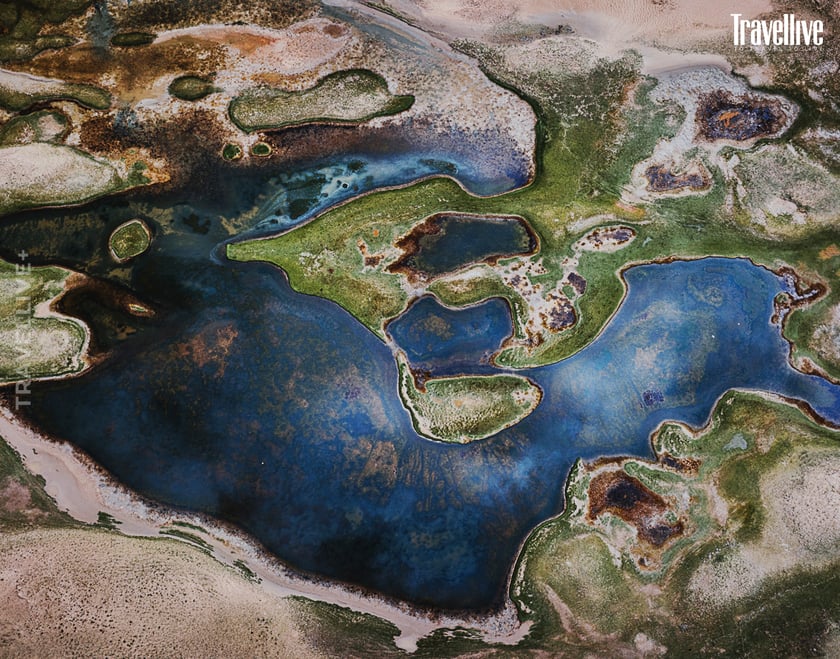
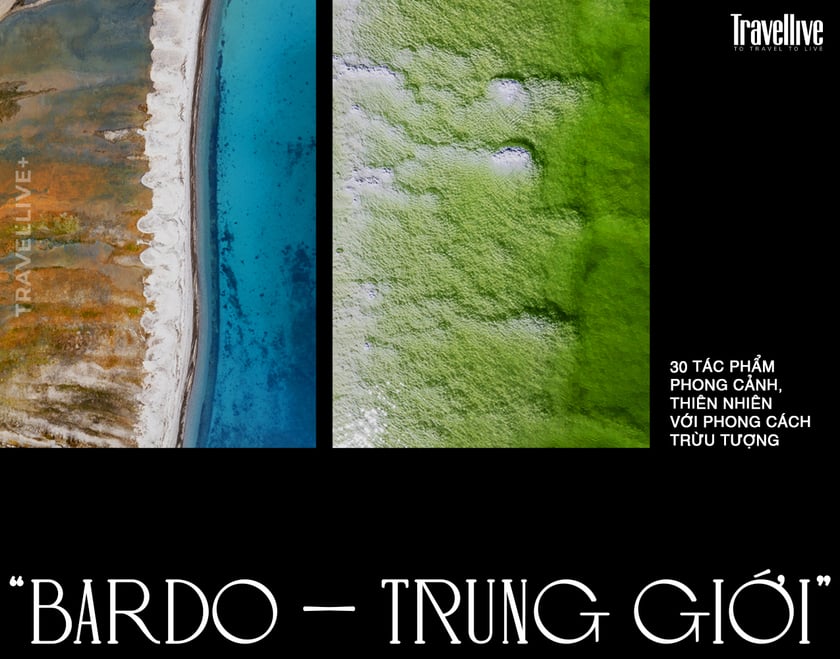
Once, from the perspective of a drone, Giang stood before a scene overflowing with light and color. In that moment, he realized an order he had been searching for throughout his life. His life had been a collection of disjointed, seemingly unconnected colors. But that very artwork revealed that, from that perspective, the hues of life and passion (emerald green), of waiting (earthy brown), and of the crystallization after hardship (salt white) were not in conflict. They lay side by side, blending together, each layer of color contributing to a harmonious whole.
For Giang, perhaps everything is a process of random arrangement. The artist's job is to steadfastly move forward. And when looking back, the entire structure of life will become clear, so that each difficulty or turning point naturally takes on its own meaning. Personally, I really like Hoang Le Giang's reflections. He shares that, usually, these reflections occur in parallel with the photography process. They not only encompass the broader relationship between the universe, nature, and humanity, but also evoke small, private things that he calls "the origins of life," such as the naive days of going to school with the first knowledge, the hesitant steps of a career, a work of art, a love affair…
One big question has always haunted Hoang Le Giang throughout his journey: "What was my original purpose?" Looking back, he's played many roles, made mistakes, and sometimes been caught up in the struggle for survival just to continue doing what he loves, forgetting his initial reason. Each time he paused, he asked himself and realized: "I want to be a photographer, I want to pursue photography." That's what helped him persevere on his chosen path.
Whether as a travel blogger or the owner of a travel company, Hoang Le Giang remains steadfast in the answer he has found. Therefore, when sharing his travel experiences or taking tourists to new places, he rarely shares beautiful locations, delicious food, or travel tips. Instead, he wants to use his own experiences to clarify why he chose to visit a particular place. He believes that once people understand that reason, they can also find their own answer as to why they want to visit that place rather than another.
Another photograph that left a deep impression on me was taken at the border between the desert and a salt lake in Iran. Amidst the chaotic space of swirling vortices and unfinished beginnings, a single, unbroken, unwavering line emerges. Giang calls it the clear path. The tire tracks imprinted on the ground serve as a reminder that every successful journey is the result of a silent dialogue between perseverance and grace. Not one or the other, but both present together, supporting each other, opening a path together.
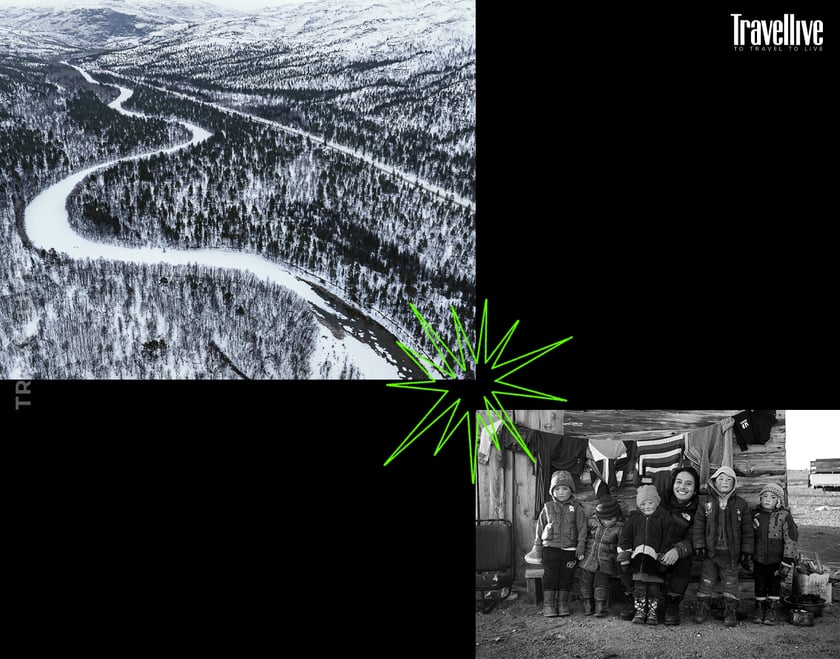
Questions, curiosity about the world, about himself, the meaning of life, and the answers to those questions become a guiding principle, keeping Hoang Le Giang steadfast in his journey, not drifting amidst choices, not lost in aspirations. "Walking on solid ground" is not just the act of a traveler setting foot on unfamiliar lands, feeling the layers of geology, the breath of nature. It is also a metaphor for living realistically, doing concrete things to realize dreams. Whether on the white snow of the Arctic or in the Iranian desert, the questions and answers carry a clear awareness of the journey of life. And Hoang Le Giang is a person living fully with all the passion, impulsiveness, uncertainty, and steadfastness; with the right and wrong and the blurred lines that a human being must experience in life.