VI
VI


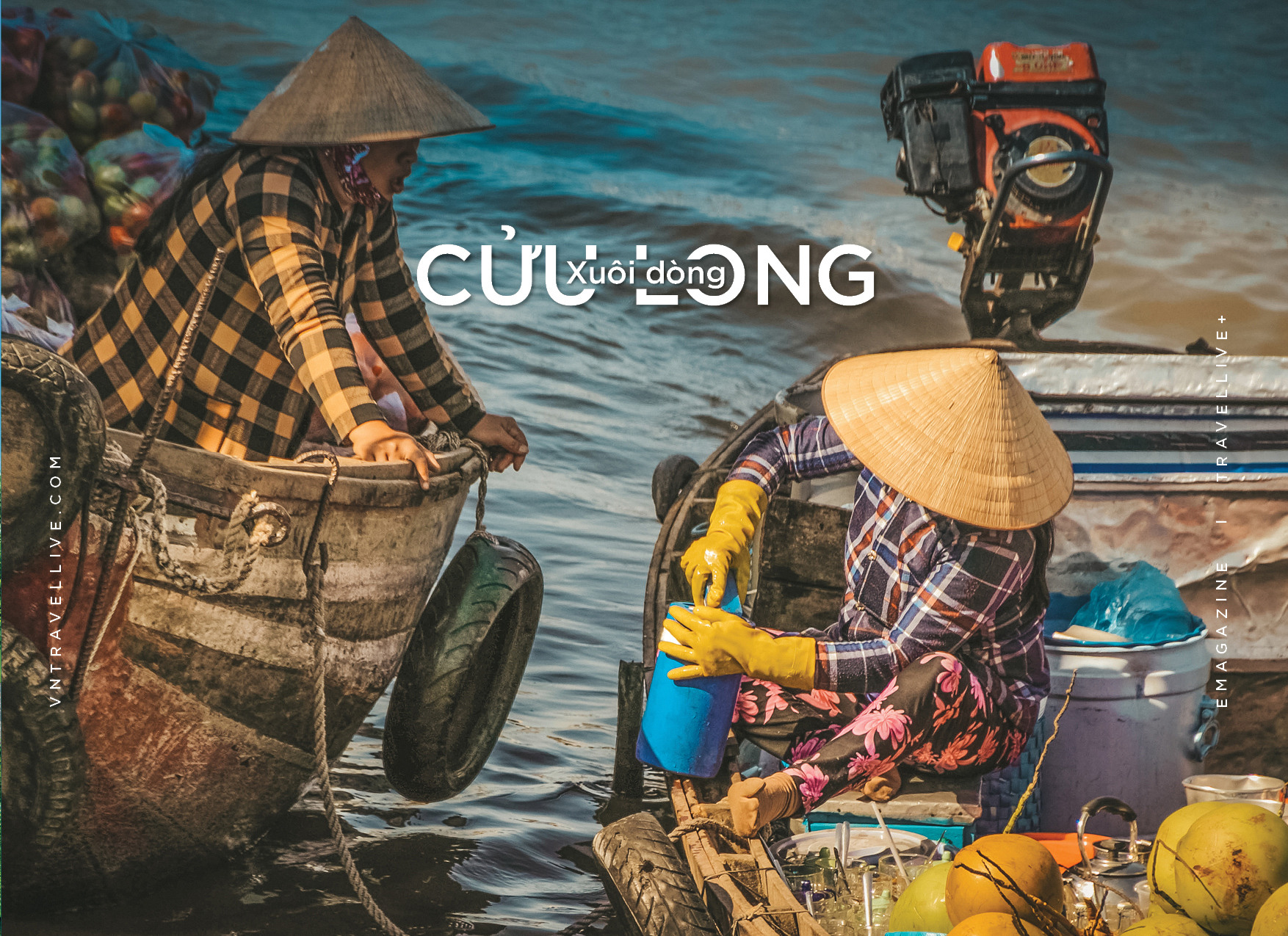
Drifting along the vast Mekong River, feeling the poetic natural scenery, hearing the warm laughter and genuine conversations of the people in the fertile Western region... echoing every moment, I live in happiness and want to cherish every breath here.

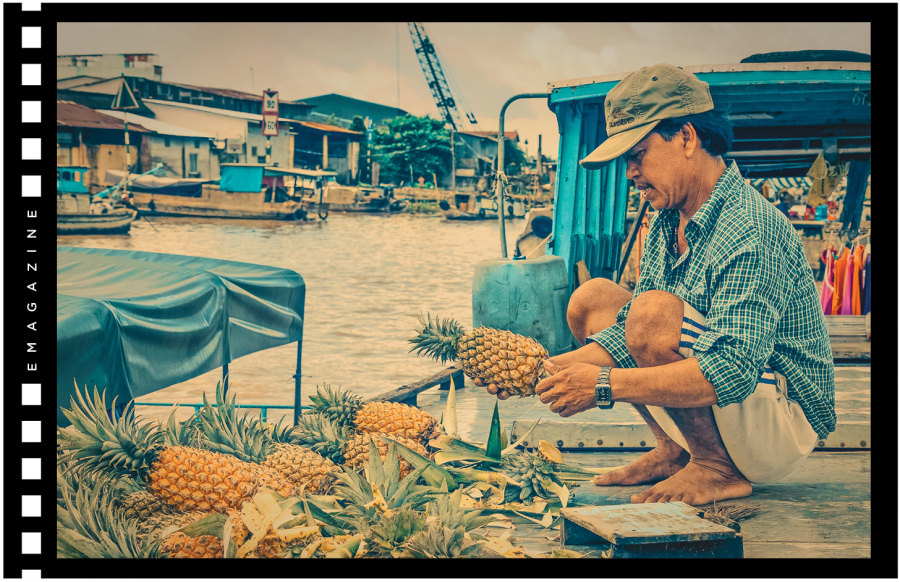
As soon as I arrived in Can Tho, the first place I chose to visit was Cai Rang floating market. In Vietnam, floating markets are only found in the Mekong Delta. Ca Mau province has the Ca Mau floating market, Vinh Long province has the Tra On floating market, Soc Trang has the Nga Nam floating market, Hau Giang has the Nga Bay floating market, and Tien Giang has the Cai Be floating market… Floating markets on the river are one of the distinctive features of the Mekong Delta, existing for a long time and closely associated with the cultural life of the people in the region. Therefore, when visiting Can Tho, tourists from afar still hope to see a bustling and attractive Cai Rang floating market as it once was.
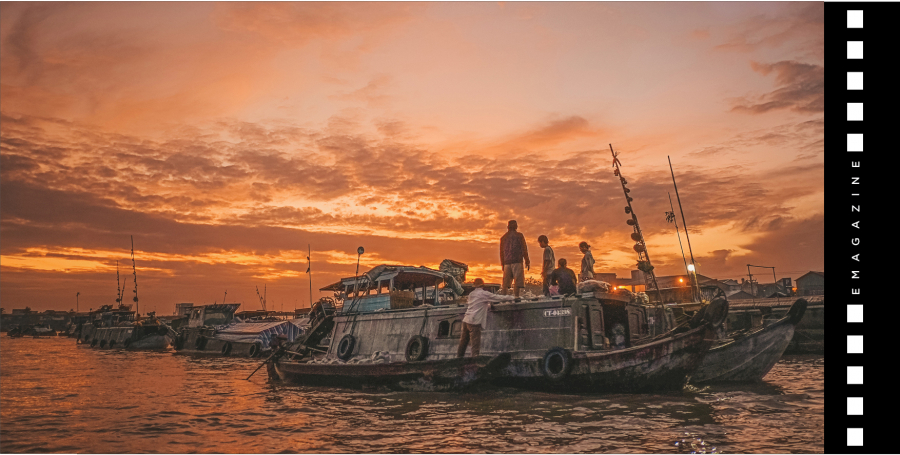
Throughout my trip exploring the Mekong Delta, I was fortunate to have a colleague in Can Tho who guided me to attractions and took care of my accommodation and meals. Being a "local" of the Mekong Delta's waterways, my friend was quite meticulous in his planning, even better than a professional tour guide. He told me: "Cai Rang Floating Market is open all day, but it's busiest from dawn until 9-10 a.m., after which it gradually quiets down. If you want to visit the market, you should leave at 6:30 a.m. and arrive at 7 a.m., which is the busiest time."
As planned, at 6:30 a.m., our group departed from Ninh Kieu wharf, arriving at Cai Rang floating market at 7:00 a.m. Influenced by the folk verse: "The Nha Be river flows in two directions. Whoever goes to Gia Dinh or Dong Nai, let them go," I imagined the floating market as a series of floating houses bobbing on the river, with people moving and "dancing" from one house to another to shop.
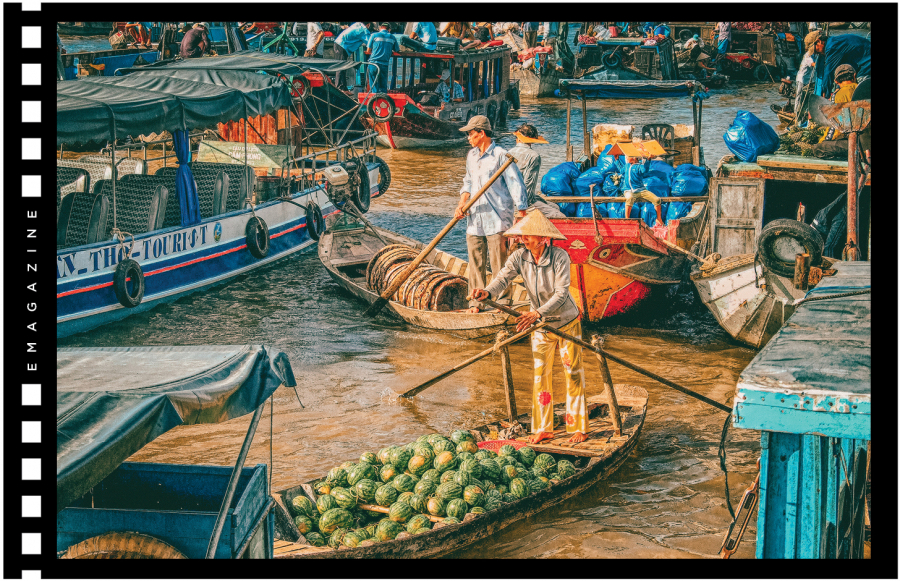
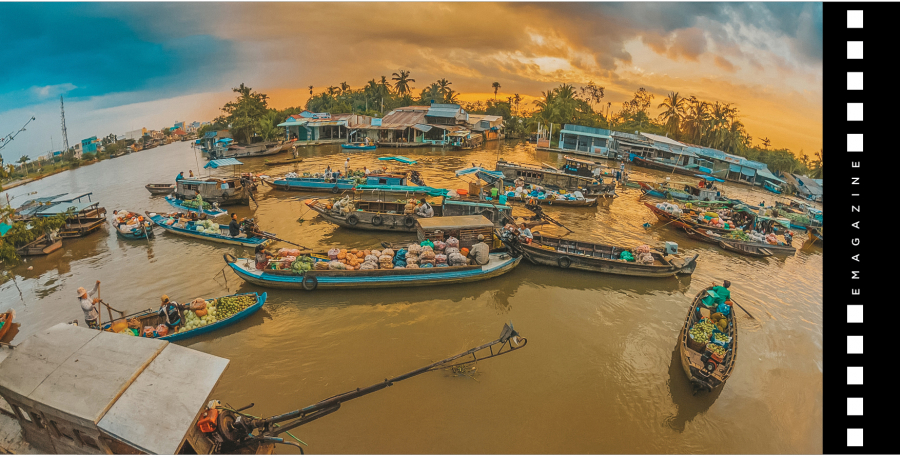
As our boat approached the floating market, I chuckled because it wasn't at all like what I'd imagined. On a wide stretch of river, numerous boats and canoes gathered to buy, sell, and exchange agricultural products, fruits, goods, food, and drinks...
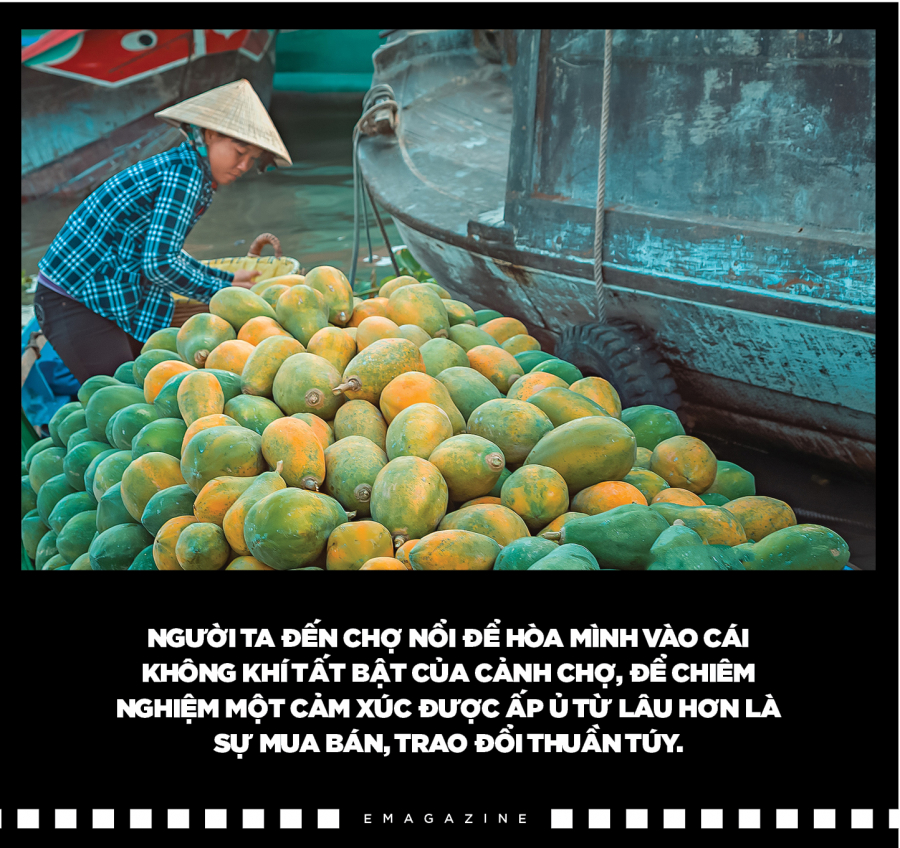
The sheer number of boats is so overwhelming that it fills a stretch of river more than a square kilometer wide. It's incredibly convenient for both buyers and sellers. After agreeing on a price, the buyer's boat pulls alongside the seller's to transfer goods quickly and safely. The selling boats usually anchor in one spot, sometimes three or four together forming a large group, leaving channels in the middle for buyers' boats and tourists to navigate. Along these pathways, tourists can freely take pictures, buy goods, and even enjoy snacks.
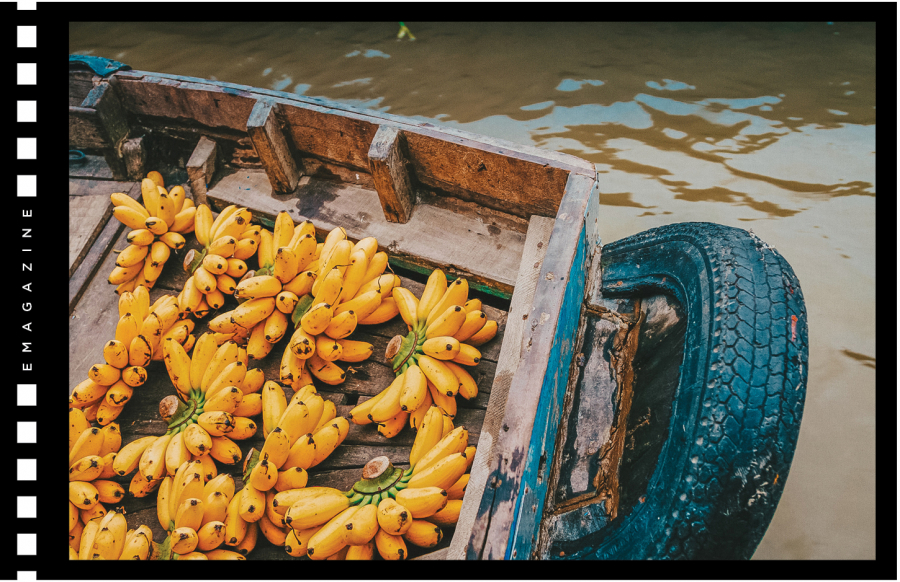
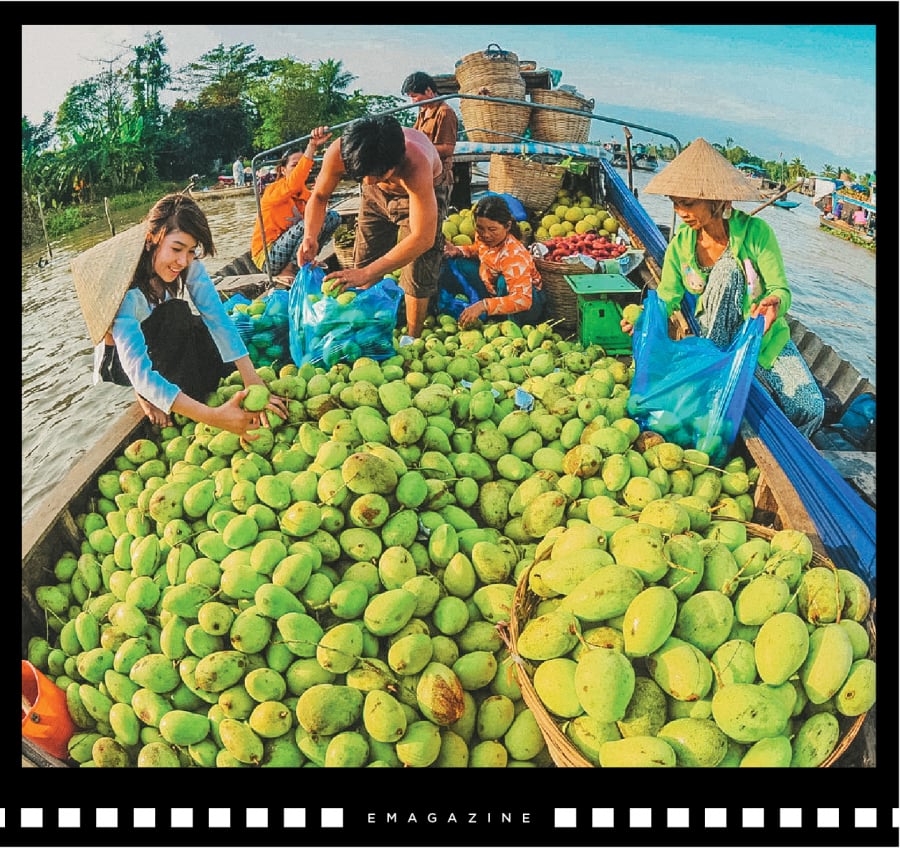
We excitedly bought all sorts of things: some bought pineapples, others iced coffee, a dozen mangoes, and some even tried their luck with lottery tickets... Buyers kept buying, and sellers kept selling. The atmosphere was lively and bustling. When the vendors saw tourists raising their cameras and phones to take pictures, they didn't shy away but instead smiled brightly.
Suddenly, I had the feeling that people sometimes come here not to buy, but to immerse themselves in the bustling atmosphere of the marketplace, to contemplate a long-cherished emotion rather than simply engaging in buying and selling.
The vendors here are so genuine, down-to-earth, and don't haggle. Most of them are from the Mekong Delta region, and their appearance, faces, and voices all exude a kind and simple nature. These people may not be rich or wealthy, but they have truly won the hearts of me and other tourists visiting the floating market.

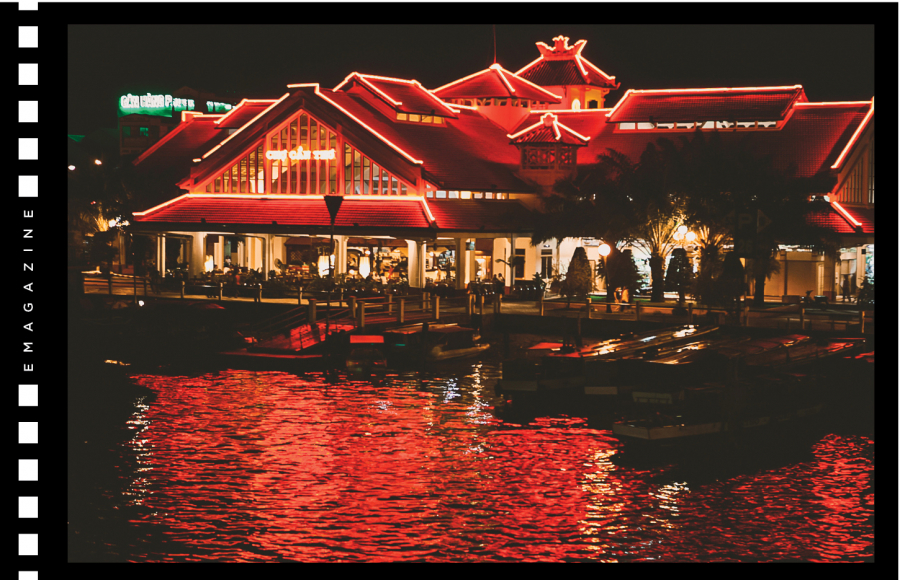
Back in the city, we strolled along the picturesque Ninh Kieu Wharf. Located at the confluence of the Hau and Can Tho rivers, Ninh Kieu Wharf is the commercial center of Can Tho city, where hundreds of boats pass by. Built in the 18th century for trade purposes, Ninh Kieu Wharf's beauty has made it a subject of many literary works. Especially at night, the sparkling lights from the floating restaurants reflecting on the river add to the enchantment of the wharf. Perhaps that's why many people come here to admire the scenery and enjoy the cool river breeze. Along Phan Boi Chau and Phan Chu Trinh streets right next to the wharf is a paradise of grilled food and snacks, incredibly diverse, no less impressive than the night markets in Taiwan. From popular dishes like grilled chicken feet and wings, grilled skewers, grilled vegetables, tofu, smoothies, and sweet soups to regional specialties like Tung Lo Mo (Cham beef sausage), and grilled seafood skewers such as shrimp, octopus, and squid, everything is incredibly delicious - you can find it all at very reasonable prices, only half the price of Hanoi.

We had planned to end our Mekong Delta trip in Can Tho, but an American friend we met along the way recommended we visit Tra Su Melaleuca Forest in Chau Doc, An Giang province. He was extremely impressed with the forest and said he would return to Tra Su if he ever visited Vietnam again.
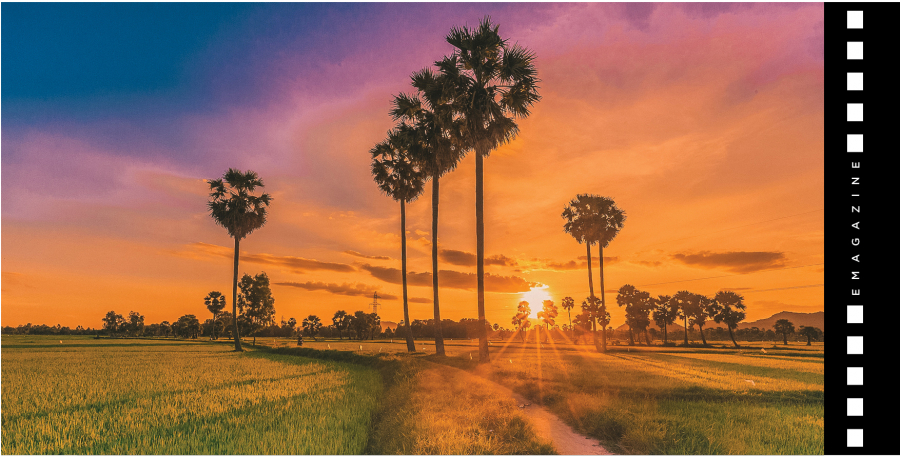
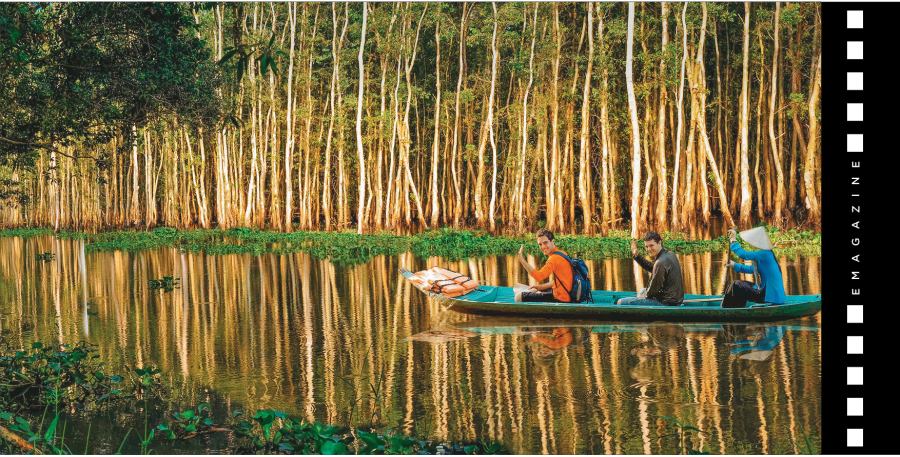
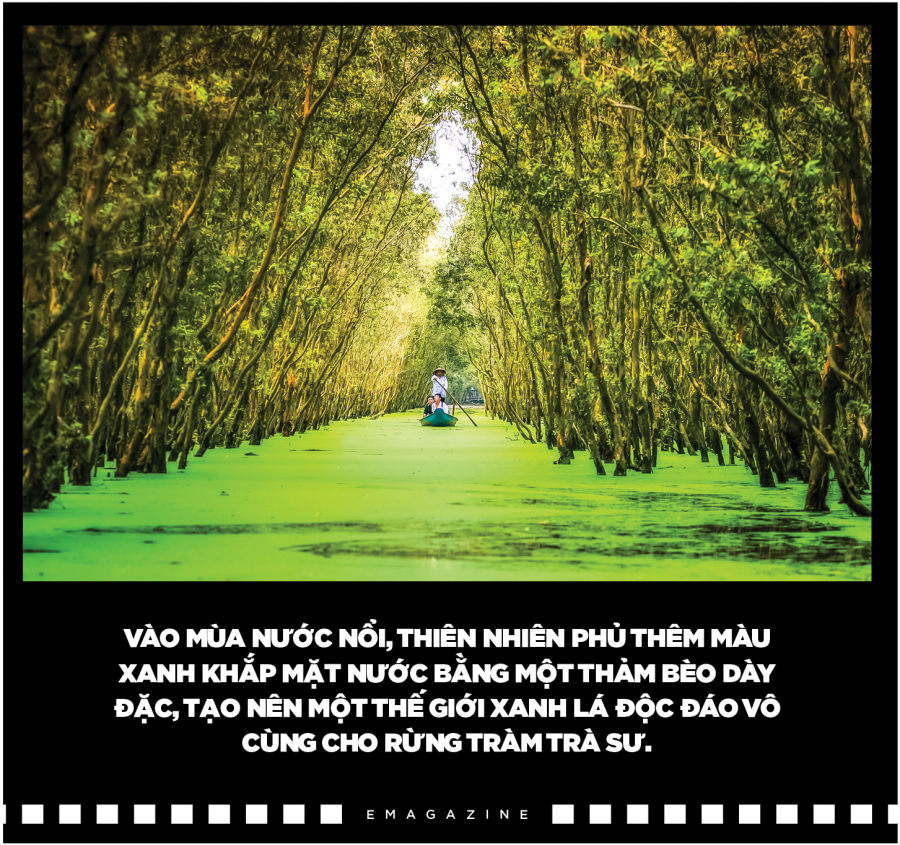
The road to Chau Doc is quite long because it's very close to the Cambodian border. But the fatigue from that long journey was instantly dispelled the moment we set foot in Tra Su, where I was completely captivated by the vast expanse of green. As if the green of thousands of melaleuca trees wasn't enough to satisfy this land, during the flood season, nature adds another refreshing green blanket across the water's surface with a thick carpet of water hyacinths, creating a uniquely beautiful green world.
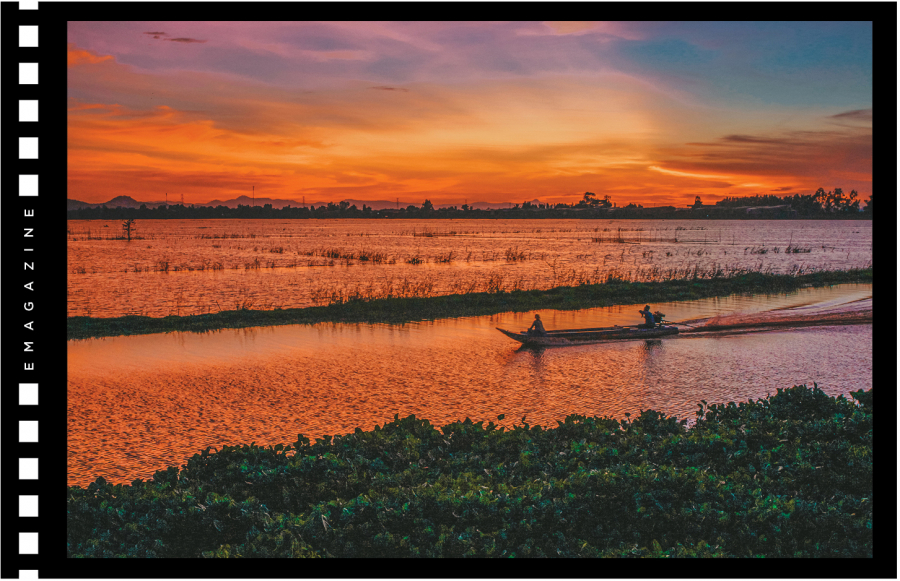
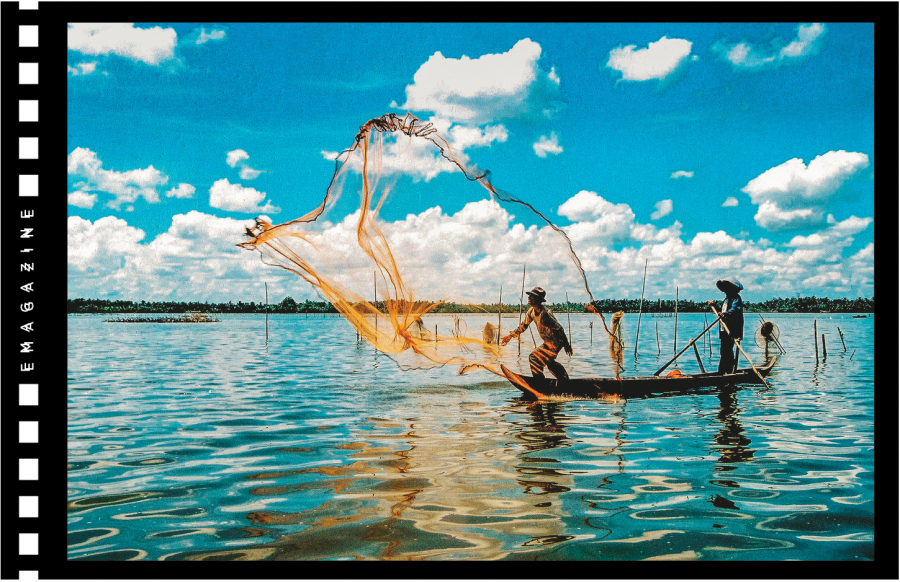
The graceful willow trees bend beside the gnarled melaleuca trees, birds sing high above, pink lotuses show off their beauty in the leafy pond, white water lilies bob gently on the water's surface, and egrets, herons, storks, and various other wading birds leisurely forage on the flooded grasslands... The air is filled with the scent of melaleuca and grass. It all feels like a scene from a Discovery Channel movie, prompting tourists to constantly raise their cameras.
Not only is it rich in plant life, the Tra Su Melaleuca Forest, covering nearly 850 hectares, is home to 70 species of birds belonging to 13 orders and 31 families, including two rare species listed in the Vietnam Red Book: the giant heron (Mycteria leucocephala) and the egret (Anhinga melanogaster). Besides many species of wild animals and reptiles, the Tra Su Melaleuca Forest also has more than 20 different species of fish, including two endangered species: the common catfish and the white catfish.
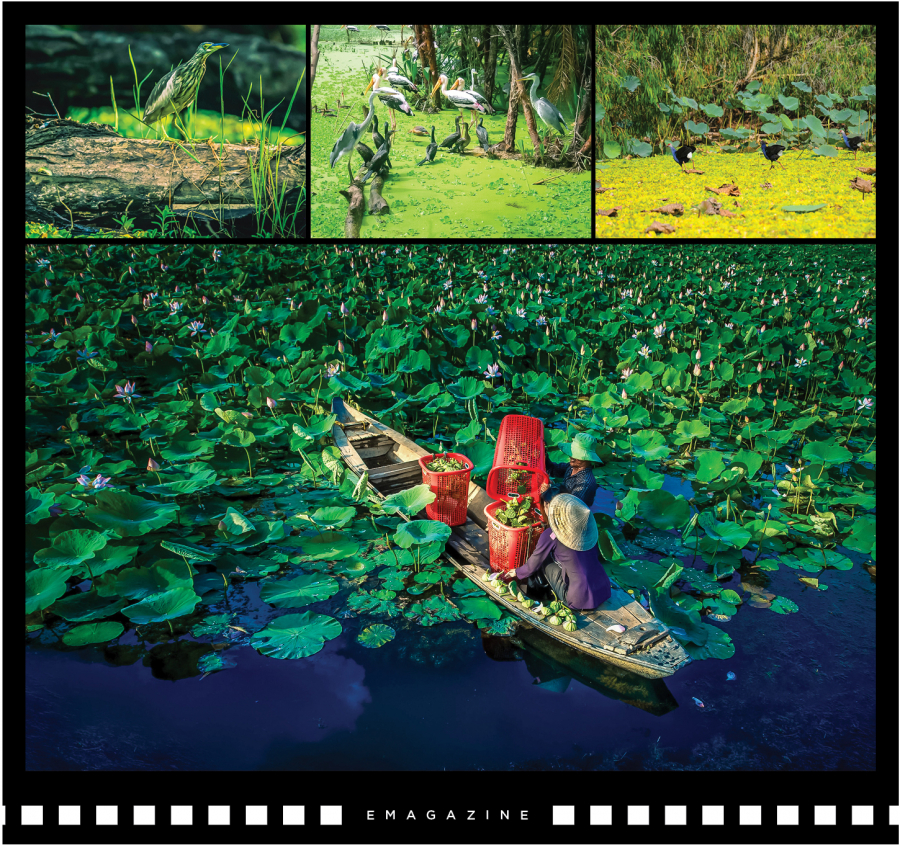
Leaving the main canal, we paddled deep into the forest, weaving through mangrove trees covered in duckweed and water hyacinth. A strange, vibrant green shimmered in the sunlight filtering through the old mangrove trunks, occasionally revealing tender young leaves that glowed brilliantly in the sun. Water spinach, water hyacinth, and countless other aquatic wildflowers bloomed with tiny white and yellow flowers in the rippling water, right next to the boat.
Apart from the sound of oars and birdsong, there was almost absolute silence, so quiet that one could almost hear the fluttering of countless yellow and white butterflies rising from the emerald green water lilies.
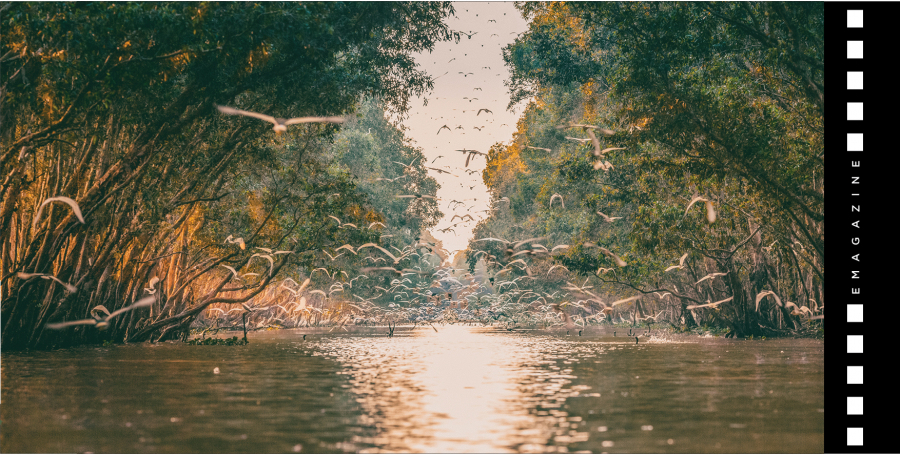
The boat drifted through that green space as if floating in a timeless illusion, so quickly that it was impossible to tell when evening had fallen. The forest suddenly seemed even more vast. As the sunlight faded, the forest birds returned to their nests, thousands of egrets filling the sky with the red glow of the setting sun slowly fading over the treetops.
The land and people of the Mekong Delta left a lasting impression on me. The boat carrying us drifted leisurely through the lush green mangrove forest. A gentle swaying, a touch of romantic charm crept into the dreamy mind of a Hanoi boy like me, making this place seem like a dream, and I didn't want to wake up.