VI
VI


Uzbekistan, a country in Central Asia, has always been a mysterious land for travelers worldwide. Besides its unique architecture and ancient Eastern culture, Uzbekistan is also famous for its location along the legendary "Silk Road." In his one-week trip exploring Uzbekistan, Nguyen Anh Tuan highlighted three must-see destinations in the country.
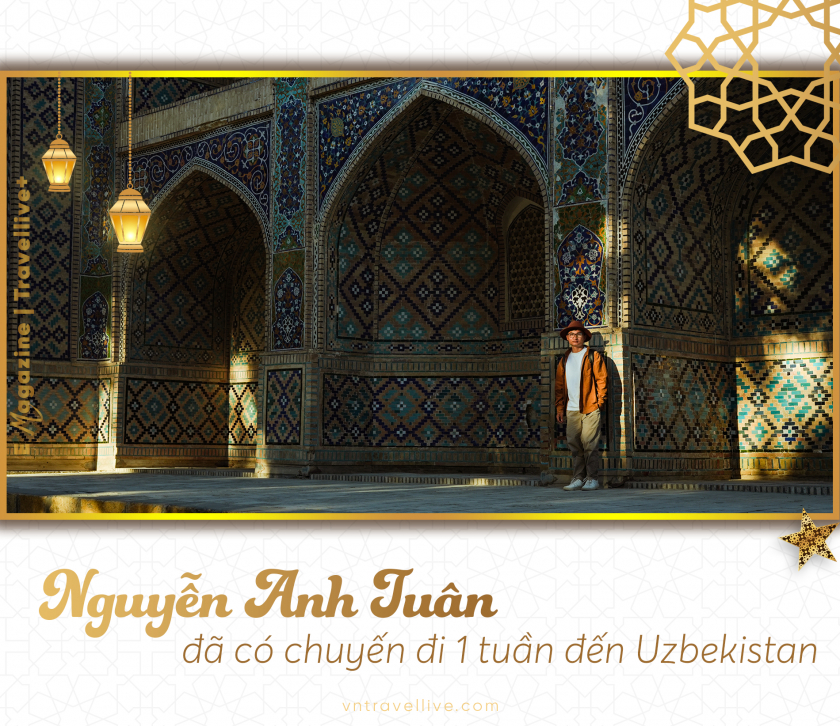

Nguyen Anh Tuan, currently working in the business field, recently traveled to Uzbekistan. His trip explored three Central Asian countries: Kyrgyzstan, Kazakhstan, and Uzbekistan. His trip to Uzbekistan lasted a week, from August 30th to September 6th. During this time, he visited three famous tourist cities in Uzbekistan: Samarkand, Bukhara, and Khiva, and spent a day exploring the capital, Tashkent, before returning to Vietnam.
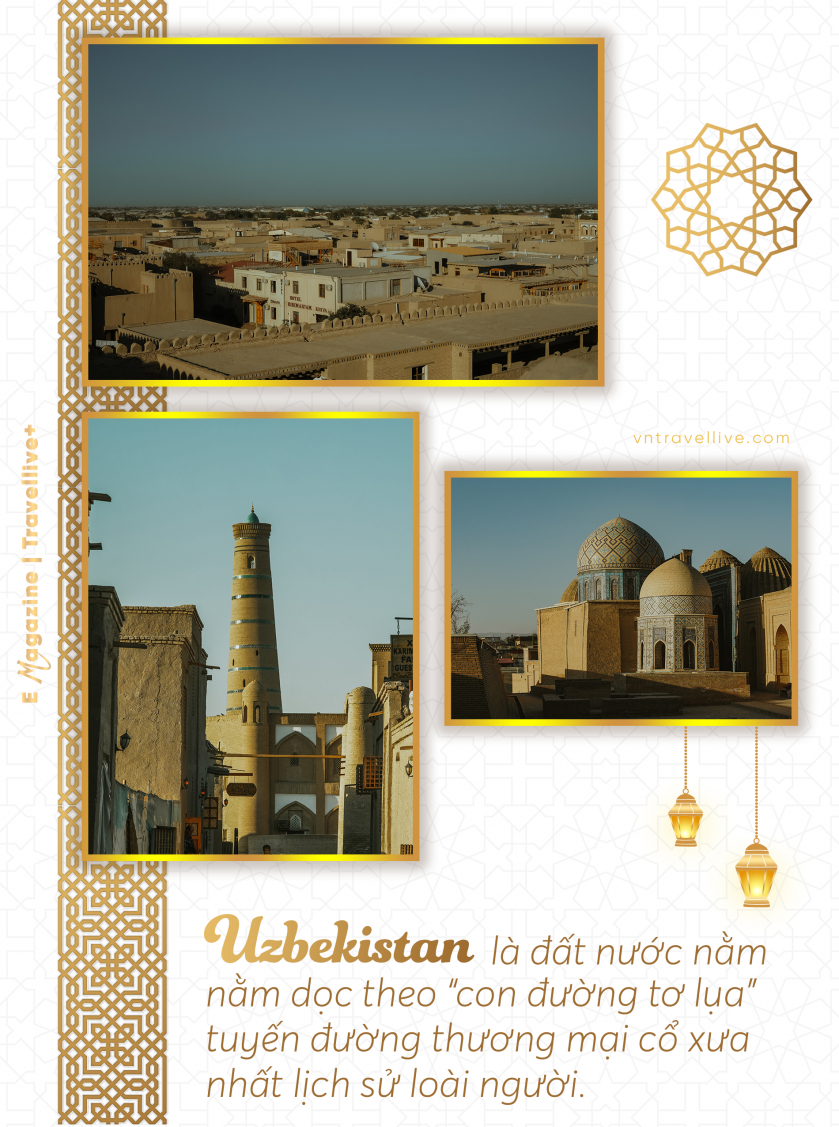
Uzbekistan lies on the "Silk Road"—an ancient trade route connecting China with the mystical West Asia. Major cities along this oldest trade route in human history, such as Samarkand, Bukhara, and Khiva, are always attractive destinations for tourists due to their architecture steeped in Islamic culture. These are all UNESCO-recognized tangible heritage sites that are carefully preserved. Uzbekistan boasts diverse natural landscapes, including rocky mountains, scorching deserts, deep rivers, and arid steppes.
Located in the heart of Central Asia, the Republic of Uzbekistan is renowned for its countless architectural monuments, breathtaking natural landscapes, magnificent palaces, ruins of ancient fortresses, outstanding cultural events, cuisine, and famous handicrafts.
“My first impression of Uzbekistan was probably its cleanliness. Every street, alley, dock, and train station was spotlessly clean and litter-free. The weather was a little sunny during the day but not excessively hot, while the evenings were extremely cool and slightly chilly,” Anh Tuan shared.
Uzbek cuisine is perhaps one of the most compelling reasons to visit this wonderful country. The culinary landscape of Uzbekistan is a blend of Iranian, Arab, Indian, Russian, and Chinese influences. Only in Uzbekistan can you fully appreciate dishes prepared in the traditional styles renowned worldwide. A common feature is the presence of round bread rolls on the table in Uzbekistan.
In Uzbekistan, Islam is the majority religion but not the official religion. Unlike many Middle Eastern countries, the lifestyle in Uzbekistan is more liberal. You can often see young women wearing short skirts in public. As a predominantly Muslim country, many people go to mosques to pray at any time.
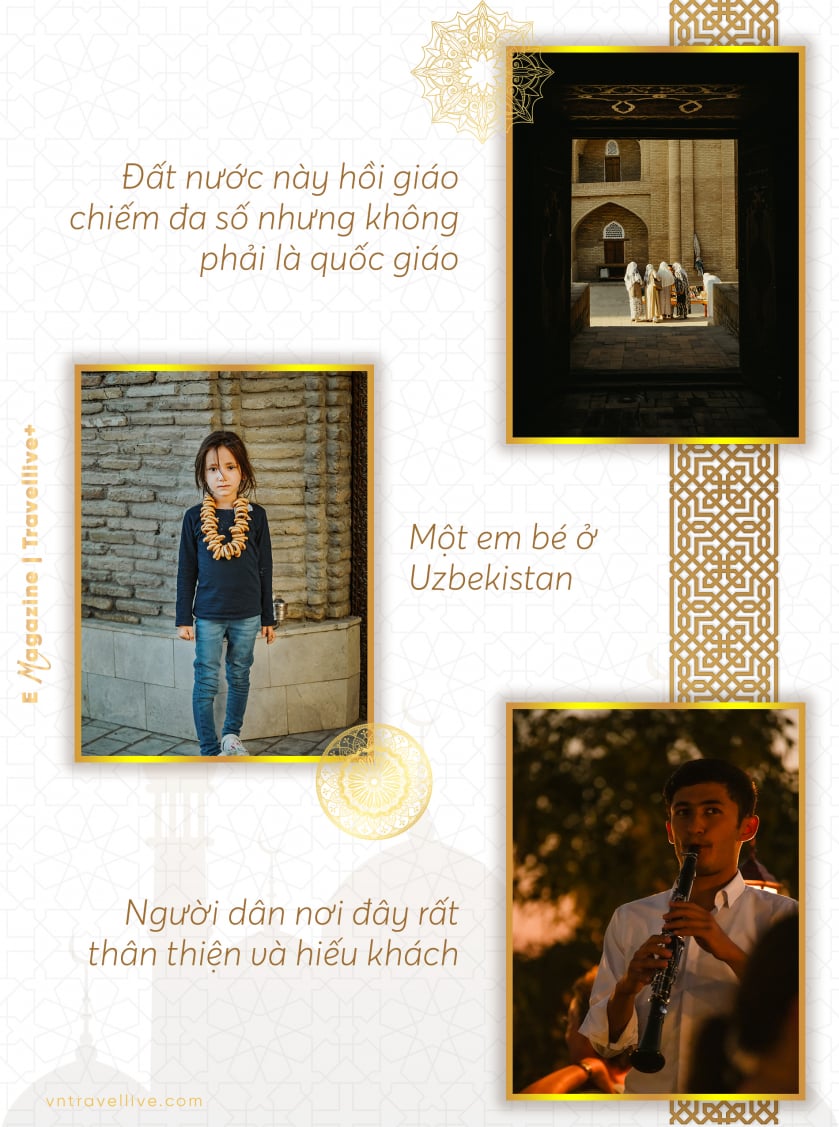
According to Anh Tuan, prices in Uzbekistan are not too expensive compared to Vietnam, especially taxis which are extremely cheap. The people of Uzbekistan are extremely friendly, kind, and hospitable; wherever we went, locals asked to take photos with us.
"When visiting Uzbekistan, there are three places tourists definitely shouldn't miss: Khiva, Bukhara, and Smarkand. These are three cities I've been to; each has its own unique beauty, and I was truly impressed by the ancient architecture from centuries ago that has been preserved almost intact," Anh Tuan said.
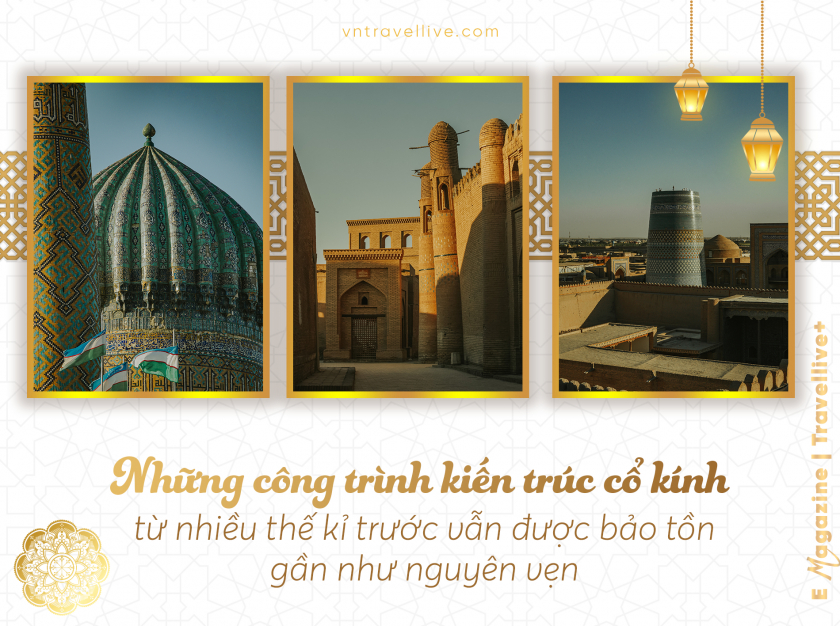
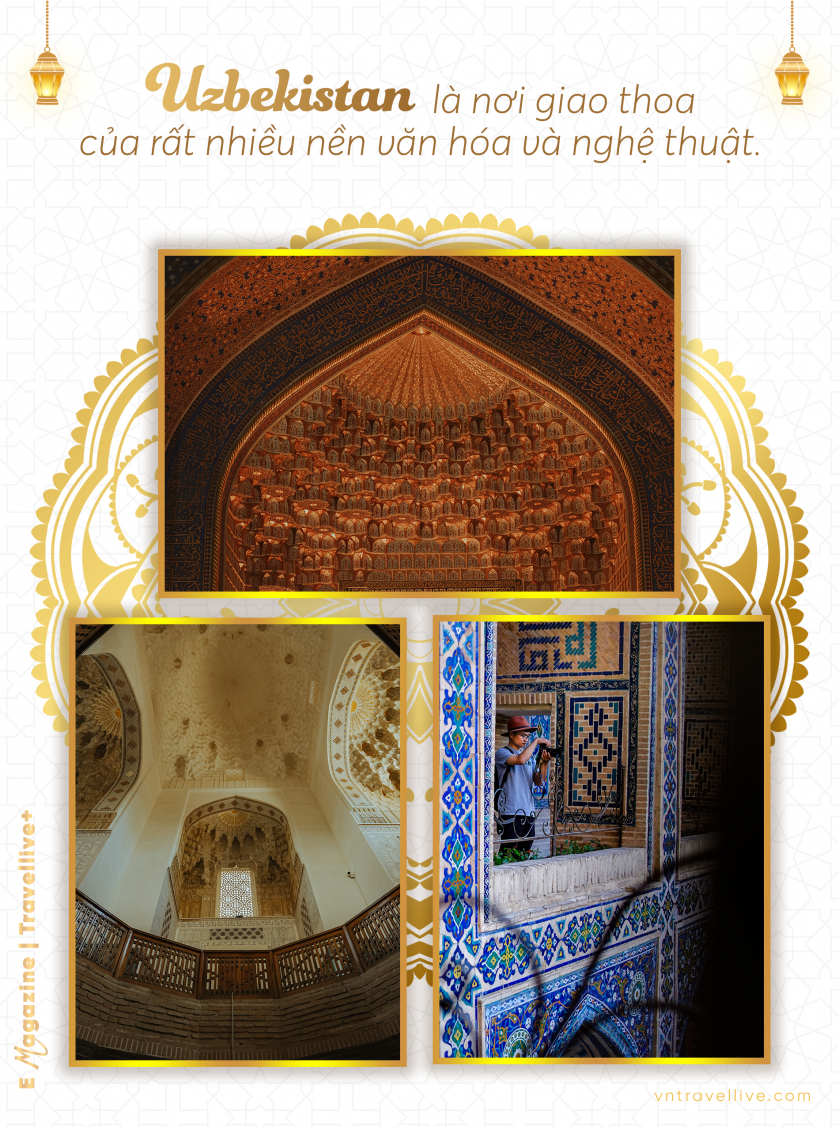
While Samarkand boasts magnificent mosques and Islamic schools, Bukhara is famous for the Kalyan Minaret, a symbol of the city. Khiva, on the other hand, has a vast ancient citadel with many UNESCO-recognized monuments. Of these, Samarkand left the strongest impression on Anh Tuan. The mosques and Islamic schools there are covered in colorful ceramic tiles, intricately and attractively coordinated in color and pattern.

The first destination on Anh Tuan's journey to Uzbekistan was Samarkand – a 3,000-year-old ancient city located at a cultural crossroads on the legendary Silk Road.
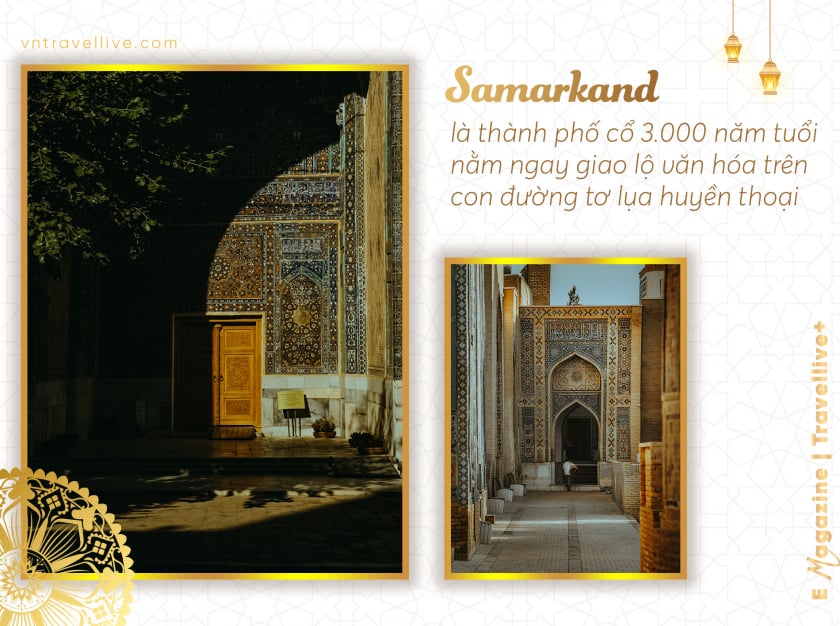
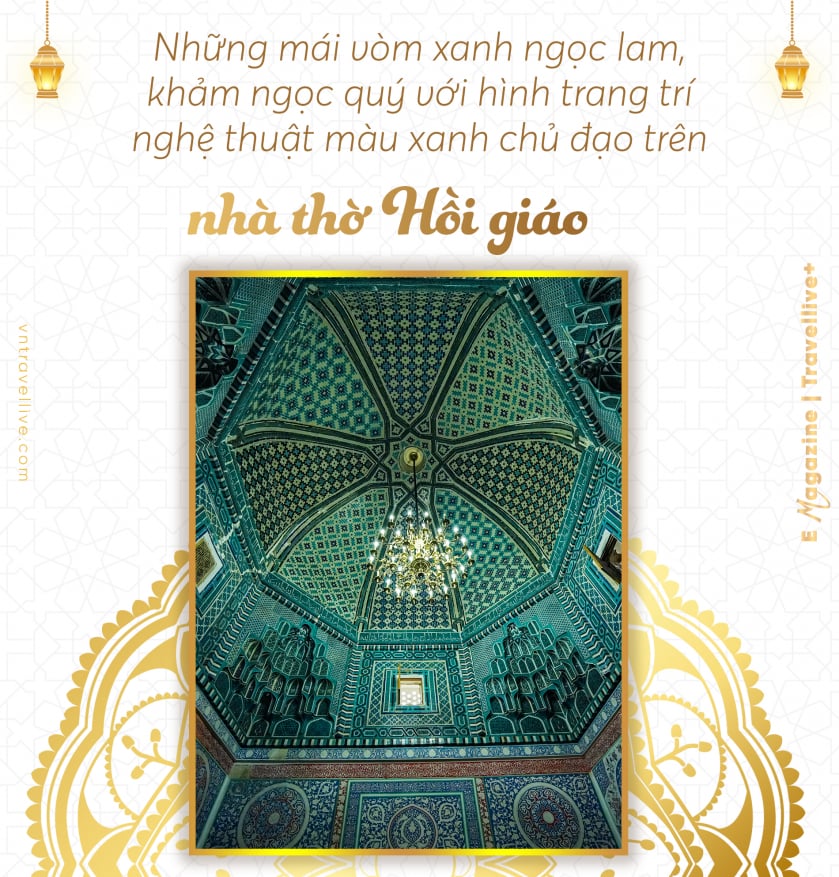
This place is considered a paradise on earth, with a history of remarkable development during the Timurid era. At the heart of the city is Registan Square. There are magnificent mosques with turquoise domes, mausoleums of historical and cultural value, and murals inlaid with precious gems, along with colorful artistic decorations that have remained vibrant throughout the ups and downs of history.
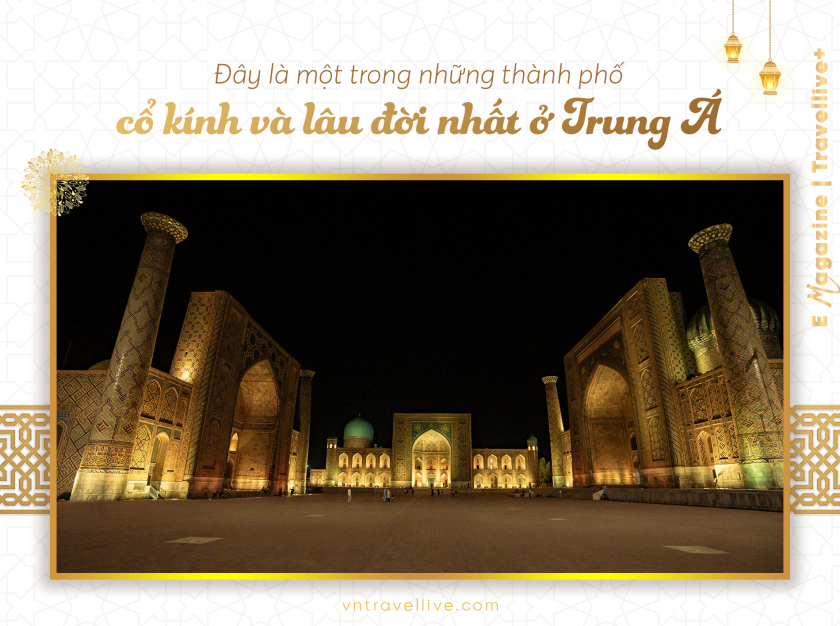
It's impossible to get lost in Samarkand because your feet naturally wander in one of the city's three main directions.
Samarkand boasts breathtaking structures such as Registan Square, which includes the three Islamic academies Tilla Kari, Ulugh Beg, and Sher Dor; the Bibi Khanym Mosque; the Gur Emir Mausoleum; the Shah-i-Zinda complex; and the Ulug Bek Observatory.

Bukhara is considered a "museum city," boasting over 140 historical architectural structures, with its central area recognized by UNESCO as a World Heritage Site.
The Kalyan Tower, an impressive 48-meter-tall structure, is the most popular tourist attraction in Bukhara. Located in the old town of Bukhara, alongside other mosques, it serves as a space for Muslims to pray five times a day. In addition to being used as an astronomical observatory or a military watchtower during certain periods, the Kalyan Minaret was also used as a military observation post.
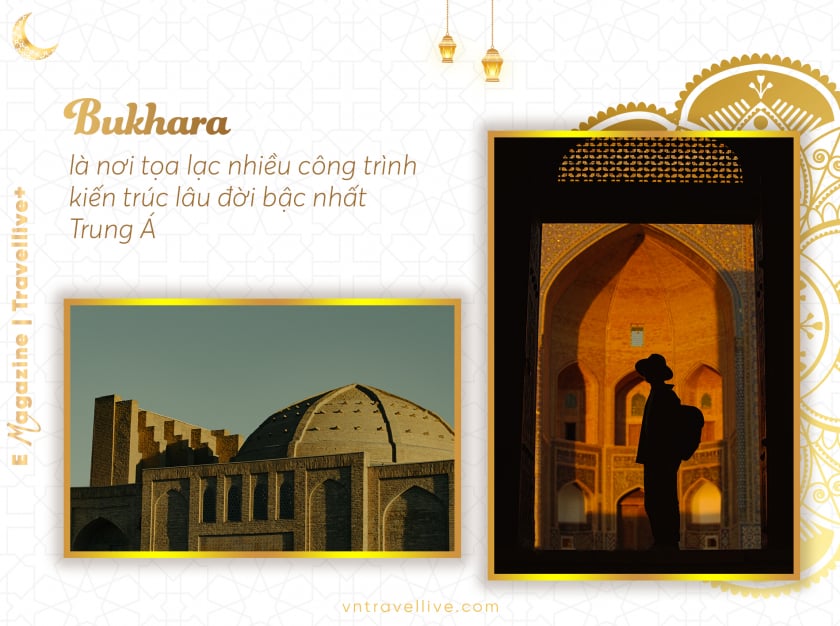
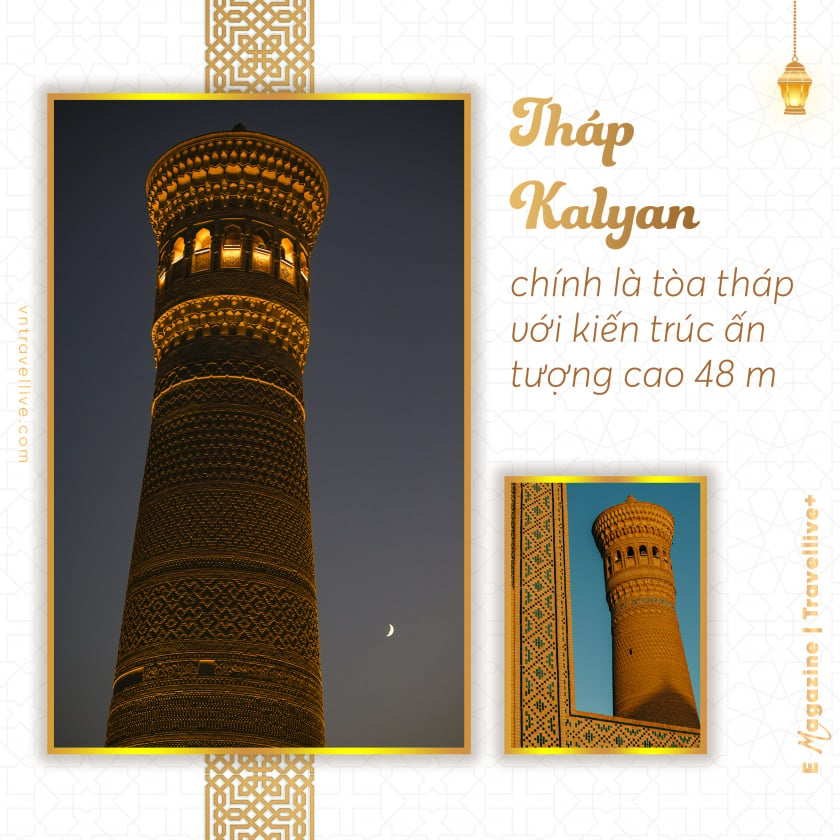
In addition, Bukharam is romantic with its Abdulaziz Khan, Nadir Divan-Begi, and Ulugh Beg Islamic academies; Kalyan Square; Toqi Telpak Furushon covered market; Chor Minor, Islamic academy, Magok-i-Attari mosque, and Ark fortress.

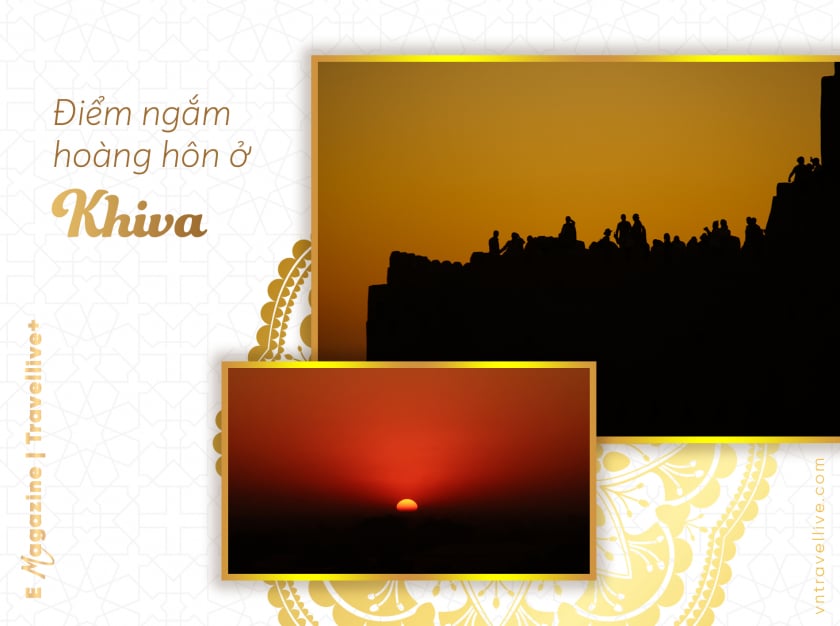
“Before returning to the capital Tashkent, Khiva was our last destination in Uzbekistan. Khiva is a World Heritage Site with a vast, almost perfectly preserved ancient citadel. It’s a very worthwhile place to visit, and the sunsets here are also beautiful,” Anh Tuan said.
Uzbekistan has three cities that evoke the spirit of the ancient Silk Road: Samarkand, Bukhara, and Khiva. Of these, Khiva is the most remote and smallest, yet it offers the most profound sense of stepping back in time.
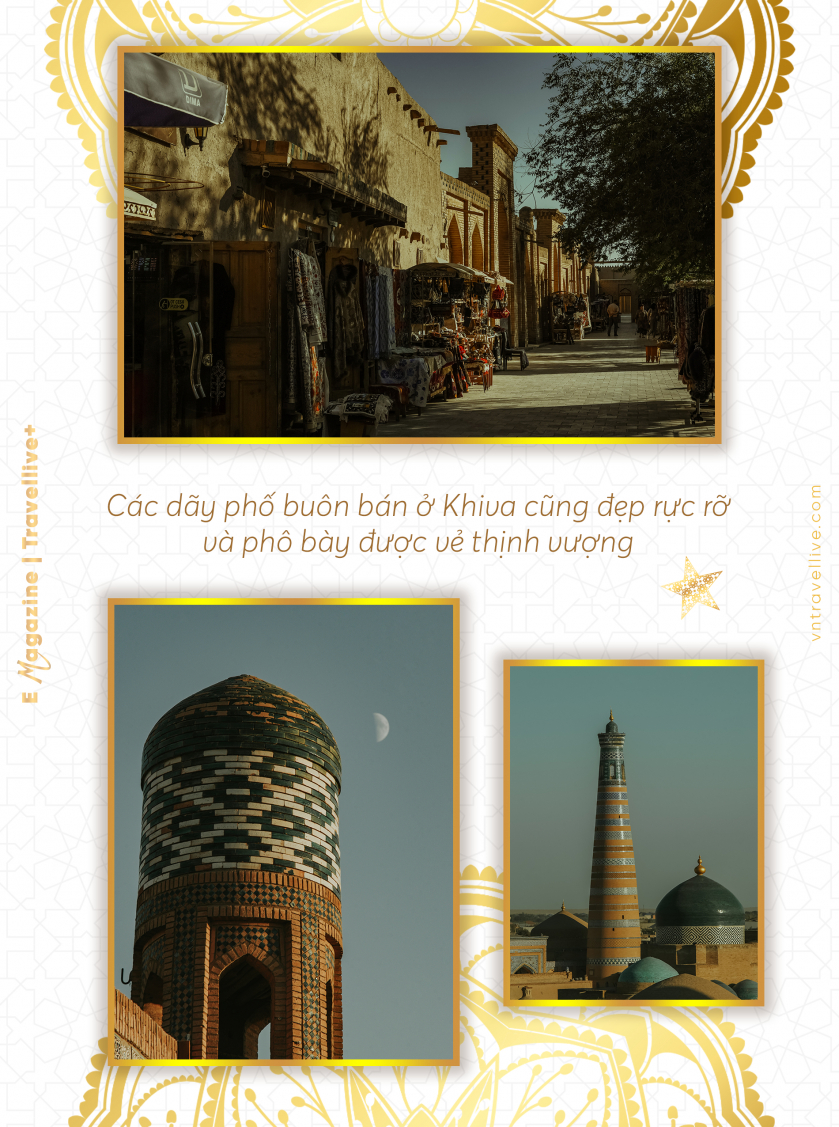
The commercial streets were also dazzlingly beautiful and displayed an air of prosperity. Every building in Khiva was decorated with incredibly meticulous brickwork. Every corner of the city was a part of a treasure trove of royal architecture.
The ancient city of Khiva is like a "Silk Road" museum with open spaces. Behind the grand walls lies the smaller city center of Itchan Kala. Walking along the ancient streets of Itchan Kala, climbing the impressive mud walls, visiting castles, tombs, churches, and enjoying the food at the local eateries are experiences not to be missed when you visit. Khiva is among the bustling commercial centers that have witnessed glorious and magnificent events.
But this place also serves as harsh evidence of life in the desert. Khiva was once a slave trading city with extremely strict regulations and forms of punishment. In the 9th century, Muhammad Ibn Musa al-Khwarizmi was instrumental in teaching algebra and developing the theory of algorithms for future generations.
It could be said that Khiva was the place that opened up a world of the most brilliant achievements while also concealing the deepest secrets on the Silk Road.
Anh Tuan's trip to Uzbekistan this time went without much difficulty, except perhaps for the overnight train journey from Bukhara to Khiva, which was a bit tiring because he booked his tickets too late and couldn't get a sleeper berth, so he had to sit all night.
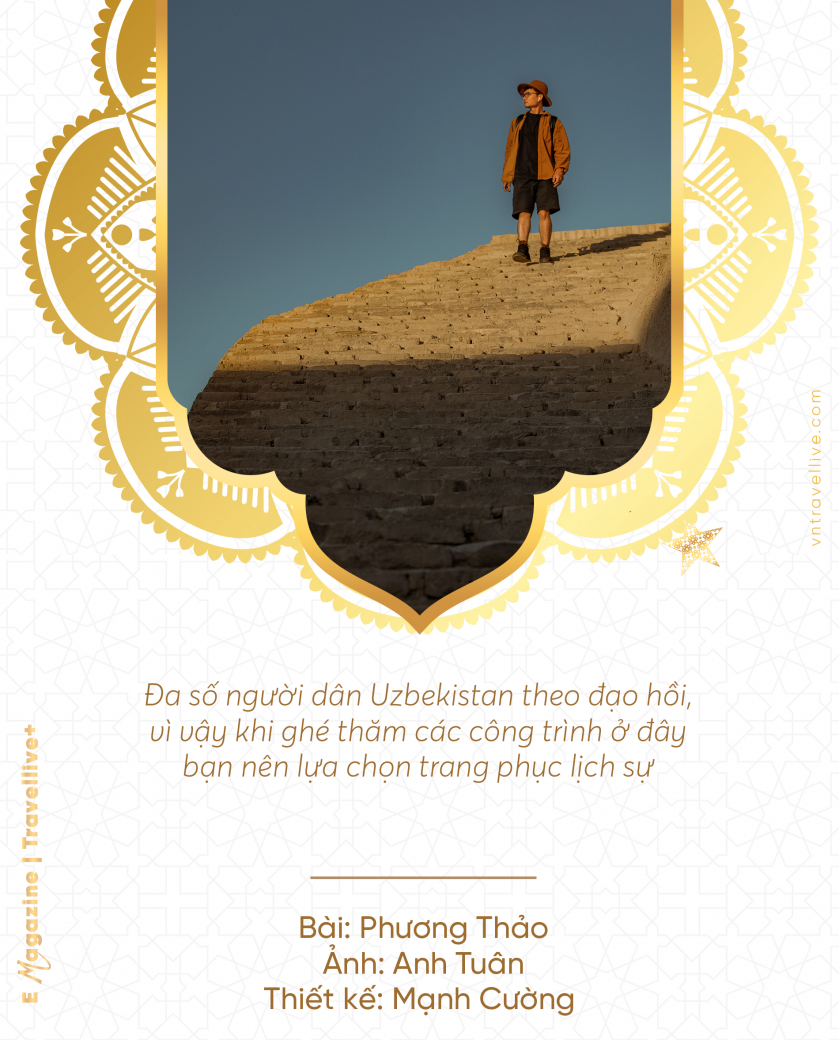
In addition, Mr. Tuan also shared some tips and tricks for Vietnamese tourists traveling in Uzbekistan. Before going to Uzbekistan, you should thoroughly research and plan a specific itinerary of tourist attractions and historical sites in each city. Each place has many attractions and historical sites, so it's important to avoid getting lost. Most people in Uzbekistan are Muslim, so when visiting landmarks in this country, tourists should choose respectful clothing. Avoid wearing overly short or revealing clothing.