VI
VI


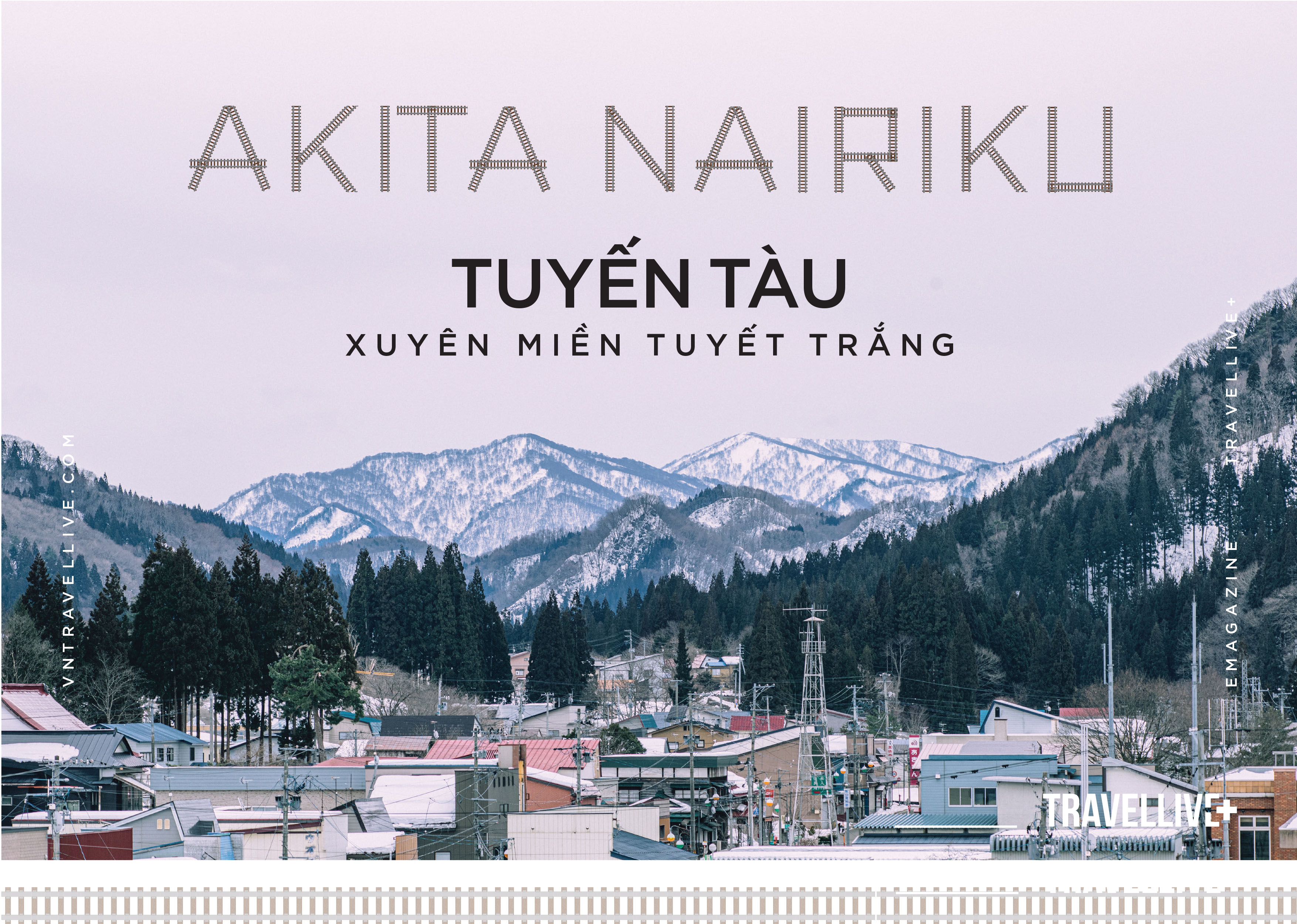
Have you ever taken a train to a snow-covered landscape like something out of a fairy tale? If not, you can buy a ticket for just 1,000 JPY at Kakunodate train station in Akita Prefecture, Tohoku region, Japan, to admire the icy beauty through the train window. And this might be the most "valuable" view you've ever seen.
______________________________
Beginning in 1964, the "bullet-shaped" locomotives (Shinkansen) have traveled across Japan at a maximum speed of 320 km/h on a nationwide railway network spanning over 2,700 km. The number of passengers traveling by train each year is estimated to reach hundreds of millions, and has surpassed 5.6 billion since its inception. With an average delay of only 36 seconds, it is the most punctual railway system you can experience.
But that's the story of speed; Japan also has countless smaller branch railway networks connecting local areas—places that the Shinkansen doesn't reach. These lines are often operated by private companies on their own tracks. They are smaller, have fewer carriages, and travel more slowly.
The Akita Nairiku railway line (located in Akita Prefecture, Tohoku region of Japan) is one such example. Operating since the Youkaku line was established over 100 years ago, the Akita Nairiku originally served to transport minerals and raw materials from the mountains to towns as part of Japan's nation-building efforts, bringing hope and dreams to the people. That mission is no longer fulfilled; goods have long since given way to passengers.
Today, instead of transporting people for daily life, they also serve the purpose of tourism. Named the "Smile Railway - Journey to Happiness" of Akita Prefecture, the Akita Nairiku starts from Kakunodate town, stretches nearly 100 km through 20 tunnels, 322 bridges, 29 stations, and ends in Takanosu town.
Proud of its stunning natural beauty in all four seasons, the nearly 100-kilometer-long railway line winding through the mountains and forests of Satoyama is more than just an ordinary sightseeing journey. Tourists from all over the world still come seeking a seat for this very reason.
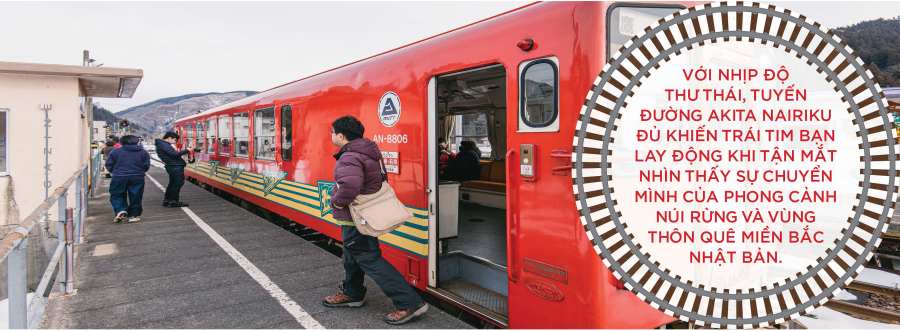
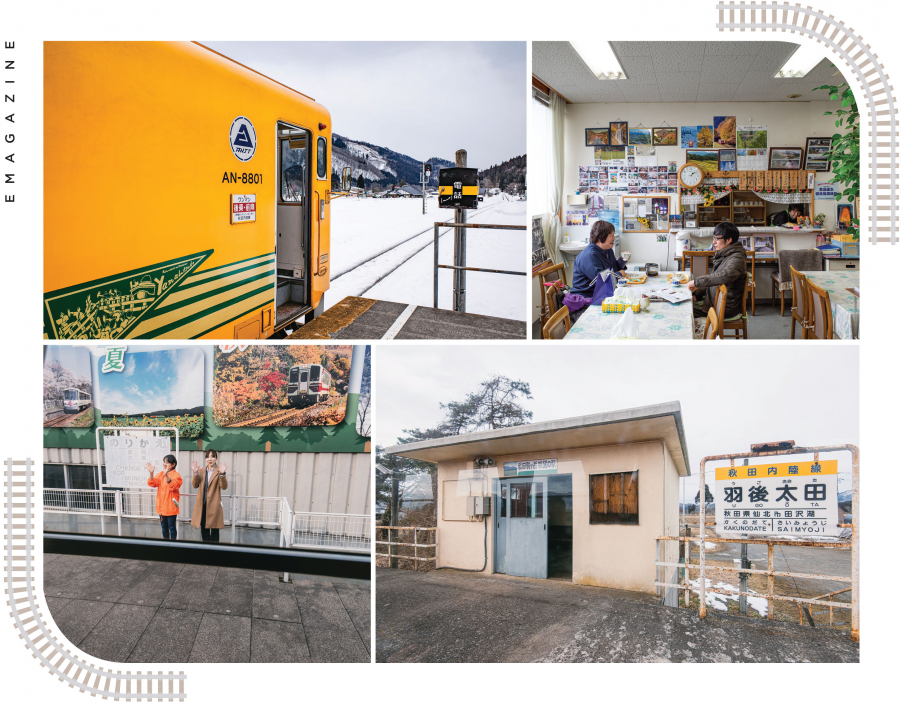
The journey began in the town of Kakunodate, where a small, brightly colored AN-8800 diesel locomotive awaited on the platform. The entire interior was decorated with images of Akita dogs, from pictures on the ceiling to embroidered patterns on the seats. In my opinion, this decoration was a "bomb" of color, elevating passengers' emotions from excitement to fervent enthusiasm.
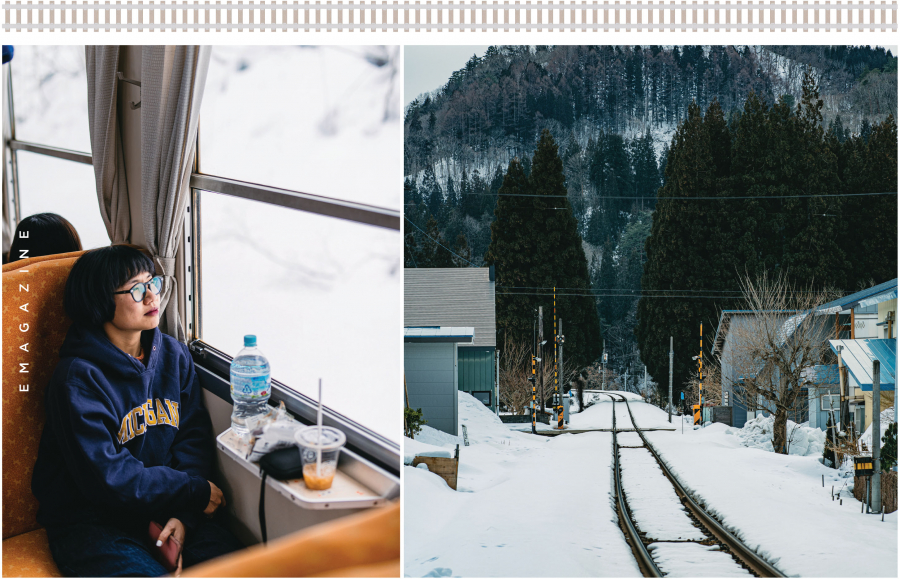
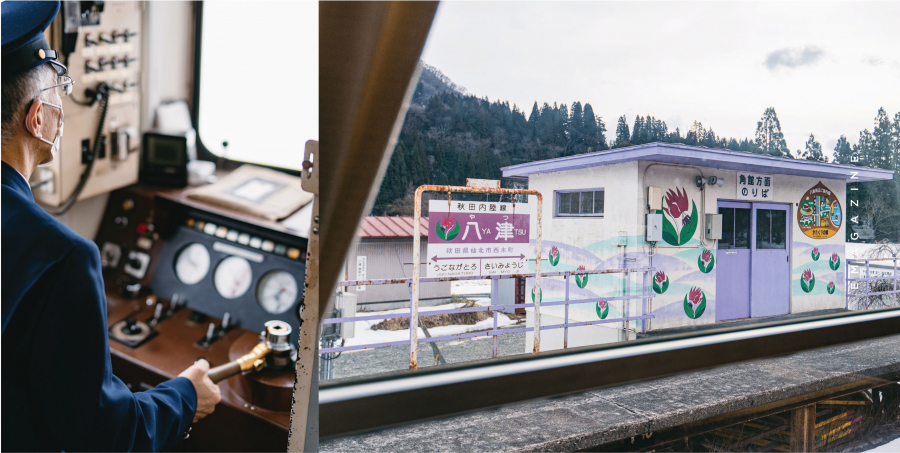
Slowly leaving the station, as the train left the city behind, the snow began to fall thicker. First came the white fields, with a few charming houses drifting past the windows. Because the route was intended for locals, it would stop occasionally for a minute or so at a tiny station, sometimes completely empty. Even knowing that no one was boarding, the train driver would lean out of the door, scanning the station from beginning to end to ensure no passengers were left behind. A humane act without exception.
The train slowly ascended into the mountain range ahead, revealing the most beautiful part of the journey. The pine forest canopy was covered in a large amount of soft, fluffy snow (the Japanese call it Aspirin Snow, ideal for sports activities). The train wound its way through the gorges. Occasionally, we encountered small streams crossing beneath our feet or tiny trails frozen in winter, and even abandoned structures left to blend with nature, all in a serene beauty.
This single-car train always slows down when passing scenic viewpoints, especially the iron bridges spanning the ravines. The weight of the locomotive is enough to make the bridge tremble, causing the snowdrifts clinging to the top to fall onto the train's roof. These are also the easiest places to take photos while remaining seated inside the train car.
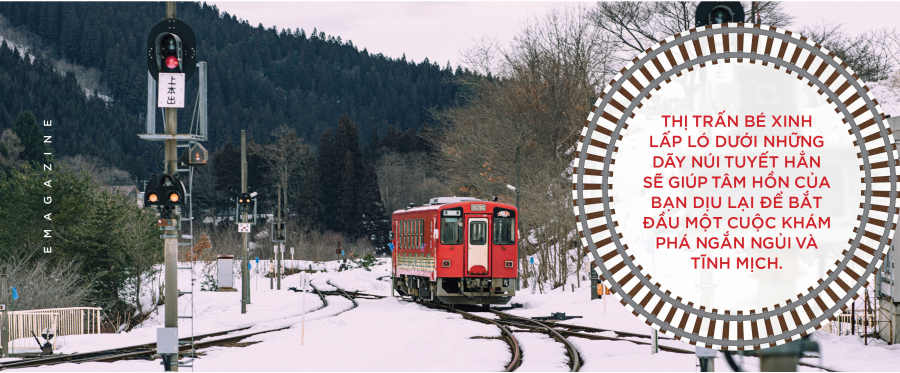
About an hour and a half after departure, the train arrives at Aniai Station – the station of a small town located midway through the journey, an ideal location for travelers seeking tranquility, a safe escape from the bustling tourist centers and megacities. The town's scenery is similar to other small stations the train passes through – deserted, rarely seen. The charming little town nestled among snow-capped mountains will surely soothe your soul, preparing you for a short and peaceful exploration. If the tiny museum you encounter right out of the station, which recreates the old way of life in the region, isn't enough, you can visit the Museum of Indigenous Culture to learn about the golden age of the country's largest copper mine. A leisurely two-hour walk is all you need to complete your visit to Aniai. Most travelers, like myself, usually end their journey here rather than going to the final station, Takanosu.
______________________________
For me, all that experience for the price of a 1,000 JPY (approximately 210,000 VND) train ticket is a real bargain for those who love hunting for hidden gems on the road. High-speed trains traveling at hundreds of kilometers per hour often make it difficult for travelers to appreciate the scenery along the way. But with its leisurely pace, the Akita Nairiku route is enough to stir your heart as you witness firsthand the changing landscapes of the mountains and countryside in northern Japan. Certainly, a journey to this snowy land will be an unforgettable experience.