VI
VI


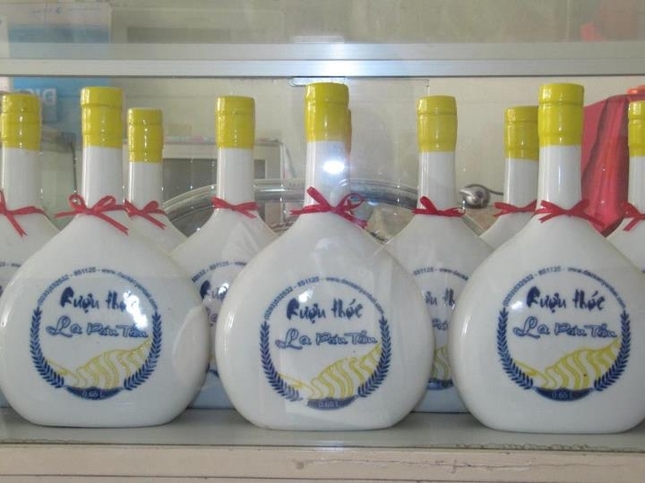
The traditional rice wine-making craft of the Mong people in La Pan Tan commune, Mu Cang Chai district, has a long history. The golden rice grains, embodying the diligence and creativity of the Mong people, are the precious ingredient for making rice wine – a unique specialty of the Mong people here. They have a secret recipe for their yeast. The yeast used to make rice wine must be leaf yeast. Unlike other types of yeast, it is specially prepared with great care and requires skill and finesse to achieve the desired quality. The leaf yeast is made from 15 types of plants, containing various herbs from the mountains and forests such as cardamom seeds, wild chili roots, galangal, etc. The selection is based on a family secret, known only to the oldest men in the family, who know how to process these herbs into the leaf yeast to brew their unique wine. When fermented, these ingredients create valuable medicinal remedies such as those that prevent colds, relieve flu symptoms, improve blood circulation, reduce joint pain, and do not cause headaches.

To produce delicious rice wine, in addition to the main ingredients mentioned above, other indispensable tools in the brewing process include: a clay stove; a double-boiler made from the core of precious wood harvested from the forest, with a diameter of about 60-70cm and a height of about 1m, capable of holding 30kg of rice at a time; a sieve to pour the rice onto during the double-boiler process; bamboo tubes to guide the drops of wine after distillation; and a cast-iron double-boiler pan with a diameter of about 1m.
The Mong people of La Pán Tẩn brew their rice wine using traditional methods, involving many steps and depending on varying weather conditions (sun, rain, dryness, humidity) to produce high-quality wine. The first step in the brewing process of the Mong people is fermentation. The leaves and seeds of forest plants used for the yeast must be washed, dried, then ground into a fine powder, mixed with water, molded into small pellets, and dried in the kitchen attic. The fermentation time also depends on the weather; in cold weather, it can take months.

The rice used for making rượu (rice wine) is harvested by the local people from terraced rice fields, carefully selecting only ripe, golden, firm, and uniform grains. The rice is boiled until cooked, then removed and spread evenly on fresh banana leaves to cool. It is then mixed with yeast and placed in sealed earthenware jars for fermentation. According to the local people's experience, the fermentation process is crucial, usually taking 10 to 15 days, but the longer it ferments (up to a month), the better the rượu tastes.
The unique aspect of the brewing process is that the brewer uses a sieve with small holes placed over a pot or pan containing water. Then, the ingredients for brewing are poured onto the sieve, completely covering the sieve, preventing any ingredients from falling into the pot. A steamer is placed on top of the pot (or pan), enclosing the sieve. This is a double-boiler method; the steam from the boiling water in the pot (or pan) rises intensely, permeating the ingredients on the sieve, condensing them into precious drops of liquor that flow into the collecting pot. The alcohol content reaches 40-45 degrees. The liquor is distilled twice: the first time to remove impurities and filter the essence, and the second time to cool it using fragrant leaves from the mountains. Because the brewing process is long and elaborate, La Pán Tẩn rice liquor has a very distinctive flavor, with a slightly earthy forest aroma blended with the scent of mountain rice. It's fragrant, mild, and delicious despite its high alcohol content. Even when intoxicated, it leaves you feeling refreshed and relaxed, without the headaches often associated with other liquors. Drinking it in the morning will give you extra strength in your shoulders, allowing you to work all day without feeling tired. Drinking it in the evening will lead to a good night's sleep, leaving you feeling refreshed and with a rosy complexion upon waking.

With the belief that wine is the essence of heaven and earth, the local people used it only for worshipping heaven, earth, and ancestors, during festivals, holidays, weddings, and to entertain close friends. Nowadays, with the support of the Department of Culture, Sports and Tourism in preserving traditional crafts, the rice wine-making craft of the La Pán Tẩn people has gradually developed into a marketable product serving the needs of locals and tourists. Many visitors, especially foreign tourists, have purchased La Pán Tẩn rice wine as a gift for friends and family. When visiting Yên Bái, remember to visit the Mong people of La Pán Tẩn in Mù Cang Chải district and savor a glass of their rice wine to experience the unique flavor of this local specialty.
It can be said that with its reputation and top-quality wine, La Pán Tẩn will continue to expand its market, becoming known to more customers, thus further developing the wine-making industry in La Pán Tẩn, contributing to poverty reduction and preserving the brand of this precious wine.
- La Pán Tẩn Commune, Mù Cang Chải District, Yên Bái Province