VI
VI


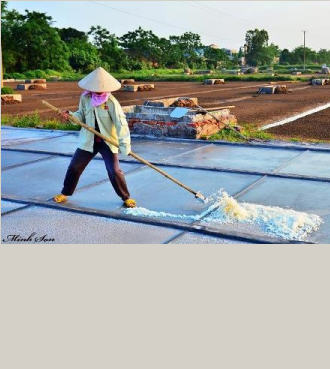
Located 110 km southeast of Hanoi, Diem Dien town in Thai Thuy district, Thai Binh province, is one of the three largest biosphere reserves in the Red River Delta. In Sino-Vietnamese, "diem" means salt and "dien" means field; the original meaning of the name Diem Dien is "salt field." The name of the village reflects the occupations of its people: salt production and seafaring.
Diem Dien sea has a salinity level that meets the standards for producing white salt crystals. The traditional sea salt-making village here has a long history. Salt production lasts from approximately April to July each year. Especially in April and June, when the southerly winds blow and the sun shines intensely, it is the most favorable time to produce large, flavorful, and firm white salt crystals.
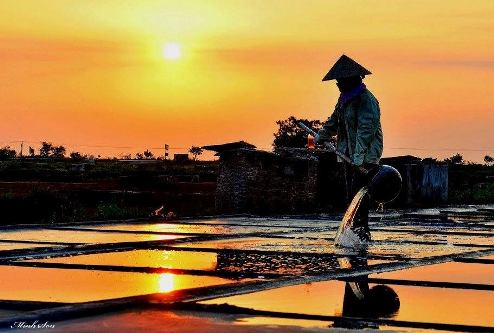
Regularly watering with high-salinity water helps increase the thickness of salt crystals. Photo: Nguyen Minh Son
A typical salt-making day for the people of Diem Dien begins early in the morning. The first step is preparing the land. They soak the sand in seawater, then spread it evenly, dry it on the fields, and sprinkle seawater on the drying area, adding starter salt. When the sand dries, tiny salt crystals form on each grain.

At midday, between 12 PM and 1 PM, people use salinity meters (salinity refractometers) to determine the salt concentration. This work helps ensure the quality and quantity of salt production remain stable. Salt only solidifies when the salinity of seawater reaches 25-30 degrees.
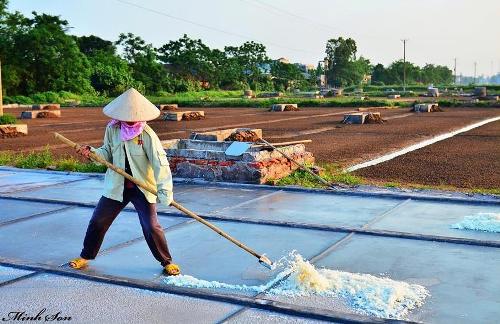
Salt harvesting. Photo: Nguyen Minh Son
Under the scorching summer sun, on each salt-growing field, the villagers endure the intense heat that burns their skin, all to reap the rewards of their hard labor. They rejoice in working under this blazing sun, believing it will lead to a bountiful harvest and even whiter, purer salt. Conversely, if a sudden rain shower falls, all their efforts are wasted, and the farmers must start the process all over again.
Around 2 PM each day, salt begins to crystallize in the fields, and farmers rush to harvest it. The salt is gathered into pristine white mounds that reflect onto the fields, creating a unique picture. Each mound of salt is brought ashore to allow the water to evaporate before being packed into bags.
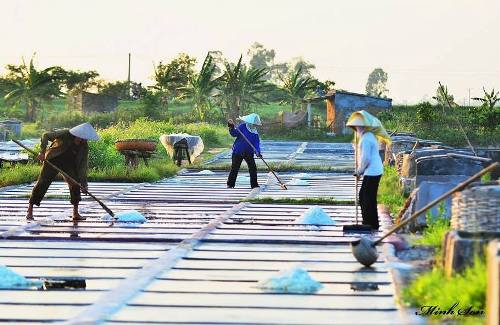
The salt fields stretch out, pristine white under the sun. Photo: Nguyen Minh Son
Despite the hardships, the people of the coastal region remain diligent in their work. A visit and experience it firsthand will make you appreciate the salty sea salt and grow to love the hardworking people on the white salt fields.
Diem Dien beach is also famous for its delicious crab paste. The people of Thai Thuy often invite guests to their homes to enjoy local specialties such as eel salad, sour jellyfish salad, and crab soup. Tourists can combine their visit with a trip to the Thuy Truong mangrove forest, An Co communal house, the Salt Lord's shrine, and the Nguyen Duc Canh memorial area.