VI
VI


Trinh Sinh
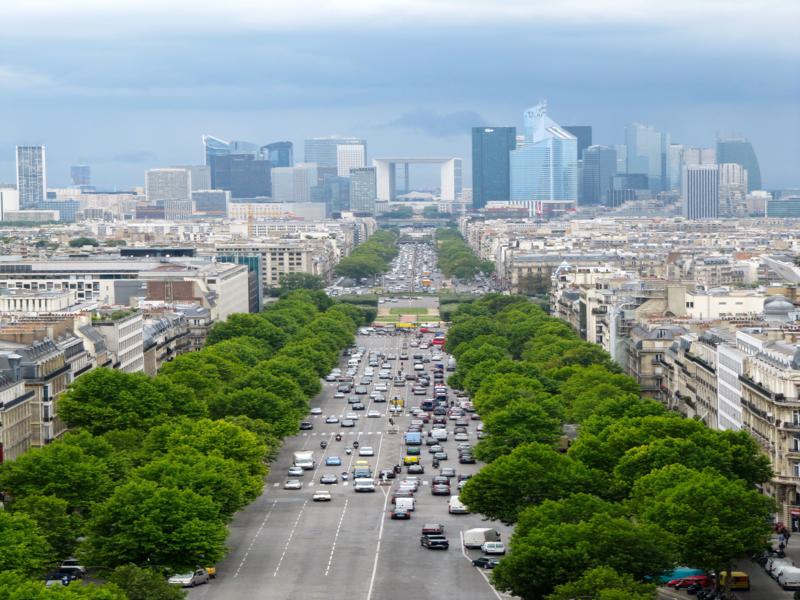
During a business trip to Europe, I took a backpacking tour to Paris, the City of Lights. Paris doesn't have many skyscrapers. Actually, the skyscrapers are clustered together in one corner, La Denfense, a new area on the outskirts, considered one of the largest commercial centers in Europe. The rest of Paris is a magnificent city with many old or classically styled buildings, much like Hanoi's Western Quarter. And in fact, isn't the Western Quarter in Vietnam a direct copy of a part of Paris in the early 20th century?
My genuine Parisian colleague offered to show me around the city, but I preferred to explore it on my own, as had become my habit when visiting unfamiliar cities like New York, Washington, Moscow, or Tokyo…
For just 17 US dollars (calculated from Euros, as exchanging US dollars here is quite complicated!), you can take a 60-minute cruise on the luxurious "Bateaux Parisiens" along the Seine River to admire the scenery on both banks. There are many different docks and cruise companies, but the prices are almost the same, giving tourists plenty of choices. A boat arrives and departs approximately every half hour, dropping off and picking up passengers in a constant rhythm that beautifies the city and is very convenient for tourists.
| It is no coincidence that the banks of the Seine River, flowing through the magnificent capital of Paris, France, are included in the UNESCO World Heritage list. This is also a rare case where this international organization has "sanctified" the banks of a river. |
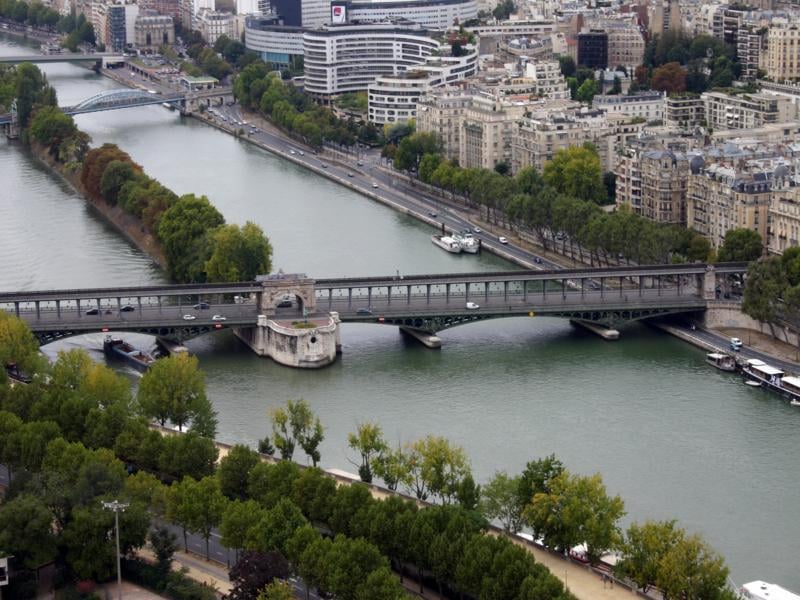
Naturally, the river is "average," with its emerald green beauty, gentle flow, and depth of about 6 to 8 meters. That is, it's similar to many other rivers in Europe, but its advantageous location is in the middle, dividing the French capital into north and south banks. It is these banks that enhance the river's beauty, and the bridges connecting them further beautify both the river and the banks. It turns out that the French have long considered the Seine River a God-given "frontage" to showcase their prestige to the world. And so, they have displayed numerous architectural structures and temples along this approximately 14km stretch of river flowing through the city center. The Seine River has been in use for 2,500 years, since the first prehistoric French arrived in Paris to settle and develop the Cistercian Islands in the middle of the river. Since then, the banks of the river flowing through Paris have become a sparkling jewel, contributing significantly to the city's attractiveness, drawing up to 30 million tourists each year. It is no coincidence that the banks of the Seine River, flowing through the magnificent capital of France, are included in the UNESCO World Heritage list. This is also a rare case where this international organization has "sanctified" the banks of a river.

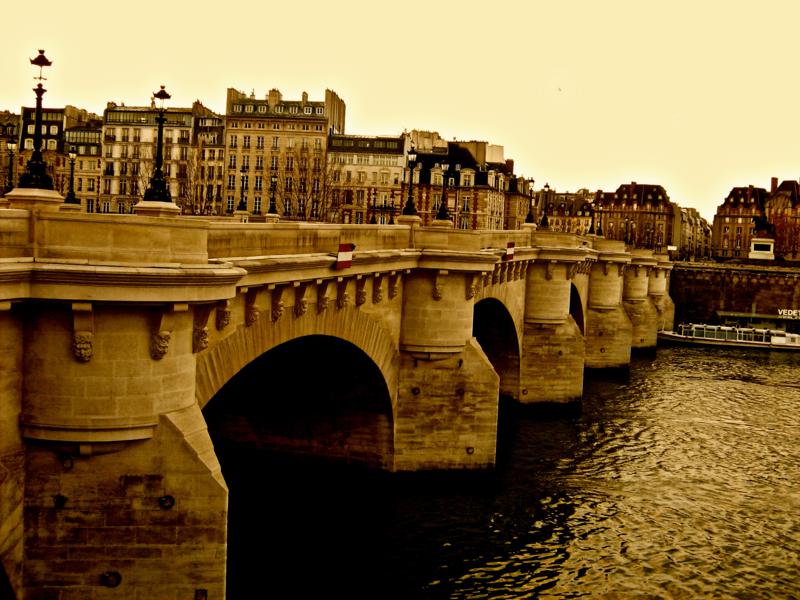
I counted 37 bridges crossing the river. Each bridge is a masterpiece of architecture, no two are alike. The most impressive to me was the Pont Neuf, literally meaning "New Bridge." Yet it's not new at all. Among the bridges still reflecting on the Seine River, this is the oldest, built in 1578. The reason is that when this bridge was built of stone, the others were made of wood. The meaning of "new" has remained from that time to the present day.
One of the most beautiful bridges, in my opinion, is probably the Alexandre III Bridge, built in 1896. It was a gift from the Russian Emperor to Paris, and the bridge is named after him. The bridge is artistically styled and very popular because it's located at the entrance to the city center, where the Eiffel Tower, the Elysee Palace, the Bourbon Palace, and Concorde Square are located. The bridge features beautifully decorated lampposts. At both ends of the bridge are magnificent golden metal statues.
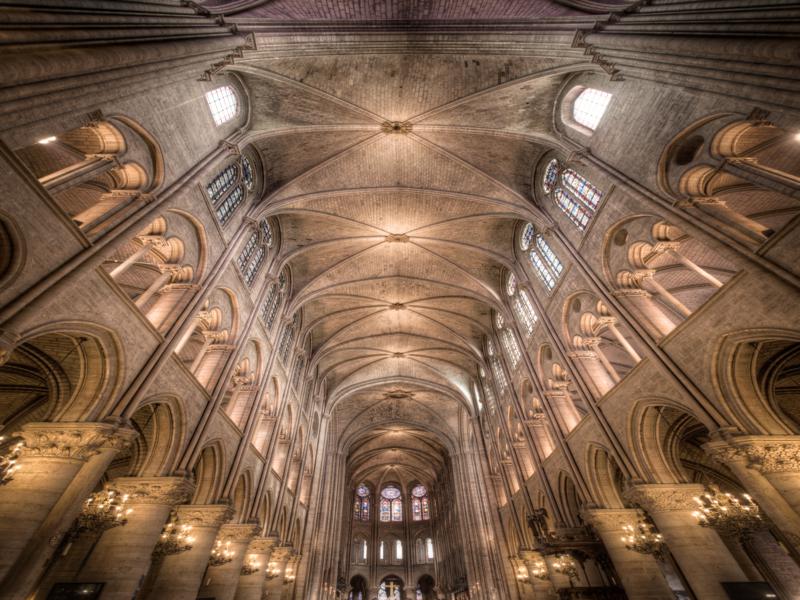
The highlight of the riverbanks is the castle architecture. Notre Dame Cathedral, famous for Hugo's "The Hunchback of Notre Dame," is a beautiful, ancient structure, like a magnified version of Hanoi's grand cathedral. One can also admire the National Assembly building, the Grand Palair, a grand palace located on the famous Champs-Elysees avenue, and another famous hotel complex built in 1671 called the Invalides…
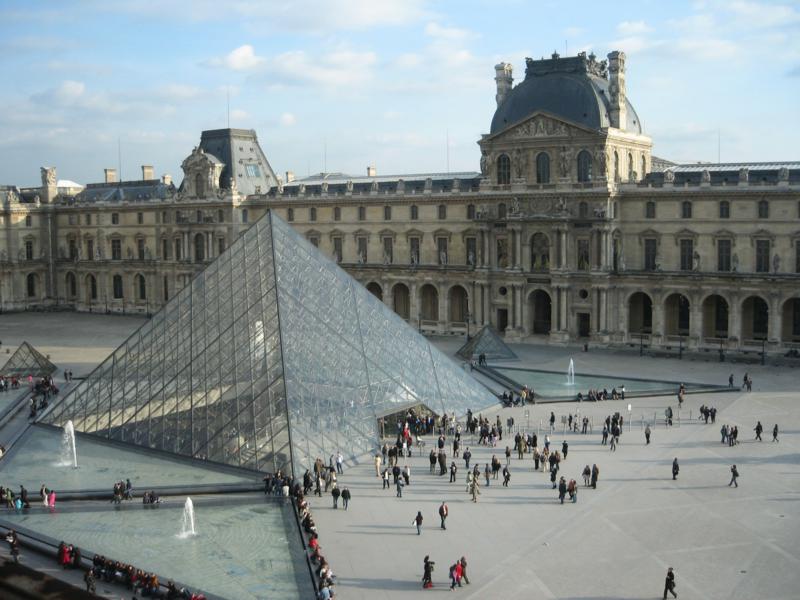
Two of the world's most famous museums are also located along the river. These include the Louvre Museum, which houses many of the most valuable ancient and medieval artifacts, such as the Venus de Milo statue and the Mona Lisa painting with its enigmatic smile. Recently, a modern glass pyramid was built in the middle of the museum courtyard, creating a dazzling spectacle, especially at night when illuminated by colored lights. Meanwhile, the Orsay Museum preserves many modern and contemporary Western art works, including famous pieces by the great painter Van Gogh.
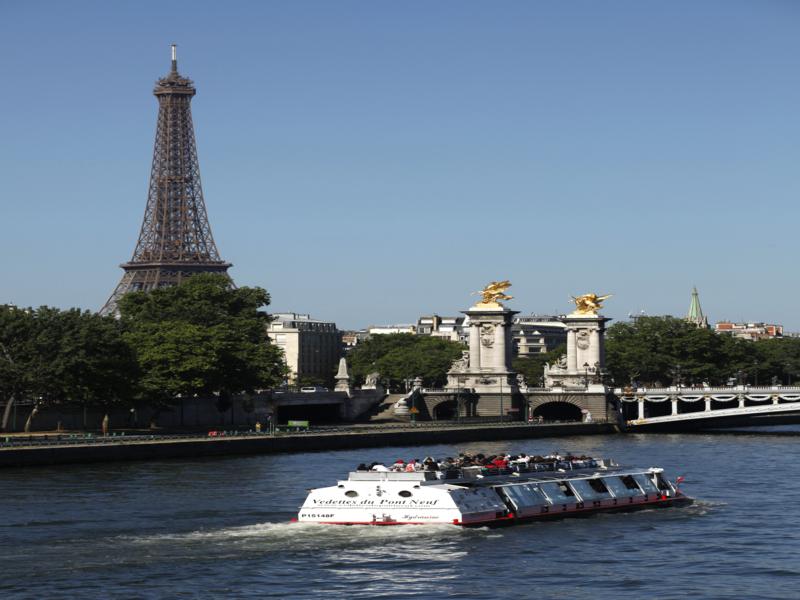
Another architectural marvel that sparked considerable controversy among Parisians when it was first built was the Eiffel Tower. Initially considered a "steel monster," it gradually became commonplace. Now, it's a beautiful and indispensable symbol of Paris, and even of Europe. The tower also stands majestically, casting its shadow over the river.
Along the riverbank, there are also many stone piers, no less ancient than the castles. The French also built many floating restaurants, dance halls, and cafes. But the most striking and elaborate project was the creation of an artificial "beach" along the river. Thousands of tons of sand and palm trees were imported. There were scenes of girls in bikinis sunbathing, picnics, gatherings playing guitar, and drinking here and there along the riverbank, as if every day were a festival.
For Parisians, the Seine River is not only beautiful in its architecture, but also holds lifelong memories. Countless poets and writers have visited it, it has been the subject of poetry and painting, and a meeting place for lovers... A river that has become intimately connected to the lives of its people.
I've been to the Seine River more than once, but perhaps for me, the time when the river is most beautiful, the Parisian sky is clearest and warmest, is from May to September each year. What could be more delightful than sitting on the deck of a boat amidst the blue sky and clear water, sipping on a glass of French wine?
| The best time to see the river, with the clearest and warmest Parisian skies, is from May to September each year. What could be more delightful than sitting on the deck of a boat amidst the blue sky and clear water, sipping on a glass of French wine? |
Additional information:
How will we get there?
From Hanoi and Ho Chi Minh City, you can fly directly to Charles De Gaulle Airport on many international airlines. Vietnam Airlines also operates this direct flight. Vietnam Airlines' flight attendants are beautiful, young, and, most importantly, can communicate in Vietnamese. From the airport, you can take a bus to the city center, about 25km from the Seine River waterfront. This is the cheapest option and offers beautiful scenery along the way, especially in the summer.
Where will we stay?
You can book hotels yourself through many travel websites (from 2-star to 5-star). If you know English or French, or have experience traveling abroad, you should stay in hotels in suburban areas; they are cheaper, cleaner, and offer better service.
+ Sightseeing
Along the Seine River are many beautiful sights, castles, and museums. If you only have one day, take a tour along the Seine. If you have several days, you can walk to the most beautiful places on both banks of the river: climb the Eiffel Tower, visit the Louvre Museum, the Elysee Palace, the Bourbon Castle, Concorde Square… these places encapsulate French history and civilization. Or take a boat tour of Paris's intricate network of canals, also departing from the Seine River docks, or visit the modern commercial district of La Denfense with its many skyscrapers, although it's a bit further from the city center.
If you want to enjoy Vietnamese dishes like pho, banh cuon (steamed rice rolls), and nem (spring rolls), head to District 13 – home to a large Vietnamese diaspora, much like a kind of Little Saigon.
Note:
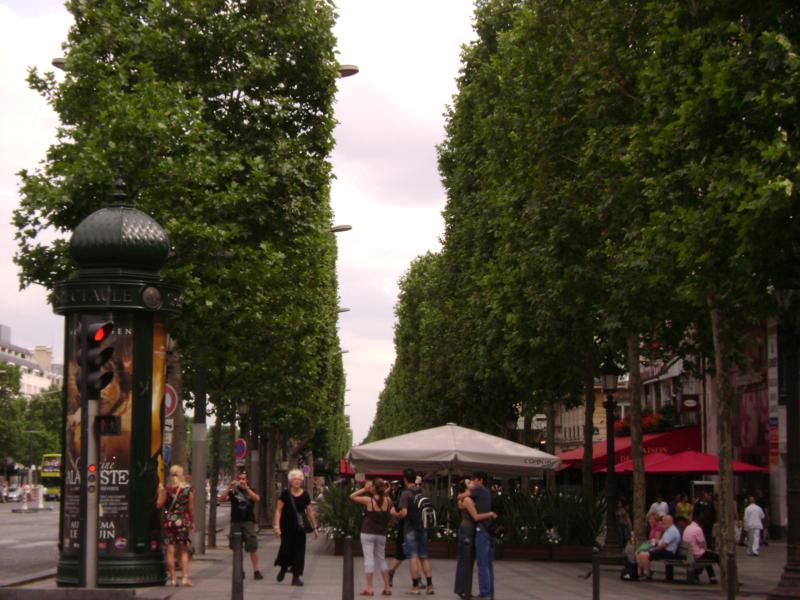
If you're strolling through the streets of Paris, be careful: Watch your step, as the French are accustomed to walking their dogs, and it's easy to step on dog droppings along the way. Also, be aware that some streets have lush, old trees, and you might easily get hit by a pile of bird droppings right on your head. Perhaps these two things make France a unique place that doesn't happen in many other countries.