VI
VI


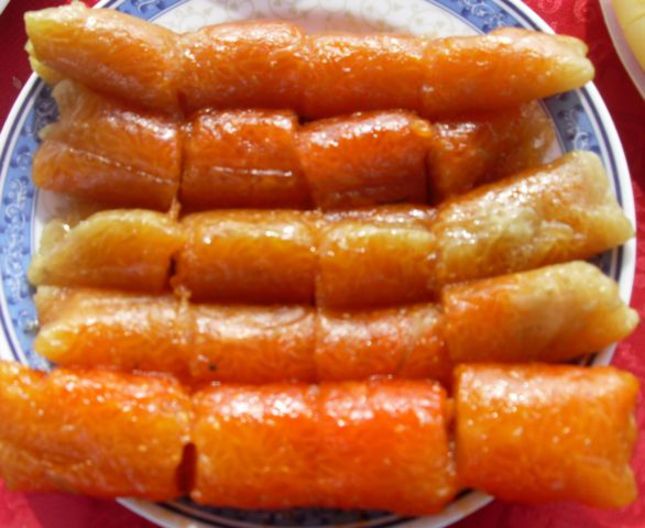

Da Mai is a region with many traditional, rustic dishes that leave a lasting impression on visitors, the most famous of which is undoubtedly Da Mai vermicelli. Many food connoisseurs are familiar with this renowned vermicelli village of the ancient Kinh Bac region. And when it comes to cakes, one cannot overlook the simple yet flavorful banh tro (also called banh gio).
Rice cakes are made from simple ingredients, using glutinous rice and the ash of some plants readily available in this region, such as glutinous rice straw, dried banana roots, and other miscellaneous plants.
The ingredients are simple, but completing a batch of these cakes requires meticulousness and skill from the baker.

Glutinous rice (specifically the "golden flower" variety) is washed thoroughly, removing any impurities or regular rice grains, then drained. Impurities such as dry straw and other debris are dried and burned to ash. This ash is then mixed with lime, allowed to settle, and the clear liquid is collected.
When adding lime, bakers must be very careful; adding too much lime will make the cake taste bland and unpleasant.
The lye water must have an amber yellow color for the cake to look delicious and appealing. Then, soak the washed rice overnight, drain it, and let it dry. The leaves used to wrap the cake are usually dong leaves or ong leaves. The leaves are washed and dried. Then, the baker must carefully and skillfully place the rice neatly and evenly into the center of the leaf, then wrap the leaf around it and fold the edges at both ends of the cake tightly, evenly, and symmetrically.

The rice cakes are usually tied with string, not too tightly, so that the rice grains expand evenly when boiled. During the preparation of ingredients and wrapping the cakes, the baker always avoids getting grease on them, otherwise the cakes will not be soft and will be ruined when boiled. After wrapping, the cakes are placed in a pot and boiled for 5-6 hours.
When boiled until cooked, the outer layers of the rice cake are peeled off, revealing a golden-brown, amber-like color that is captivating even before tasting. Rice cakes are usually dipped in honey or sugar syrup. A bite reveals the refreshing, chewy texture of the rice grains blended with the sweetness of the sugar, and a sense of the skill and artistry of the bakers.
Simple and unpretentious, yet Da Mai rice cakes are imbued with the warmth of human kindness, just like the people of this place.