VI
VI


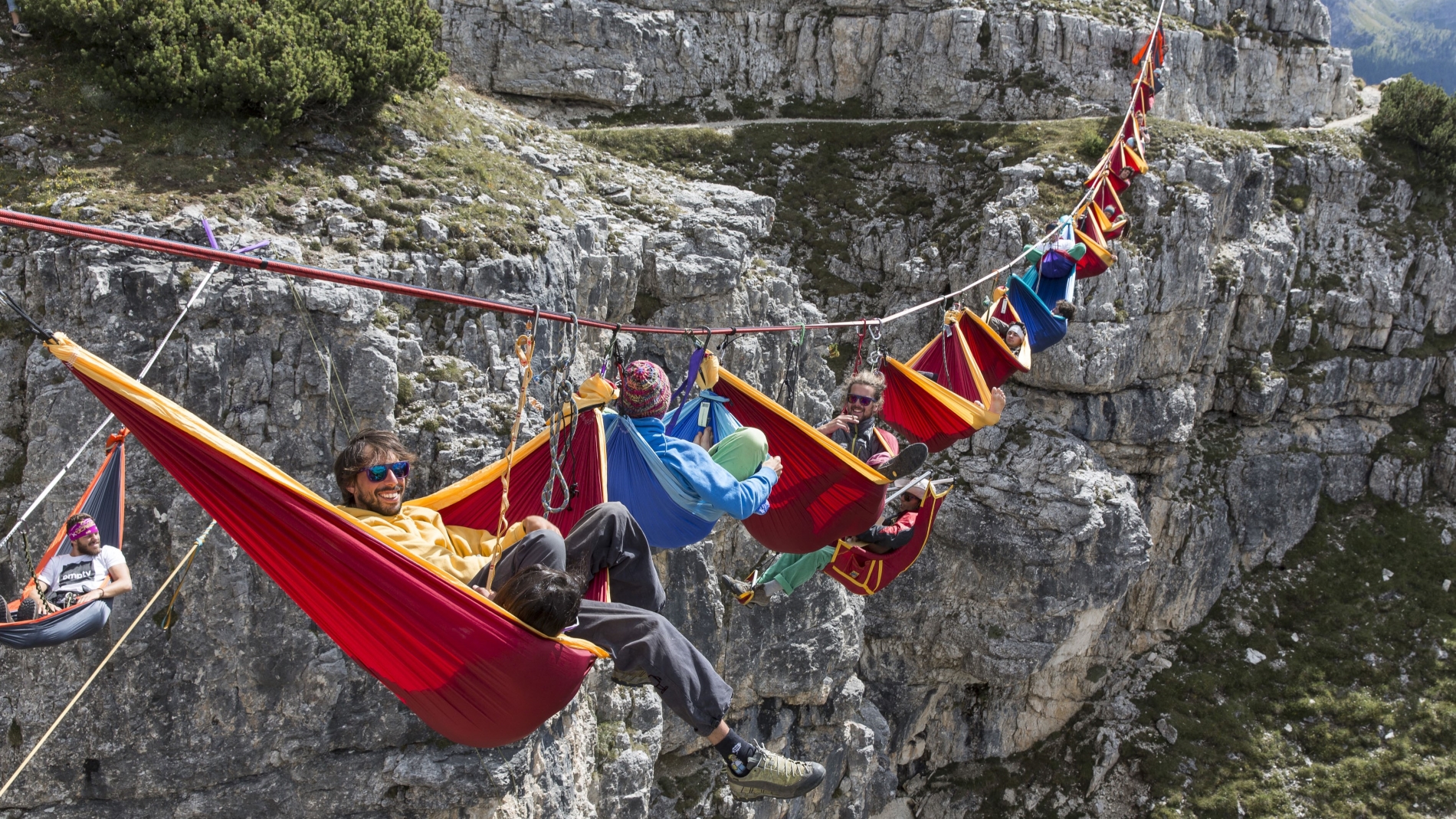
Unlike the typical cliffside camping with tents suspended in mid-air, these hammocks are only for short rests for highliners. Because there's no shelter from sudden weather changes, living in such a small space as a hammock isn't ideal for camping activities.
So what is Highlining?
In April 2012, American climber Dean Potter attracted international media attention with his highlining activity, an adventurous variation of slacklining. Highlining requires athletes to walk on a narrow, elastic rope suspended at a great height above the ground.
With a thickness of less than 3cm and a length of 40m, Potter's slack rope was stretched across the Enshi Gorge in Hubei Province, China. Dubbed "China's most beautiful scar," the Enshi Gorge is 1,800m high. After two minutes of swaying in the swirling winds, Dean Potter successfully reached the opposite cliff safely.
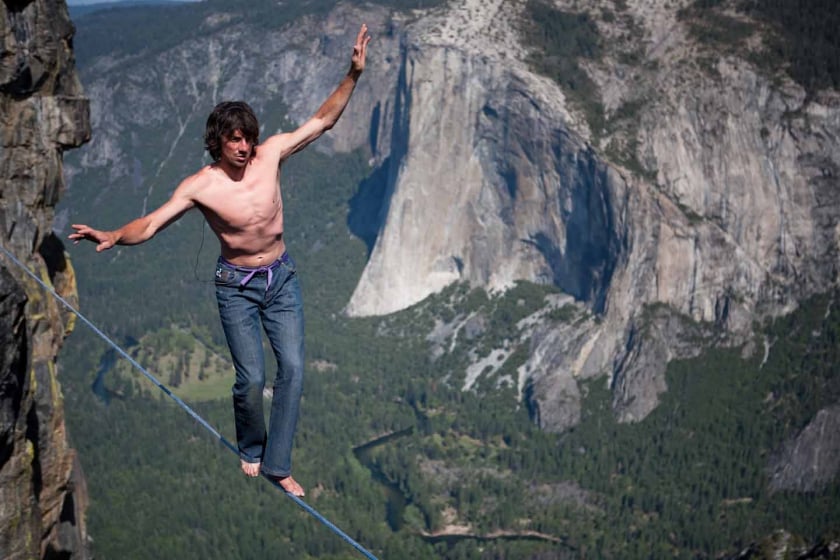
Dean Potter's Highlining performance in Enshi Gorge caused a media sensation.
This sport might remind you of tightrope walking; however, the difference is that tightrope walkers typically carry a long pole for balance and walk on a heavy, tightly stretched steel cable to prevent excessive movement. In Highlining, athletes balance using their hands and walk on a type of rope made of hollow nylon, similar to climbing rope. This type of rope is much more elastic than cable and also significantly more difficult to maneuver.

Even with a seatbelt on, performing a highlining maneuver can still be quite dangerous if you happen to fall or if the harness isn't properly secured.
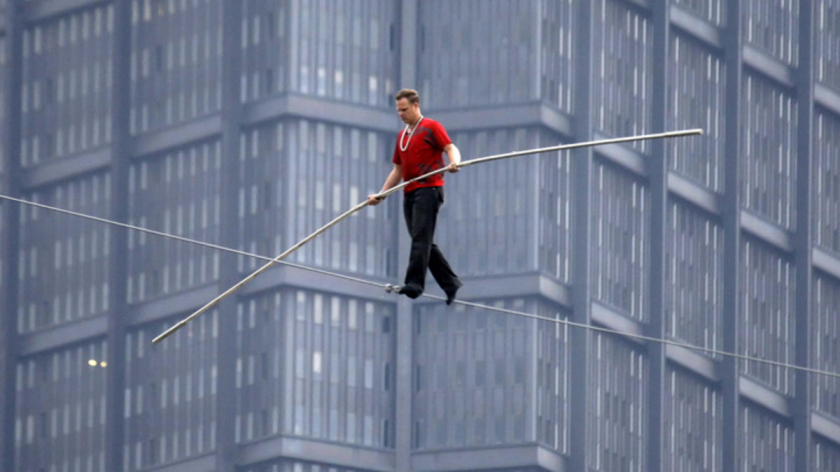
Unlike highlining, tightrope walking uses a steel cable stretched taut with a pole for balance.
From "two handspans" to an altitude of a thousand meters
Highlining is an evolution of Slacklining, but with Slacklining, the practitioner simply walks on a slack rope about one to two handspans above the ground. Practicing walking on a slack rope helps improve balance and strengthens the leg and core muscles.
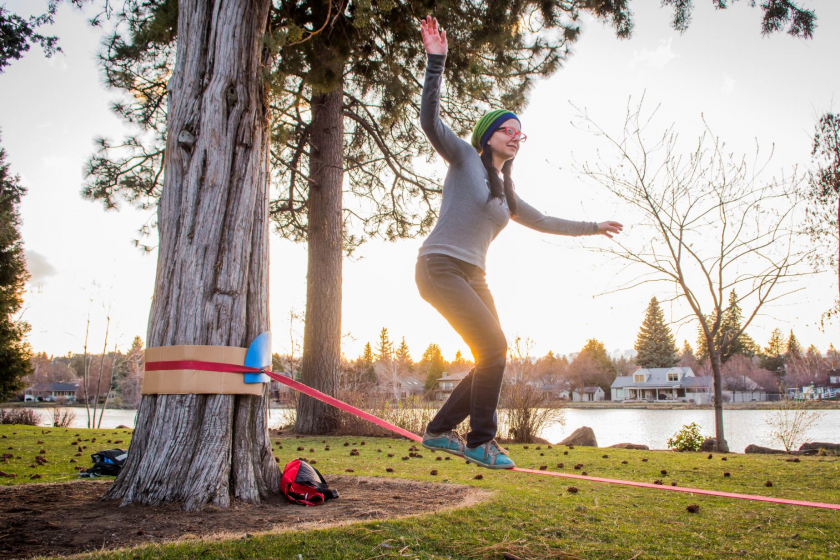
Highliners typically start with Slacklining at a height of only about two handspans.
Watching athletes perform Highlining so gracefully can lead people to mistakenly believe that mastering Slacklining is all that's needed. The challenge of Highlining lies not in technique, but in the mental strength of the practitioner. Athletes share that when they begin stepping onto the rope at heights of tens, even hundreds of meters, intense fear runs through their bodies, leaving them feeling paralyzed. They must expend a great deal of energy to wash away the fear from their minds, replacing it with focus and calmness.
This process demands so much energy that those new to highlining often collapse after only about 15 minutes of effort. And when they wake up the next morning, their entire body aches so much they can barely move. Even professional athletes who have trained and are accustomed to altitudes share that the feeling of fear will never go away, no matter how skilled you become. But the freedom to immerse yourself in a majestic space at an altitude of several thousand meters, for those who have experienced it, feels worth the risk they took.
In this sport, we sometimes encounter athletes who choose to add dangerous elements, such as securing the harness around their ankles instead of their waists, wearing a parachute backpack instead of a safety harness, walking between two flying hot air balloons, or even having no safety measures at all. They want to overcome their fears and take this sport to a new level.
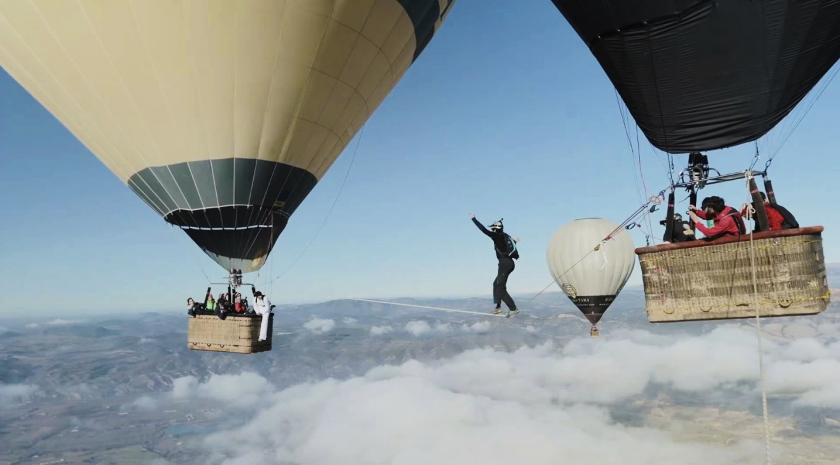
A Highlining athlete is walking between two hot air balloons.
Daring but humble
Highlining athletes come not only to satisfy their adventurous spirit but also because of the core value of the sport: enjoying nature. They go to the most remote and pristine canyons, with no amenities other than tents, and in some places, there's no cell phone signal due to the mountainous terrain. Some even practice yoga, play music, or juggle on a tightrope. Relaxing in a hammock suspended in mid-air—an activity many mistake for camping in the air—is also part of the experience.
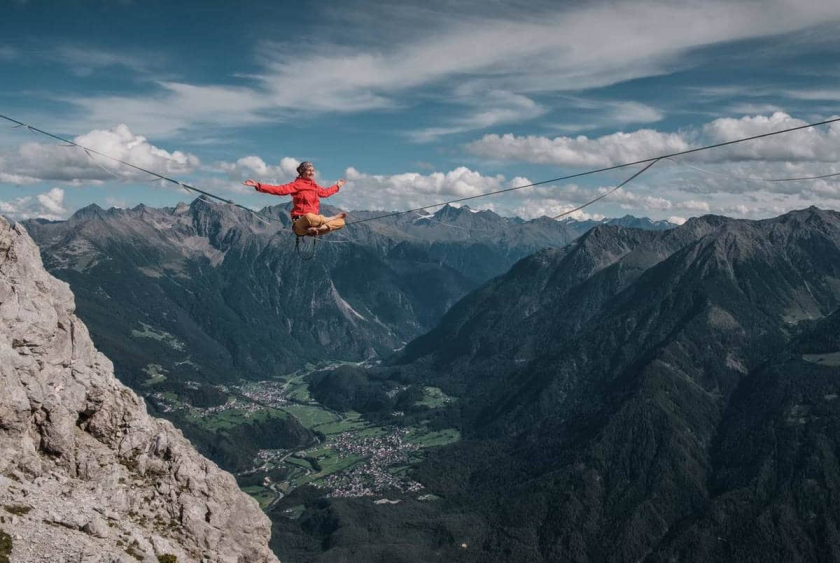
Meditate and enjoy nature while suspended in mid-air.
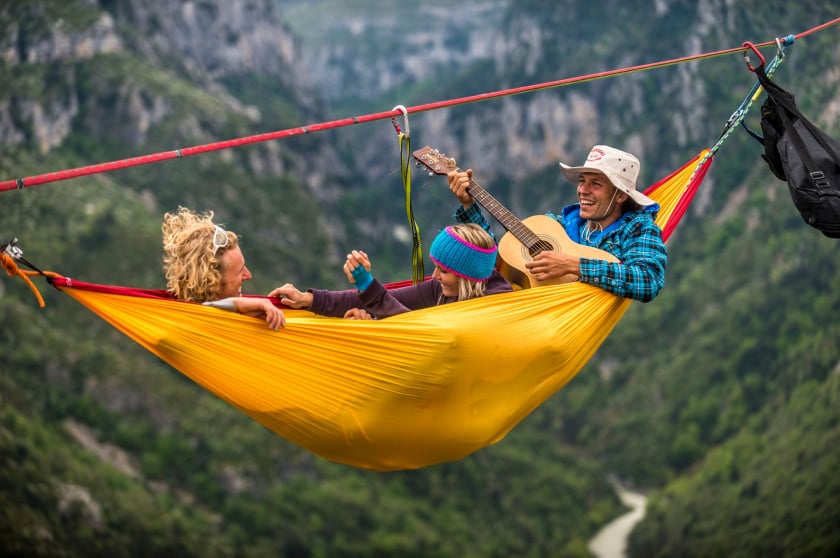
They relaxed together and played music.
Highlining may seem like a risky sport to many, but it is precisely this risk-taking and confronting one's own fears that helps highliners realize how small humanity is in the face of nature. Despite its dangerous and impulsive appearance, highlining is actually a sport that trains physical strength, mental fortitude, and humility.