VI
VI


Text and photos:Phan Quoc Vinh(Contributor from the US)
Part 1: Austin – The Heart of the “Unique Star”
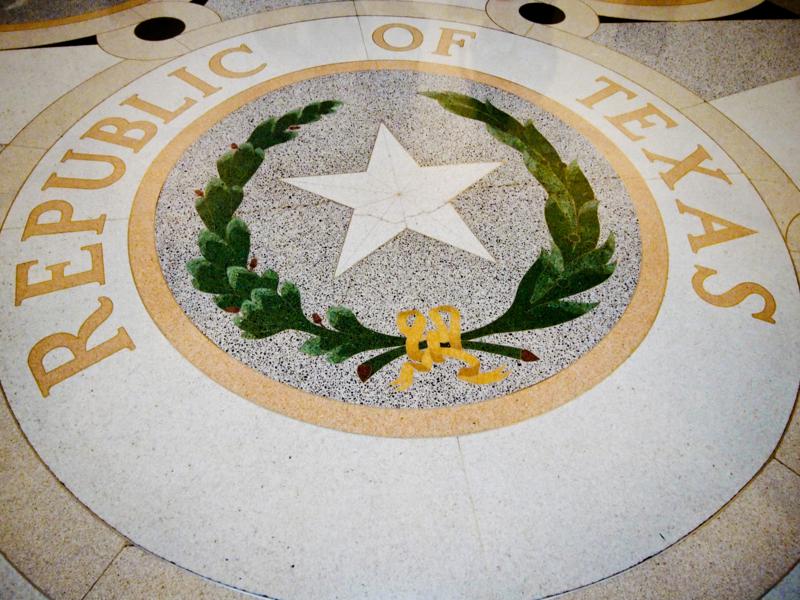
Texas is also commonly known as the "Lone Star State," derived from the single white star on its flag. The star on the flag symbolizes Texas' history of fighting alone for its freedom and independence. While the "lone star" is a historical symbol, today it represents Texas's spirit of independence and self-development.
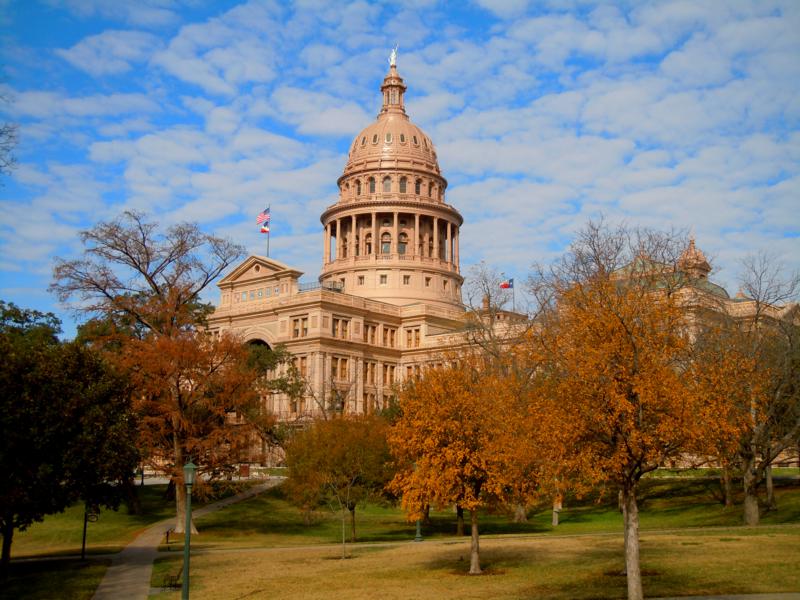
And the heart of this "Unique Star," a destination many Texans long to visit, is the tranquil city of Austin. Austin is the capital of Texas and the administrative center of Travis County. Located in Central Texas, it is the fourth largest city in Texas and the sixteenth largest city in the United States. There are approximately 6,000 Vietnamese Americans in Austin, representing 1% of the city's population.
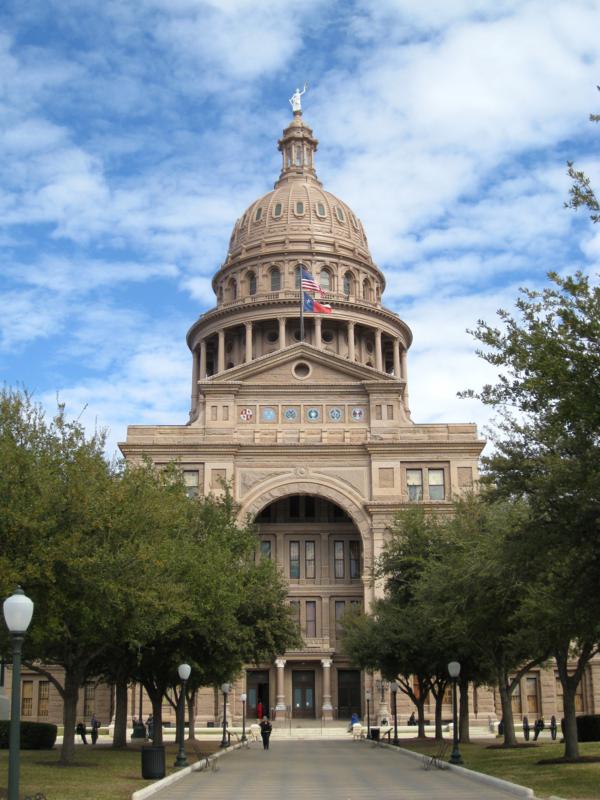
Parliament building
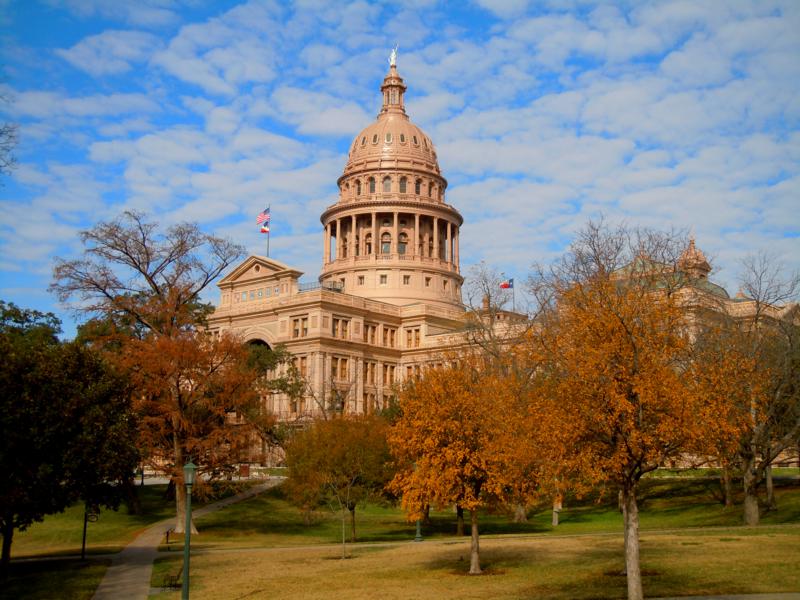
I decided to take my family to visit the "Capital of the Republic of Texas" by car. Like many other tourists, we chose the Texas Capitol building as our first destination. Located in the heart of Austin, the Capitol building houses the Texas legislature and the governor's offices. Designed in 1881 by architect Elijah E. Myers, it was then constructed from 1882 to 1888 under the direction of civil engineer Reuben Lindsay Walker. The exterior is made of granite, the foundation is limestone, and it is reinforced with iron. It has 392 rooms and 924 windows and doors. Currently, about 750 employees work there. On the high roof, there is a statue of a man holding a star, with six flags below. In terms of height alone, the Texas Capitol surpasses the White House in Washington D.C. – the capital we had already visited – and several other state Capitols.
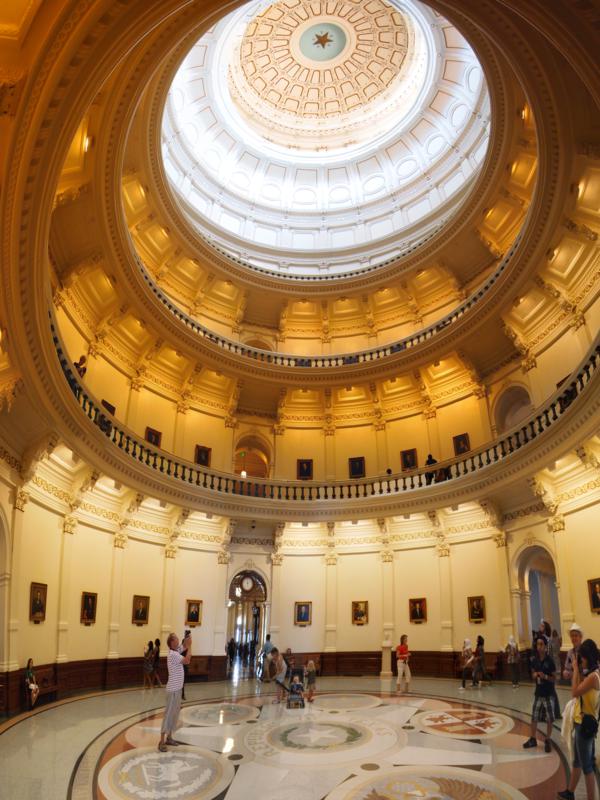
In 1983, the eastern ceiling suffered significant damage from a fire, which was later restored using metal scaffolding. An underground extension costing $75 million was completed in 1993. This nearly 100-meter-tall building was designated a national historic landmark in 1970.

Inside the building are large statues and murals depicting the state governors and the layout of the Senate and House chambers.
What's even more special is that each door hinge is intricately carved with the words "Texas Capitol," affirming Austin's enduring status. If you're a lover of history, architecture, sculpture, or photography, you'll likely visit many times because the building is beautiful, located right in the city center, and is enthusiastically guided by helpful guides – no entrance fee.
Joining the throngs of over 100,000 people flocking to Lady Bird Lake, we quickly found a small spot on the lawn to enjoy the grand concert. Some people were relaxing in boats in the middle of the lake, others were walking their dogs. We, meanwhile, sat in our spot, gazing at the shimmering high-rise buildings reflected in the water – a scene that was both modern and magical, romantic.
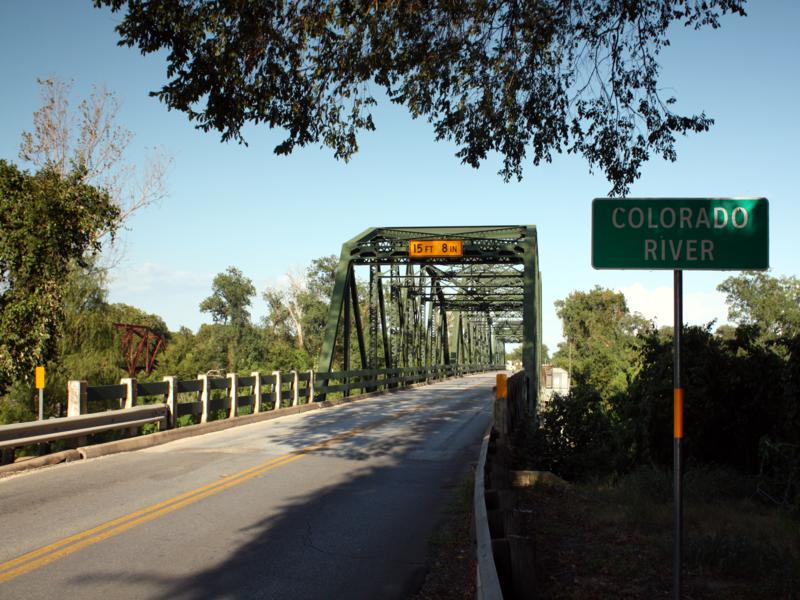
As dawn broke, we headed straight to Bonnell Mountain for a panoramic view of Austin and the famous Colorado River. Walking around the wealthy neighborhood, I believe paradise truly exists! Luxurious homes nestled amidst lush greenery and verdant lawns, free from the noise of cars and filled only with the chirping of birds, devoid of large trash cans and instead adorned with delicate wildflowers, and free from smog and dust, greeted by a gentle morning mist.
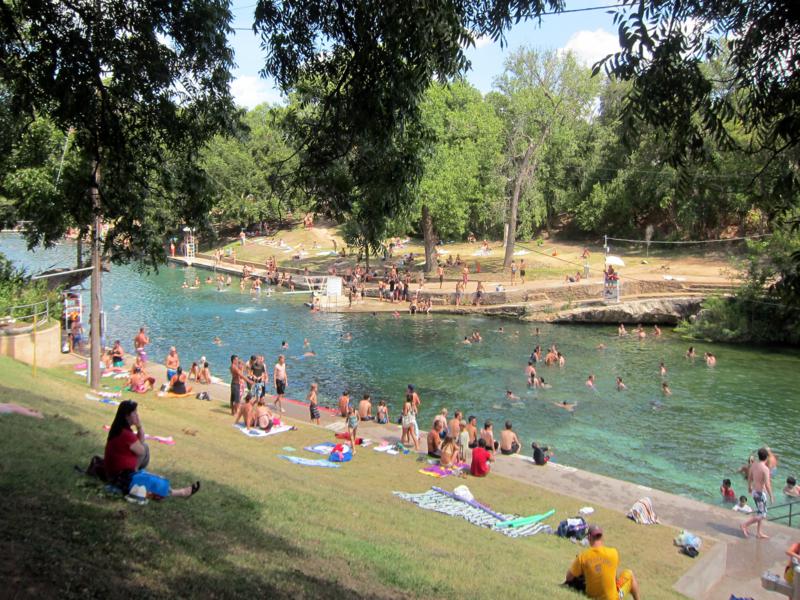
To experience the more relaxed pace of life here, we descended to Zilker Metropolitan Park. This is Austin's most beloved park and is often referred to as the city's lungs. Here, you can not only admire the skyscrapers, symbols of Austin's dynamic development, but more importantly, you'll feel how Austinians enjoy the small pleasures of everyday life in the bright sunshine: walking their pets, jogging, boating on the river, cycling, playing sports with friends even at... 11 a.m. Their faces reflect the relaxed enjoyment of life.
_800x600.jpg_8.jpg "VưonthaomocZilker(3)_800x600.jpg_8.jpg")
One must-see attraction is the Zilker Botanical Garden, with its thousands of spring flowers and plants, Japanese-style garden structures featuring lotus flowers and the sound of babbling streams. Often described as the city's most beautiful jewel, you simply can't resist admiring this precious gem. In addition, Austin boasts seven museums, 17 libraries, and the tallest tower in Texas, standing 91 meters tall with 28 floors and 56 bells. Built in 1882, the tower is a symbol of the University of Texas at Austin, a source of pride for the more than 50,000 students who study there each year.
Austin is known as the "Live Music Capital of the World." This flattering, and perhaps somewhat understated, title is well-deserved, as it brings to mind spectacular outdoor music performances and massive concert halls. Austin is also the annual home of "South by Southwest (SXSW)," a major film and music festival with hundreds of events across the United States.
And when tourists come here, they can't miss the chance to visit Street 6, located right in the city center, at night with its many mini bars playing live music in a distinctly Wild West style. It's probably not an exaggeration to call this street the "Live bar street of the world." "Live" seems to more accurately describe the reality here; besides the lively live music, there are also bars to hang out in, upscale restaurants to enjoy the cuisine, and a variety of tourist services.
Right from the start of Route 6, visitors can read the history of this bustling thoroughfare. It began with its original name, Pecan Road, given in 1839 by Edwin Waller, an architect and Austin's first mayor. The road was built to connect the agricultural areas on the outskirts of the city from East Austin to the inner-city commercial district. From there, it became the center of Austin's development in the 19th century. And now, the road continues to serve visitors from all over, especially young people who come to party and dance all night long.
If you're just strolling around like I did, it takes about an hour to wander along both sides of this street and discover many things. There are horse-drawn carriages carrying passengers, just like in the early days; bars lined up side-by-side, each with its own unique style to attract customers. Here, scantily clad waitresses stand behind glass doors invitingly; there, live music blares from the rooftop for customers to sway along. Especially noteworthy is the historic Bullock Hotel, located at the corner of Pecan and Congress streets, a tranquil stop where visitors can relax in its serene atmosphere. A vintage car is parked in front, a centuries-old bakery, soft lighting, and soothing music transport passersby back to Austin of nearly two centuries ago.
When tourists talk about a vibrant Austin, they often mention 6th Street, home to numerous live music bars. It could be considered Austin's true entertainment hub, as I read online that it's a "red light district," which seems to carry a more negative connotation. A "red light district" would be more accurate, because Austin's buses and trains run until 3 AM and then resume operation at 5 AM, meaning this street is always brightly lit to cater to the nightlife crowd.
Goodbye vibrant Austin, I hummed a few lines from the once-famous Spice Girls' song, as if to say:“Goodbye my friend, I know you're gone, you said you're gone but I can still feel you here. It's not the end…”Certainly, this won't be our last meeting, Austin!
Additional information:
If you're visiting Austin during a holiday season with many people, it's a good idea to use the public bus service that runs until morning to avoid parking problems and traffic jams.
MT supermarket in Chinatown has many Vietnamese food stalls, beauty salons, and other services where you can shop. There's a wide variety of goods imported from Vietnam, so I managed to find a hat with a picture of Thien Mu Pagoda and a pack of authentic Hue beer.
Austin's cuisine has a strong Mexican-Tex influence, making it difficult to find authentic dishes, mostly Mexican food with flavors that can be challenging for those unfamiliar with it. You could choose the Sea Dragon Vietnamese buffet lunch restaurant at 8776 Research Avenue or Buffet King at 5451 N IH 35, which offers a variety of Asian dishes.
The rules require customers to be over 21 years old and to have their identification checked before entering a bar, so always bring your passport or other valid document proving your age.