VI
VI EN
EN


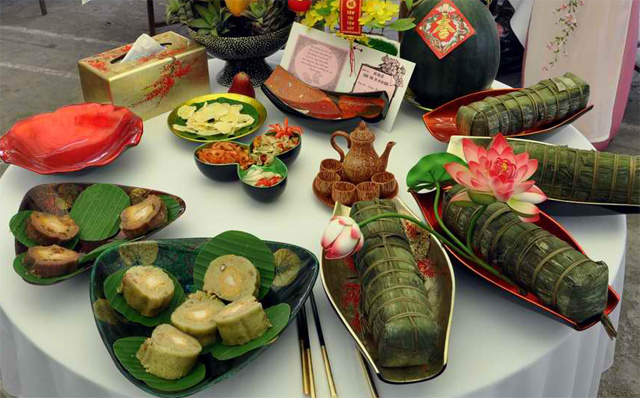
During Tet (Vietnamese New Year) in the Mekong Delta region of Southern Vietnam, almost every household has three basic dishes: banh tet (sticky rice cake), banh trang (rice paper), and braised pork. For the people of Southern Vietnam, banh tet symbolizes prosperity and abundance passed down from generation to generation. Unlike other regions, Southern Vietnamese people have a special banh tet made with purple leaves, which is both delicious and aesthetically pleasing, reserved only for important holidays of the year. To make a delicious banh tet with purple leaves, first, you must choose sticky, round glutinous rice, and pick and wash the purple leaves, then boil them to extract the juice. Before wrapping, the rice must be washed clean, drained, stir-fried with coconut milk, a little salt added, and then stir-fried again with the purple leaf juice. The filling can be bananas, mung beans, meat, fat, pork trotters, eggs, peanuts, shiitake mushrooms, etc. When the cake is cooked, each slice has a hint of the deep purple of the banana, a touch of yellow from the mung beans, white from the fat, pink from the lean meat, and reddish-orange from the salted duck egg yolks. Whether bánh tét is delicious or not depends on the glutinous rice; the rice should be sticky, soft, and free from any admixture of regular rice to be truly tasty and flavorful.

Braised pork belly, also known as braised pork with eggs or braised pork in coconut milk, is a dish uniquely prepared in Southern Vietnam with an unparalleled appeal. The key is pork belly with a balance of lean and fat, a clear broth with a translucent layer of fat, and tender, flavorful meat that isn't mushy. The pork is cut into large pieces, about three fingers wide, and marinated with spices like garlic and fish sauce. After the pork is boiled in coconut milk, boiled eggs are added and the mixture is seasoned to taste. Some people sun-dry the pork all day for a better flavor, while others prefer using grated coconut instead of fresh coconut milk for a sweet, rich, and fragrant broth. After boiling, the duck eggs are peeled and pierced around the edges to allow the broth to penetrate, or they are lightly fried to create a crispy yet chewy texture. A delicious pot of braised pork belly retains its aroma for up to two weeks. The meat remains intact when served, yet is tender, with firm skin for added flavor. The broth should be slightly thick and naturally golden yellow thanks to the coconut milk. This dish is usually served with pickled vegetables or white rice.


Another familiar dish on the Tet holiday table is rice paper rolls. These delicious, pristine white rice paper rolls, filled with shrimp, braised pork, grilled fish, sausage, and various vegetables, are found in almost every household. The accompanying drink is usually rice wine, a premium, authentic Southern Vietnamese liquor. The best rice paper is still the homemade kind. Families with their own rice paper making facilities select high-quality rice, soak it overnight, and grind it into flour for making the rolls.

In addition, bitter melon soup stuffed with meat is a popular choice for Tet feasts in Southern Vietnam due to its bitter yet refreshing and nourishing properties during the hot and humid spring days. The bitterness of the bitter melon blends with the sweetness of the meat, and the slightly bitter broth creates a dish that is both cooling and nutritious. Without this soup, the feast would be incomplete. Some sweet treats include specialties from home gardens such as tamarind jam, coconut jam… along with seasonal fruits. Furthermore, Southerners also favor Vietnamese pork sausage (chả lụa), dried shrimp, pickled shallots…

People in Southern Vietnam always meticulously prepare the Tet feast, with all their heartfelt respect for their ancestors and grandparents. A warm and joyful reunion with loved ones and family in the first days of the new year becomes even more meaningful, allowing them to fully appreciate the salty, sweet, sour, spicy, and bitter flavors in each dish, contributing to the richness and diversity of traditional Vietnamese Tet culinary culture.
Post:Dung Nhu