VI
VI


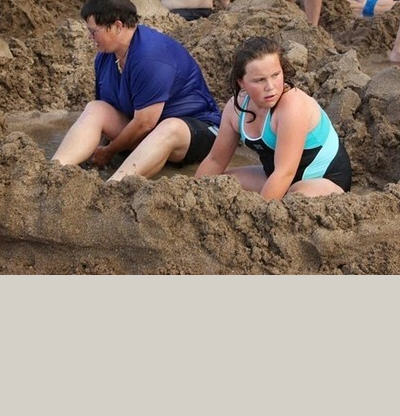
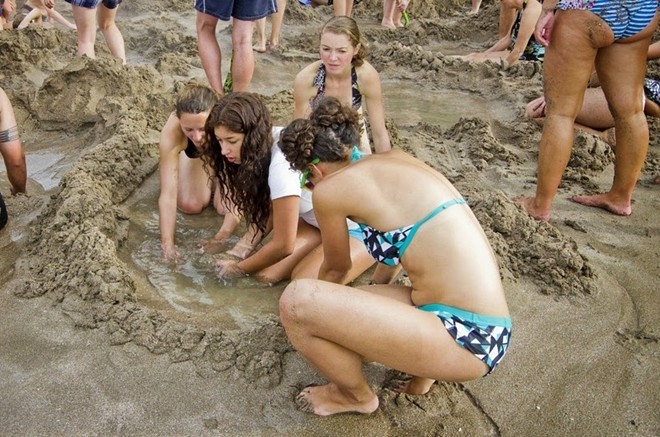
Between high and low tides, warm water from two underground hot springs is pushed up through the sand, forming a shallow hole in the ground.
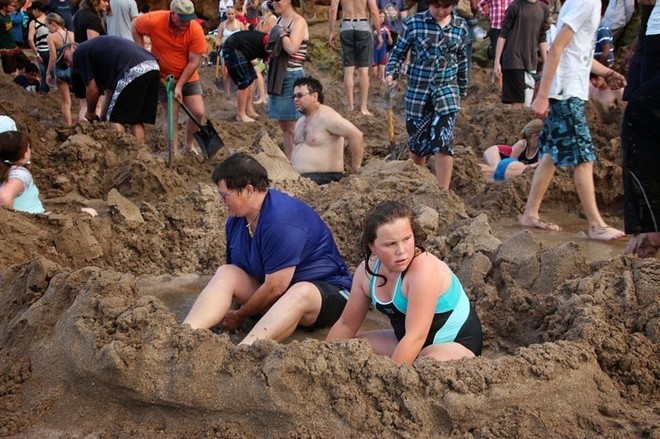
This phenomenon only occurs when the tide is low or halfway down, revealing a sandy area with warm water underneath.
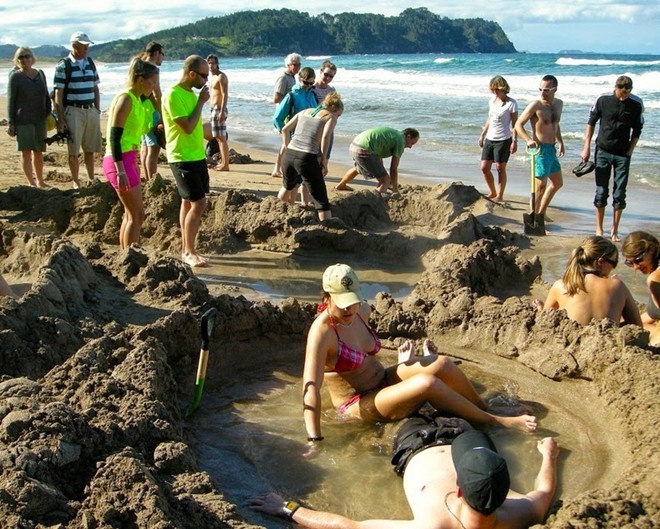
The two hours before and after low tide are the best times to come and soak up the warm waters at this beach.

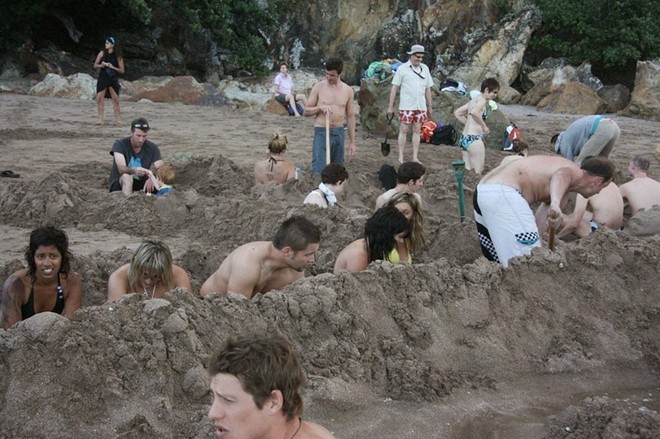
During peak season, hundreds of locals and families flock to the beach with small shovels and buckets of water, digging holes to lie in and relax in the warm surrounding water.
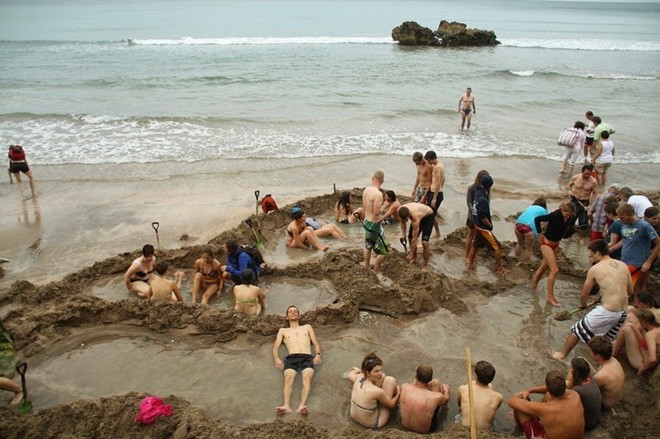
The deeper you dig into the earth, the hotter the water becomes, reaching temperatures of up to 64°C.
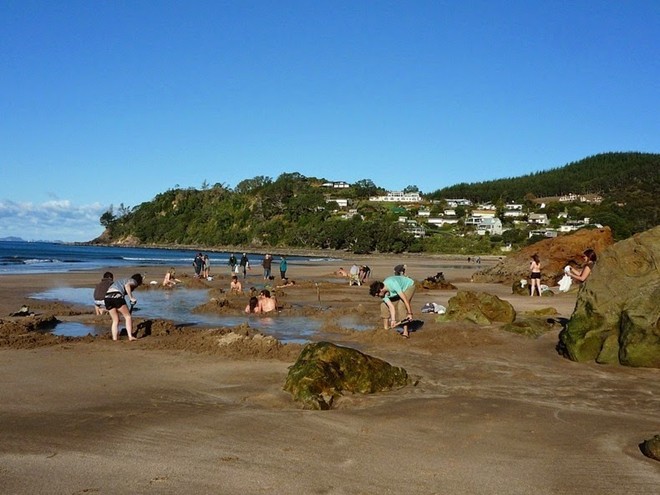
Because the water is hot, people often dig a canal to the sea so that the cold seawater flows into the hot springs, mixing together to a comfortably warm temperature that isn't too hot to cause burns.

With the ebb and flow of the tides, each individual's hot pools for soaking will be flushed out to sea, and the shape of those holes will disappear. Then, others will follow suit, creating new holes.
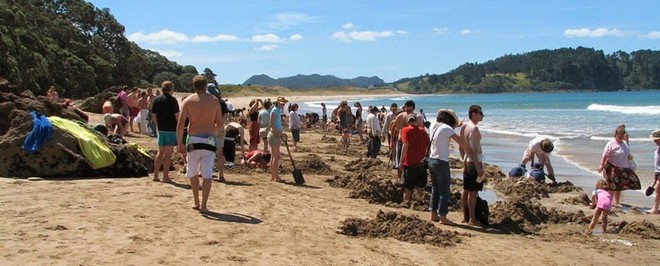
Beaches are a popular destination for both locals and tourists visiting New Zealand. However, many people diligently create hot spring pools on the beach for relaxing soaks, sometimes forgetting the dangers involved.
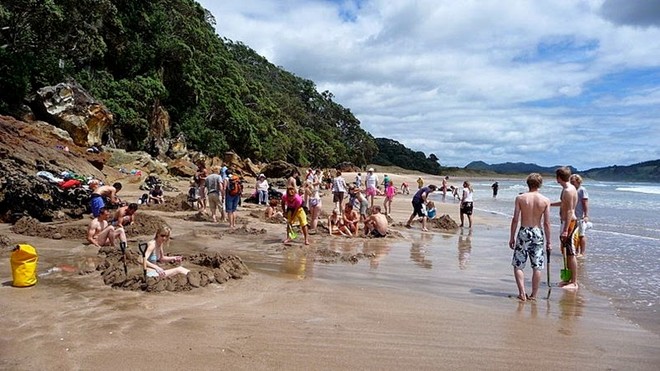
Because the hot springs are not far from the sea, even at low tide, visitors are so engrossed in the water that they are unaware that the currents are sometimes torn apart, creating deep holes, and then large waves suddenly crash in, claiming the lives of many who can't react in time.