VI
VI




Decades ago, the summers of the 80s and 90s generations were associated with scorching hot afternoons spent secretly picking a few banyan or starfruit, lying barefoot on bamboo hammocks or porches, devouring comic books and novels that they hadn't had time to read all year... Summer was a season for fun, exploration, and travel, but also a season for reading. However, it wasn't simply a habit or a hobby.summer readingIt is truly considered a culture and has a historical narrative surrounding it, originating from the American people.
As the days lengthen and the heat sets in, you see an abundance of books. Books with covers stained with sunscreen are stuffed into beach bags or backpacks, laid out on picnic blankets, or nestled somewhere in a hammock. Americans are familiar with blockbuster movies and summer song charts, and they know just as well: summer has arrived, and so has reading season.
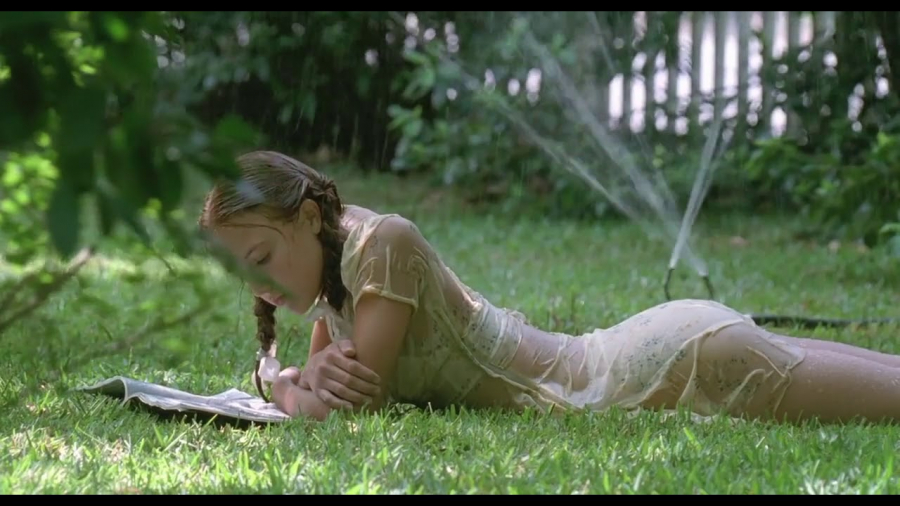
Lolita, 1997
Looking back to the early days of The New York Times (NYT), the first special issue, published on June 5, 1897, featured a prominent article titled "Books Suitable for Summer Reading," and since then, it has included similar recommendations almost every year. The titles featured encompass a wide range of genres, from memoirs, history, and biographies to poetry and essays. And, to be complete, the editors at the time even included a list of the 50 best books of 1896.
The practice of enjoying different literary genres at different times of the year has existed for centuries – take, for example, William Shakespeare's "Winter Tale." But "summer reading" as we know it today only emerged in America in the mid-1800s, spreading thanks to the burgeoning middle class, publishing innovations, and a growing number of avid readers, many of whom were women.The surge in summer reading coincided with the emergence of another cultural tradition: summer vacation.
"It is said that sitting on the veranda of a hotel at the foot of a mountain or by the sea and reading a novel, or in the shade of a farmhouse, is a direct result of American summer habits" (NYT, 1900). "Half a century ago, moving to the suburbs or taking a family getaway during the scorching heat was almost unthinkable, something only the wealthy and fashionable would consider."
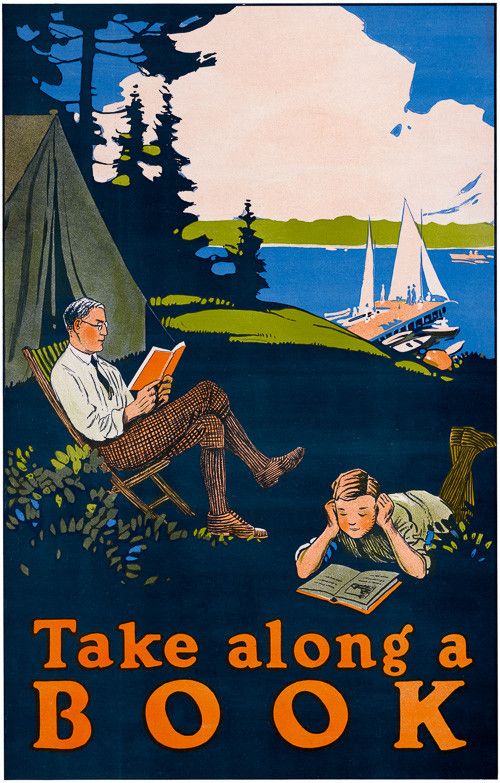
The American upper and middle classes are growing rapidly, leading to the emergence of a summer reading culture - Photo: Internet
By the mid-1800s, things began to change. The number of upper and middle-class Americans was growing, and what had once been the exclusive privilege of the wealthy was no longer an unattainable dream. While they didn't own summer estates or have the money to travel to Europe for months, short breaks after years of hard work were readily available. And they eagerly pursued them, as a sign of their rising social status.
More and more middle-class Americans are flocking to the resorts and large hotels springing up across the United States, connected to urban centers by an expanding rail network. Dr. Donna Harrington-Lueker, author of the bookBooks for leisure time: The story of 19th-century publishing. and the rise of summer reading.He said in a phone interview, "Wherever the railway line goes, there's a good chance there's a summer resort waiting at the end of that line."
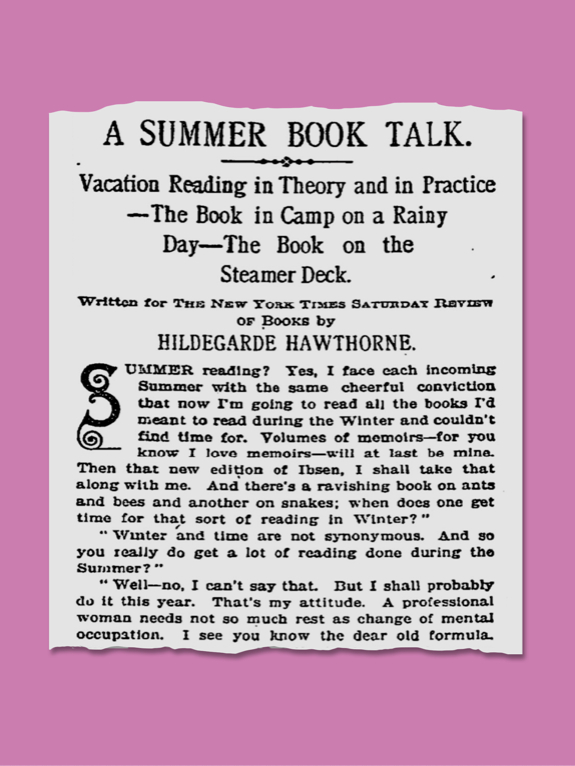
Article published in The New York Times in 1907 - Photo: NYT
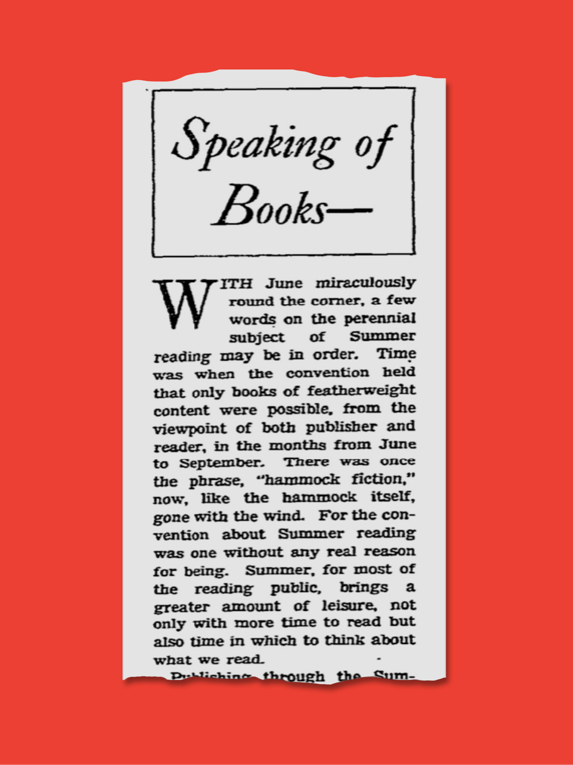
Article published in The New York Times in 1941 - Photo: NYT
Publishers have seen opportunities in this new wave.- an opportunity to boost book sales, which had been sluggish during the summer, and to promote a genre of novels that was then considered a low-quality and potentially harmful branch of literature, especially for young girls.

"Reading novels used to be incredibly unwelcome," says Dr. Donna Harrington-Lueker, "but gradually, from the 1870s through the 1880s and 1890s, they turned it into a middle-class pastime. Short novels, paperback novels, long stories, books that were easy to carry and could be read under a tree—all were embraced by the pioneering publishers of the industry."
Wendy Griswold, a professor of sociology at Northwestern University, explained in a phone interview that publishers were partly aided by two other important factors. First, books could be significantly reduced in price thanks to the invention of corn pulp paper in the mid-1800s, which was much cheaper than linen paper. Second, the literacy rate of American women—who were far more likely to spend their summer days at resorts than their husbands—had skyrocketed.
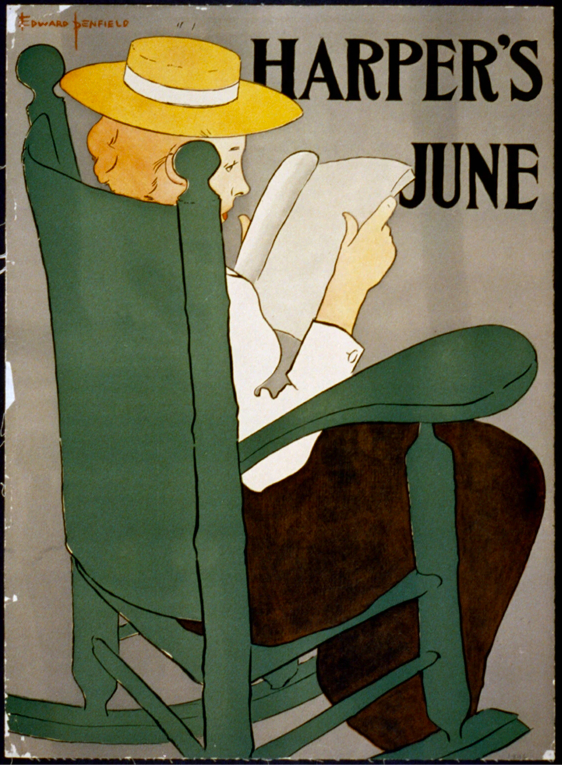
Harper's magazine (June 1896) - Photo: Library of Congress
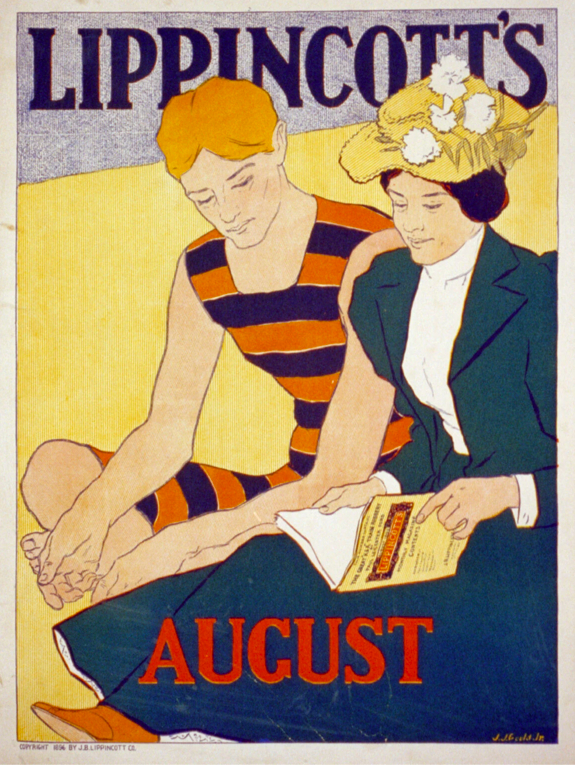
Lippincott Magazine (August 1896) - Photo: Library of Congress
Resorts help women escape the constraints of daily life, the watchful eyes of their husbands or guardians. And that also becomes...The inspiration for a new genre of novels dedicated to the summer of freedom.
This new genre of novels, which began to emerge in the 1860s, can be identified by several key characteristics—many of which are still familiar today. They tell stories set during a particular summer, at a resort or a luxurious hotel. And often the book is "for lovers... for longing, for sorrow, for misfortune and for triumphant joy" (NYT, 1898). The adventure usually culminates in an engagement or wedding, as the summer ends and the two main characters prepare to return home.
Such a novel is easily recognizable without the need for meticulous analysis. Its design is particularly striking from the cover: usually made of paper and printed with a romantic summer scene. "An appealing title, elegant colors, a drawing of a young lady's dignified face—that's all it takes for a satisfactory cover for a summer novel. The rest is up to the public" (NYT, 1900).
These books not only paint fantastical adventures for those yearning for a fleeting summer romance on a breezy beach, but they also serve as a "special treat" for first-time summer travelers to America, for those eager to prove they belong to this class of vacationers seeking to escape the heat.
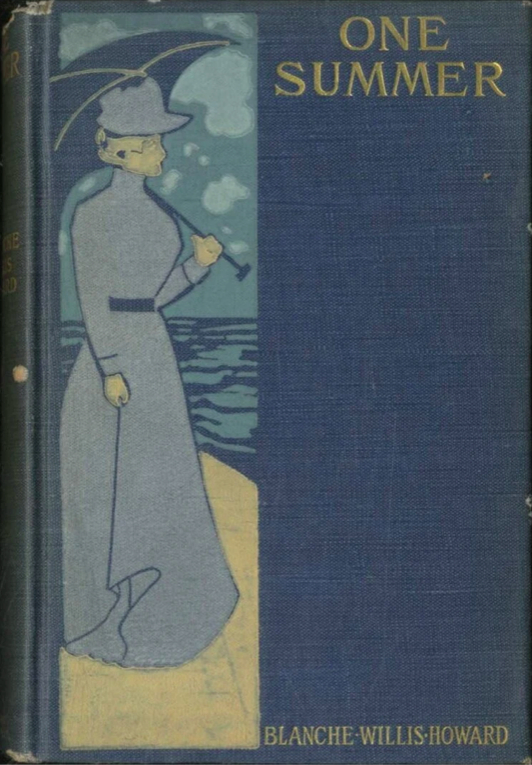
First published in 1875, Blanche Willis Howard's "One Summer" was such a huge hit that it was reprinted every year, at least until 1900. - Photo: NYT
This literary movement also presented new opportunities for many female writers, not a few of whom penned some of the most popular summer novels of the time.One summerBlanche Willis Howard's novel, set on the Maine coast, was a "blockbuster" when it first came out in 1875, Dr. Harrington-Lueker recounts, adding that it was reprinted every year, at least until 1900. And before writing...Little girlsLouisa May Alcott wrote many similar summer stories—all published anonymously or under a pseudonym: the bookPauline's Passion and PunishmentgoodDangerous game- The book tells the story of a group of young people vacationing at a beach, then finding themselves constantly on the run after deciding to spice up their leisurely afternoon by eating candy laced with marijuana. These works were very familiar to readers of the time and frequently appeared on the New York Times' summer reading lists. But they were also considered by many to be too feminine and lacking depth.
Summer leisure activities suddenly developed and expanded in the early 20th century, largely thanks to the advent of the automobile and paid vacation time.Thus, summer reading became a popular pastime for Americans and continues to this day."To all surprise and astonishment, war has affected and changed many things," wrote The Times in 1915, just one year after World War I, "And one of its most powerful effects has been the explosion of summer reading culture. And it wasn't just war books that became popular—all kinds of books were in demand."
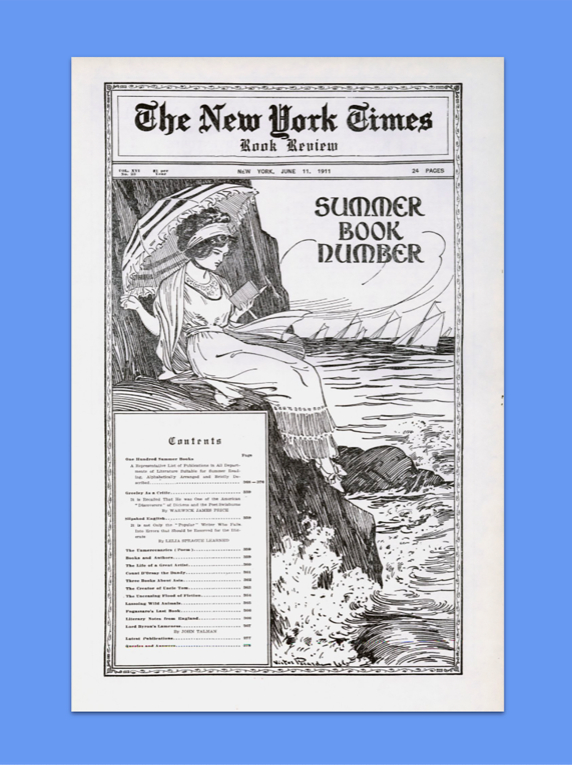
Cover of The New York Times Book Review, June 11, 1911 - Photo: NYT
Paperback books, which dominated the mass market in the late 1930s, continued to democratize things. Leah Price, a professor of English at Rutgers University, once shared: "The novelty of paperback books wasn't just their format, but the fact that you could buy them anywhere. Instead of going to a bookstore, you could buy them at drugstores or newsstands, because what if there was only one bookstore in the whole town? Think of it that way,We can call paperback books the ancestors of e-books."It's like using a Kindle e-reader; you can get whatever book you want in a minute. Paperback books were the same back then."
Novels aren't the only genre to have made significant strides. The types of books people choose to enjoy during the summer have also changed over time. In 1968, in a column for The New York Times, James Baldwin urged readers to pay more attention to books that addressed racial issues, such as the works of Ralph Ellison or the novelThe Autobiography of Malcolm XIn 1999, following the 2000 computer crash, The Times suggested titles on string theory, cultural information transmission, and a few science fiction novels. Now, summer reading culture is no longer limited to romantic novels but encompasses all genres, from mystery to fantasy, from crime to thrilling detective stories.
So, ultimately, what does a "summer book" mean?
"Summer, like other times of the year, is truly a good time to read, especially books of depth where neither the writer nor the reader feels rushed. A good time, and especially a very good time, when one reads for no reason at all. Just because one wants to read." (Joseph Wood Krutch, NYT, 1950).

Photo: Lee Romero/TYT
As the writer Hildegarde Hawthorne wrote in The New York Times in 1907, the true joy of summer reading lies not in the book itself, but in the choice to devote oneself entirely to it.
"A profound sense of peace fills the soul," she wrote, "A captivating book and a long day ahead, it's all yours."