VI
VI EN
EN


Vaadhoo Island, part of the Maldives archipelago located in the Indian Ocean, boasts a romantic and stunning beach. It's a small island with a population of only about 500 people. Most visitors come here at sunrise or midday to watch the waves gently lapping against the shore under the sunlight.
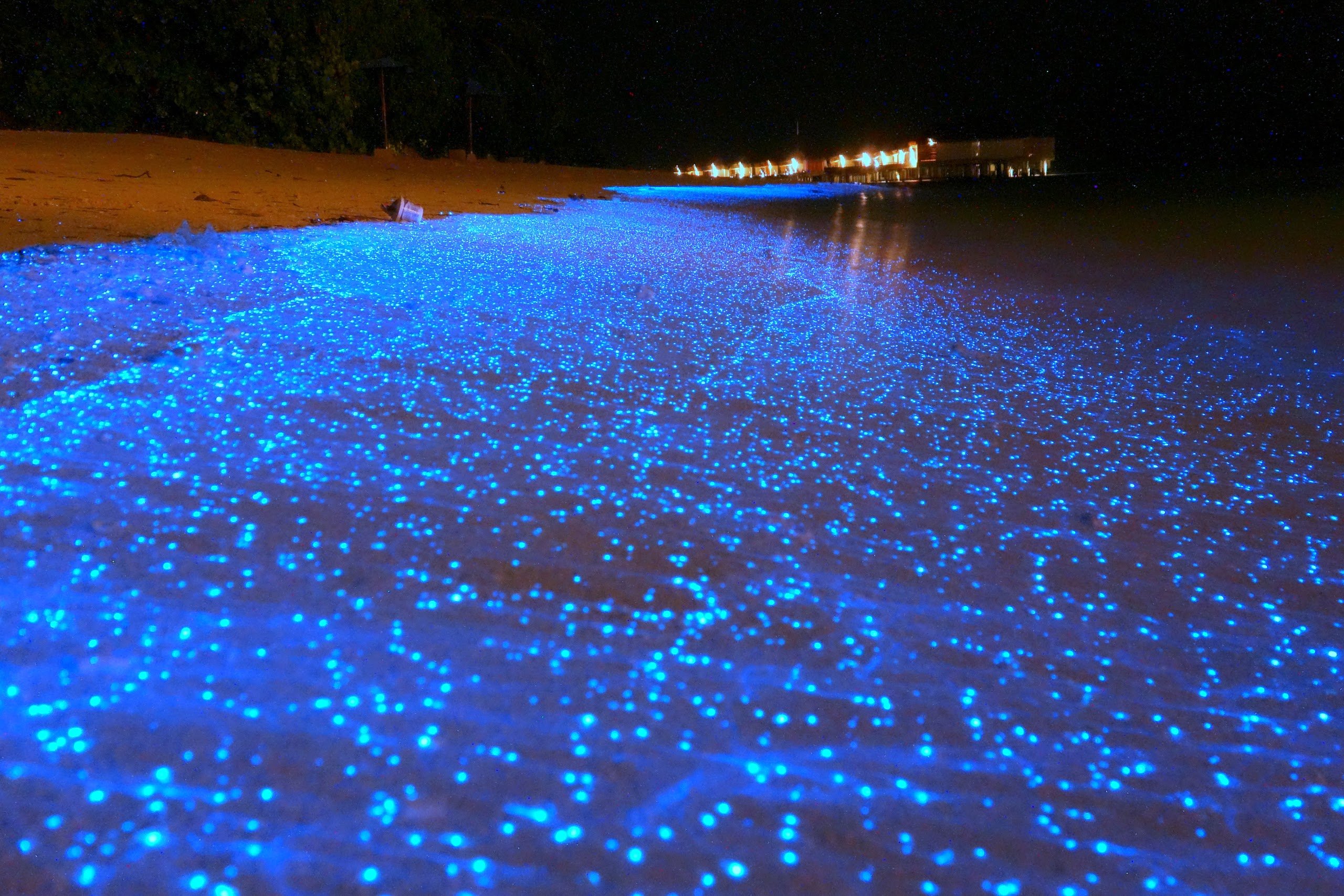
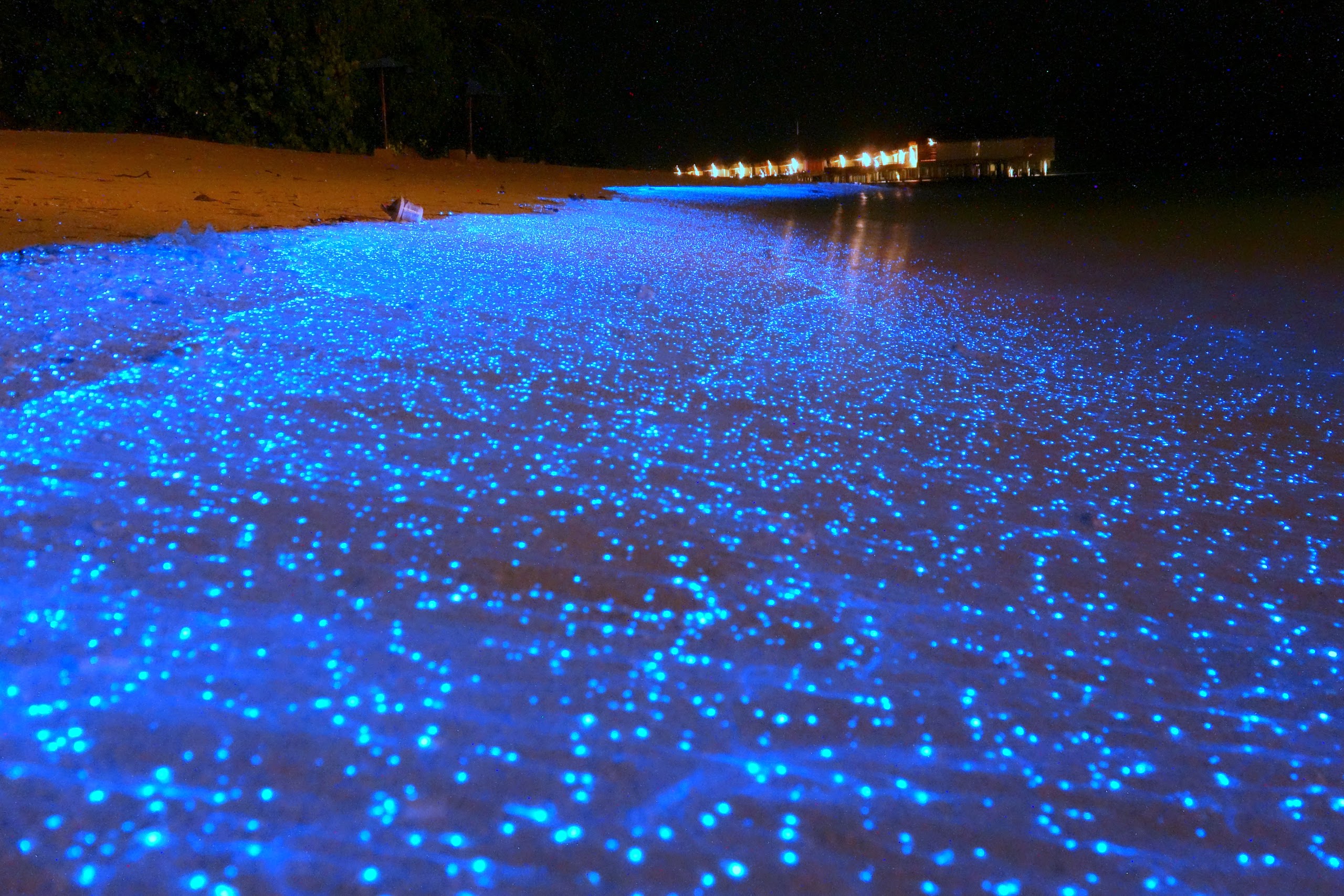
During the day, this beach with its long stretch of sand creates a peaceful beauty. At night, millions of tiny blue lights twinkle like luminescence, leaving visitors amazed, as if they've stepped into paradise. Although sparkling water is a common phenomenon in the Maldives, Vaadho is where visitors can witness this phenomenon at its most spectacular.
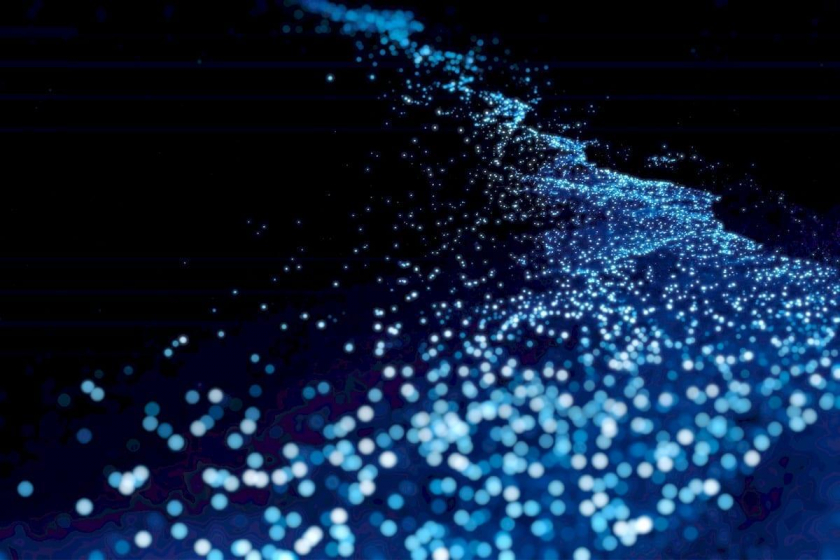
Vaadho Island in the Maldives has naturally sparkling water. Although sparkling water is a common phenomenon in the Maldives archipelago, Vaadho is where visitors can witness this phenomenon at its most beautiful.
With each wave that washes in, the deserted beach on Vaadhoo Island lights up with the presence of countless bioluminescent plankton. If visitors step onto the beach, these tiny creatures will cling to their feet. At this moment, the beach resembles a starry night sky with a magical blue hue.
Scientists explain this strange phenomenon by suggesting that the glowing beach is due to certain types of plankton living in the seawater. These are actually known as dinoflagellates, a group of single-celled organisms. Their bioluminescence helps them avoid predators, who are wary of light and therefore avoid being detected.
Tourists who participate in nighttime surfing or kayaking will leave behind brilliant glowing trails. Or, more simply, just walking on the sand can leave behind footprints with a particularly impressive glow. The ideal time to witness this optical phenomenon is from mid-summer to the end of winter.

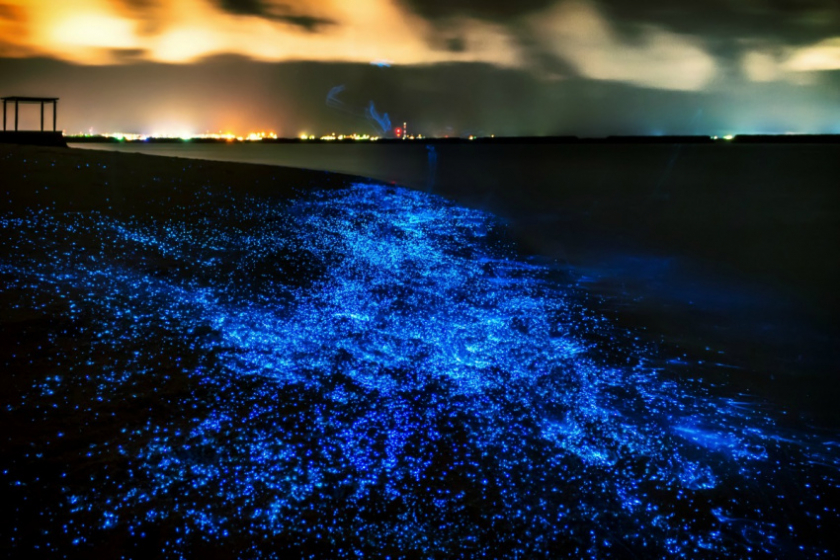
When night falls, the sea glows most brilliantly. At this time, the dazzling spectacle in Vaadho resembles a scene from a fairy tale.
On moonless nights, the "Blue Tears" beach becomes even more beautiful. The beauty of the beach on Vaadhoo Island is often compared to a natural wonder in the Maldives. In 2015, the famous travel website Global Grasshopper also voted Vaadhoo Island as one of the 10 most beautiful places in the world.
The Maldives, or Maldivian Islands, is an island nation consisting of a group of coral islands in the Indian Ocean. It lies south of the Lakshadweep Islands of India and approximately 700 km southwest of Sri Lanka. The 26 atolls of the Maldives encircle a territory of 1,192 smaller islands, about 200 of which are inhabited by local communities.
This archipelago is considered a tropical paradise, attracting hundreds of thousands of tourists from all over the world every year. Upon arriving in this beautiful island nation, visitors can hardly resist the charm of the blue sea, white sand, golden sunshine, mild climate, and picturesque natural scenery. Furthermore, visitors can stay in luxurious resorts and enjoy top-notch services...
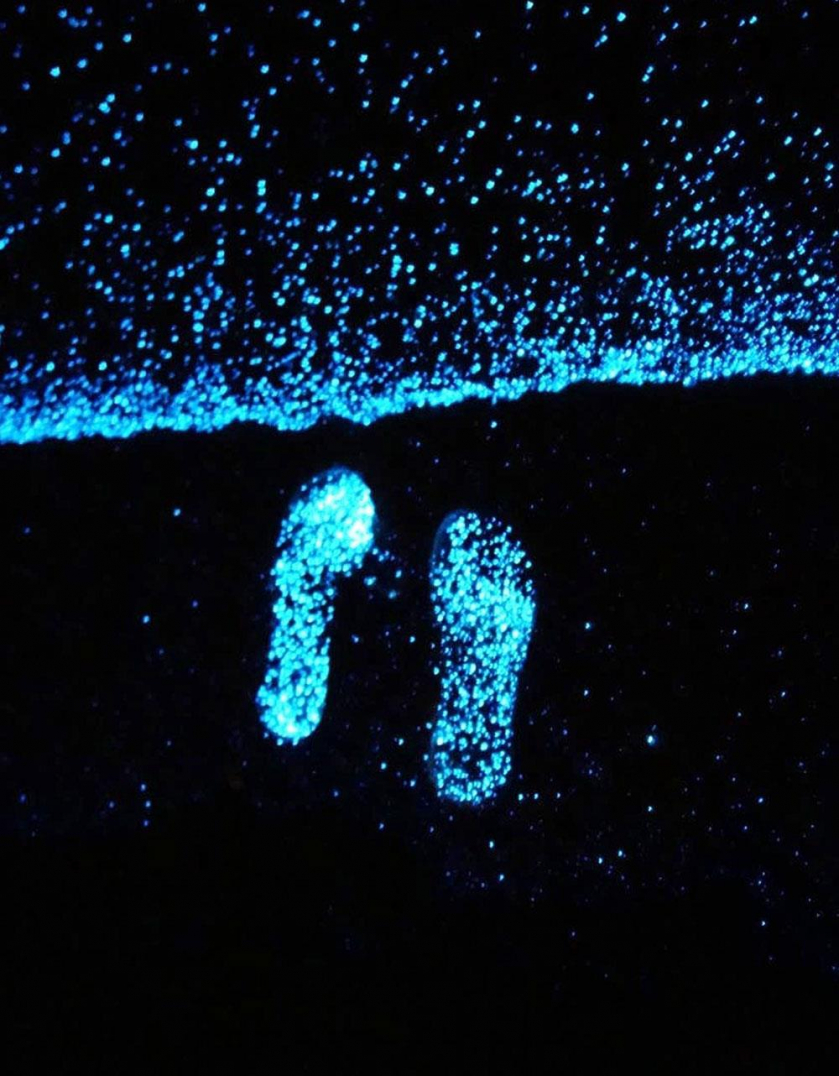
Tourists perform "magic tricks" with the seawater in the Maldives.
Beyond simply immersing yourself in crystal-clear waters or strolling along white sandy beaches, the Maldives offers a wealth of other recreational activities such as submarine tours, snorkeling, dolphin watching, and visiting local communities. The cuisine is also distinctive, largely featuring seafood. The dishes are typically hot, heavily spiced, and flavored with coconut, but use very few vegetables.
Visitors to Vaadho Island can enjoy the crystal-clear waters beneath their feet, and the long stretches of white sand are lined with graceful palm trees. In addition, the warm climate year-round makes it one of the most popular destinations in the Maldives.
The phenomenon of bioluminescent seawater can also be found in several other countries such as Japan, Australia, Thailand, Jamaica, and Puerto Rico.
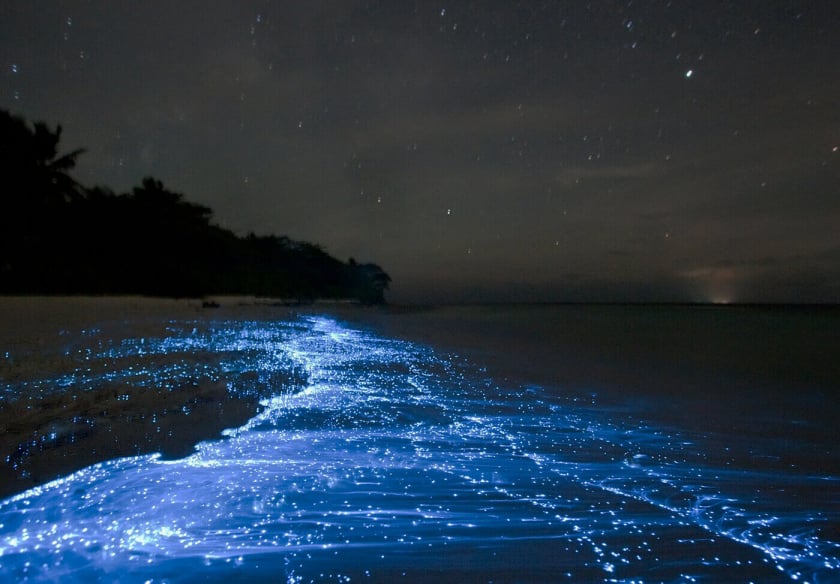
Scientists explain this strange phenomenon by suggesting that the glowing beach is due to certain types of plankton living in the seawater.
One of the key factors contributing to the fame of the "paradise islands" is the unique culture of a sun-drenched, windy, and sandy Indian Ocean region... The Maldivian identity is a blend of many different cultures influenced by immigration, especially from the coastal areas of Sri Lanka and South India.
Sadly, global warming could destroy this archipelago, which stretches nearly 970 km. Eighty percent of the island nation lies just 2.3 meters above sea level, while sea levels are rising. Specifically, sea levels in this country have risen by about 20 centimeters in the last century.
With the current rate of sea level rise, the Maldives could disappear by 2050, according to scientists' predictions.