VI
VI


The rainy season in Mu Cang Chai
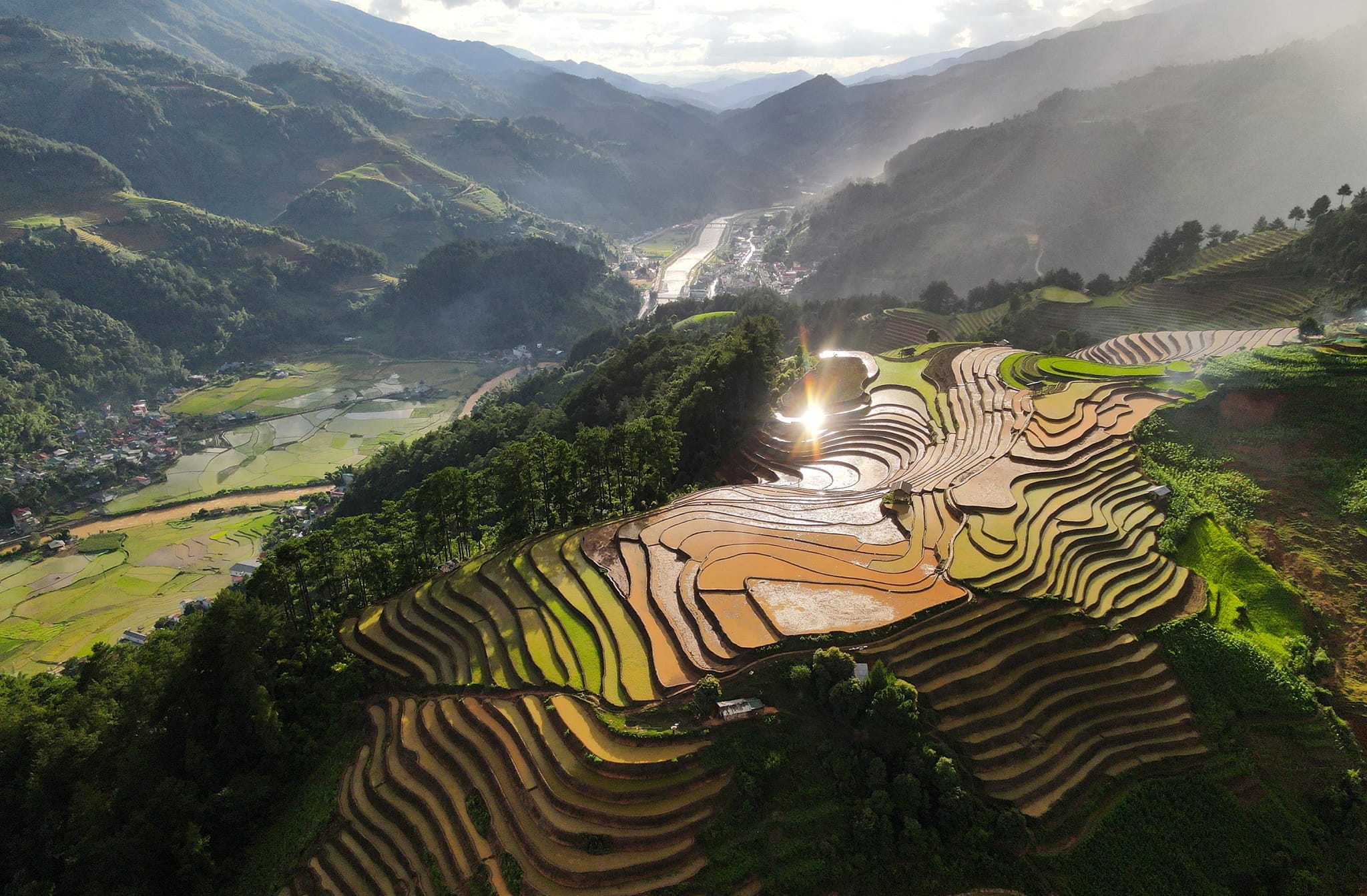
Vang A Thao, a Hmong tour guide living in Mu Cang Chai, said: "The rainy season in Mu Cang Chai starts from mid-May to the end of June, but it depends on the weather each year. This year, the rainy season came late; the water didn't start flooding the rice fields until July."
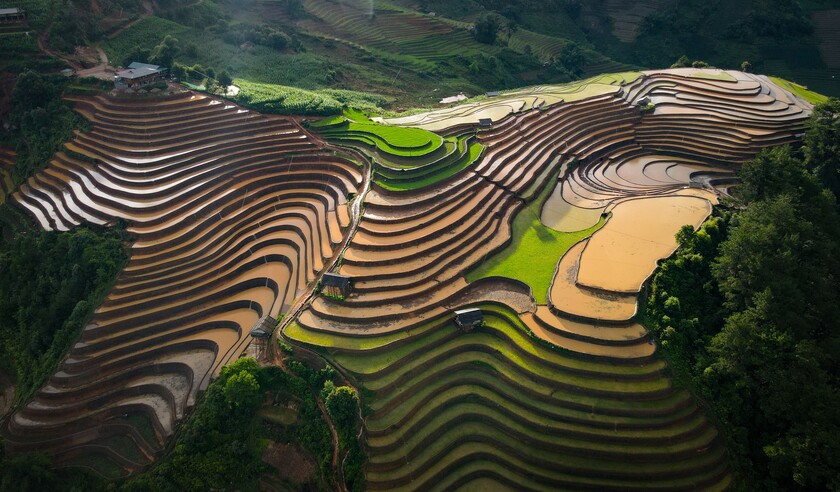
The terraced rice fields of Mu Cang Chai are spread across an area of more than 2,300 hectares, but are most concentrated in the three communes of La Pan Tan, De Xu Phinh, and Che Cu Nha.
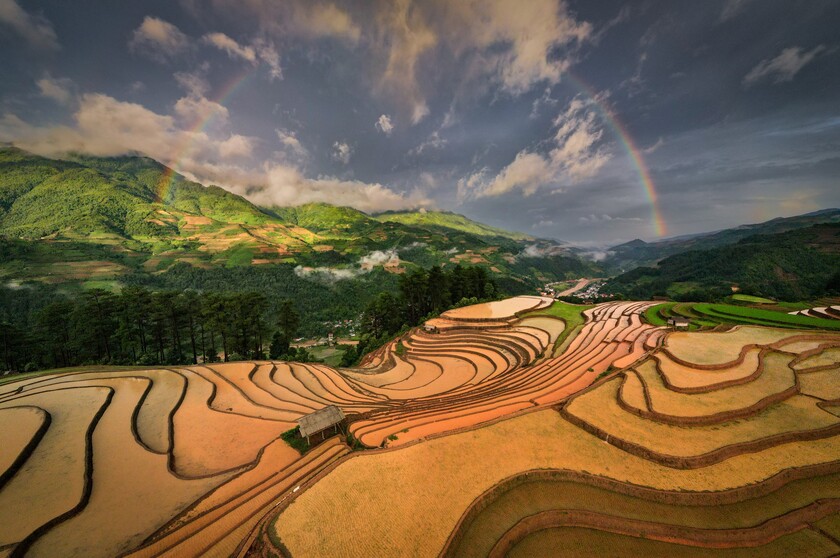
This is where the Hmong people cultivate wet rice, and it also serves as proof of their creativity in wet rice cultivation, adapting to the climate, soil, and irrigation conditions of the mountainous ethnic groups.
Terraced rice fields have always been a symbol of the harmonious beauty between majestic nature and the labor of the people in this mountainous region. Mu Cang Chai only has one rice crop per year. May and June are the months for plowing, sowing seedlings, and transplanting rice.
The last rains of summer arrive, pouring down on the terraced rice fields, creating a phenomenon of water overflowing from the higher levels to the fields below. The soil becomes soft and loose, ideal for planting rice. You will clearly see the newly planted rice paddies stretching to the horizon, tinged with the colors of the sunset. The fields are arranged in perfect rows, as if by a delicate hand on the high mountain slopes.
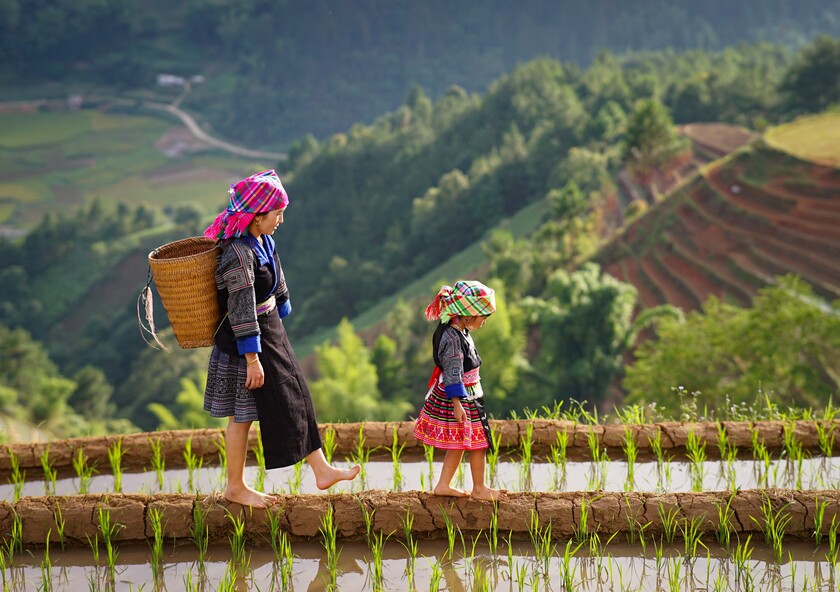
These days, people are taking advantage of the rising water to dig, build, and repair the embankments of their rice fields. Ms. Khang Thi Chai and her 5-year-old daughter, Vang Thanh Van, dressed in traditional attire, participate in farming work in Mu Cang Chai.
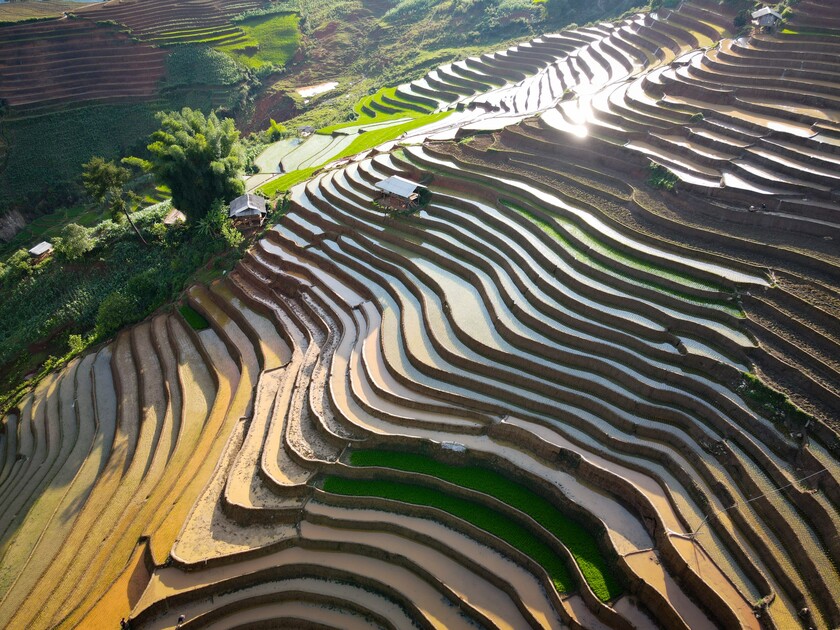
The rice paddies are perfectly aligned, as if arranged by a delicate hand on the high mountain slopes.
"To get here, tourists can choose to take a sleeper bus from Hanoi to Mu Cang Chai, rent a car, or travel by motorbike. However, traveling by bus is safer than by motorbike. If you travel by motorbike, you need to prepare all the necessary items for a long journey and avoid traveling in the evening because it is dangerous," shared Mr. Vang A Thao.
There are many famous tourist attractions and photo spots here such as Móng Ngựa, Mâm Xôi, Kim Nọi, Háng Đăng Dê, Yên Ngựa, and Lao Chải. To reach these places, tourists often have to hire a motorbike taxi or drive their own motorbike because the roads are narrow and difficult to navigate, only wide enough for one motorbike.

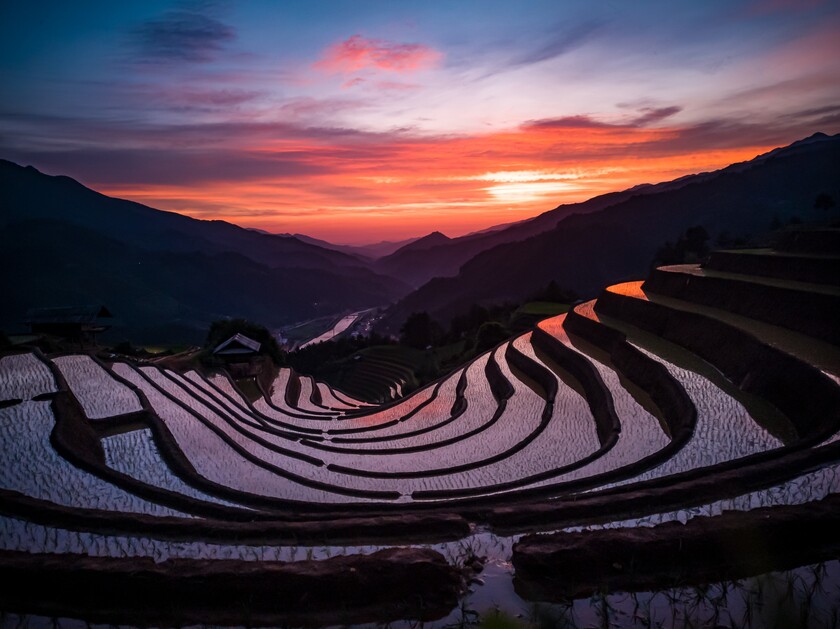
The water reflecting the purple hues of the sunset creates a unique spectacle.
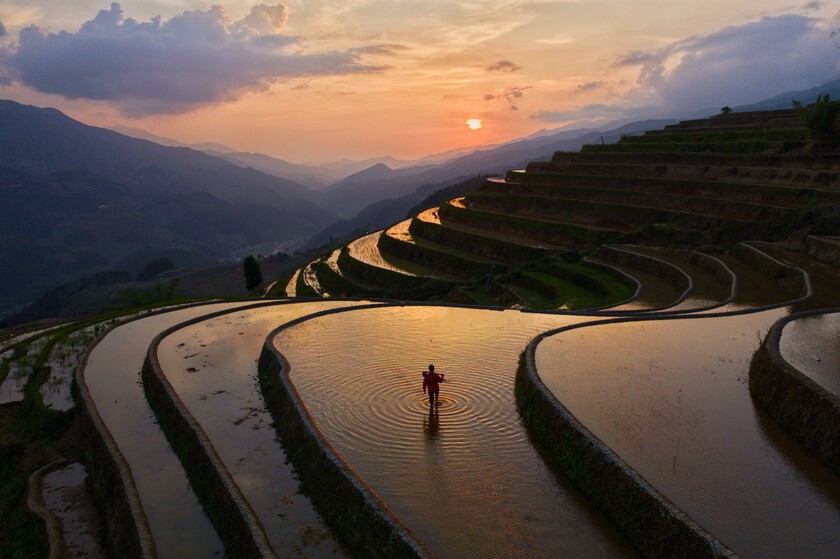
This not only marks the beginning of an attractive tourist season, but also the time when people in the highlands eagerly embark on a new farming season.
Mr. Vang A Thao further shared that, besides the rainy season, Mu Cang Chai is also famous for its golden season (the rice harvest season in September and October). The number of visitors coming to visit and take pictures during the golden season is usually many times higher than during the rainy season. This is because at this time, the terraced rice fields are filled with the golden color of ripe rice, making it easy for tourists to capture beautiful photos from any angle.
"Regarding accommodation, during the rainy season you only need to give notice a few days in advance, while during the gold rush season you need to book several months, or even a year, in advance," he emphasized.
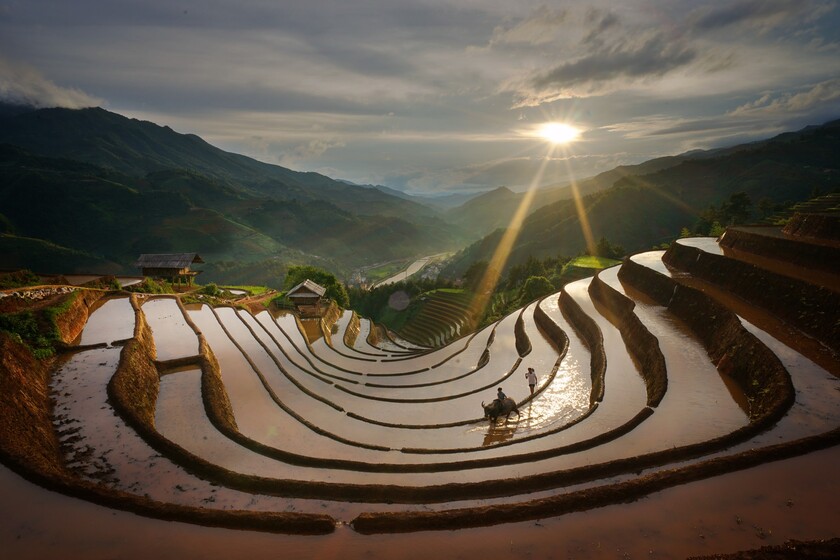
To create terraced rice fields, the Hmong people in Mu Cang Chai must select areas on hillsides and mountain slopes that are quite spacious, have a moderate slope, and are conveniently located to receive rainwater and stream water.
Indigenous culture of the Hmong people
Besides its impressive natural scenery, Mu Cang Chai also attracts tourists with the unique cultural features of the local Mong ethnic people. Visiting Mu Cang Chai, tourists have the opportunity to interact with and experience characteristic festivals such as the Lunar New Year, which takes place a month earlier than in the lowlands; participate in traditional festivals like the Gau Tao festival, Pao throwing, horse racing, and experience weaving.
In the spring, especially during the Hmong New Year or traditional weddings, the people here sing folk songs and play the Hmong flute. Many rich folk songs, such as lullabies, call-and-response songs, riddle songs, and songs of explanation, reflect their working lives, their yearning to conquer nature, and their wishes for a happy and prosperous life.
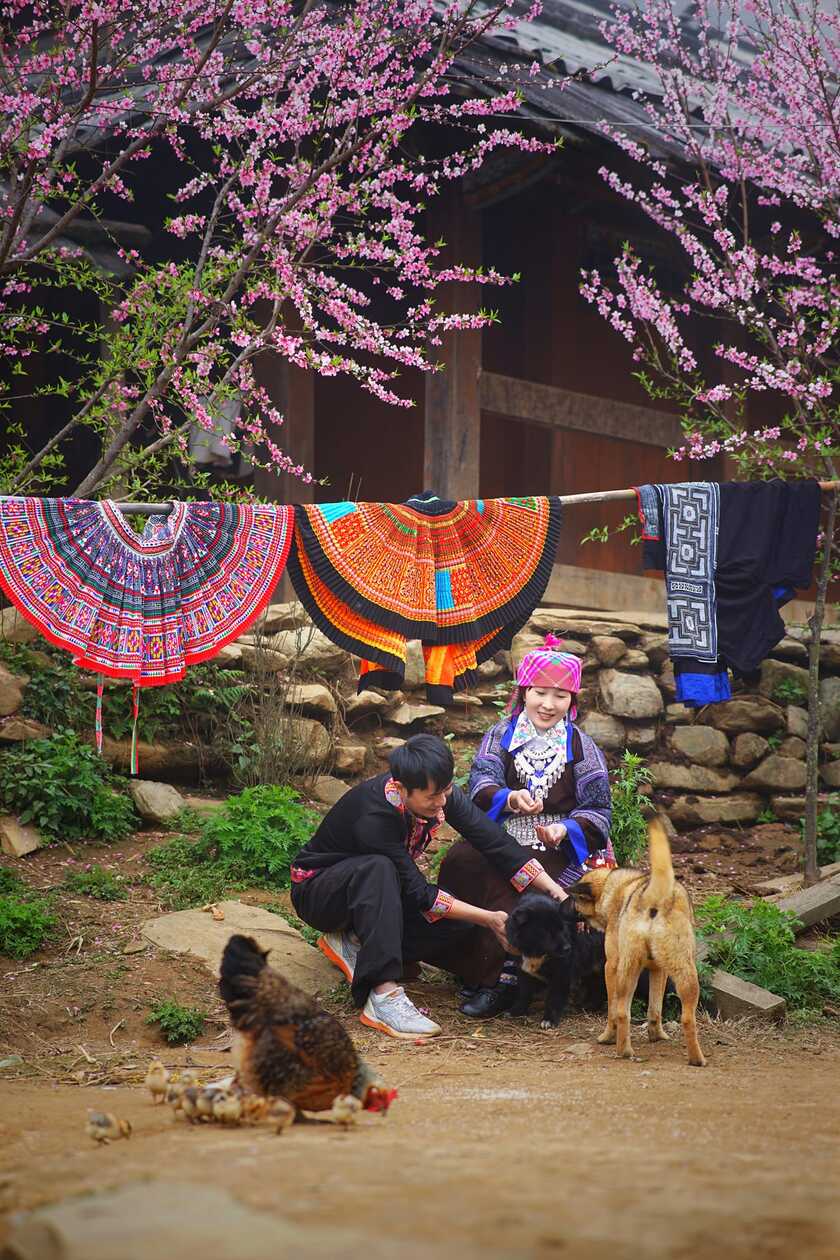
Besides its impressive natural scenery, Mu Cang Chai also attracts tourists with the unique cultural features of the Mong ethnic people living there.
Most notably, the traditional folk singing styles known as "Thản chù" and "Gầu phềnh" offer a unique cultural experience for many tourists. Boys and girls sing together while playing Pa Pao, singing through a thread connected to two bamboo tubes covered with frog skin, each for just the two of them.
Besides singing, the Hmong people here also have a unique cultural tradition: playing the Hmong flute. In the Gau Tao festival, the Hmong flute dance is considered a ritual to open the festival, expressing solemnity and reverence. The Hmong people not only use the bamboo flute but also the mouth harp, leaf flute, two-stringed fiddle, and flute, creating a distinctive and impressive local musical and cultural space.
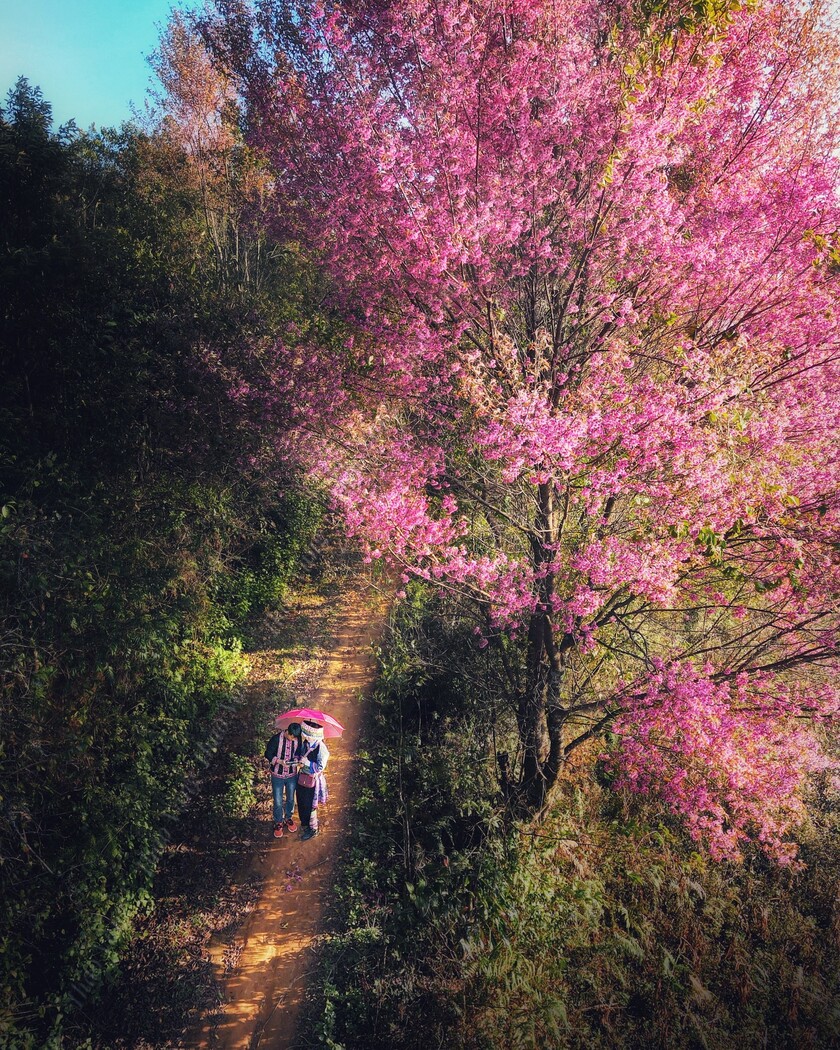
The red bougainvillea is a characteristic flower of Mu Cang Chai, Yen Bai. When the mountain peaks are covered in the vibrant red bougainvillea flowers, it marks the end of a year of hard work for the local people, when the golden harvest is complete, and the houses are full of rice.
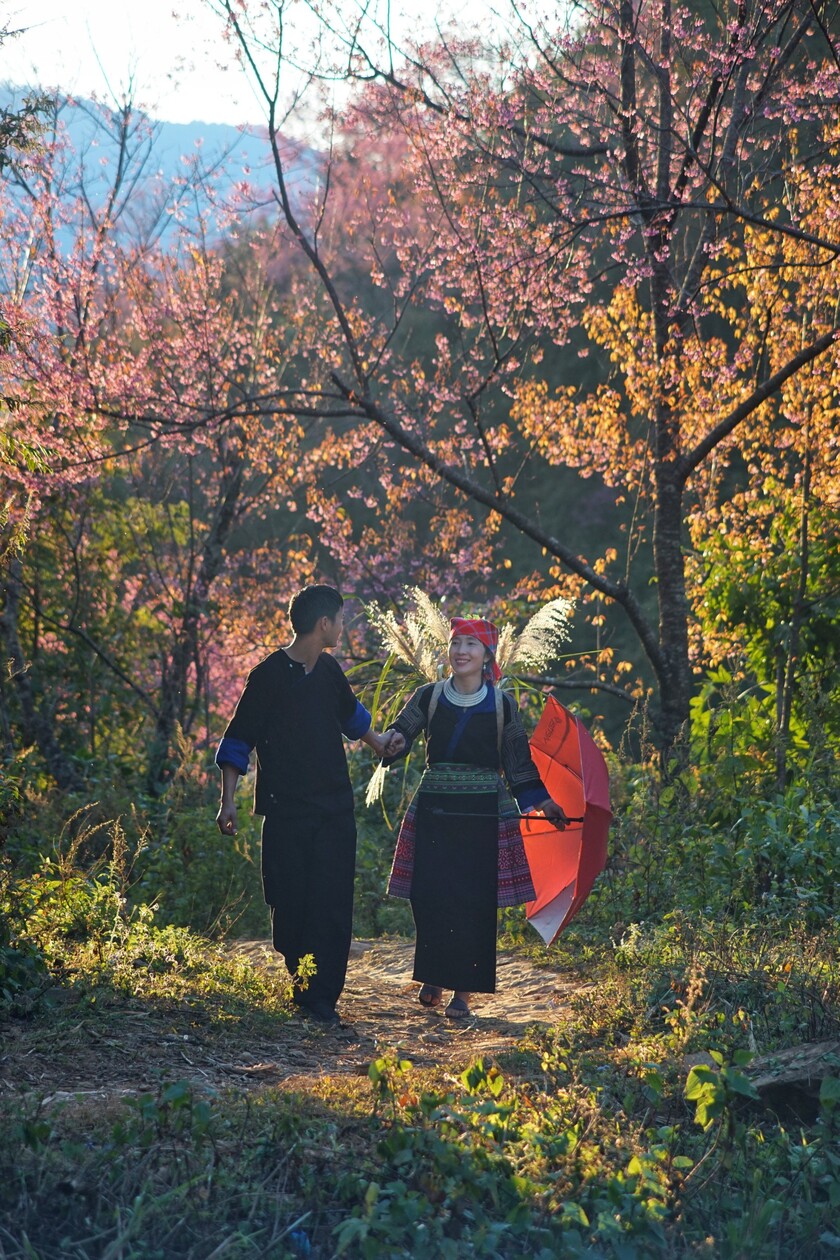
The "tớ dày" flower belongs to the peach blossom family. The Hmong people in Mù Cang Chải often call it "pằng tớ dày," which translates to "forest peach blossom" in Vietnamese. The flowers usually bloom at the end of the year and last until the Lunar New Year.
Additionally, there's the season when the "tớ dày" flower blooms at the end of December, coinciding with the Mong ethnic New Year. Mr. Vàng A Thào further suggests that Mù Cang Chải, with an average altitude of over 1,000 meters above sea level, enjoys a cool climate year-round, with chilly mornings and evenings. Therefore, visitors should bring a light jacket. The weather is unpredictable during the rainy season, so always bring a raincoat when sightseeing or taking photos. Choose shoes that are washable, have good grip, and are non-slip, in case of muddy roads in the rain.
As a local tour guide, Mr. Vang A Thao proudly speaks about the people and tourism development of his hometown: "The people here are very friendly and approachable. It's very safe up here, so tourists never have to worry about pickpocketing or robbery. Even leaving your motorbike parked overnight on the street won't get you stolen." Another thing tourists should note is to avoid stepping on crops and not to pick rice stalks without permission.
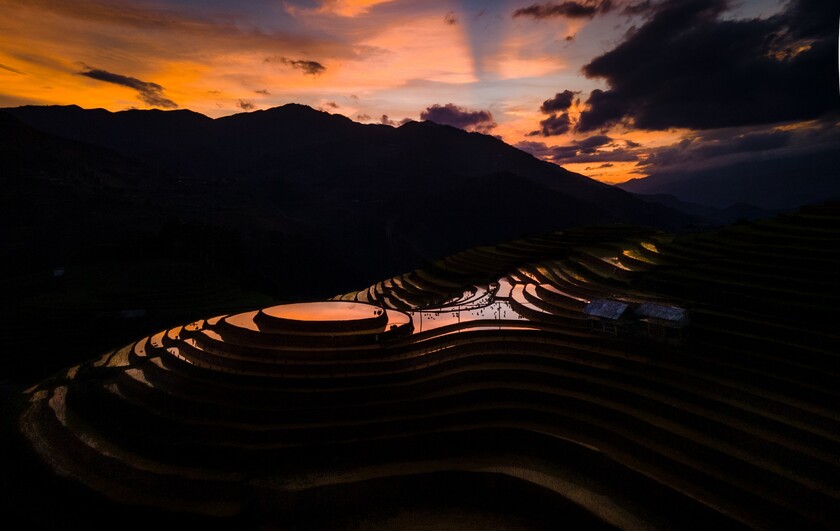
Raspberry Hill is surreal in the evening light.