VI
VI


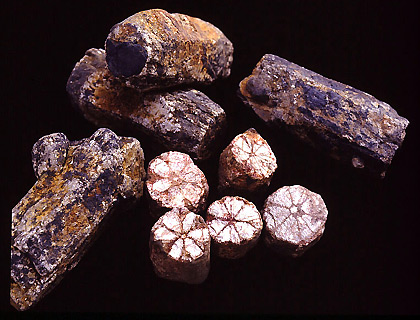
It is a small, hexagonal stone with a fine-grained surface composed of mica and muscovite minerals on a metamorphic rock called Hornfels. When cracked, its cross-section resembles a tiny flower with pink and yellow hues. It is known as cherry blossom stone – the flower recognized as a symbol of Japan and receiving considerable reverence.
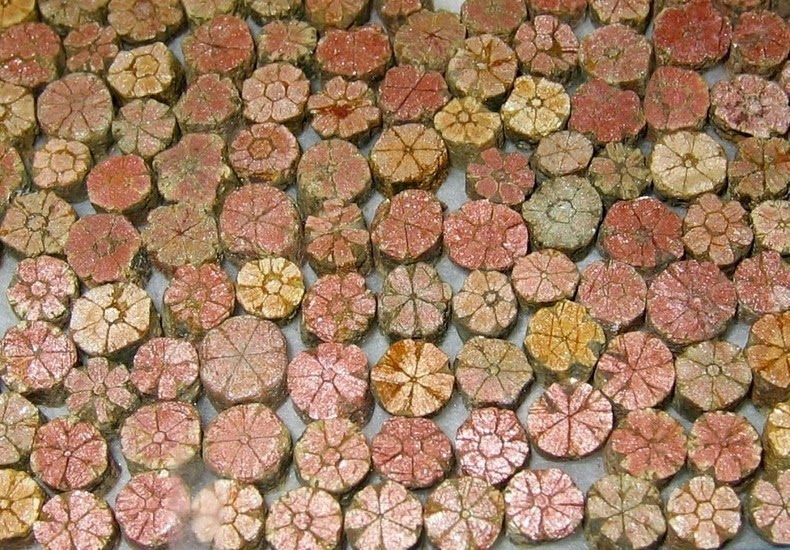
“These floral samples don’t always contain mica,” scientist Alert explains. “It begins as a complex of six prismatic crystals of a magnesium-iron-aluminum mixture called Cordierite. At its center is a simple cubic single crystal of a magnesium-aluminum-silicate mixture called Indialite.”
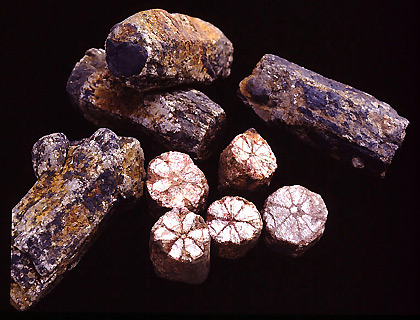

Cherry blossoms are held within the Hornfels massif, a fine-grained, metamorphic rock formed underground approximately 100 million years ago by the intense heat of molten lava. The hexagonal shape is formed from the combination of Cordierite-Indialite within the Hornfels, consisting of seven individual crystals, including a single central crystal resembling a flower pistil. Cordierite-Indialite undergoes a second metamorphism when it comes into contact with a type of hot water known as hydrothermal fluid. This changes the chemical composition within the cherry blossom masses, producing mica to replace the original Cordierite-Indialite.
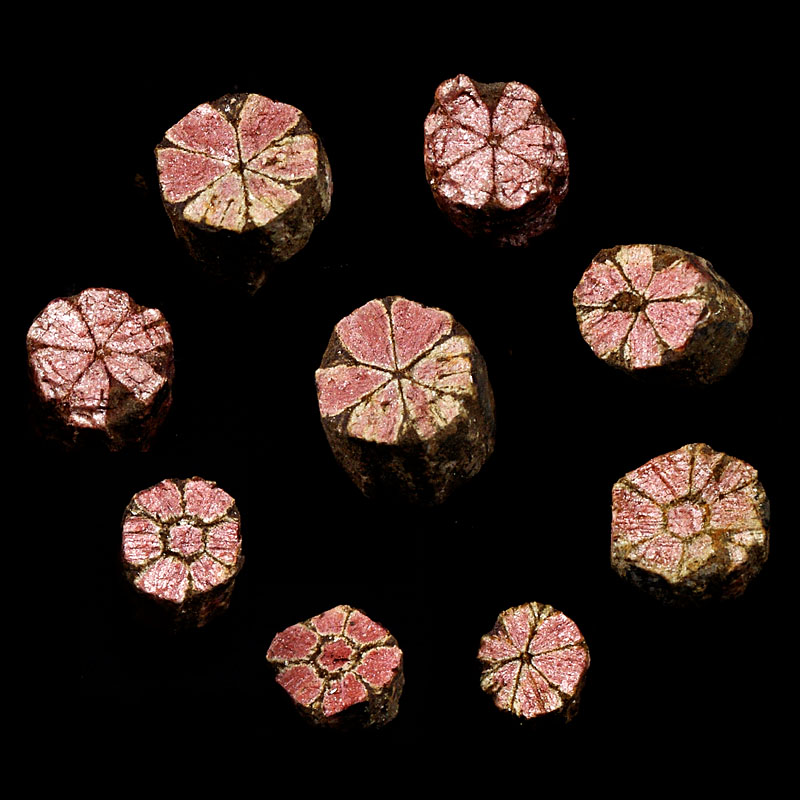
Because it undergoes two highly intense and distinctive metamorphic processes, cherry blossom stone is rare and found only in central Japan. Local people often keep it in a diluted acacia wood solution to prevent it from falling apart and to preserve the delicate beauty of this stone.
Ngoc Anh (According to AmusingPlanet)