VI
VI


Hitachi Seaside Park – Japan's largest flower paradise.
Located in Hitachinaka City (Ibaraki Prefecture), Hitachi Flower Park is the most famous flower park in Japan, which is why it's always on the list of must-visit destinations for tourists to "check in" with its vibrant flower paradise throughout all four seasons.
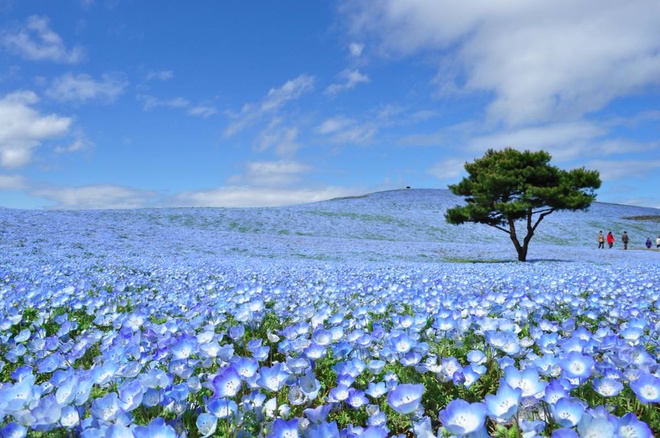
Nemophila flowers are planted all over the hills in Hitachi Park and bloom profusely in the spring.

In July and August, the lush, soft green of the Kochia bushes blankets the hillsides.
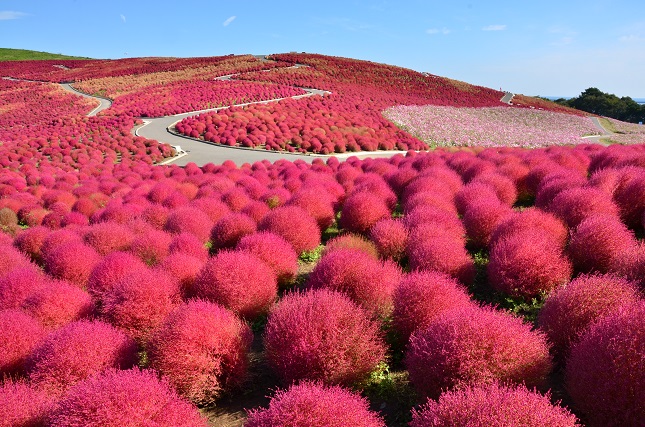
In autumn, Hitachi Park is filled with the vibrant red hues of mature Kochia bushes.
Spanning over 3.5 hectares, each hill in the park is planted with different types of flowers, which take turns blooming in each season: in spring, around April, is the time when Nemophila flowers, the symbol of Ibaraki Prefecture, bloom, along with 220 varieties of tulips and over 600 varieties of daffodils under the pine forest canopy; in summer, around July and August, the park is filled with the lush green of soft Kochia bushes; in autumn, October is the ideal time to admire the vibrant red of mature Kochia plants; and winter is also when year-end events are held, attracting many visitors. During flower festivals, the park also organizes special outdoor music performances for domestic and international tourists.
Ushiku Daibutsu - The world's largest bronze Buddha statue.
Japan is a Buddhist country, home to many large Buddha statues, especially the Ushiku Daibutsu (Great Ox Buddha), a bronze Buddha statue that holds the record for the world's largest. The Ushiku Great Buddha is 120 meters tall and is assembled from 6,000 high-strength bronze plates. Inside the Ushiku statue are 3,800 smaller Buddha statues ranging in height from 30 cm to 1 meter.
1.jpg_9.jpg)
The Buddha statue is 120 meters tall, surrounded by many cherry blossom trees and other seasonal flowers.
Visitors can take an elevator from ground floor up to the 5th floor, 85 meters high, to enjoy panoramic city views. Inside the Buddha statue, there are five levels: Level 1 (World of Light), Level 2 (World of Gratitude), Level 3 (World of Lotus Platform), Levels 4 and 5 (Spiritual Eagle Mountain Space). After exploring the inner levels, visitors can admire other attractions within the Buddha statue complex, such as the cherry blossom garden, the meditation garden, and even try feeding the fish.
Experience the four seasons of Japan with Fukuroda Waterfall.
Fukuroda is one of the three most beautiful waterfalls in Japan and also one of the most beautiful stops in Ibaraki Prefecture. The waterfall reaches a height of 120 meters and a width of 73 meters, with four tiers, resembling a thread cascading down from above when viewed from afar. The waterfall is also known as Yodo, meaning "four seasons." Each season brings a different beauty to the waterfall: in spring, the plants and trees sprout new leaves; in summer, the waterfall is impressive with its roaring water; in autumn, it is filled with vibrant colors from deep yellow and orange to brilliant red in the surrounding trees; and especially in winter, the waterfall completely freezes over, becoming an ideal spot for ice-climbing enthusiasts. This is why many tourists have visited and continue to return to Ibaraki to admire the beauty of this waterfall.

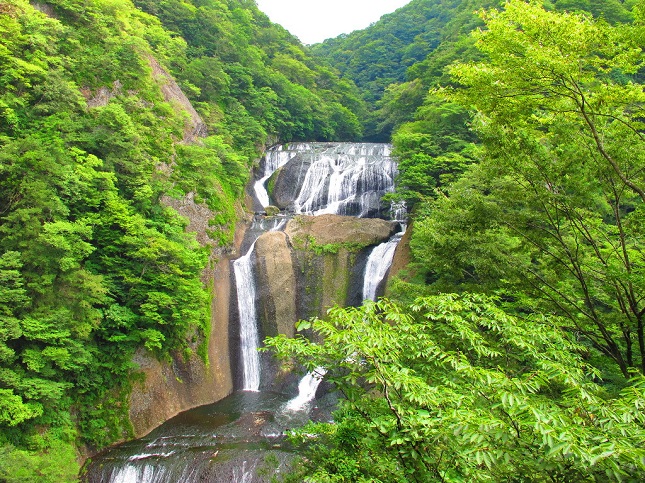
Fukuroda Falls in summer
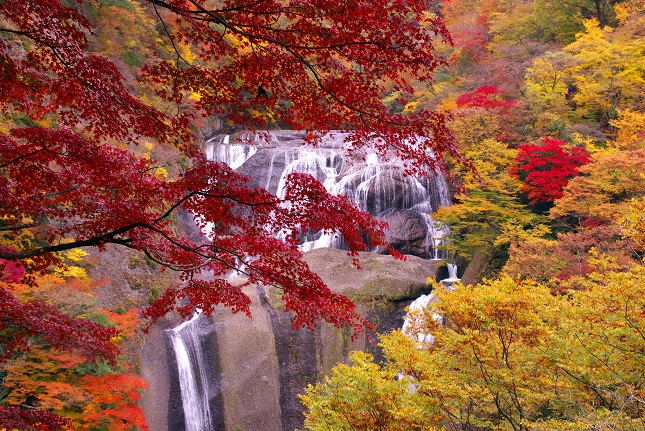
The vibrant autumn colors enchant visitors when they come to Fukuroda Falls.

The waterfall freezes over in winter, creating a spectacular sight.
To visit the waterfall, tourists will take an elevator up to a height of 40m, then reach the viewing point and stroll along the paths, stand on the suspension bridge, and freely enjoy the beautiful scenery around.
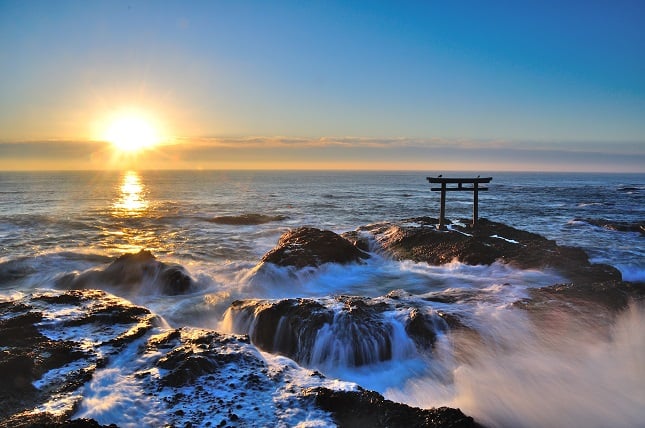
Visit Oarai Isosaki to watch the sunrise through the Tori Gate.
Oarai Isosaki Shrine has a long history, dedicated to Onamu Chinomikoto, the god of family peace and prosperous business. Besides the beautiful, tranquil scenery, a staircase leads down from the shrine gate, where visitors are impressed by the sight of the Shinto gate "Kamiiso no Tori," erected on a rocky outcrop, standing majestically before the Pacific Ocean. In the morning, as the sun rises, it bathes the Tori gate in a reddish glow, creating a magical scene rarely seen anywhere else in Japan.
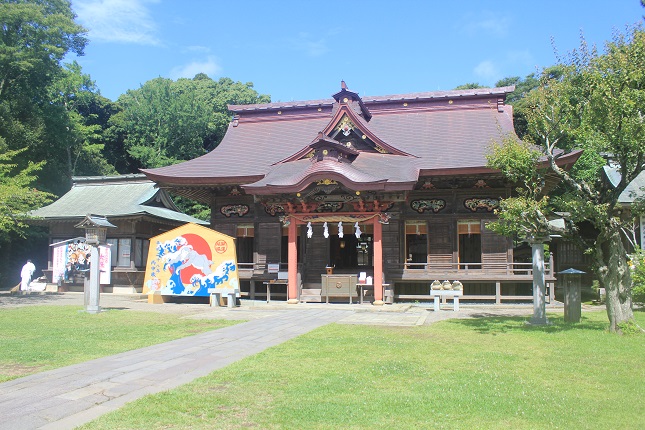
The tranquil atmosphere inside Oarai Isosaki Shrine

The Tori Shinto gate stands majestically before the sea.
Enjoy the plum blossom forest at Karaikuen Park.
Kairakuen, located in Mito City, Ibaraki Prefecture, is one of Japan's top three parks, alongside Kenrokuen in Kanazawa and Korakuen in Okayama. The garden was built in 1842 by Nariaki Tokugawa, the 9th feudal lord of the Mito clan, with the intention of providing a recreational space for the people. Visitors often come to the park in early spring to admire the cherry blossoms and plum blossoms, especially during the Mito Plum Blossom Festival, when over 3,000 plum trees of more than 100 different varieties bloom across 13 hectares. Beyond its vibrant spring beauty, Kairakuen also boasts unique seasonal variations: summer is filled with the deep red hues of Kirishima azaleas, lush bamboo forests, and verdant cedar trees; autumn, with its fiery red maple leaves, offers breathtaking scenes reminiscent of Japan.
.jpg_15.jpg)
Kairakuen Park is filled with colorful flowers in spring.
A highlight of Kairakuen Park is the Kobuntei wooden house, designed by Tokugawa Nariaki himself as a meeting place for writers, poets, and literary enthusiasts to discuss poetry. The house has three floors, with the top floor offering panoramic views of Lake Senbako and the entire park, which is lush and green.
Learn about the history of martial arts at Kodokan
When visiting Ibaraki, tourists certainly shouldn't miss ancient architectural structures like Kodokan, the largest school in Japan during the Edo period. Spanning an area of 10,000 square meters, the school was also where Tokugawa Yoshinobu, the last shogun of the Tokugawa shogunate, and many samurai studied martial arts and other subjects.
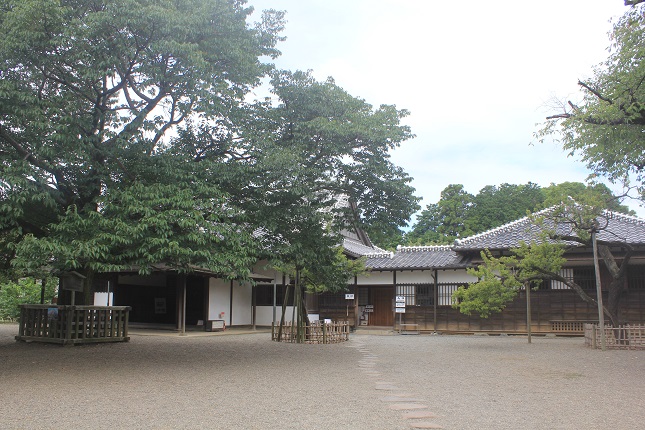
Kodokan, the largest school in Japan during the Edo period.
Most tourists who come here feel a part of Japan's history as they walk through each room, view the pictures and books neatly stored in the glass cases, listen to historical stories from local guides, and experience the tranquil atmosphere.
Aqua World Oarai - Explore the magical underwater world.
As an island nation, Japan has a history and culture closely tied to the sea, with marine institutes being a favorite attraction for locals and tourists, especially children, as they are ideal places to learn about natural resources and observe fascinating marine life.

The aquarium attracts visitors of all ages, especially young children.
Located right by the sea, near Oarai Isosaki Shrine, Aqua World Aquarium welcomes up to 80,000 visitors annually. Aqua World boasts the largest shark population in Japan, with 52 species out of a total of 800 – so numerous that visitors can easily spot sharks swimming even while riding the escalators. Anyone visiting should take the time to watch the most popular 25-minute dolphin show, where you'll be amazed by the skillful jumps, glides, and ball-playing of the dolphins and their trainers.

The dolphin show is the most popular show at Aqua World.
Besides the dolphin show, visitors can also enjoy observing marine life through reinforced glass, watch fish feeding shows, penguin shows, and many other fascinating performances.
Quelan