VI
VI


"Fatty meat, pickled onions, red couplets"
"New Year's pole, firecrackers, green sticky rice cakes"
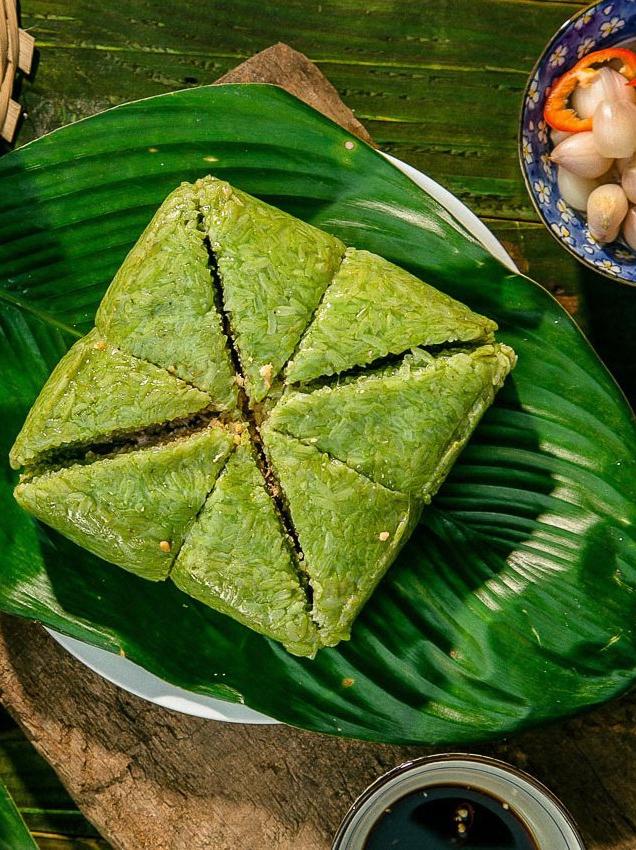
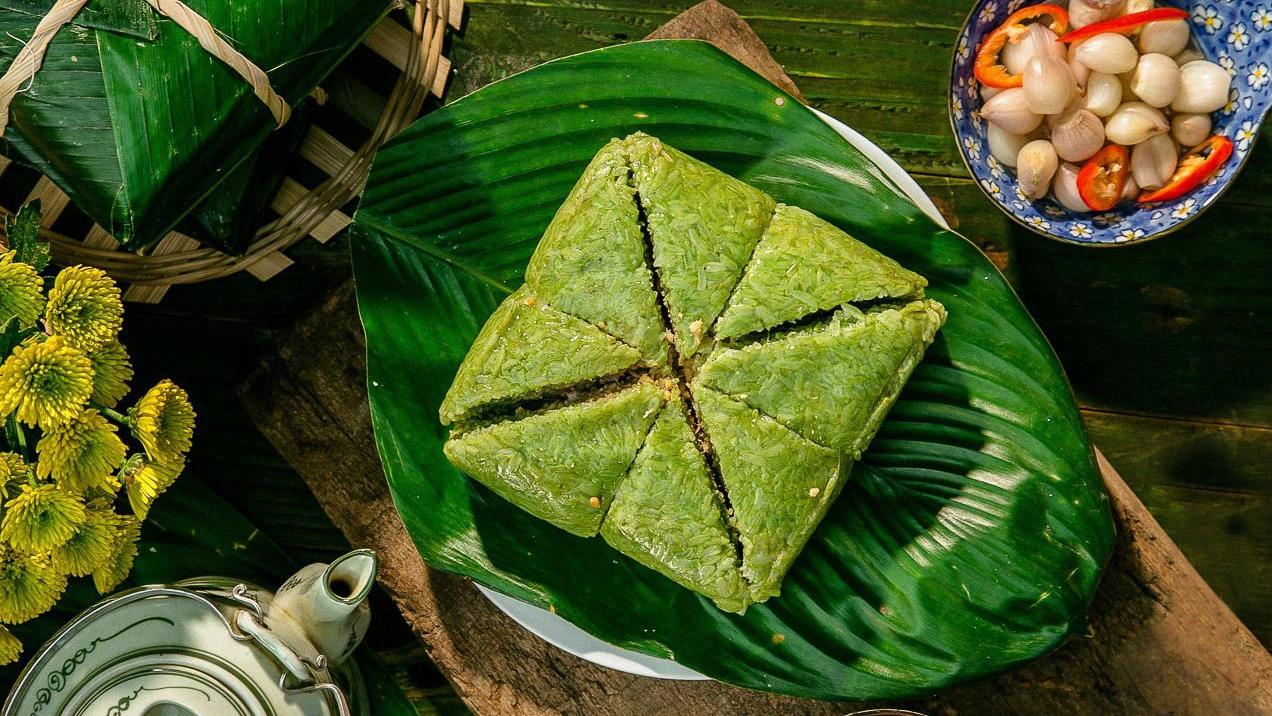
It's often said that seeing banh chung (Vietnamese sticky rice cake) means seeing Tet (Vietnamese New Year). Therefore, no matter where they are or what they're doing, Vietnamese people always long to return home, gather with their families, and feel the approaching Tet atmosphere. Just inhaling the fragrant aroma of banh chung easily evokes the unmistakable taste of Tet.
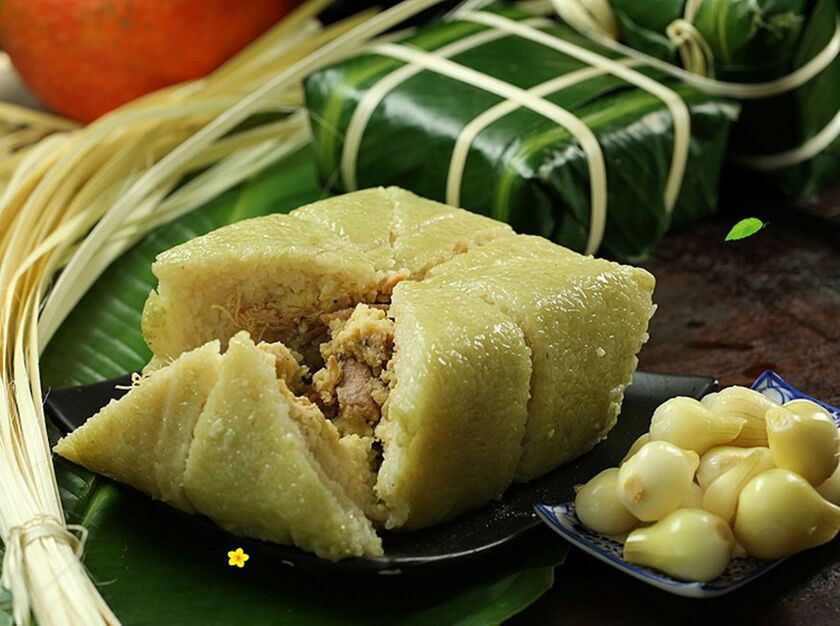
It's often said that seeing banh chung (Vietnamese sticky rice cake) means seeing Tet (Vietnamese New Year).
According to ancient beliefs, the square shape of banh chung symbolizes the earth. The ingredients for making banh chung are very simple: the outer layer is made from fragrant sticky rice, and the filling consists of pork fat, mung beans, pepper, etc. All of this is wrapped in fresh green dong leaves and tightly bound with soft, flexible strings to create a beautiful square-shaped cake.
From the very first days of the 12th lunar month, the villages specializing in making banh chung (traditional Vietnamese rice cakes) in Hanoi have become busier and more bustling than ever.

Tranh Khuc sticky rice cake
When mentioning famous villages in Hanoi known for making banh chung (traditional Vietnamese rice cakes), one cannot fail to mention Tranh Khuc village in Duyen Ha commune, Thanh Tri district. Banh chung from Tranh Khuc village are made using family secrets passed down through generations, making it very difficult for outsiders to learn the techniques. Remarkably, the professional banh chung makers in the village don't need molds, yet their cakes are perfectly square.
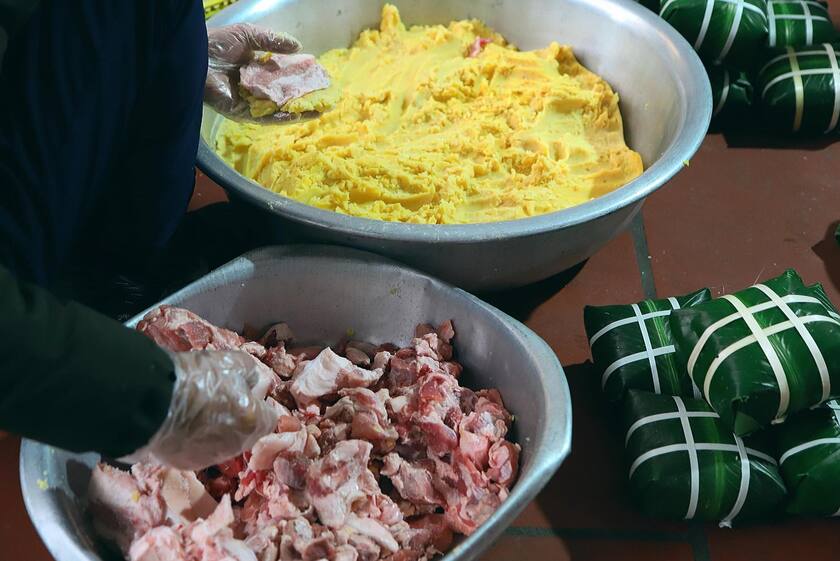
The banh chung (Vietnamese sticky rice cake) in Tranh Khuc village is made using traditional family recipes.
It is known that the secret to making a beautiful banh chung (Vietnamese rice cake) is that the wrapper must be tight, follow the correct method and weight, and cook it for the right amount of time. Wrapping banh chung may seem simple, but it actually requires high technical skill; even a single mistake in the process can easily affect the quality of the product.
Word of mouth spread, and the delicious, chewy sticky rice cakes from Tranh Khuc village are not only popular among Hanoi residents but also known to many neighboring provinces.
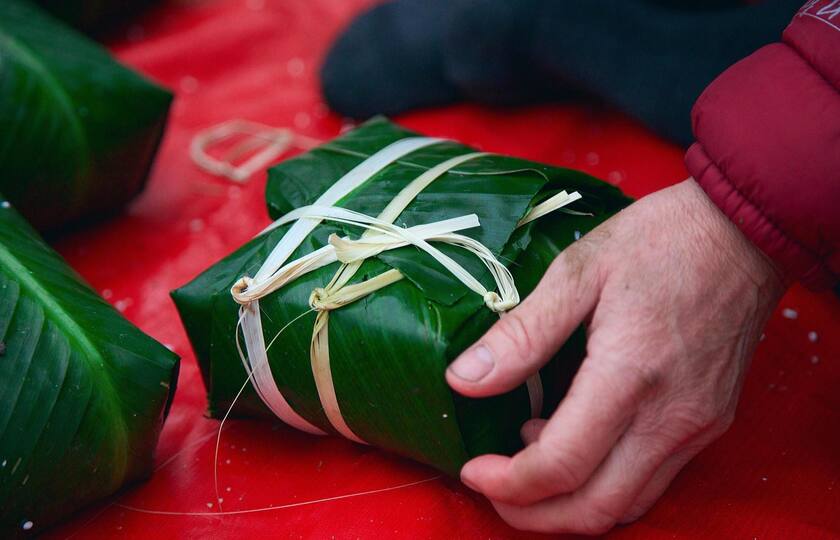
The professional bánh chưng makers in the village don't need molds, yet the bánh chưng are perfectly square.
Banh Chung from Lang Bac Village
The village of Bac (Phu Thuong, Tay Ho) has large families who have specialized in making banh chung (Vietnamese sticky rice cakes) for generations. Perhaps that's why banh chung from this village is considered by many Hanoians to be "golden and silver banh chung" because of its high price and top-notch quality in the capital.
What makes Bac village's banh chung (Vietnamese sticky rice cake) famous is that it still retains its distinctive traditional flavor. The artisans who wrap banh chung in Bac village always remember the ten "golden" words that create the brand of banh chung: "The meat is completely covered in beans, and the beans are completely covered in rice."
If you want to enjoy sticky rice cakes from Bac village, you can find them at various locations in markets such as Dong Xuan, Hang Da, and Cho Hom... With their delicious flavor and generous fillings, sticky rice cakes from Bac village easily win hearts and are a top choice for locals during Tet (Lunar New Year) celebrations.
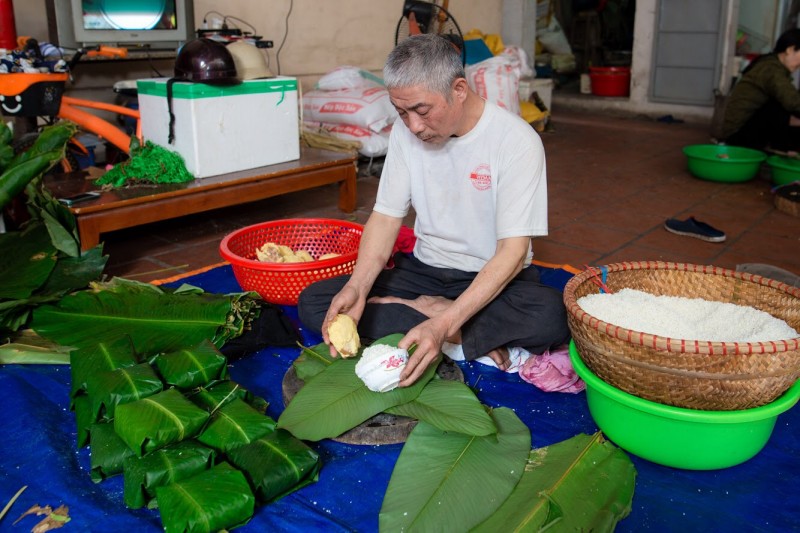
In Bac Village (Phu Thuong, Tay Ho), there are large families who have specialized in making banh chung (traditional Vietnamese rice cakes) for generations.
Lo Khe sticky rice cake
Located 30 km from the center of Hanoi, Lo Khe village belongs to Lien Ha commune, Dong Anh district, Hanoi. If you've ever had the chance to taste Lo Khe sticky rice cakes, you'll find it hard to forget their distinctive flavor. One of the factors that makes Lo Khe village's sticky rice cakes different is the rich and meticulously prepared filling. The mung beans are carefully selected, only the small, round, plump kind. After crushing the beans, the bakers soak them to remove the husks, rinse them thoroughly, drain, and steam them until cooked. The pork used is lean shoulder meat with a little fat to create a rich, savory flavor, complemented by the spicy and aromatic taste of ground black pepper.
Visiting Lu Khe village in the days leading up to Tet (Lunar New Year), you'll encounter an incredibly bustling and hectic atmosphere. In the village, every yard is filled with freshly washed banana leaves, soaked sticky rice, fragrant mung beans, and pots and pans ready to be cooked over a blazing fire.
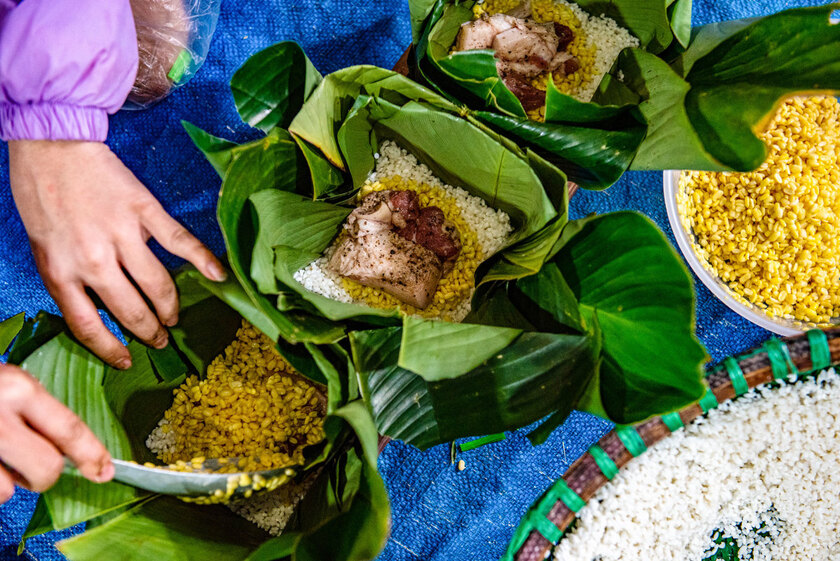
One of the distinguishing features of Lo Khe village's banh chung (Vietnamese sticky rice cake) is its rich and elaborately prepared filling.
The sticky rice cakes (Bánh chưng) from Lỗ Khê village mainly serve the suburban and urban areas of Hanoi. During peak season, the bakeries are "burning hot" from around the 22nd day of the 12th lunar month until the 30th day of the 12th lunar month. Many discerning customers even travel to the village to order sticky rice cakes, as a respectful offering to their ancestors' altars during the Tet holiday.