
 VI
VI


Beautiful and hospitable are the impressions of those who have visited Thailand. Visiting this place during the New Year, I was truly captivated by familiar yet timeless destinations.
BANGKOK CAPITAL IS BUSTLING
From Suvarnabhumi Airport, I traveled by two Skytrain and subway trains to reach downtown Bangkok. Escaping the hustle and bustle of the city, from Hua Lamphong station, I strolled to the end of Yaowarat Road in Samphanthavong district to visit my first attraction, Wat Traimit.
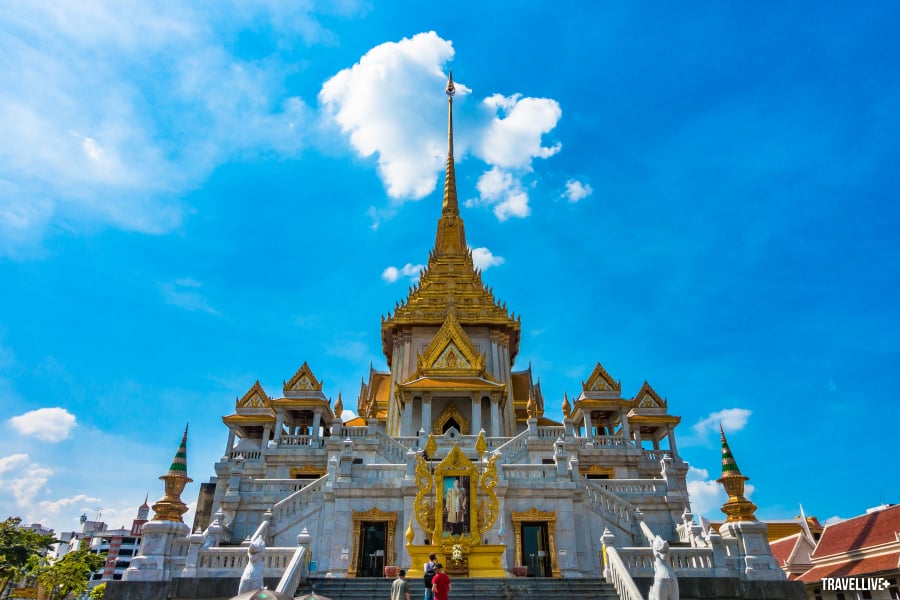
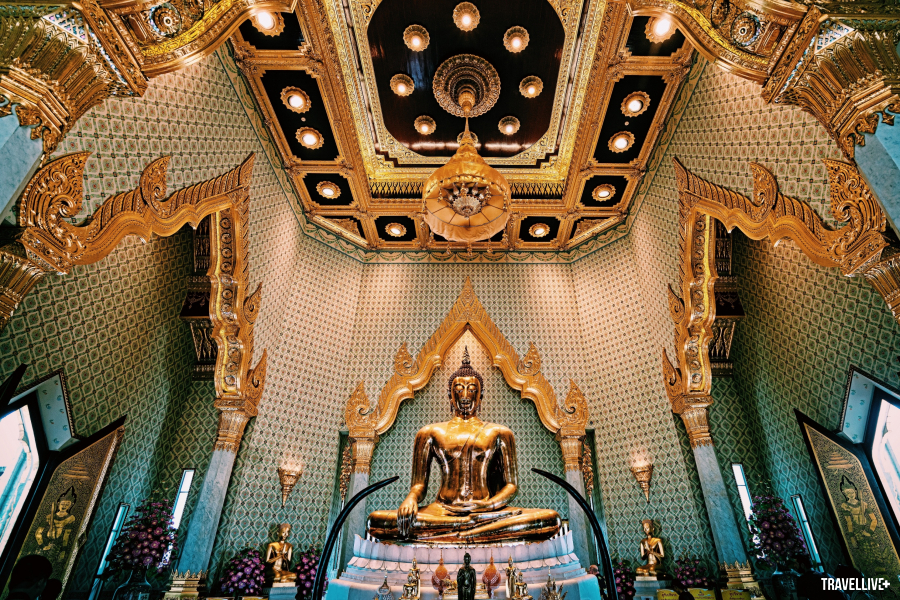
Wat Traimit is a famous temple in Thailand known for its unique beauty and long history. Legend has it that, long ago, local people decided to move a cement Buddha statue from outdoors into the temple, but because the statue was so heavy, it collapsed during the move. Immediately afterward, a heavy rainstorm with lightning struck, bringing all work to a halt. When the rain stopped, a monk noticed flashes of light emanating from a crack. After chipping away at the cement, everyone was astonished to discover that the Buddha statue was actually a massive block of gold. This is the world's largest solid gold Buddha statue, weighing 5.5 tons and standing 3 meters tall.
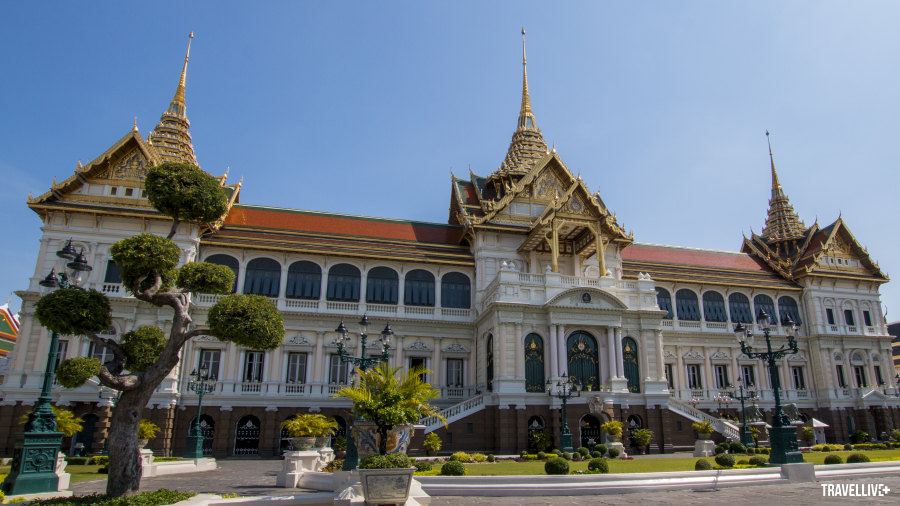
Bidding farewell to Wat Traimit, I continued my journey to the Royal Palace of Thailand. Standing before this magnificent yet ancient and solemn palace, I was truly amazed. It comprises three main areas: the Royal Palace, the Royal offices, and the temples. In particular, I had the opportunity to admire the real gold leaf glistening on the temple spires in the sunlight.
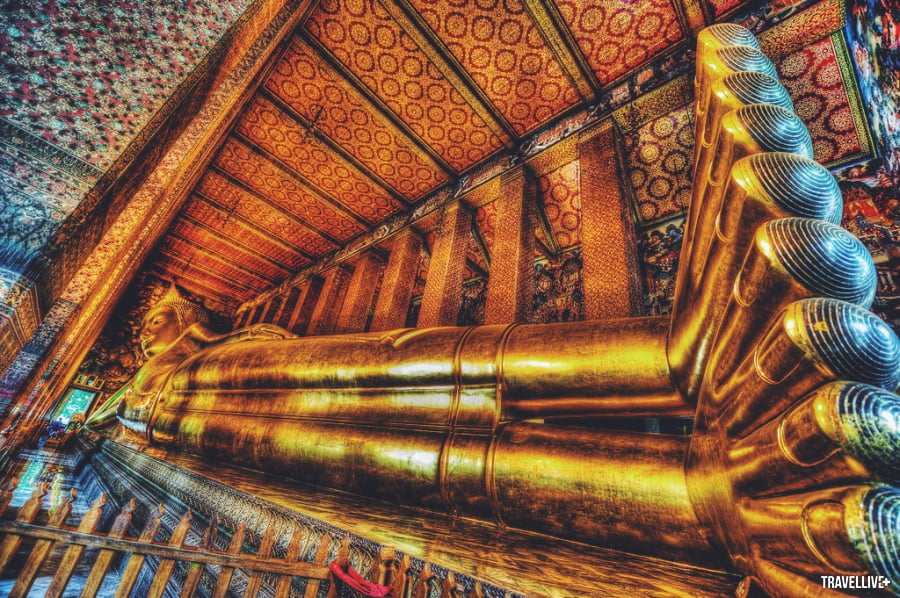
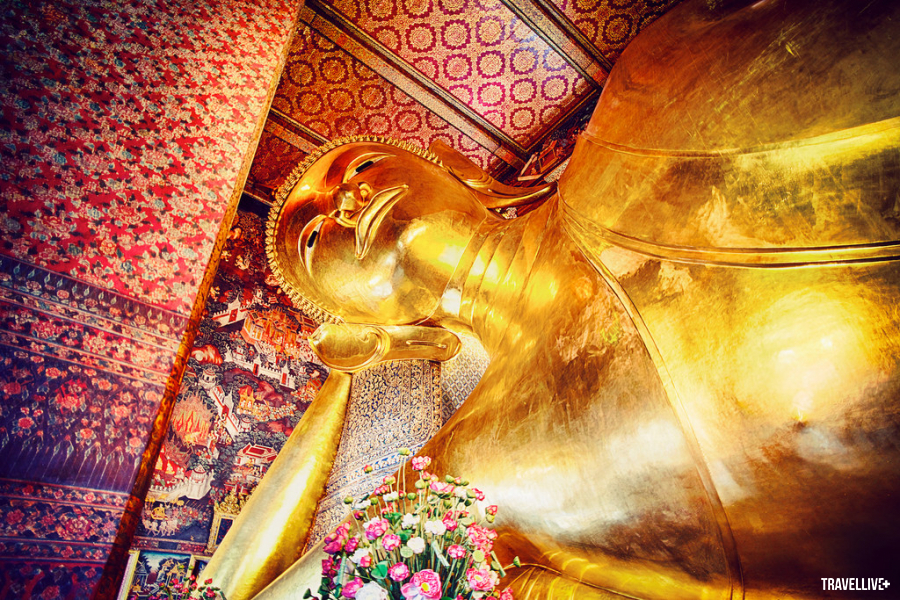
It would be a great oversight to visit Bangkok without stopping by Wat Pho. Originally a royal temple, Wat Pho houses many precious Buddha statues. Among them, the most unique and famous is the reclining Buddha statue, measuring 45 meters long and 15 meters high. The statue is cast in plaster, covered in gold, and rests on a gleaming gold-plated pedestal. The eyes and feet of the Buddha are made of wood inlaid with mother-of-pearl. The soles of the Buddha's feet feature inlaid patterns depicting the 108 auspicious characteristics of Siddhartha Gautama Buddha.
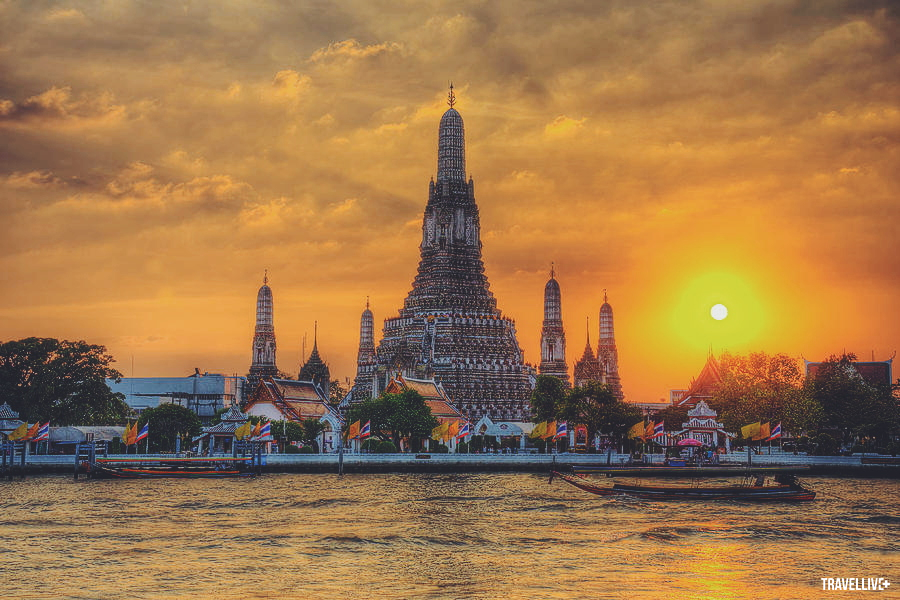
At the end of the day, it was exciting to have the opportunity to enjoy the scenery on the Chao Phraya River. Through this, I was able to get a relatively clear picture of the lives of the local people, seeing wooden houses built on the water along the riverbanks, and small boats selling all kinds of fruits and souvenirs.

PEACEFUL KANCHANABURI TOWN
Leaving the bustling city of Bangkok behind, I boarded a vehicle to explore the peaceful countryside of Kanchanaburi province in central Thailand, about 130 km from the capital. Boasting a vast valley surrounded by rolling mountains and the picturesque Kwai River, Kanchanaburi enjoys a cool climate, making it an ideal choice for those seeking tranquility after a tiring day at work.
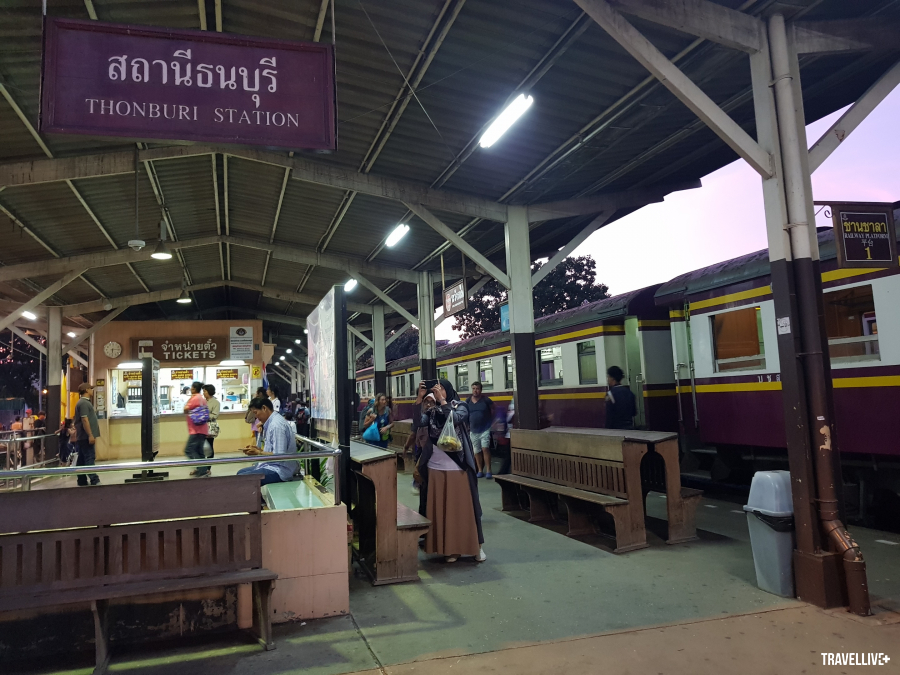
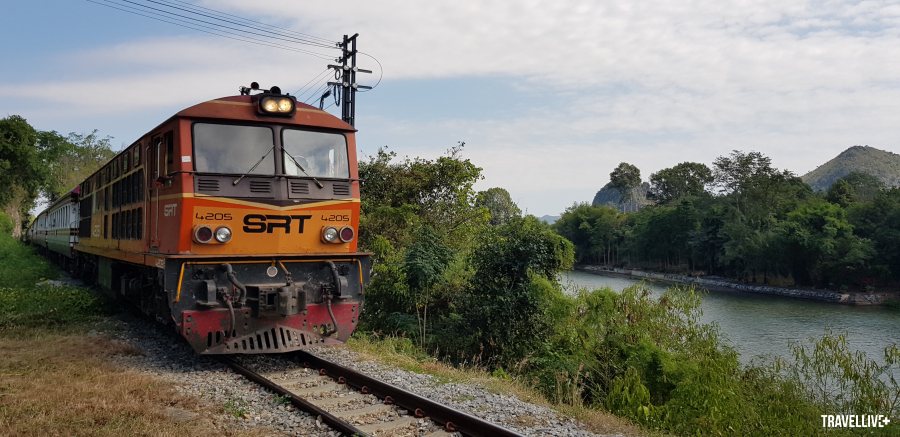
Wanting to make my journey more interesting, instead of taking a bus, I decided to choose the train. The train rumbled along from Thon Buri station on the Chao Phraya River in Bangkok and took two and a half hours to reach Kanchanaburi station. The train had many passenger carriages, typical of a commuter train, with old-fashioned interiors and rows of seats arranged horizontally and vertically, and a large standing area if it was too crowded. Tickets didn't have seat numbers; whoever boarded first got a good seat. There were even street vendors on board offering their wares. Although the train lacked air conditioning and fans, the windows were wide open, letting in a refreshing breeze.
Information about Kanchanaburi is scarce online, so asking for directions to explore the town was quite difficult. My only option was to use Google Maps. Furthermore, not all Thai people speak English well, especially in rural areas.
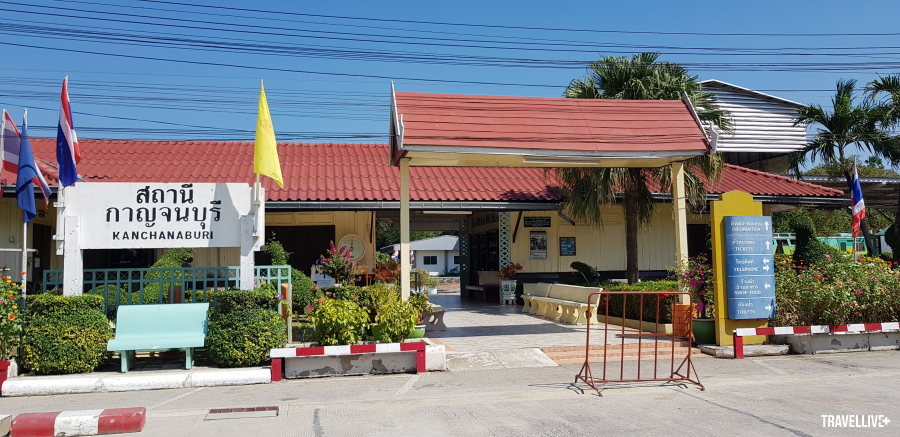
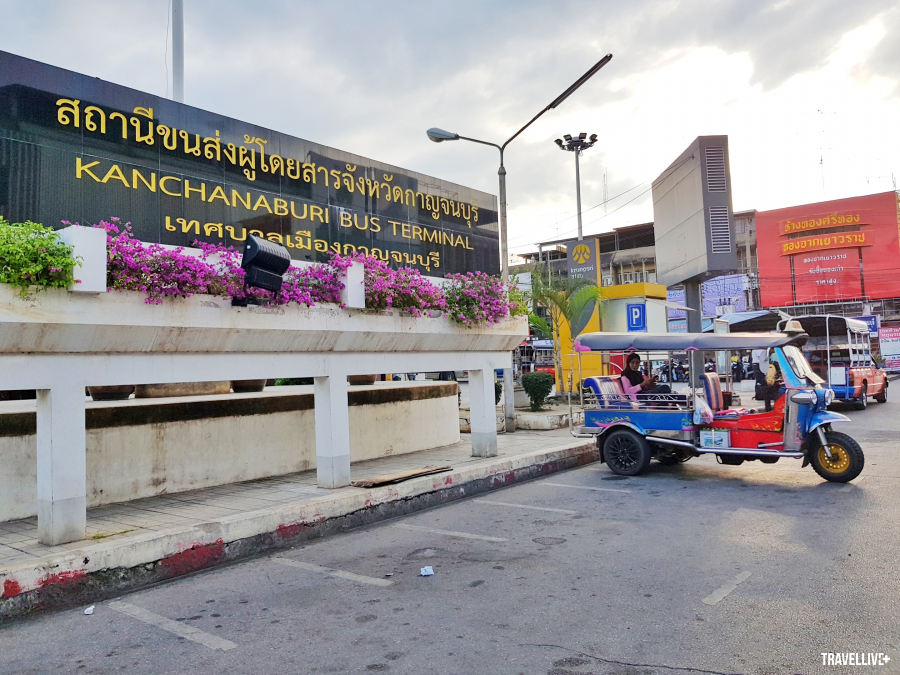
I hailed a songthaew (a cheap Thai public transport vehicle, similar to a Vietnamese three-wheeled vehicle but larger) in front of Kanchanaburi station, showing the printed address of my hotel and the map I had prepared in Vietnam. Even so, I had difficulty because the driver couldn't understand the Thai text transcribed using Latin characters. The hotel I stayed at in Kanchanaburi was quite far from the town center; after many winding turns, I finally arrived. It was about 2 km from the famous Bridge over the River Kwai.
After checking into my hotel, I strolled outside to find a place to rent a motorbike so I could explore the Kanchanaburi countryside more independently. The rental shop offered bicycles, scooters, and high-end motorbikes. However, it took me quite a while to get used to driving on the left lane (the opposite of Vietnam). The streets in Kanchanaburi town aren't as busy as in the city, giving a peaceful feeling at any time of day. The rural houses are sparsely distributed, with spacious yards and lush green trees.
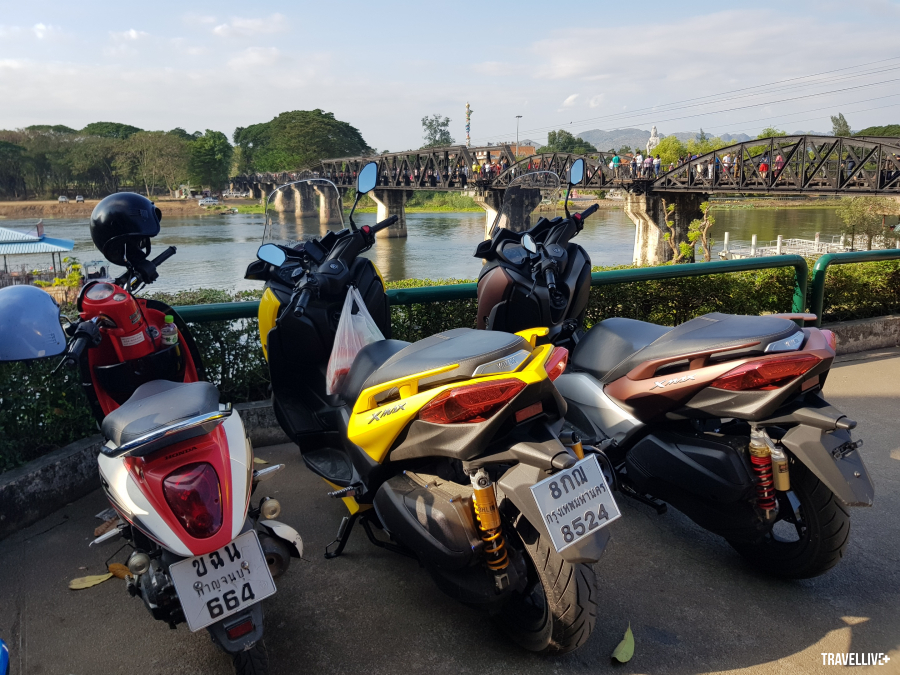
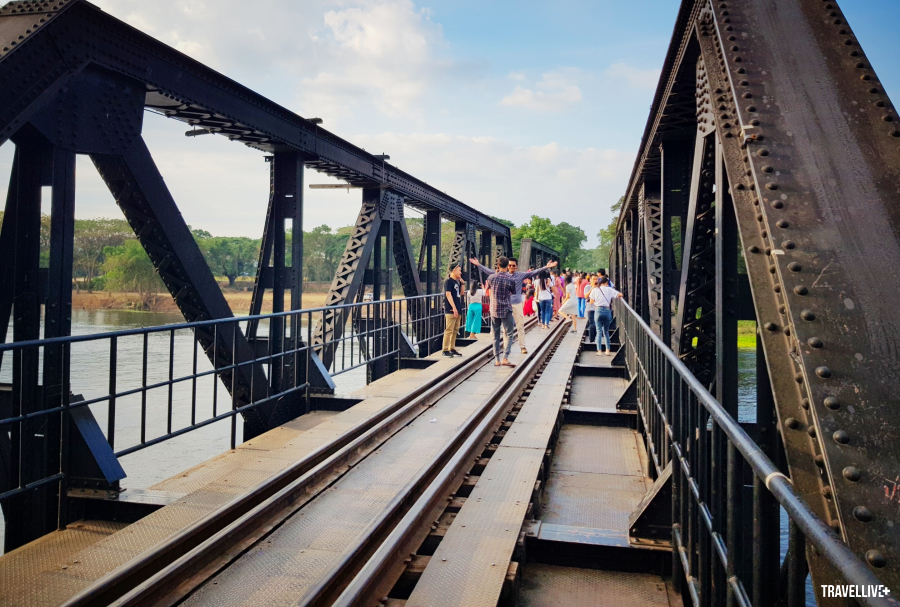
Following the map, I drove to the iron bridge over the River Kwai, a famous landmark in Kanchanaburi province. I learned about this bridge from the classic film "Bridge on the River Kwai" – a World War II film adapted from a book by a French author and an Oscar winner in 1957. The film depicts prisoners of war ordered by the Japanese army to build a bridge across the River Kwai to connect the Thai railway with Burma, and tens of thousands of people died from exhaustion during the construction process.
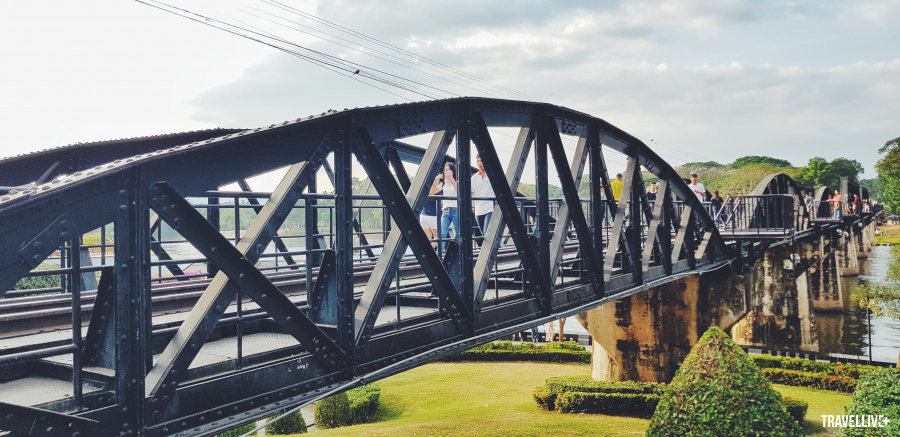
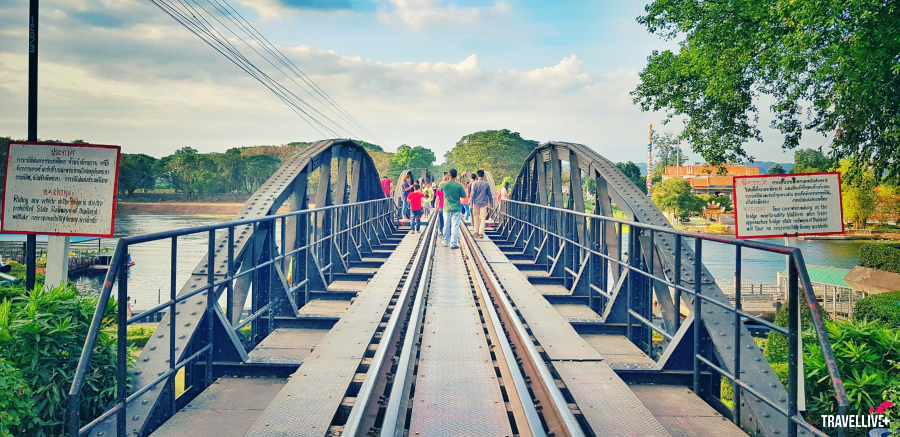
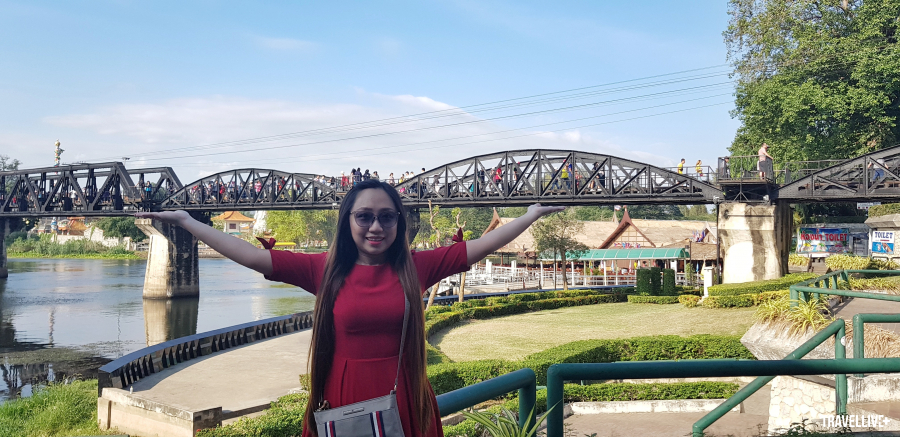
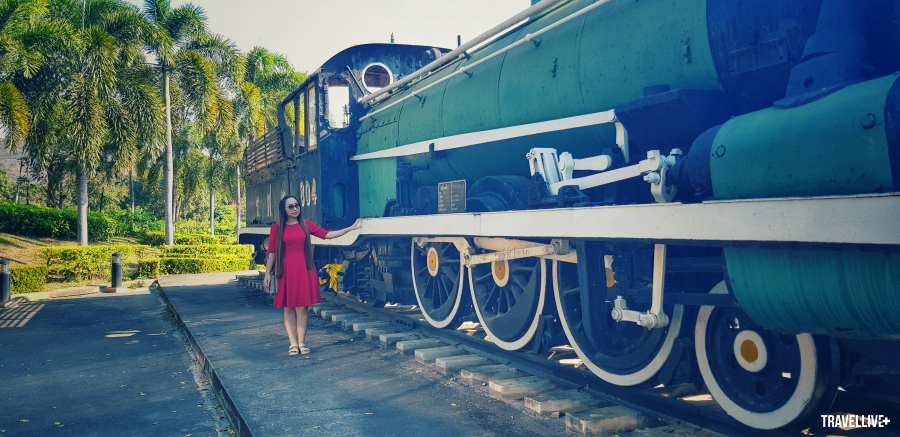
Right next to the bridge's entrance is an outdoor display area featuring the two front sections of the original World War II-era train that once ran across the Bridge of Kwai. Visitors can touch them and take souvenir photos with them.
The Bridge of Kwai has white-painted concrete piers, and its 11 main spans are made of wood and iron. I walked slowly on the railway sleepers and planks lining the sides of the bridge, enjoying the cool breeze in my hair. At the protruding sections of the bridge, I stopped to admire the vast river and the glimpses of low-lying houses. It was hard to believe that this picturesque and peaceful place had once been such a brutal place during World War II.
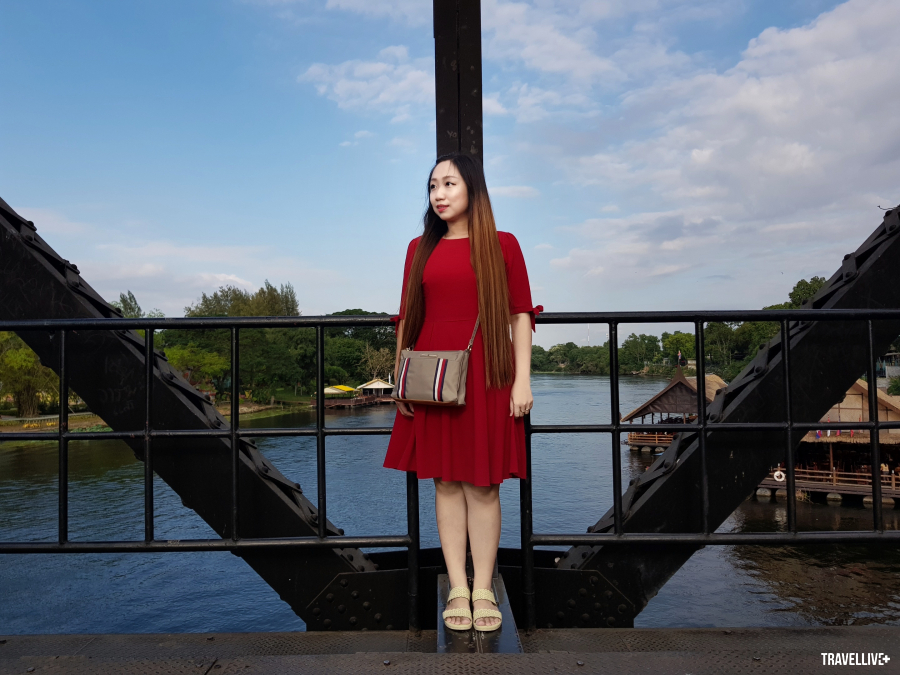
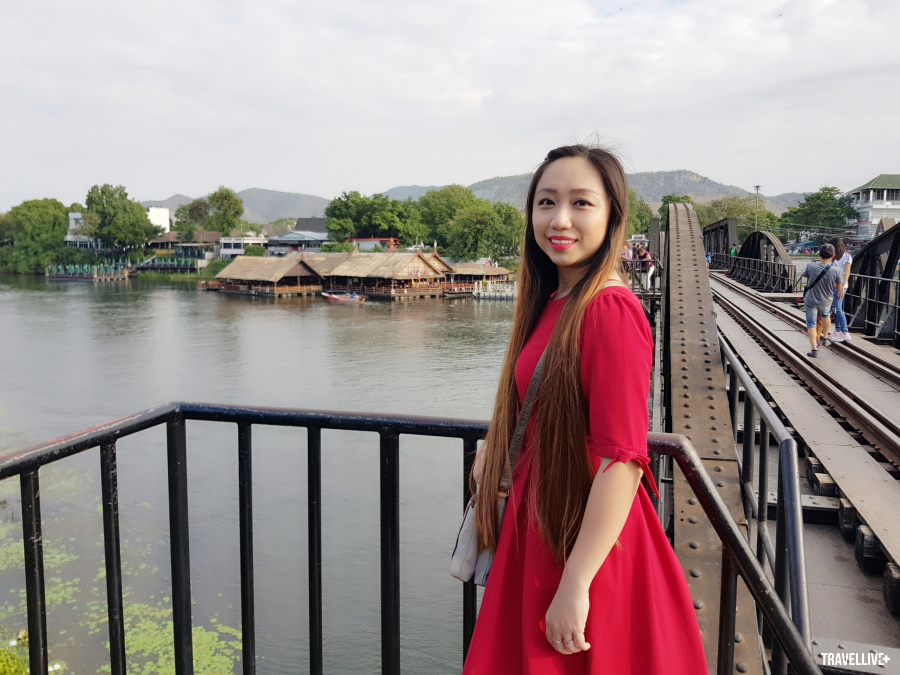
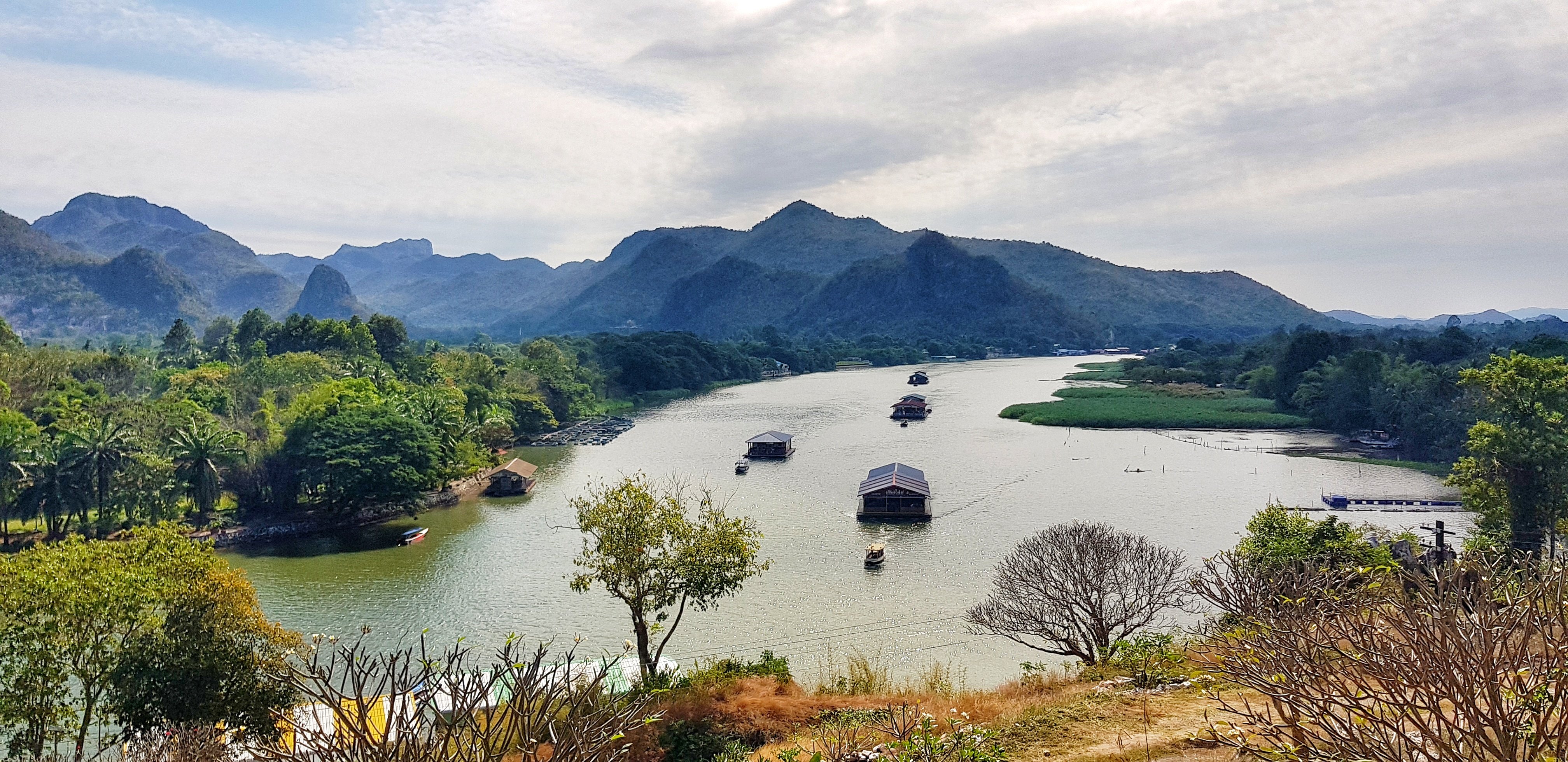
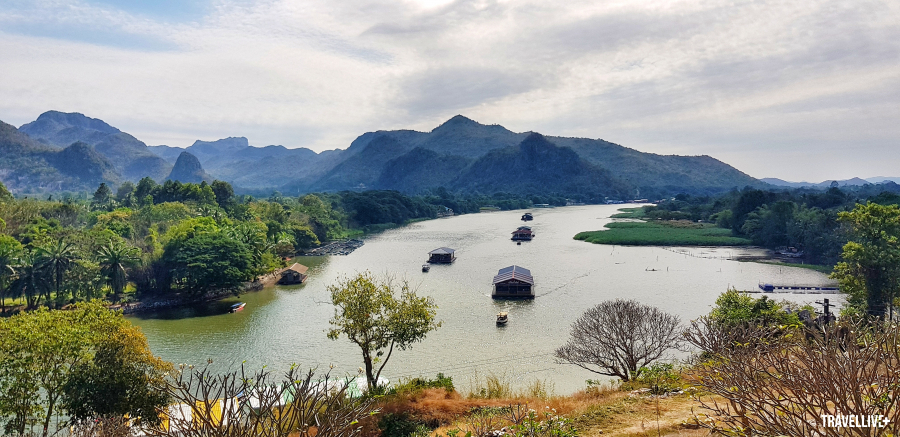
Driving smoothly along Highway 3228, 5 km from the town, I spotted a Buddha statue bearing the same name as Tham Khao Poon Temple on a hilltop. I turned at the fork in the road and drove straight up the hill, where a breathtaking natural landscape unfolded – rafts carrying tourists gliding leisurely on the winding River Kwai, blaring with the rhythmic sounds of Thai music, lush green trees, and in the distance, a range of undulating, deep blue mountains.
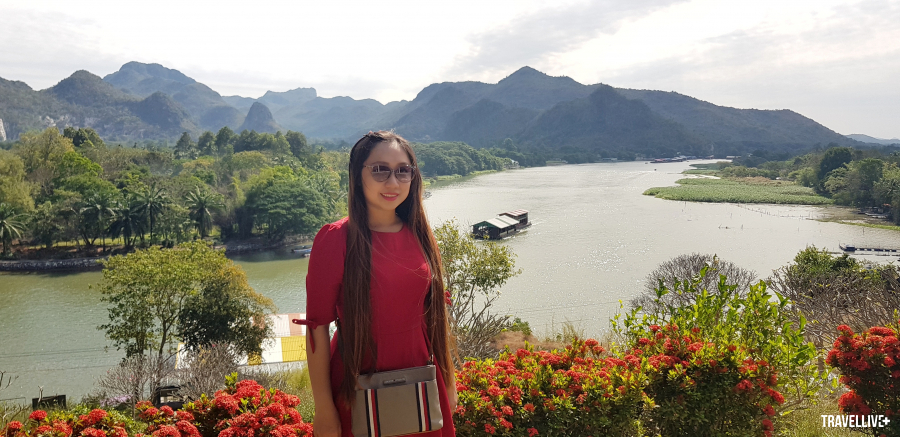
On the hill, there's also a section of railway crossing it, along with a preserved vintage train. Currently, the train is regularly put into operation, allowing tourists to experience the historical "Death Railway." And that's how the Thais do tourism!






.jpg.jpg)
.jpg.jpg)


.jpg.jpg)
.jpg.jpg)






