VI
VI


Text and photos:Nguyen Chi Linh
Mistaking me for a final-year university student majoring in culture, the kind owner of the Sun Rise Hotel offered me a special discounted tour around Jordan. He even assigned his cheerful driver, Allied, to accompany me throughout the trip.
The distance from Amman, the capital of Jordan, to Jerash is only 48km, and the scenery along the way begins to change. It's very different from the route to the Dead Sea, Petra, or the Rum Desert with its sprawling sand dunes. Here, lush green pine trees blanket the barren hills, creating a refreshing green landscape. The winding road meanders through rolling hills and mountains, shaded by verdant trees. Orange orchards and vegetable greenhouses line the valleys, giving me the feeling of a fertile and prosperous land. In the distance, the Jordan River meanders through the valleys, its color shimmering like a silver snake in the rising sun.
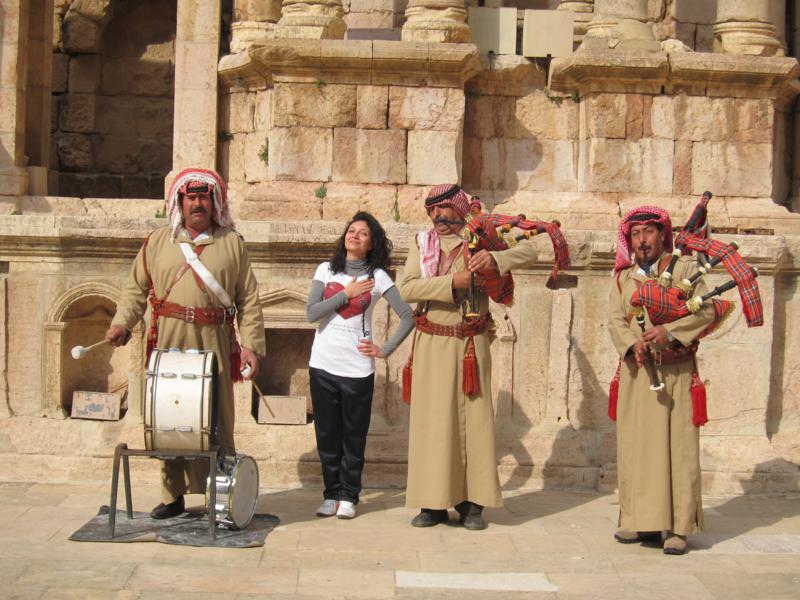
According to the plan, I was going to visit Ajloun Castle before heading to Jerash. Allied quickly turned right to head towards Ajloun. The journey slowed down a bit because the roads within Ajloun were quite narrow, resulting in constant traffic jams. After some winding maneuvers and climbing steep slopes, he finally brought me to Ajloun Castle.
Ajloun – characteristic architecture of the early Islamic period.
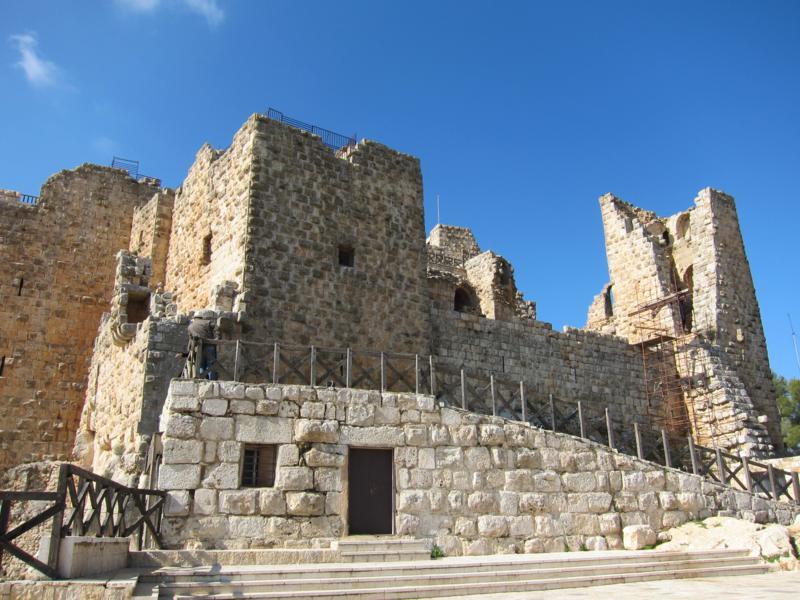
Ajloun Castle, or Ajlun, often called the Ayyubid Fortress, is located atop Jabal Auf mountain, about 5 km from the city of Ajloun. Because of its proximity to Ajloun, the castle is named after the city. The fortress was built between 1184 and 1185 in the early Islamic architectural style by King Izz al-Din Usama – grandson of King Salah ad-Din al Ayyubi. At the time, it was considered one of the rare fortresses built to defend the country against attacks from the Crusades in the south of Karak and in the west of Bisan. From its central position, the king's army could extend its reach to protect much of the fertile Jordan River valley, controlling three main routes leading to the Kufranjah, Rajeb, and Yabes deserts. From here, the king's army could also protect the vital trade route between Jordan and Syria, while also safeguarding the natural resources that Ajlun had bestowed upon it: iron ore.
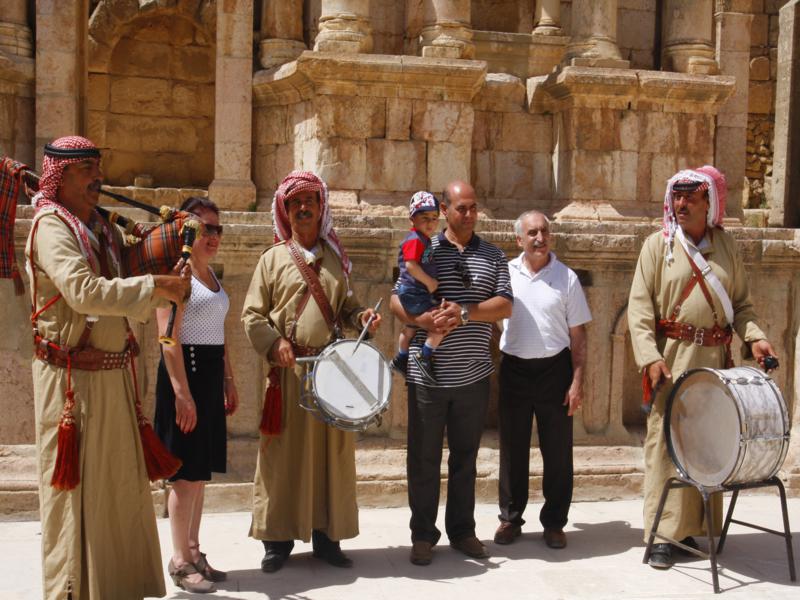
It was still early, so only a few Japanese tourists had arrived. The chill emanating from the rocks sent shivers down my spine as I climbed the steps leading to the watchtowers. From the highest peaks, the lush green olive groves of the Jordan Valley stretched out below—a rare sight in the Middle East.

The original fortress consisted of four towers at the four corners. Connecting these four towers were thick brick walls. Surrounding the fortress were moats approximately 16 meters wide and 12-15 meters deep.
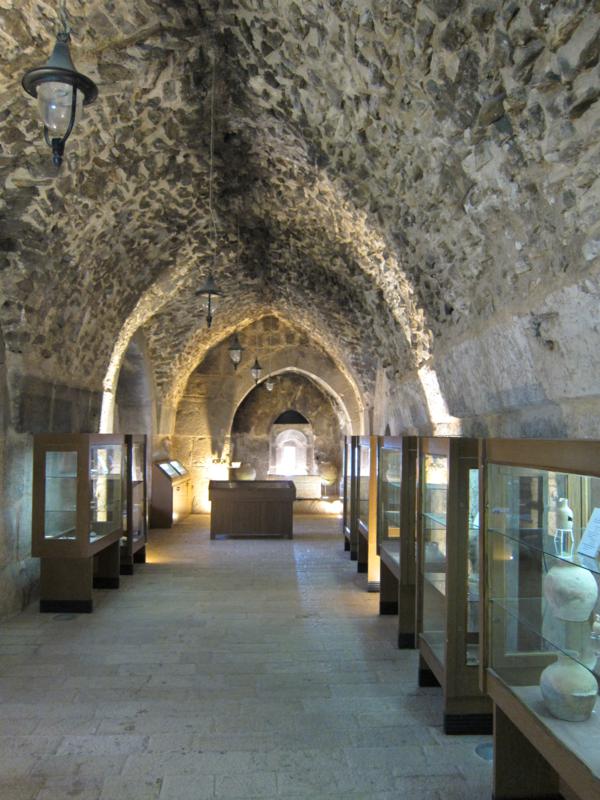
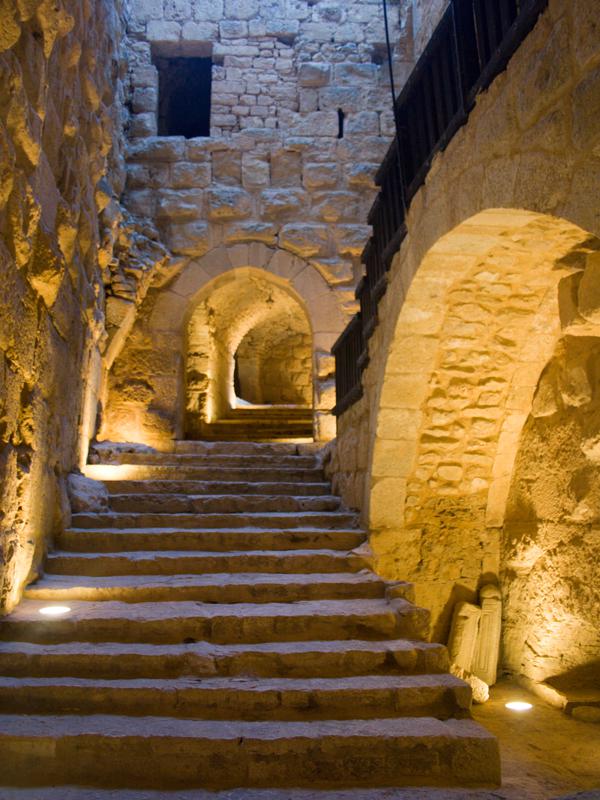
I squeezed through the doorways with their distinctive arched architecture from the modern era. Inside the castle, there were still palaces, kitchens, wine cellars, and other things reserved for royalty, along with a gallery displaying artifacts found there.
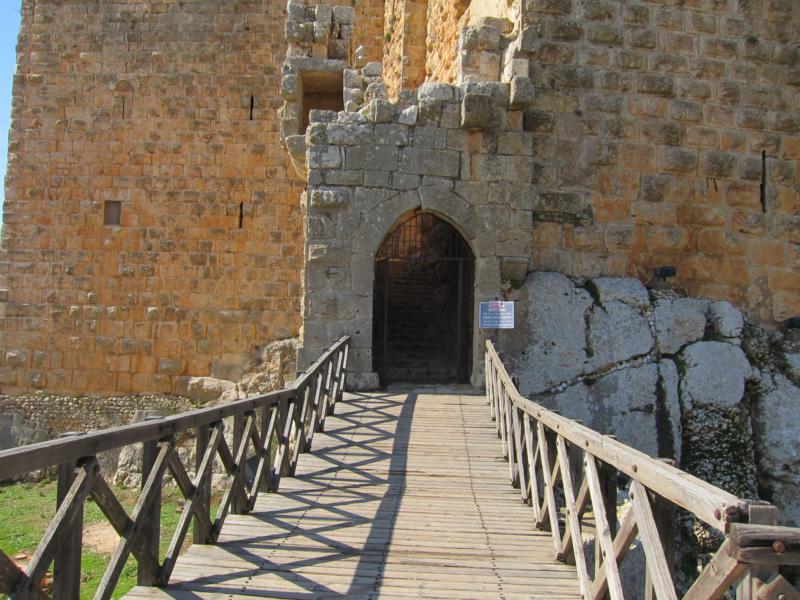
During the Ottoman Empire, the fort served as a military base. In 1812, Swiss traveler Johann Ludwig Burckhardt, along with 40 locals, discovered the fort lying dormant deep in the forest. Earthquakes in 1837 and 1927 also affected the fort's architecture to some extent.
The Pompeii of the Middle East
From Ajloun Castle to Jerash was only about 16km. As soon as the Roman city appeared before me, situated along a major road leading into modern-day Jerash, I hurried towards it, forgetting that I needed to get an entrance ticket.
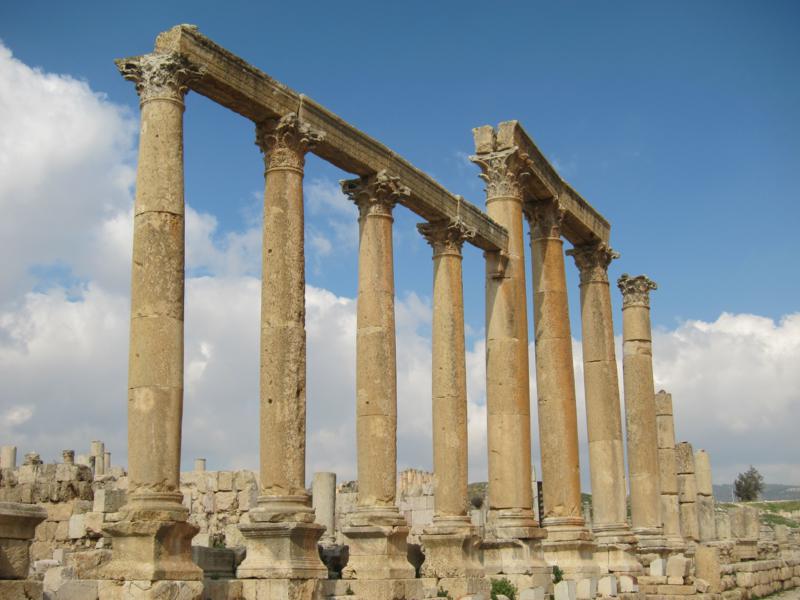
In ancient times, the city of Jerash was called Gerasa, which in ancient Latin means "the city of Antioch on the banks of the golden river." The city's name was derived from the Roman language because Antioch was one of ten cities included in the Roman emperors' development plans for Syria. In ancient Roman, "Antioch" means "steadfastness," and perhaps the name "Jerash" originated from a mispronunciation of "Gerasa."
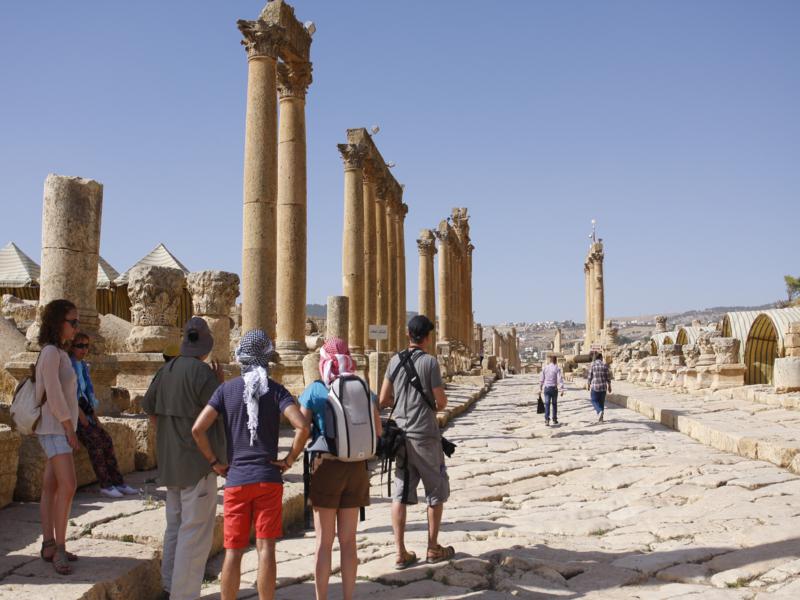
When mentioning Geresa, people often give it another beautiful name: "the Pompeii of the Middle East or of Asia." This name arose in remembrance of the beautiful Roman city of Pompeii, which was buried by a volcano – and Jerash is architecturally very similar to Pompeii. When talking about Jerash, people also don't forget to mention a great mathematician of antiquity: Nicomachus, the first to propose the "theory of numbers" or "introduce arithmetic"...
By the end of the 1st century, Jerash had begun to bask in its glory: prosperity. In 106, the Roman Emperor Trajan commissioned the construction of highways to connect the cities within the planned area and to concentrate trade specifically for Jerash. In 129-130, the Roman Emperor Hadrian visited Jerash. To commemorate this momentous event, a horse racing arena named after Hadrian was built in Jerash.
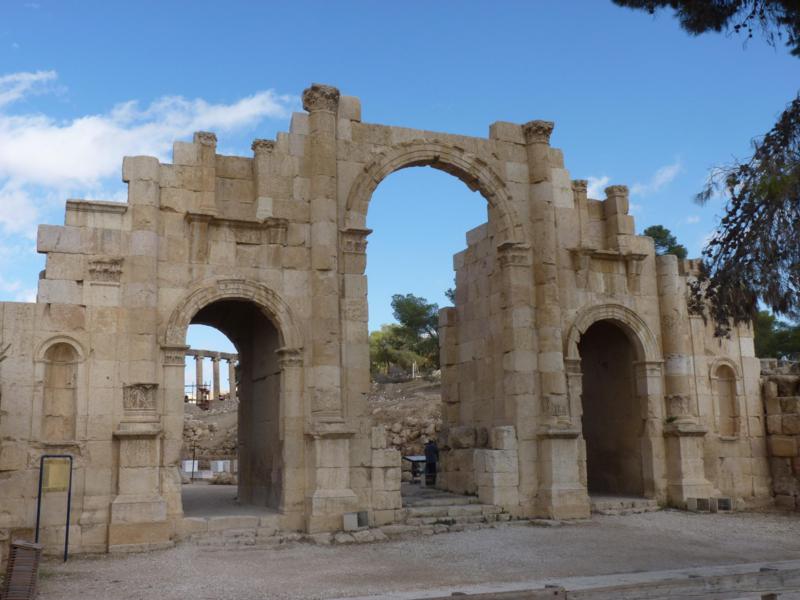
Most of the major constructions in Jerash at that time were funded by the city's wealthy merchants. From 350 AD onwards, a large Christian community lived there. Between 400 and 600 AD, more than 13 churches were built, and most of their floors were mosaiced with stone. The city's cathedral began construction in the 4th century. In addition, ancient Jewish synagogues have been found scattered throughout Jerash, and traces of this include mosaic floors depicting the life of Noah.
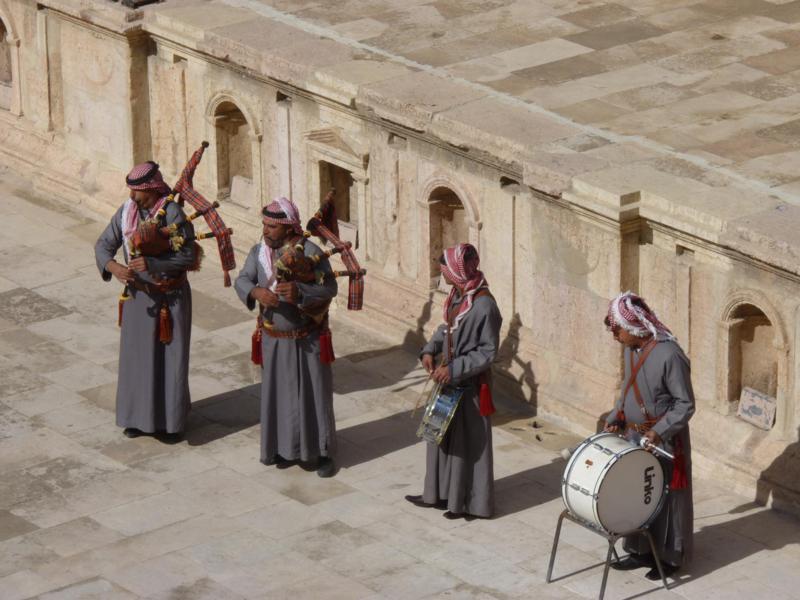
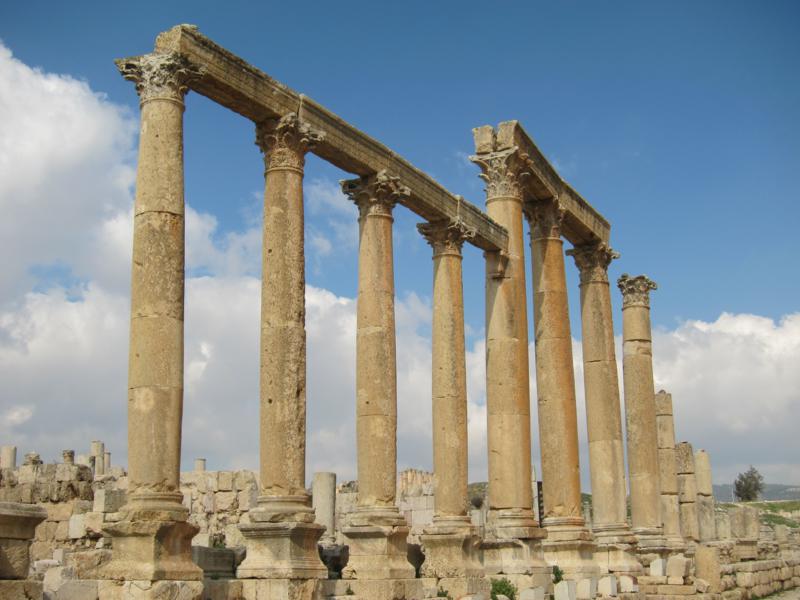
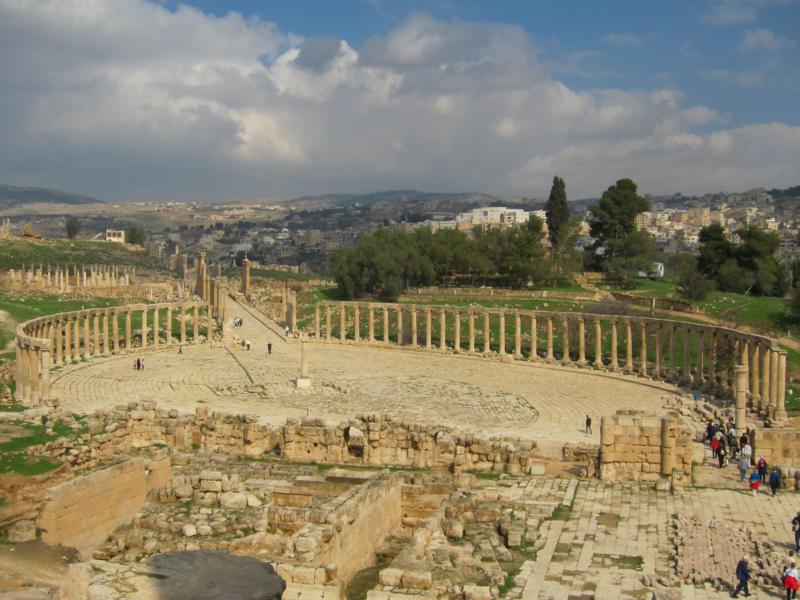
The Roman relics left in Jerash, from the outside in, include: Hadrian's Arch, built between 129 and 130 AD to commemorate Emperor Hadrian's visit to Jerash; the Hippodrome; the Oval Forum, a public square where community gatherings and religious festivals took place; the Corinthium Column, a distinctive Roman architectural feature; the Cardo or Colonnaded Street; the temples of Zeus and Artemis; two Roman baths and surrounding smaller temples; two Roman theaters, a larger one to the south and a smaller one to the north; and the city walls.
Preserve the soul of Jerash
I wandered through the ancient city of Pompeii in the Middle East for about three hours, having to climb up the hillsides to reach the temples. While munching on bread on the steps of the grand theater, I watched the tourist groups flocking there to experience the resounding acoustics of an open-air theater.
My heart suddenly sank as I listened to the soaring, operatic voice of an Italian man performing for our tour group: the Romans were truly magnificent in their architecture during ancient times. Therefore, it's essential to preserve the essence of Jerash so that future generations can still see glimpses of the legendary Pompeii.
Additional information:
Since Jordan does not have an embassy in Vietnam, tourists need to contact the Jordanian embassies in Indonesia or Malaysia to apply for a visa.
+ Airlines operating flights from Ho Chi Minh City to Amman include: Turkish Airlines, Emirates Airlines, and Qatar Airways.
+ To get to Jerash from Amman: go to Raghadan Al Seyaha bus station (next to the Roman Theatre), take bus number 6 to Tababour. From Tababour, take another bus to Jerash. Bus fare per trip: 0.85 JOD
+ Entrance fee to Jerash: 8 Jordanian Dinar (JOD), show fee is 10 JOD. Opening hours in winter: 8:00 AM - 5:00 PM. Entrance fee to Ajloun Castle: 1 JOD (1 USD = 0.7 JOD).
+ When buying souvenirs around Jerash, bargain down to 2/3 of the asking price. Avoid buying Roman coins from street vendors. Buying and selling antique coins is illegal in Jordan and there's no guarantee they are genuine.
+ You should visit the Jerash Archaeological Museum, which houses artifacts found in Jerash.