VI
VI


The trend of checking in with a famous breakfast spot.
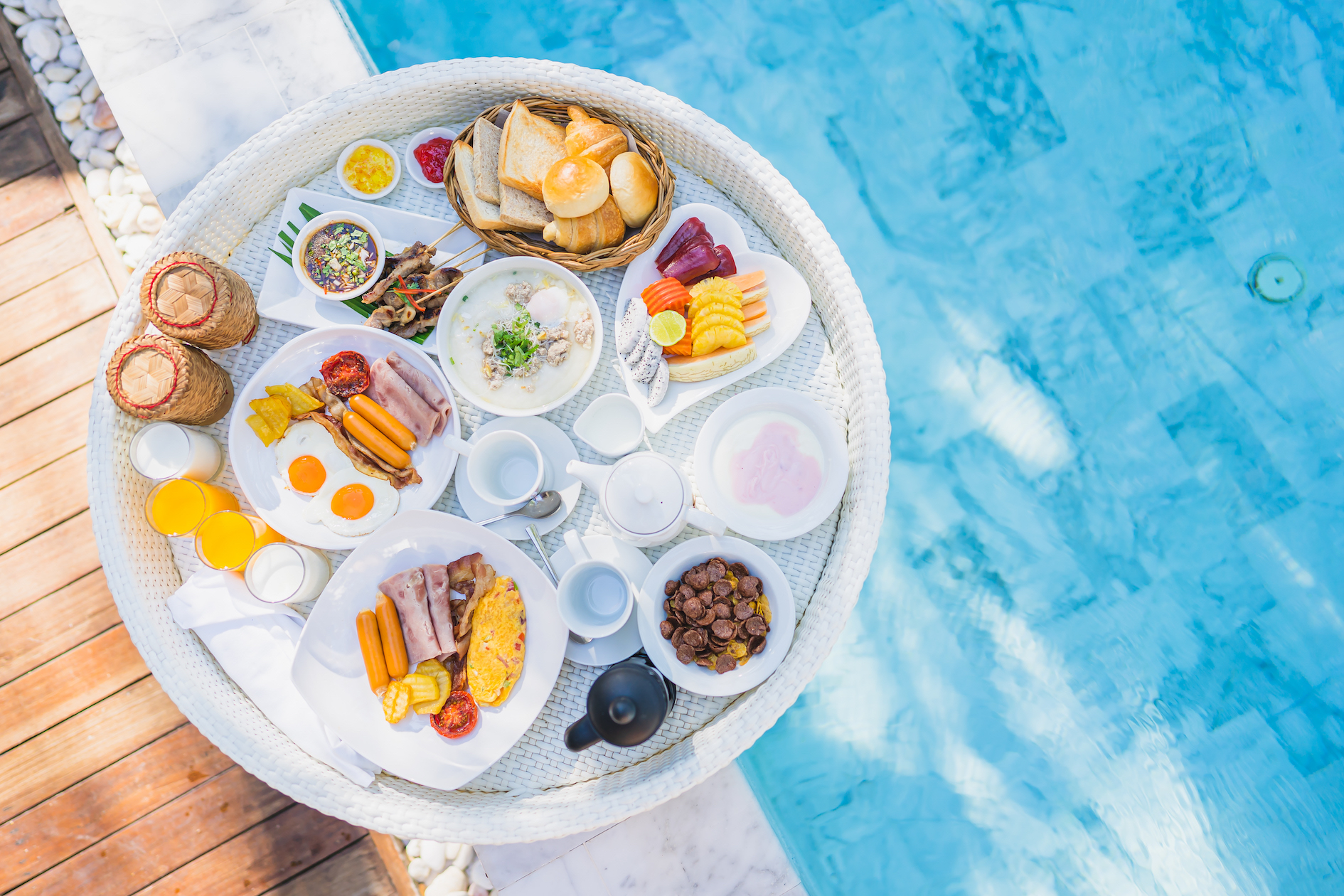
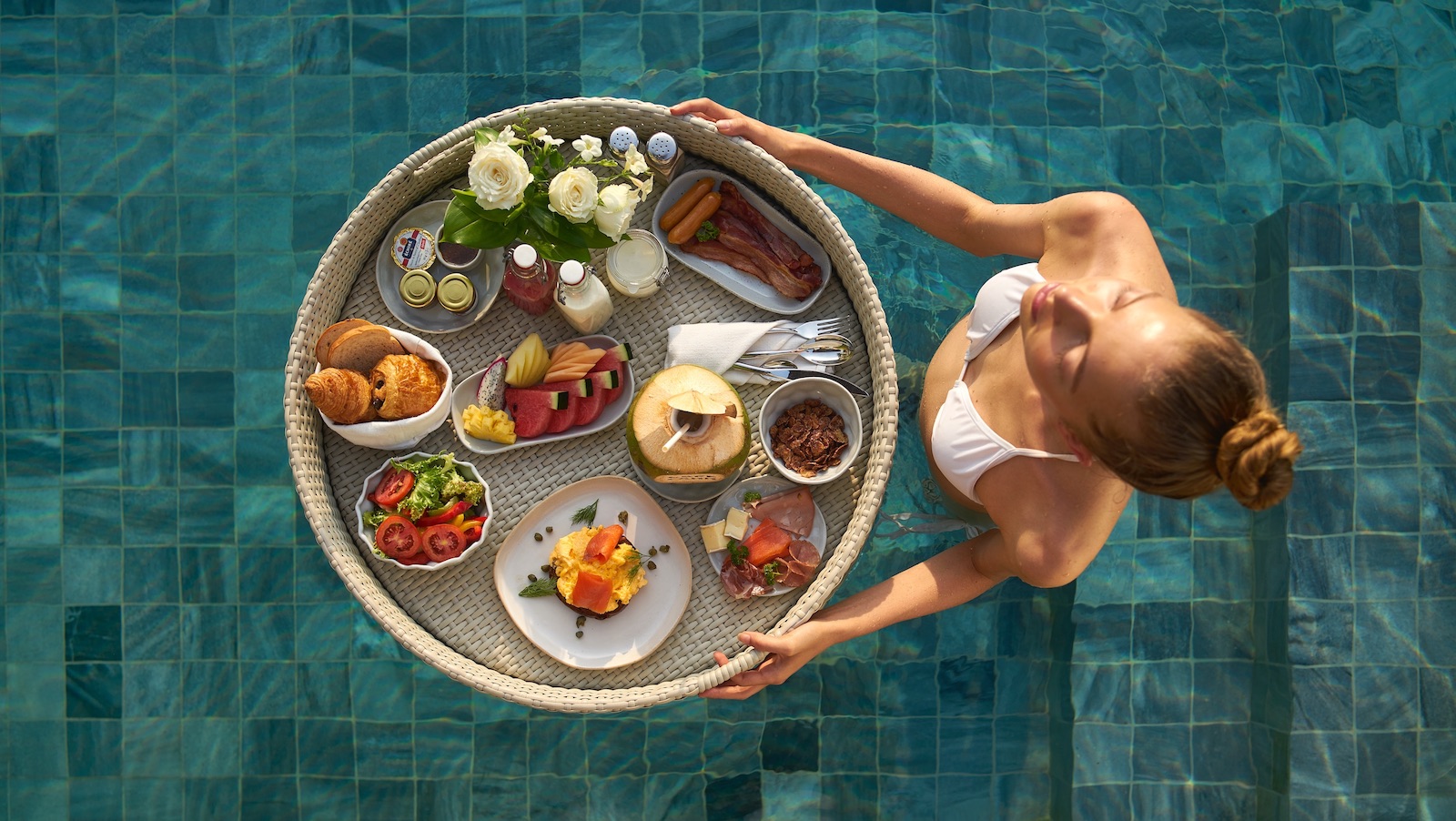
Floating breakfast is an complimentary service offered by high-end hotels or resorts, often used as a marketing tool to attract tourists. Instead of eating breakfast in a restaurant or their room, guests are served their meal by the pool. This includes coffee, toast, fruit, pastries, and more, placed in a large wicker basket that floats gently on the water. These baskets are often decorated with bright tropical flowers to make them more visually appealing and photogenic.
According to CNN, this trend is very popular in the Asia-Pacific region, especially in secluded resorts in Thailand, Fiji, or the Maldives. Most people believe this trend originated in Bali, Indonesia, although it is unclear which specific resort or hotel came up with the idea.

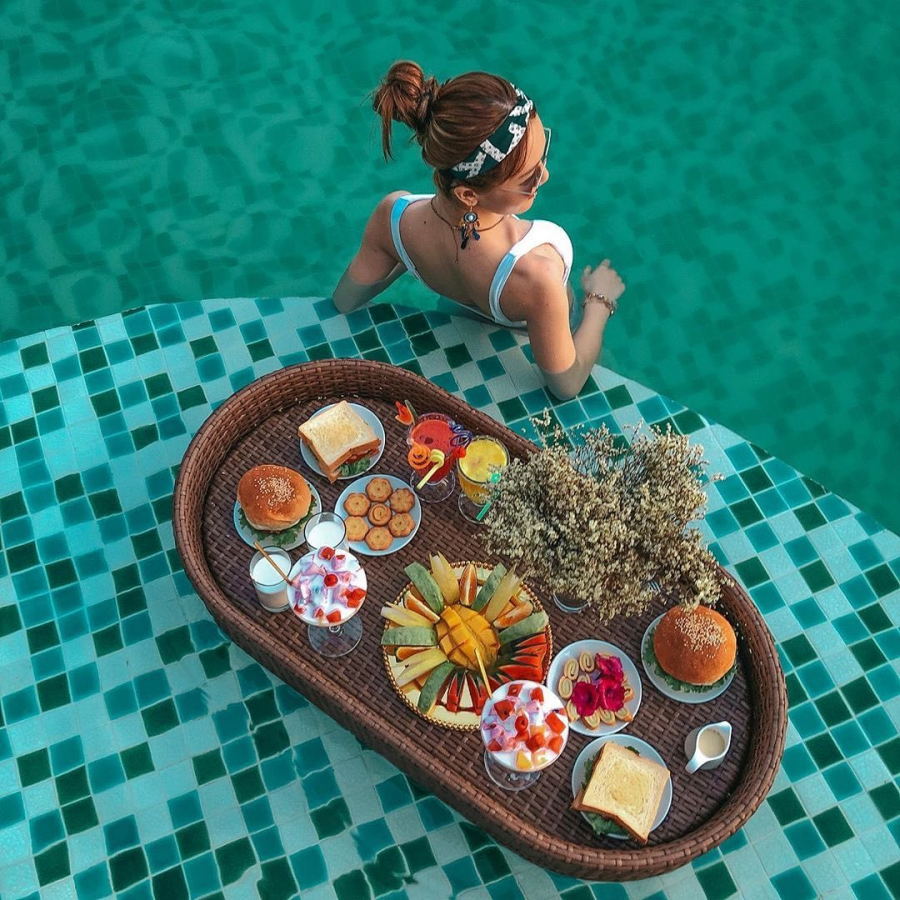
Floating breakfasts have been on hotel and resort menus for the past five years. However, the Covid-19 pandemic has made this trend more popular than ever, as travelers tend to avoid buffets and communal dining rooms.
Of course, choosing a private pool for each floating breakfast also makes sense, because for a good photo, a calm pool is more effective than a public one. Nobody wants to start the day next to mischievous children splashing water around, risking their food basket tipping over at any moment.
However, not everyone gets to enjoy beautiful moments with their floating breakfast, and many tourists have been disappointed because the experience of having breakfast in the pool is not what they imagined.
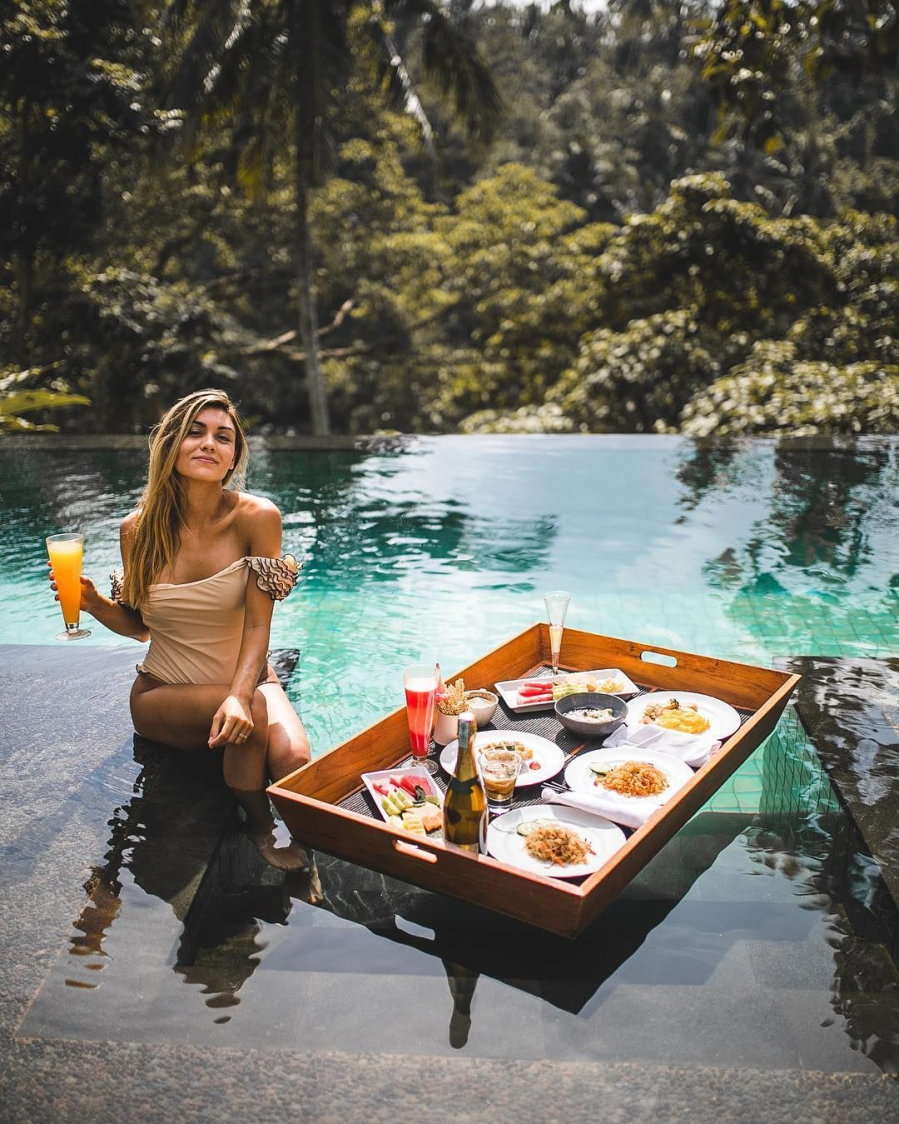
chaotic experiences...
Although the vibrant colors and buoyancy make floating breakfasts look perfect in social media photos, capturing a good shot requires being at the pool early in the morning or consuming caffeinated beverages to stay awake, which doesn't seem as ideal as we might think. So, are floating breakfasts just for photos, or do tourists actually enjoy this type of breakfast?
James Booth, a Sydney-based reporter who experienced a floating breakfast in Bali in 2019, admitted that... they weren't as idyllic as he imagined. According to him, these kinds of meals are almost exclusively for showing off on social media.

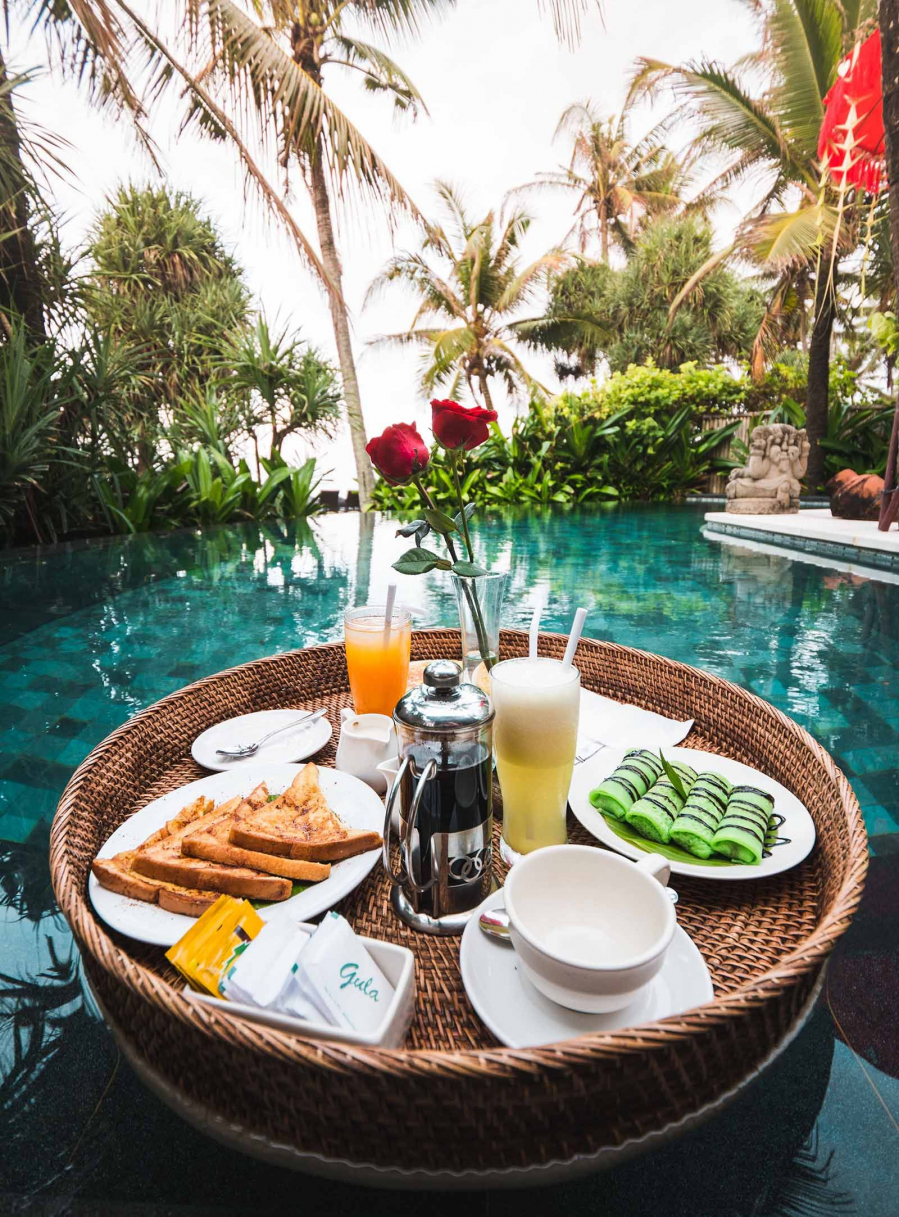
In concept, the meal service sounded novel and interesting. However, the reality was quite the opposite. Although Booth had scheduled the meal to be delivered on time, he ended up oversleeping by 20 minutes.
The first reason is that to capture a beautiful scene with clear skies, you have to time it perfectly with the weather. Next, you have to wake up on time because the tropical climate makes the experience of having breakfast by the pool quite challenging with the intense sun. "I realized that serving meals in such a humid environment wasn't ideal at all," Booth recounted.
Even though the food had gone cold, Booth was determined to take a picture to post on Instagram. The hotel had cleverly arranged the food basket beautifully, but Booth still struggled because he was still… sleepy. Furthermore, the food basket kept drifting in different directions, making taking the photo difficult.
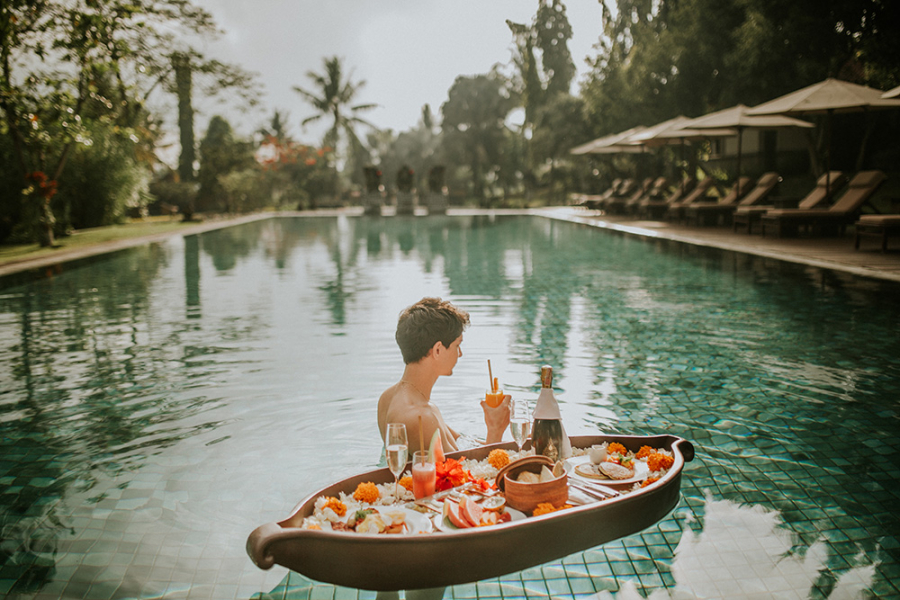
"I was quite embarrassed to ask the hotel staff for help, so I tried to manage on my own. As a result, I spilled food everywhere. Coffee was splattered in the pool, and the bread was soaked."
After that experience, Booth realized that diving into the water early in the morning just to get a good photo wasn't worth it. "If I could try again, I would drink coffee to stay awake and not spill anything, find a place to stand in the pool instead of awkwardly wandering around."
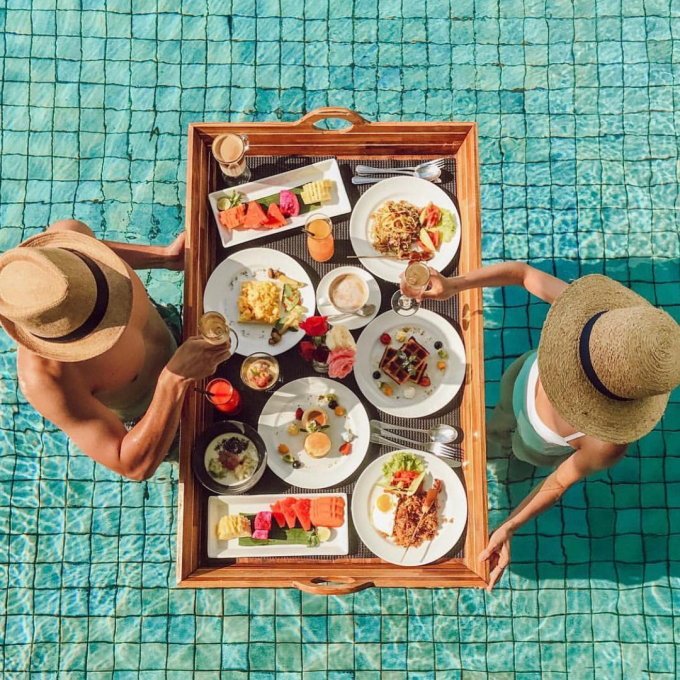
Jayne Gorman, a traveler who also wrote on ourtravelhome about her "failed" breakfast experience, said:
"I made Justin (my husband) take a million different photos of me because the food just kept getting blown away."
While having breakfast in the pool, my wife and I each held the tray while the other cut the pastries. Having been in the water since early morning, we felt quite cold and a little... silly, while pool water spilled onto the salad on the tray. So we ended up sitting on the edge of the pool to warm up, finishing our breakfast and using one foot to keep the tray from rolling away."
free advertising tools
Despite the less-than-perfect real-life experience, the numerous celebrities and young people posting stunning check-in photos have fueled the spread of the floating breakfast trend. Like afternoon tea or evening banquets, floating breakfast has now become a luxurious and expensive service in high-end hotels.
Amid the pandemic, budget resorts have also added this service at affordable prices to attract guests.
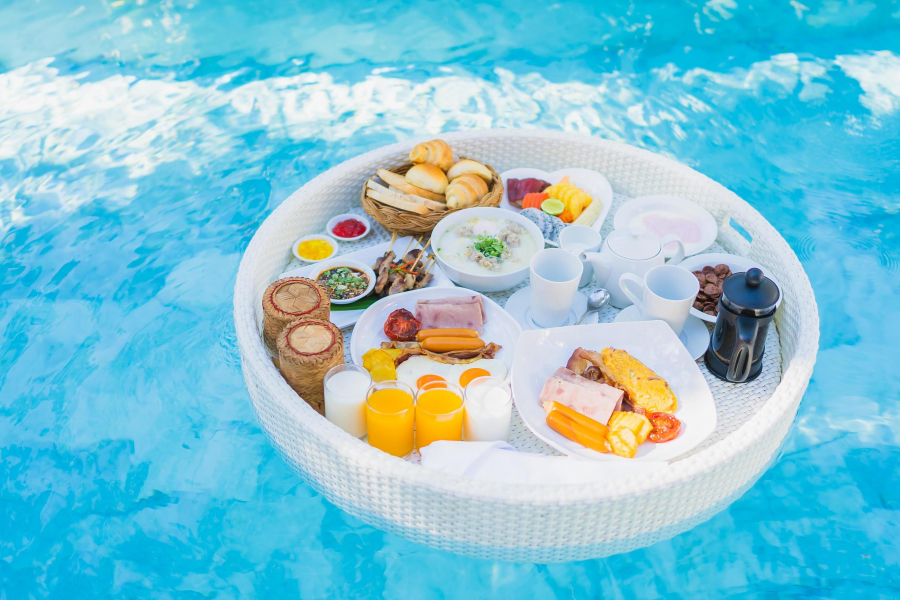
Timo Kuenzli, General Manager of the Cape Fahn Hotel in Koh Samui, said that nearly 100% of their guests have used the floating breakfast in the past year. He also noted that the Asian market definitely has an advantage in terms of Instagram visibility compared to other markets.
Besides producing beautiful photos, floating breakfasts also serve as a free marketing tool. People see these moments online, search for the check-in location, and then want to experience it for themselves.
And because of its increasing saturation, resorts must continuously improve the quality of their services to stand out. Many unique ideas have emerged, such as: Six Senses Uluwatu in Bali serving meals in a red heart-shaped basket; Anantara in Koh Phangan, Thailand, featuring "sunset sushi" on its floating menu; and Cape Fahn piloting a "floating afternoon tea" model.
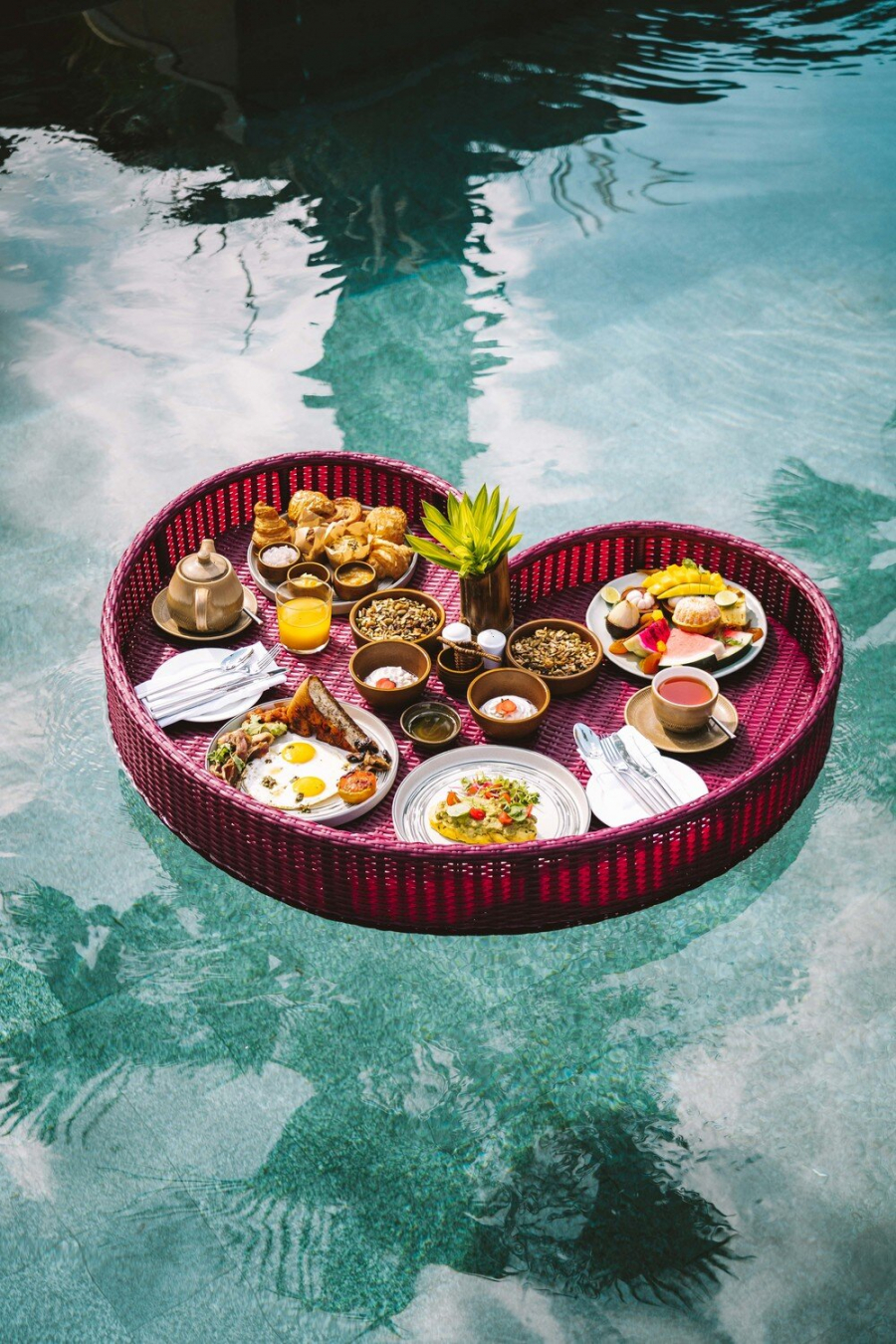
Regardless of whether tourists actually eat the floating breakfasts or are just there for "Instagrammable" purposes, these hotels only need to know that their images are getting free advertising on social media.
However, tourists should prepare themselves mentally, because the floating breakfast experience might not be as idyllic as they imagine.