VI
VI


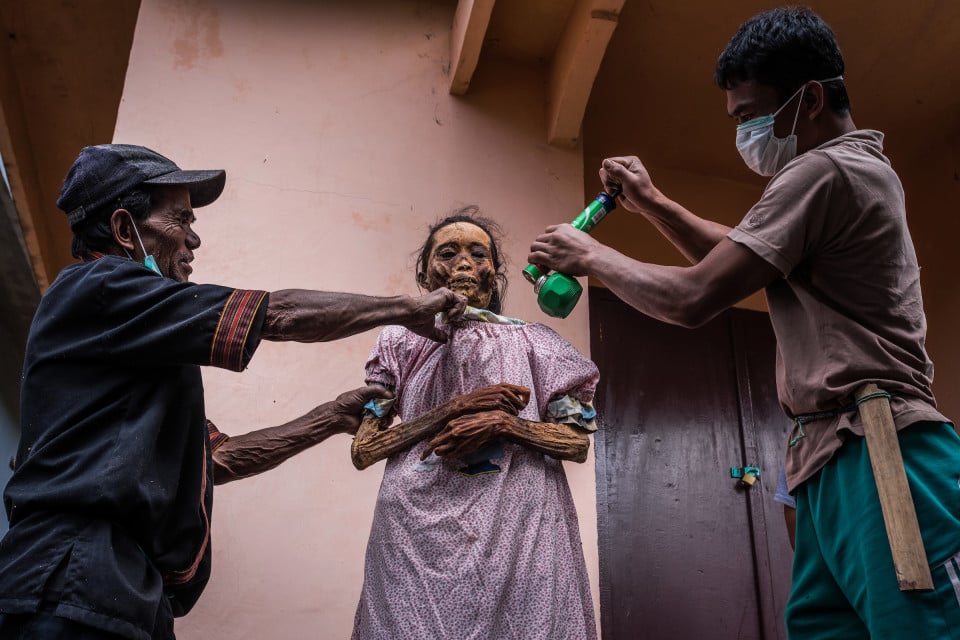
In a mountainous region of Indonesia, the Toraja people have a custom of mummifying the dead and carefully caring for these preserved bodies as if they were still alive.
The Toraja are an indigenous minority group with a population of approximately 1 million people, most of whom live in South Sulawesi – where it is believed that after death, the spirit of the deceased continues to reside in the home, so family members still provide them with food, drink, clothing, and even tobacco.
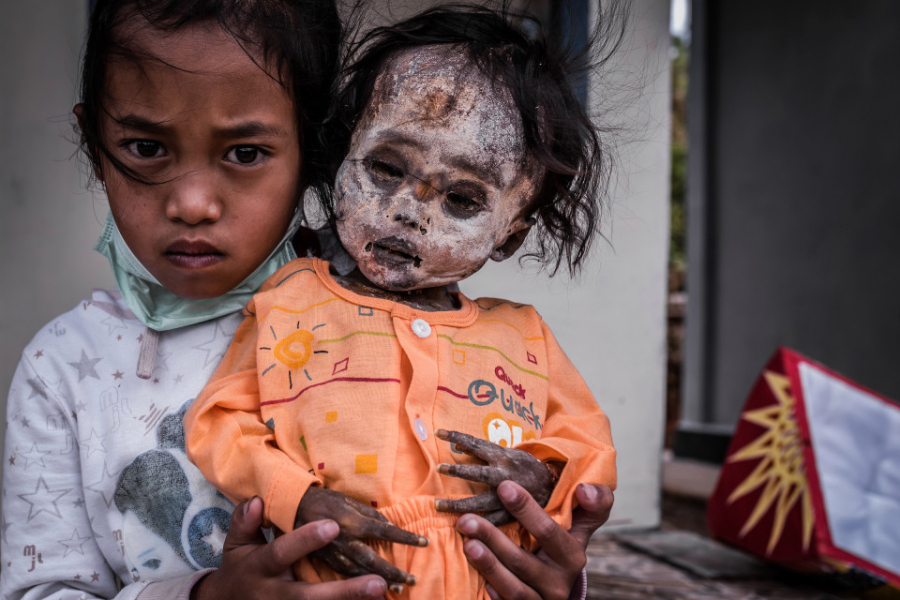
Clara is pictured with her younger sister, who passed away at the young age of 6.
Just days after death, the skin and flesh of the corpse are preserved to prevent decay and rot by covering the body with a chemical solution called formalin – a mixture of formaldehyde and water. The stench from the deceased's bodies is so strong that families will store large quantities of dried plants next to the body to mask the odor.
For the entire tribe, a well-preserved and cared-for body brings good fortune and happiness, so families always try their best to ensure that the bodies of the deceased remain in the most beautiful form possible.
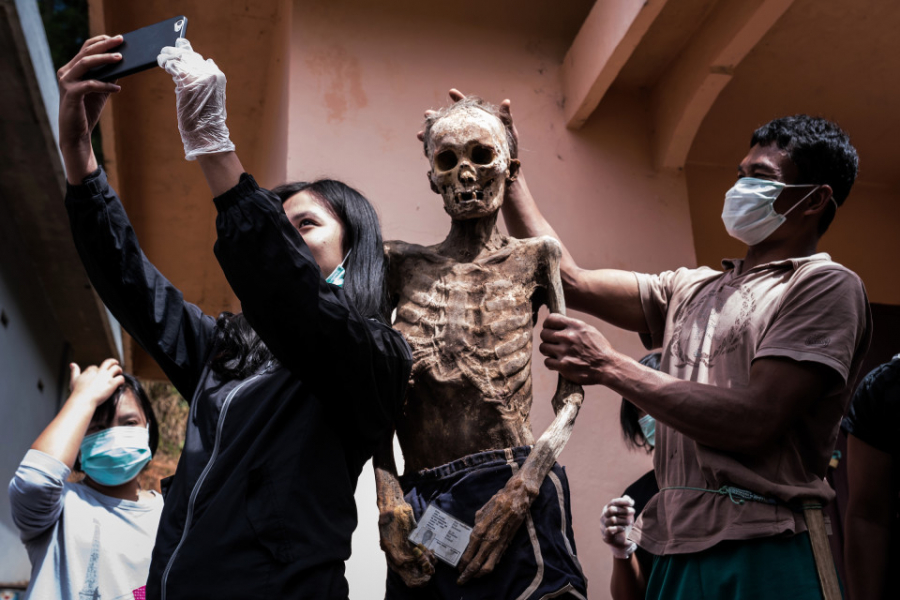
Yuanita took a selfie with Allo, a relative who passed away more than 20 years ago.
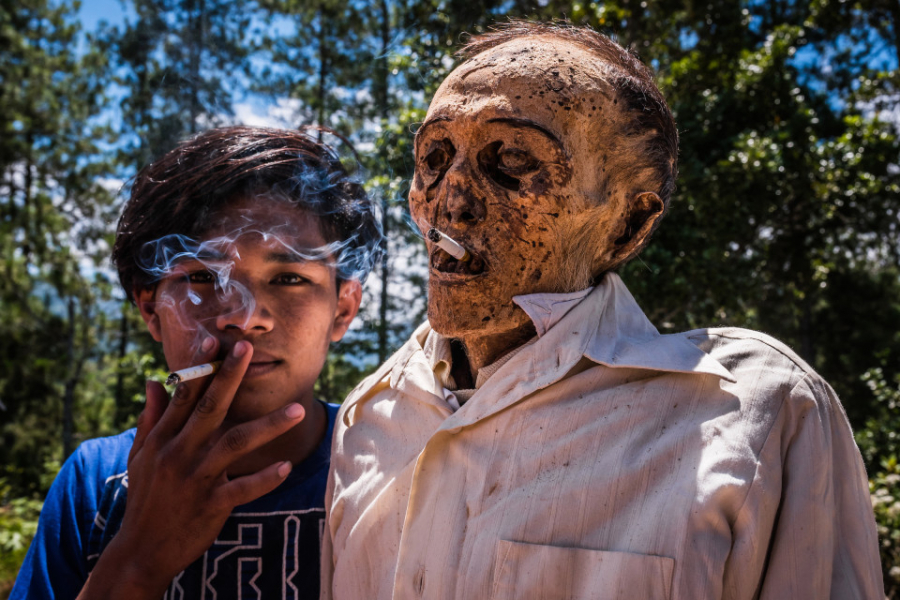
Songa passed away over 40 years ago, but he still gets to smoke with his grandson.
Afterward, these bodies are wrapped in blankets and stored on beds in a room within the house; or, for wealthier families, the bodies will "rest" in a tongkonan—a traditional Torajan "ancestral" house with a distinctive, boat-shaped, curved roof that allows rainwater to drain away without getting trapped above.
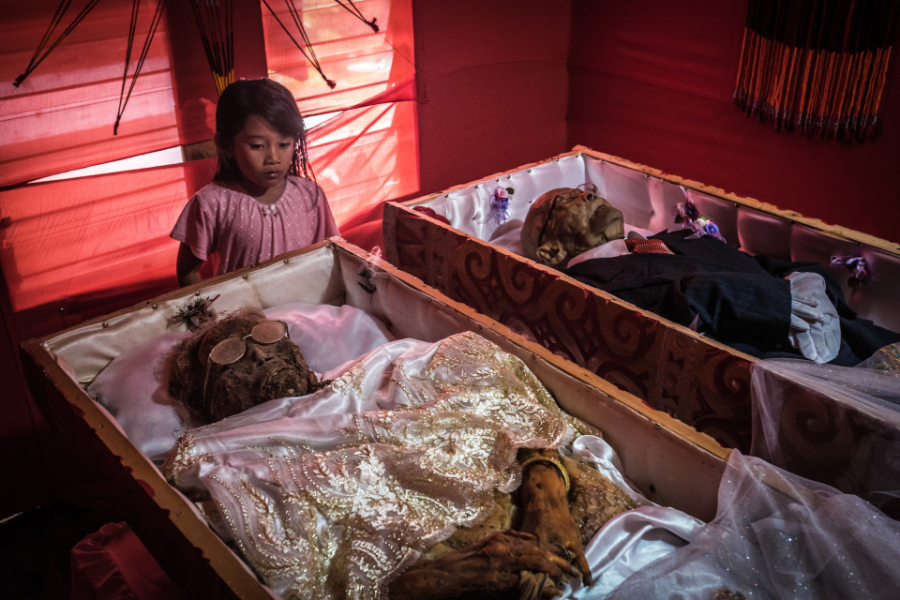
The bodies of deceased relatives are kept by the Toraja people in their homes or in special ancestral places until the funeral is performed.
These bodies will remain in the tongkonan house until the funeral takes place. However, in some cases, this period can last for years or even decades because many families lack the financial means to perform this elaborate funeral rite.

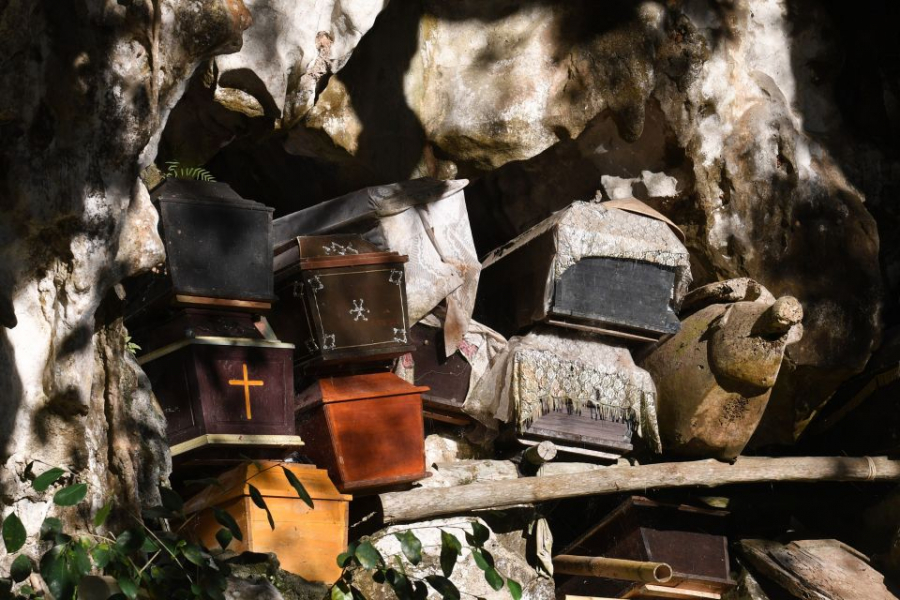
The bodies are kept in coffins placed in the cliffs of Sulawesi.
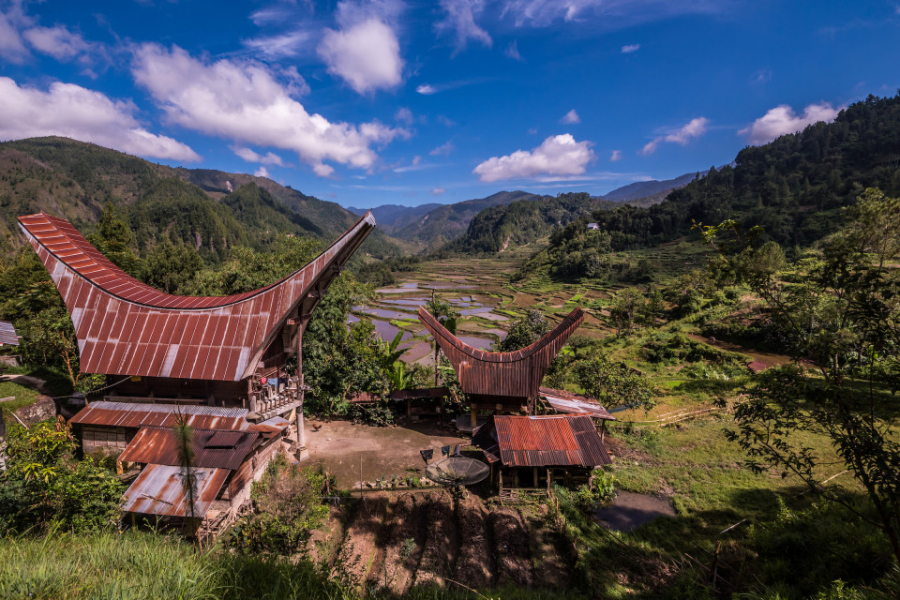
The magnificent scenery of the mountainous region where the Toraja people live.
Many people also believe this is a way for them to cope with the pain of losing a loved one. Yohana Palangda, a Torajan woman, shared: “My mother passed away suddenly, so we weren’t ready for her to leave. I certainly can’t accept that she would be buried so quickly.”
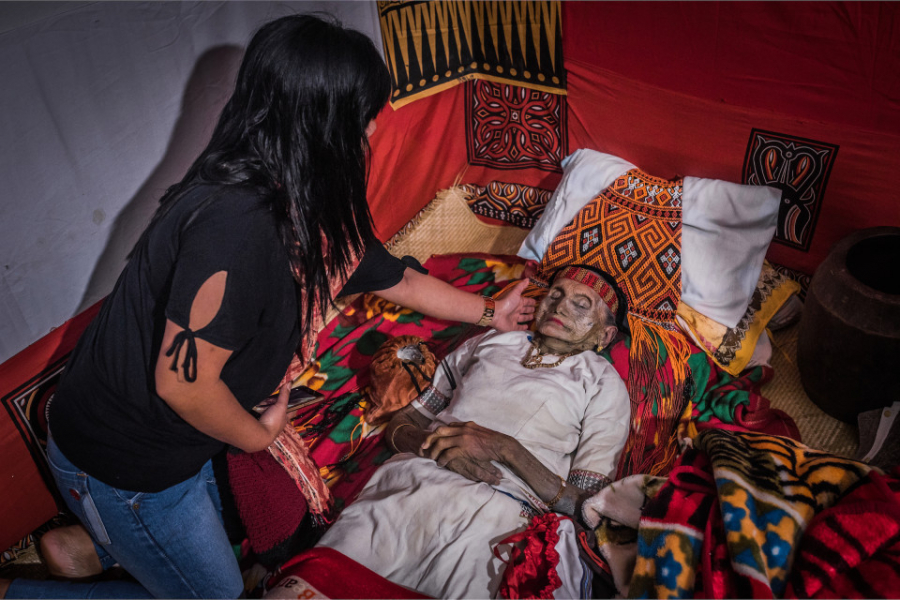
Nene' Tiku passed away 3 days ago.
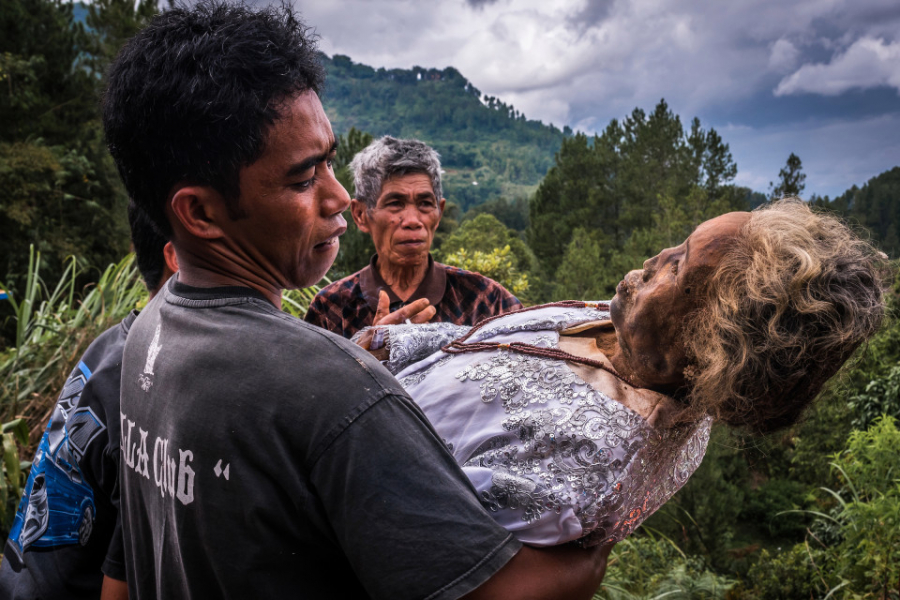
Two years have passed since Martha's death.
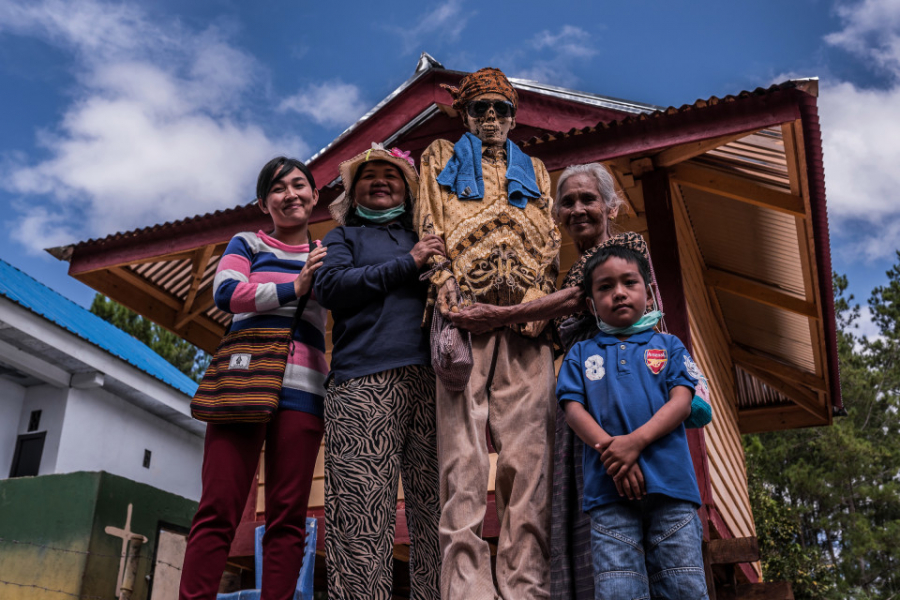
A reunion of a Toraja family.
Typically, families need to save money for a considerable period to afford a proper funeral for a loved one. Surprisingly, such a funeral can cost anywhere from 700 million rupiah (£38,000) for modestly-income families to over 3 billion rupiah (£200,000) for affluent families.
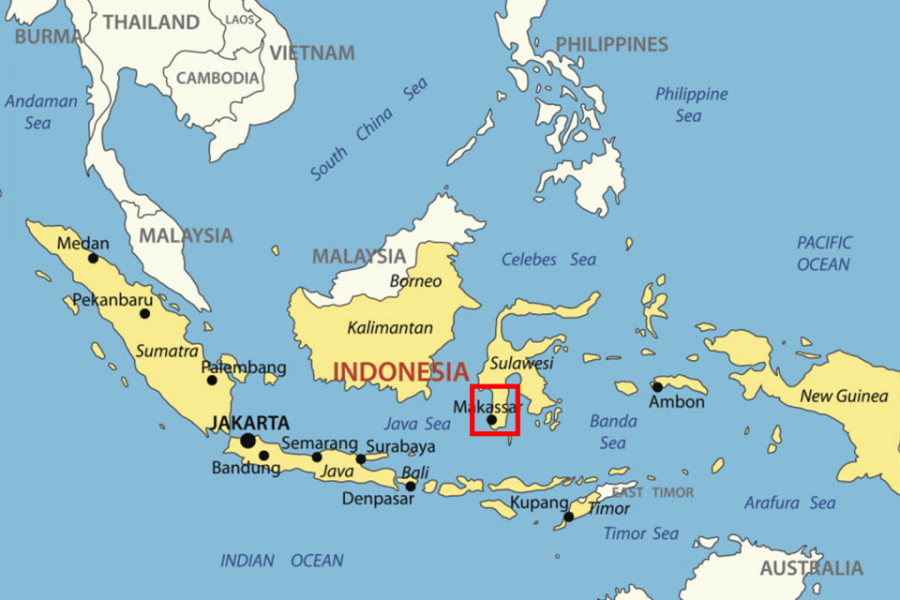
There are approximately 1 million Toraja people, and the majority live in South Sulawesi.
For many Toraja families in rural areas—who struggle daily to earn more than 1 million rupiah a month—bank loans are a necessity. However, in recent years, as young people have increasingly moved to larger cities, repaying such large sums of money seems impossible.
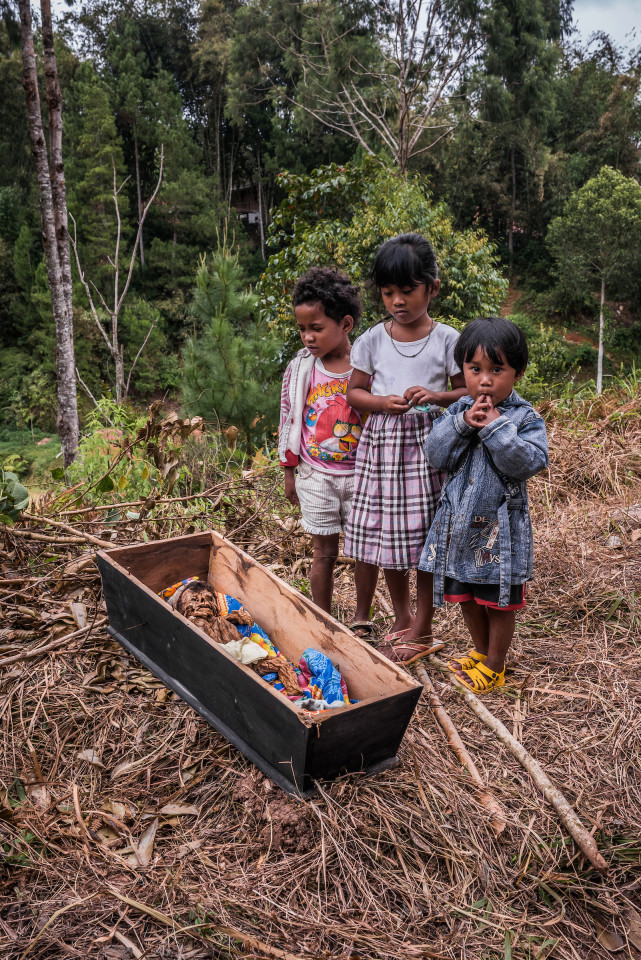
The cousins met their deceased relative, who had passed away more than a decade ago, for the first time.
The majority of the money is spent on buying water buffaloes, often dozens of them. In other words, these buffaloes are used as sacrificial offerings and are called Rambu Solo. Typically, people have to pay between £7,000 and £30,000, depending on the length of their horns and eye color.
Christina Bane's body is being preserved using plaster.
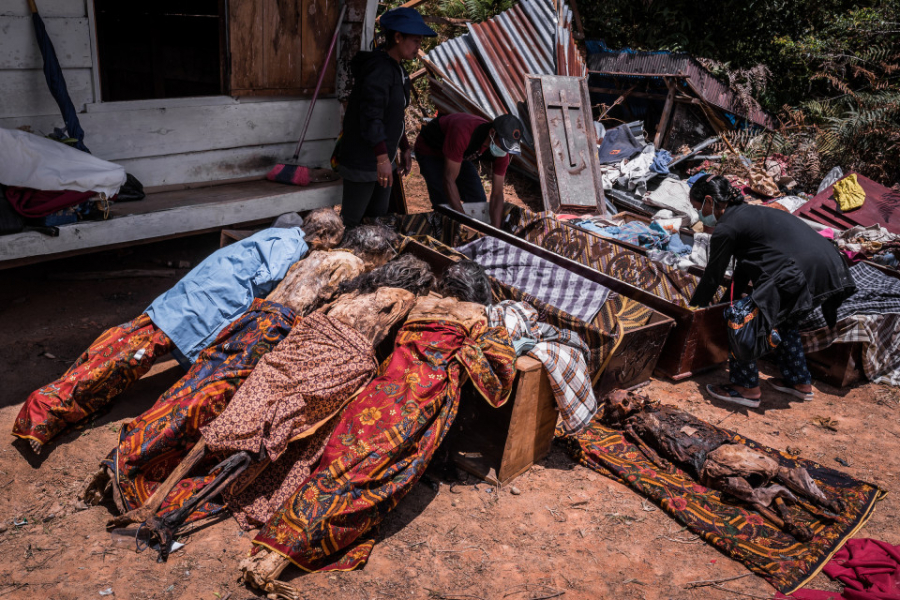
Occasionally, the bodies would be removed from their coffins.
This ritual marks the official death of the deceased and escorts them to heaven, a place commonly known as Puya. However, despite being a sorrowful family event, these funerals are often celebrated more like a celebration than a funeral. Even after the deceased is buried in a mausoleum or tomb, this is not actually the last time their relatives will see the body.
The body is being embalmed using a chemical solution.
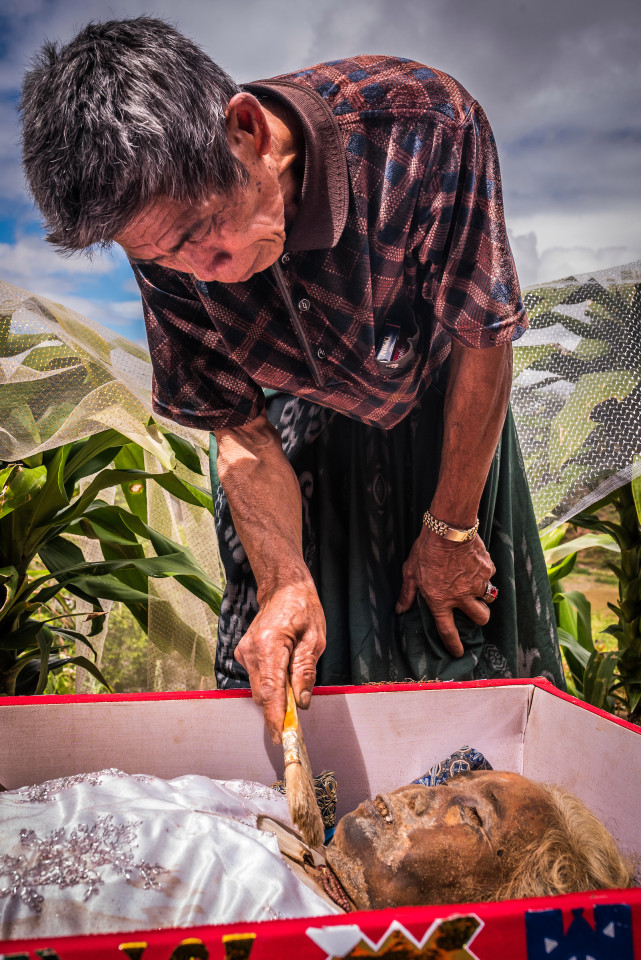
In a ritual called Ma'nene, meaning "ancestor care," usually performed in August, the deceased are removed from their graves and coffins, then washed clean of insects and dirt, dressed in new clothes, and finally taken down to the village so that the body can enjoy a good smoke at their favorite spot or visit the house where they once lived.
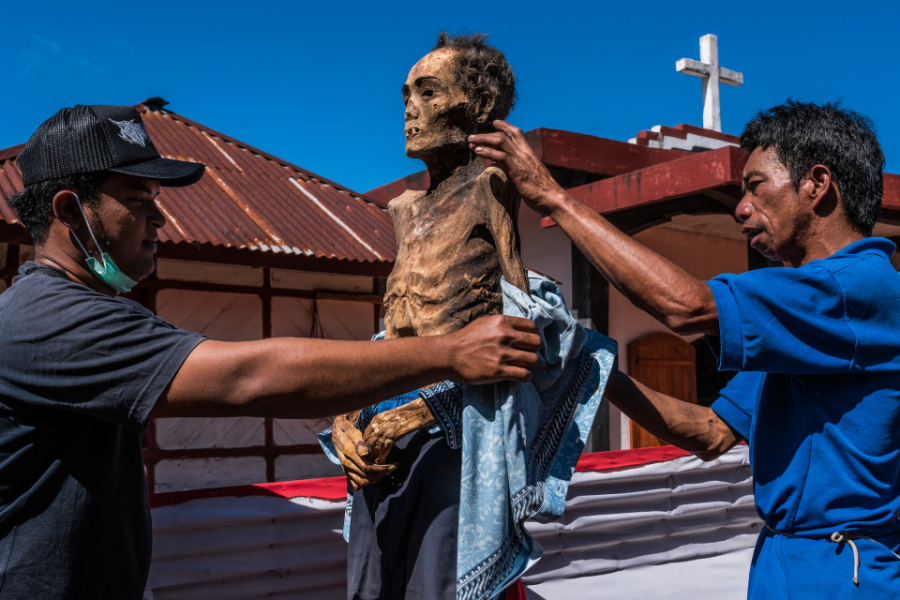
The Torajan people believe that even after death, the soul of the deceased remains connected to the real world.
All the friends and family of the deceased will travel miles to reunite with their departed loved one and enjoy a lavish feast to mark this significant event. This may also be the first time the younger generation meets their ancestors – those who died before they were born.
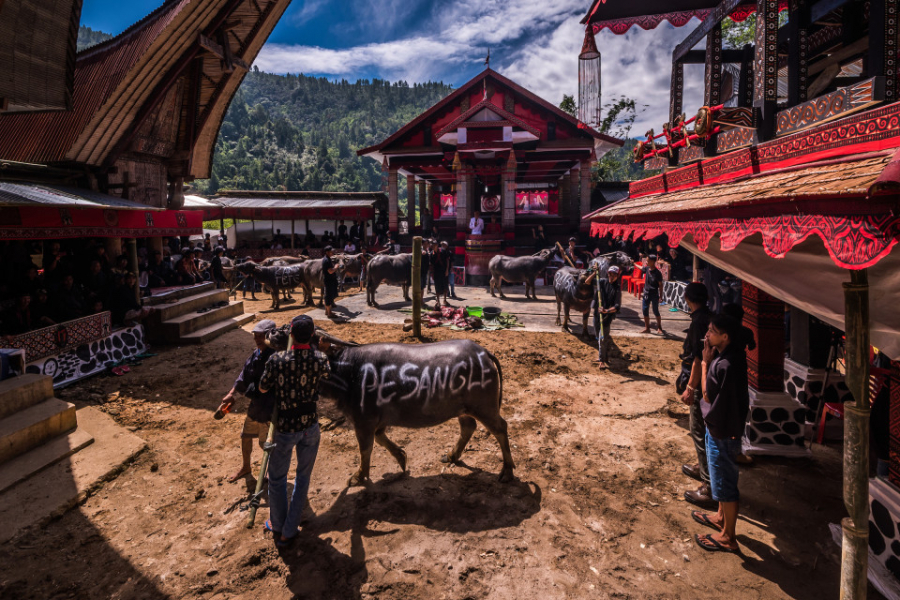
Water buffaloes are sacred sacrificial animals in the funeral rituals of the Toraja people.
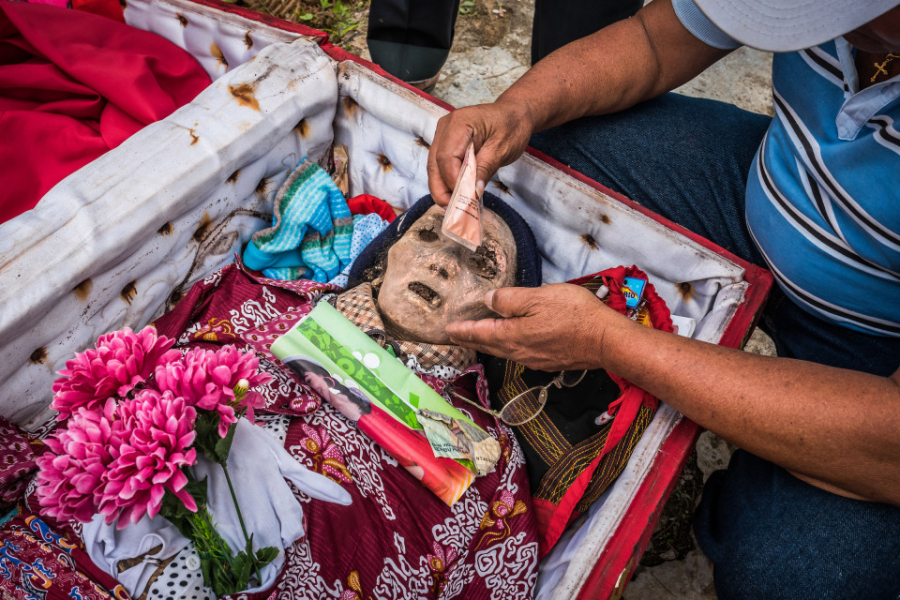
Not only that, they even frequently take photos with the corpses, sometimes even selfies. Finally, the deceased are returned to their coffins, and then their relatives give them new gifts such as watches, glasses, or jewelry.
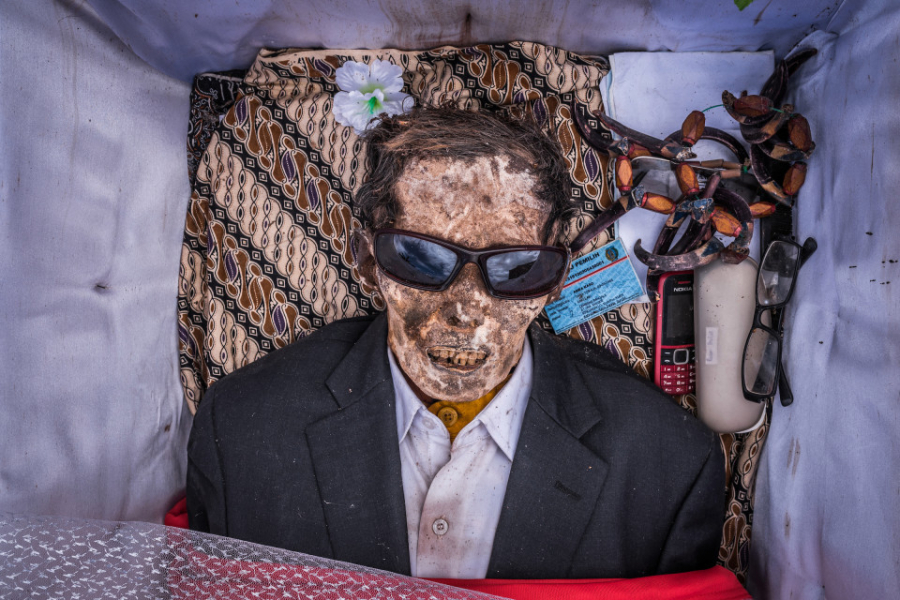
New gifts are given to the deceased.
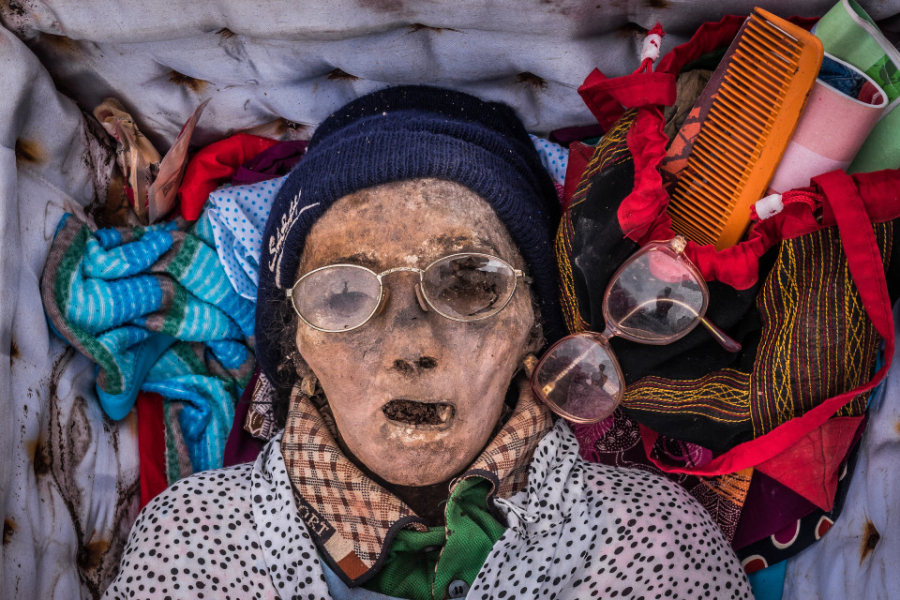
The bodies were buried with their favorite belongings.
These Toraja funeral rituals are believed to have begun in the 9th century AD. However, to this day, these rituals often include Christian elements, including the reading of the Bible. These customs are thought to have originated when Dutch missionaries discovered Indonesia in the 16th century. While searching for nutmeg and cloves, they brought religion to the local Toraja people.
Today, as rituals related to the afterlife are gradually becoming more accepted, Australian and European tourists are becoming more integrated with the local people in this area.