VI
VI


Many foreign tourists, when thinking about the United Kingdom, immediately recall the familiar rhyme: "At half past three, everything stops for tea."
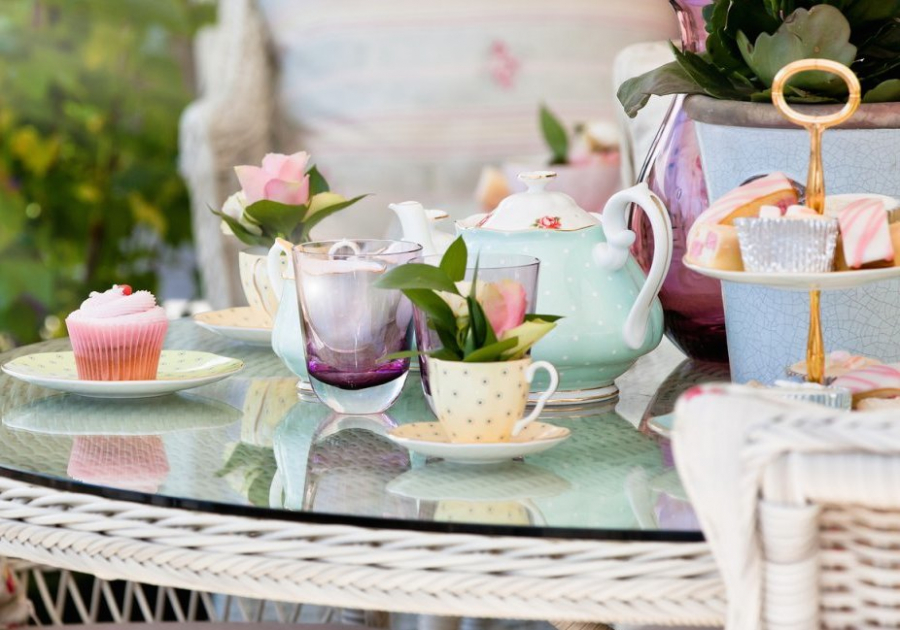
For most Britons, nothing seems to compare to the allure of the aroma of tea leaves wafting from a steaming Chinese porcelain teapot. Moreover, a perfect afternoon tea is always associated with the image of freshly baked, crispy pastries topped with fruit jam or a rich cream. The pleasure of afternoon tea has become a unique cultural characteristic of one of Europe's wealthiest nations.
A tradition dating back to the 17th century.
Despite being a quintessential part of British culinary culture, tea arrived in the UK relatively late. While the Chinese had a tradition of drinking tea since before Christ, the British only became aware of this natural beverage in the 17th century.
It wasn't until the 19th century that tea began to be widely consumed in England. The person primarily responsible for creating the afternoon tea tradition in England was the 7th Duchess of Bedford, Anna Maria Russell.
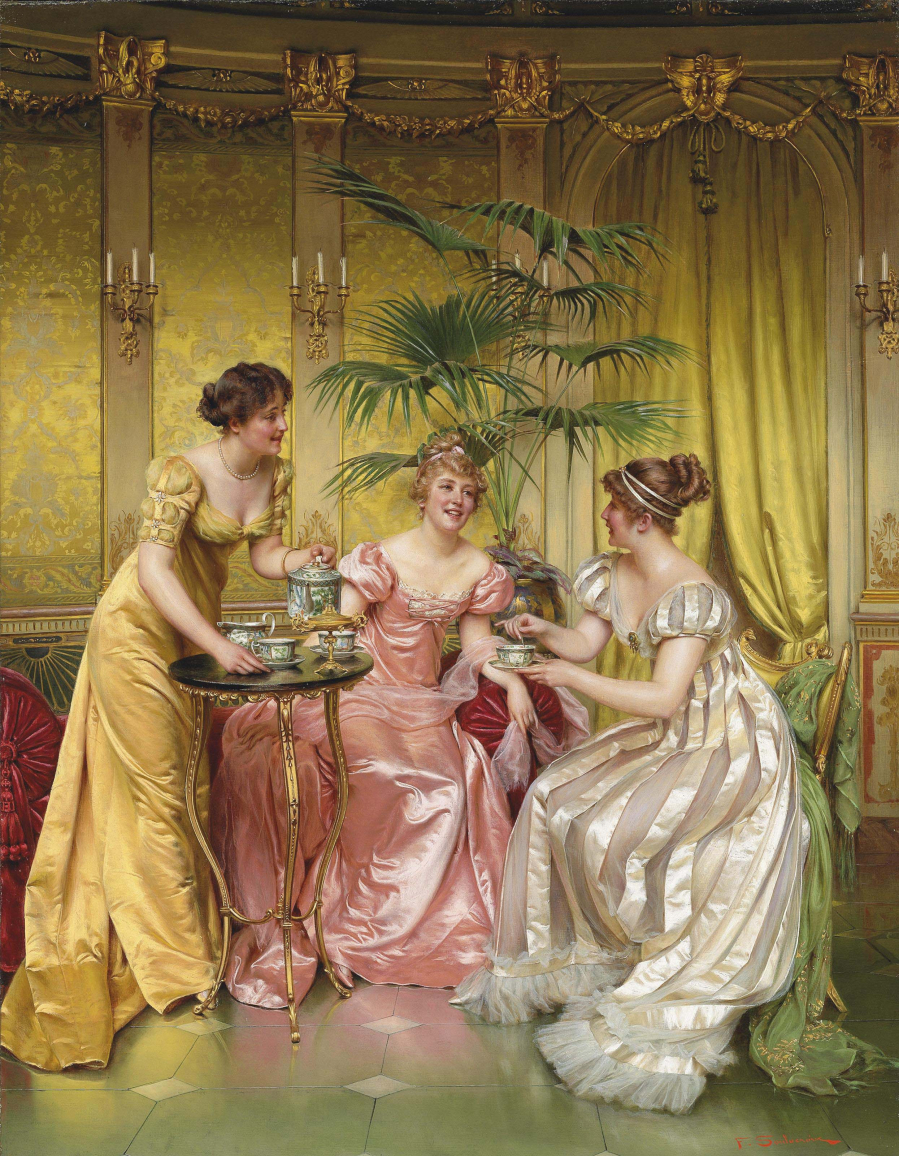
The Tea Party (Frédéric Soulacroix)
At that time in England, there were only two main meals a day: breakfast and dinner. Dinner usually took place at 8 pm. The gap between the two meals made the Duchess feel hungry and bored around 4 pm.

To remedy this, she began drinking a pot of tea and eating it with buttered bread or pastries in her private room. The Duchess even started inviting friends to her home at Woburn Abbey to “enjoy tea and stroll through the vast fields.” Even after returning to London, her fondness for tea with friends remained unchanged.
Low Tea, High Tea and Afternoon Tea
The tradition of afternoon tea gradually spread and became a luxurious social ritual for the upper class at the time. Even aristocratic women would change into long dresses, wear gloves, and stylish hats to attend these elegant tea parties.
That is the origin of a quintessential English aristocratic tea party, also known as a tea party.low teaorafternoon tea, which took place around 4 PM. Meanwhile, the phraseHigh TeaIt also refers to tea parties held by the middle and lower classes at 5 p.m., often a combination of afternoon tea and dinner.
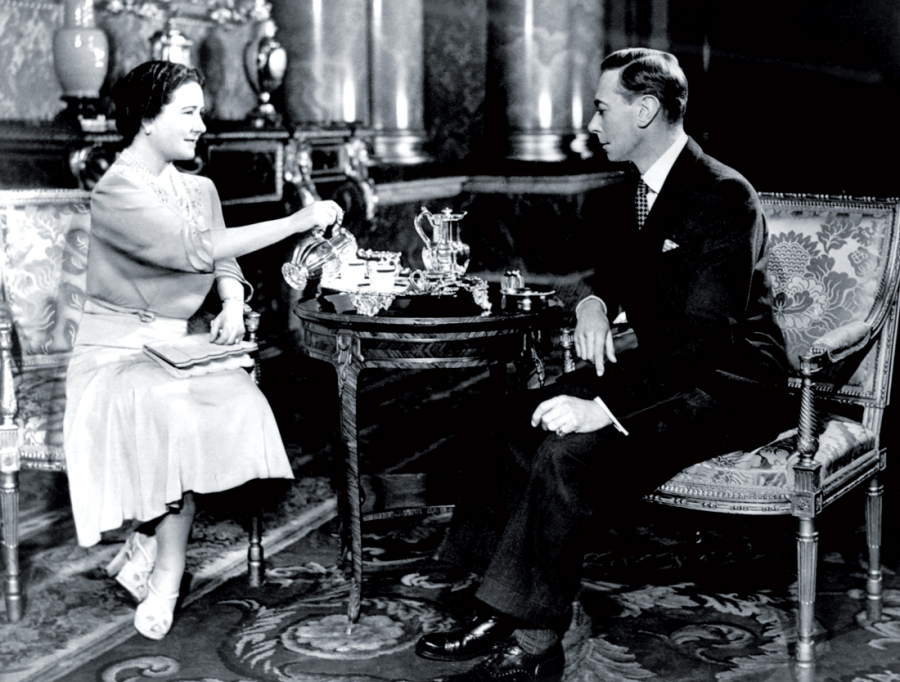
King George VI (1895–1952) and Queen Elizabeth (1900–2002) are having tea at Buckingham Palace in 1948.
These names are entirely based on the height of the tea tables. At upper-class tea parties, tea is usually served on a low table placed between sofas in the living room. Meanwhile, for the middle class and below, tea drinking usually takes place at the dining table, possibly accompanied by main courses.
Menu for an English afternoon tea party.
Traditionally, the British brew loose leaf tea in a classic, elegant porcelain teapot. Furthermore, all the cups, teapot, and saucers are part of a set and must be made of white porcelain. To enhance the flavor of the tea, they may add milk, cream, white sugar, or brown sugar according to their taste and preference.
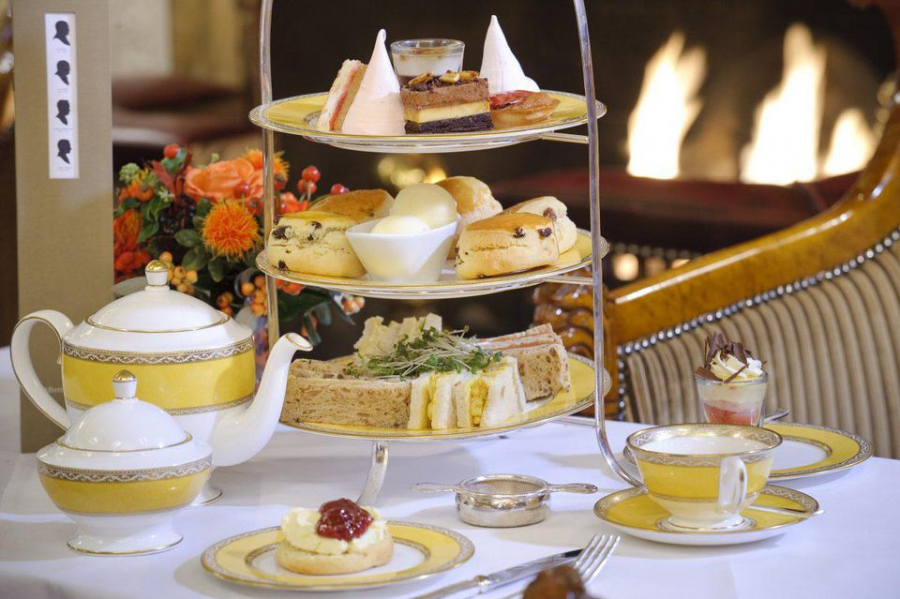
Tea party at the Goring Hotel (London)
At first-class hotels in the UK, a full afternoon tea menu always includes a carefully selected selection of sandwiches, cream-filled cupcakes, fruit tarts, or pretty chocolate pastries.
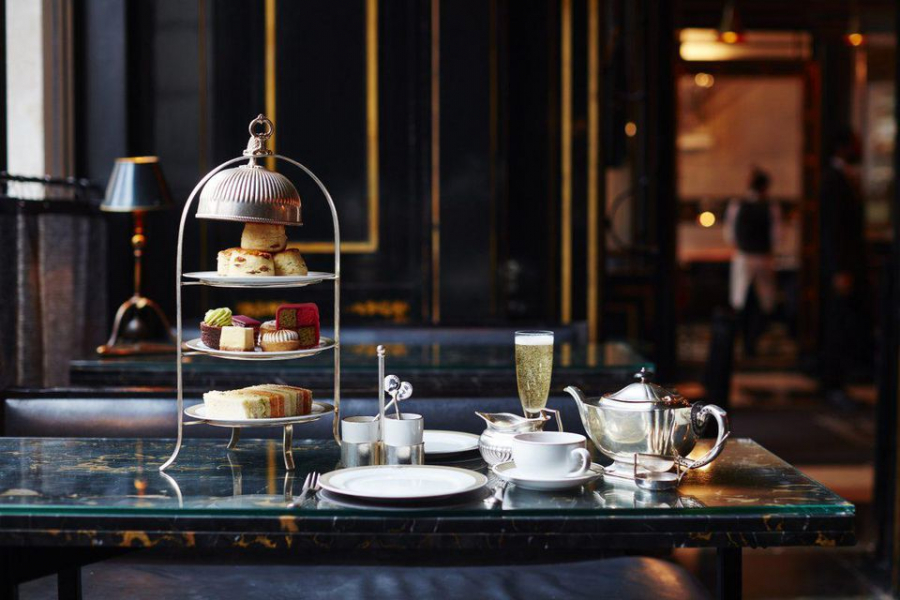
Tea party at the Wolseley Hotel (London)
Besides that, you can choose from a wide variety of teas, rich in both color and flavor, to enjoy. However, if you want to experience the taste of England, you can brew yourself a cup of Assam, Darjeeling, or Earl Grey tea. These are arguably the teas that the English people particularly love.
- Assam tea: A type of black tea from India, a cup of Assam tea always has a rich, distinctive malty aroma that is unmistakable and unlike any other tea.
- Darjeeling tea: Also an Indian black tea, the dried Darjeeling tea leaves imbue the tea party space with a subtle, tranquil aroma of almonds and wildflowers.
- Earl Grey Tea: Earl Grey tea, also known as British Earl's Tea, is named after Charles Grey, Earl Grey II, British Prime Minister from 1830 to 1834. He is credited with creating the recipe for this sweet, bergamot-flavored tea. Most people in the UK consider Earl Grey tea a national symbol of England.
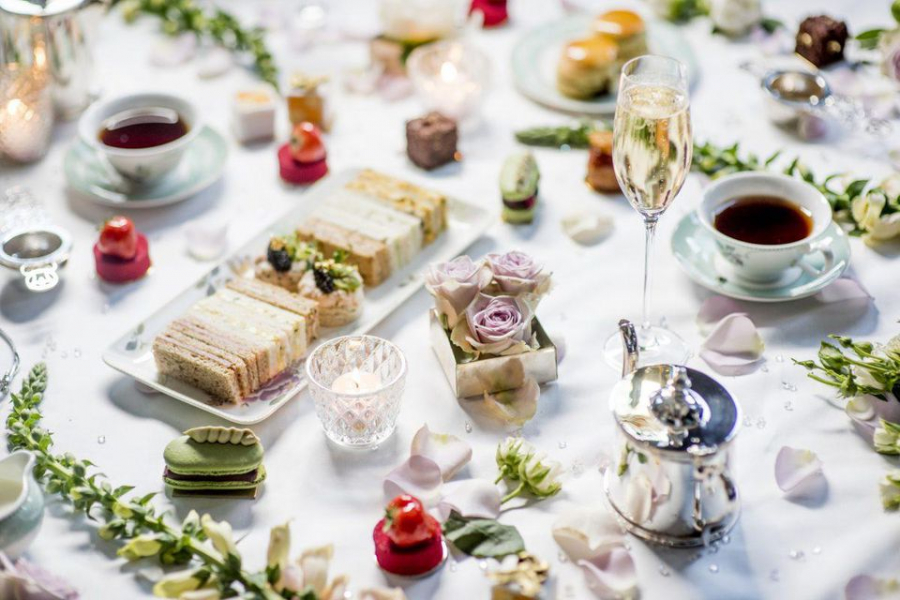
Tea party at the Savoy Hotel (London)
It's no exaggeration to say that a rich cup of loose-leaf tea and creamy butterscotch pastries are a charming aspect of English culture. After a long shopping trip at Oxford Circus, afternoon tea is the perfect way to fully and truly experience the flavors of the United Kingdom.
ADDITIONAL INFORMATION
When traveling to England, you can visit the following famous locations to experience a traditional afternoon tea: tea rooms at The Goring Hotel, The Wolseley Hotel, The Savoy, or The Ritz London. Additionally, you shouldn't miss Devon, famous for its Devonshire tea, along with scones, cream, and fruit jams.