VI
VI


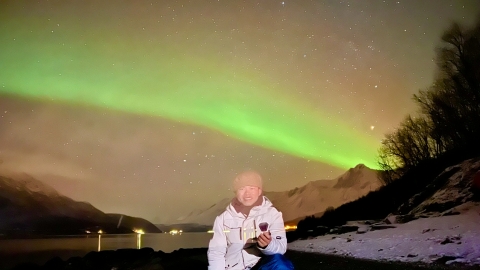
Nguyen Le Quang Vinh, a 34-year-old travel blogger from Ho Chi Minh City, began his journey of exploring the world four years ago. Under the pseudonym itsmevinh, he has attracted hundreds of thousands of followers on social media platforms with his vivid stories and stunning images from his travels. For Vinh, exploring nature is not just a hobby, but also a way to understand himself.
"Nature gives me a very real feeling, both beautiful and harsh. Each trip gives me a different perspective on myself," Vinh shared.

Vinh's trip to Norway – the land of fjords, aurora borealis, and snow-capped mountains – became the biggest lesson in his travel journey.
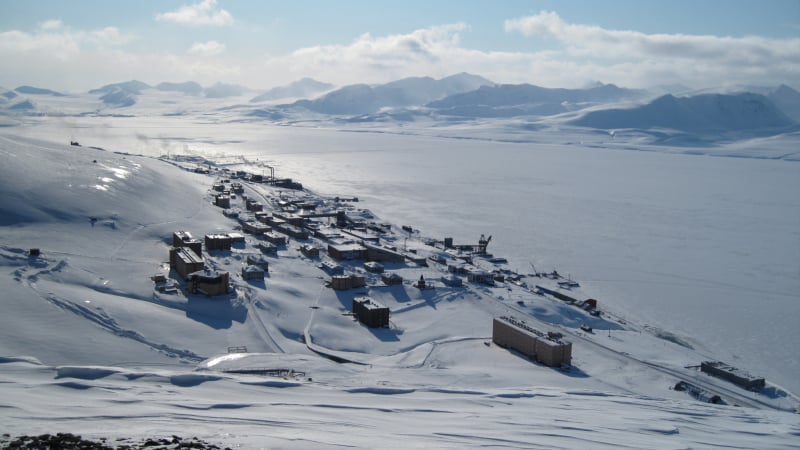

The fine line between experience and risk.
The trip to Norway, a land famous for its fjords, aurora borealis, and snow-capped mountains, became an experience that Vinh acknowledges as the biggest lesson in his travel journey.
Planned months in advance, the 10-day trip cost approximately 180 million VND. For the TikToker, Norway is not only a beautiful destination but also a symbol of some of the world's most pristine and majestic nature. Trekking routes there have long been on his must-experience list.
"Theoretically, I researched the weather, terrain, and safety warnings. But in reality, I underestimated the harshness of winter in Northern Europe, especially when traveling alone," Vinh shared, adding that this was his first and perhaps most important mistake in life.

The 40-minute wait in the snowstorm became a life-or-death experience, leaving him with an unforgettable lesson about preparation and personal limits when embarking on adventurous travel.

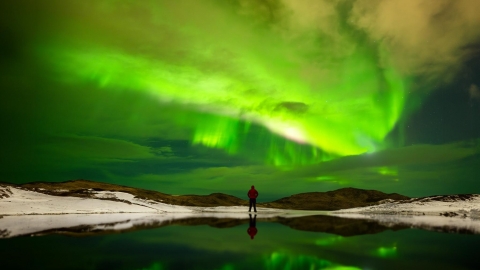
Norway is not only a beautiful destination, but also a symbol of some of the world's most pristine and majestic natural landscapes.


Unlike previous trekking trips, which took place in mild weather or late spring, this journey took Vinh into a real snowy and icy environment. Although he had prepared basic equipment such as thermal clothing, windproof jackets, trekking shoes, gloves, and hats, Vinh admitted that it was still not enough to cope with the unpredictable changes in the mountains.
The weather was relatively favorable on the first day of the journey. But the higher we climbed, the harsher the conditions became: stronger winds, heavier snow, and slippery roads. In such an environment, even a small misjudgment could have serious consequences.
The trouble began when Vinh was near the summit, where the terrain was steep and covered in snow. Strong winds, low temperatures, and rain caused his body to lose heat rapidly. In that situation, he made a survival decision: to slide down the mountain instead of walking as usual. This is a choice he later believes helped him shorten his exposure to dangerous conditions. However, the price he paid was not small.


The higher we climbed, the harsher the conditions became: stronger winds, heavier snow, and slippery roads.
After more than two hours of sliding down, when he was only about a 30-minute walk from the foot of the mountain, his body began to react violently to the cold. Muscle groups started to cramp one after another: from his thighs and calves to his arms, abdomen, and chest. Widespread cramps made it impossible for him to stand up or continue moving.
It was getting dark. The temperature continued to drop. And Vinh realized he was in a situation he couldn't control.
"It wasn't a panic attack, but I knew very well: this was a genuinely dangerous situation," he recalled.
40 minutes of waiting in the white snow.
In a situation where he was unable to move, the most important decision Vinh made was to use the SOS feature on his Apple Watch to send a distress signal. This device connected directly to the local emergency system, a crucial factor in whether he would be found in time.
The waiting time lasted about 40 minutes. Under normal circumstances, that might not seem like a long time. But in the middle of a snow-covered mountain, when the body is losing heat rapidly, every passing minute is a matter of life or death.

In a situation where movement was impossible, the most important decision Vinh made was to use the SOS feature on his Apple Watch to send a distress signal.


“At that moment, all I could do was huddle in the snow and shiver. There was nothing else I could do,” Vinh recounted. The feeling was a mix of hope and anxiety. Not panic, but enough to understand that things were no longer under his personal control.
Two rescuers were the first to reach him. In the dim light of the late afternoon, they quickly assessed his condition: his body temperature had dropped drastically, and he was immobile. He was fitted with thermal insulation sheets, wrapped tightly in a special blanket, before they attempted to pull him down the mountain. But the terrain wouldn't allow for a smooth process.
After a short distance, the ground became uneven, making pulling impossible. They were forced to ask Vinh to stand up on his own so they could help him walk. However, with his body almost "frozen," standing up at that moment was an overwhelming challenge.
One of the two rescuers then had to go back down to call for reinforcements. About 20 minutes later, a rescue team of seven arrived at the foot of the mountain. However, they were unable to reach Vinh's location due to the increasing risk of avalanches. In that situation, the only option was to move on their own.
“The rescuer told me: there’s no other way, you have to stand up and keep going. I gritted my teeth, stood up, took a few steps, and then fell again. This repeated many times,” Vinh recounted. As the avalanche warning became clearer, the pressure increased. With no choice but to continue, he was forced to keep going despite the pain all over his body, supported by the other rescuer. And with an effort he himself couldn’t explain, Vinh made it to the foot of the mountain. “Perhaps it was survival instinct,” he said succinctly.

This experience left a deep impression, not only physically, but also cognitively, on travel blogger Nguyen Le Quang Vinh.
After being safely brought down, he didn't have to work with authorities or pay any rescue costs. The entire process was free, which surprised him. He also didn't encounter any language barriers, as the rescue team communicated very well in English.
Currently, Vinh's health and mental state are stable. However, this experience has left a deep mark, not only physically but also cognitively. Regarding opinions that his trip was reckless or impulsive, Vinh frankly stated: "I think they are absolutely right. This is a lesson I had to learn."
The lesson, he believes, isn't about giving up the passion for exploration, but about approaching it more responsibly. Thorough preparation, accurate risk assessment, avoiding going alone in dangerous conditions, and always considering the worst-case scenario.
"I will definitely continue these kinds of journeys. But with a different mindset, much more cautious," Vinh said.
Additional information:
Based on his experience of being stranded in a snowstorm in Norway, Vinh believes that many Vietnamese tourists often underestimate the harshness of the Nordic winter, especially when traveling in remote areas to hunt for the aurora borealis or explore nature. Even a slight oversight in monitoring the weather, preparing appropriate clothing, or securing necessary equipment can lead to dangerous situations. From his experience, he recommends that tourists thoroughly research weather conditions, prepare adequately, and always prioritize safety when traveling to Nordic countries in winter.
- Check the weather forecast regularly: The weather in Northern Europe changes very quickly, especially in mountainous or remote areas. Before going out or starting a trekking trip, travelers should monitor the weather forecast for the day and keep it updated.
- Do not travel alone in remote areas: Snowy trails, forests, or mountainous regions may be sparsely populated. If an accident occurs, finding assistance will be difficult. It is best to travel in a group or inform others of your route.
- Prepare appropriate cold-weather clothing: Winter temperatures in Northern Europe can drop below 0°C with strong winds. Travelers should wear multiple layers, non-slip shoes, gloves, a hat, and a warm jacket.
- Bring a power bank and a GPS device: Your phone can run out of battery quickly in cold weather. A power bank, offline maps, or a GPS device will help you handle emergencies.
- Always have a backup plan. If the weather is bad or conditions are unfavorable, travelers should be prepared to change their itinerary instead of trying to continue the journey: Essential items checklist, windproof and warm jacket, specialized non-slip snow boots; gloves, wool hat, warm scarf; large capacity power bank; offline map or navigation app; some snacks and drinks for long trips...