VI
VI



Norwegian swimmer Henrik Christiansen, a three-time Olympic medalist, turned the chocolate muffin into a sensation, giving it an 11/10 rating for deliciousness.


Who would have thought that, amidst the glamorous city of Paris and its myriad of exquisite French dishes, an Olympic athlete would fall in love with such a simple muffin? Henrik Christiansen, the 27-year-old swimmer, unintentionally became the "muffin king" of the Olympics when his humorous review video went viral on social media.
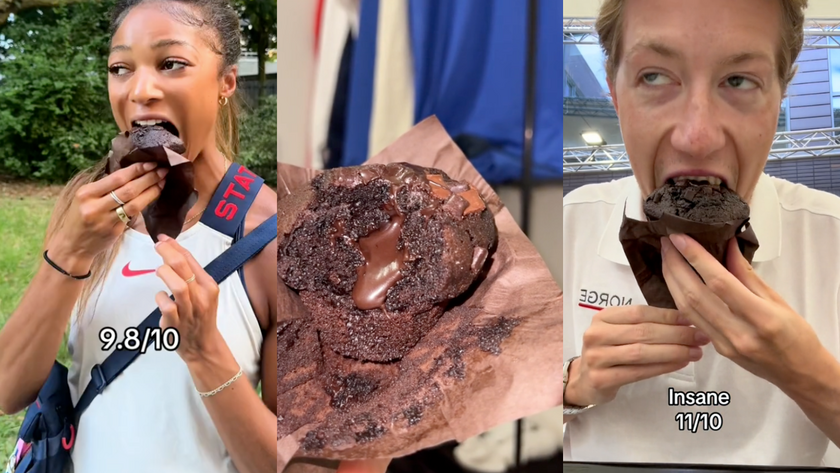
"So far, they are the best thing about the Olympics," the swimmer shared.
Despite being surrounded by quintessential French flavors, the Paris Olympic Village witnessed an unexpected culinary phenomenon: international athletes preferred a familiar treat found in American fast-food restaurants over the famous croissants and baguettes. The Norwegian swimming star described them as "unbelievably delicious," to the point that he posted 10 consecutive videos on his social media to express his particular love for chocolate muffins.
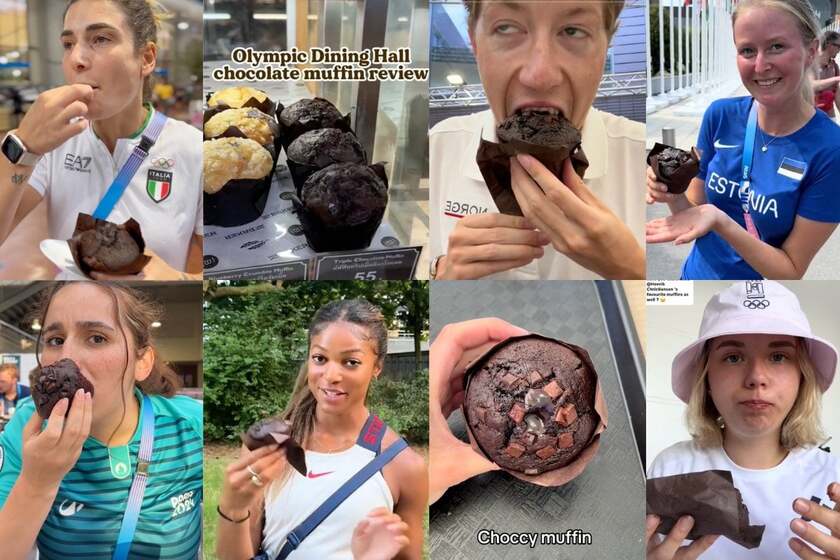
The cake has truly become a "craze," with athletes scrambling to get their hands on it.
The muffin truly exploded in popularity at the Olympic Village thanks to the hilarious videos by Henrik Christiansen. Walking down the street with four muffins in his hands, a bedside table overflowing with muffins, a play about being kidnapped by muffins as hostages... a series of skits written and performed by this swimmer have attracted millions of views. He even dubbed himself "Muffin Man".

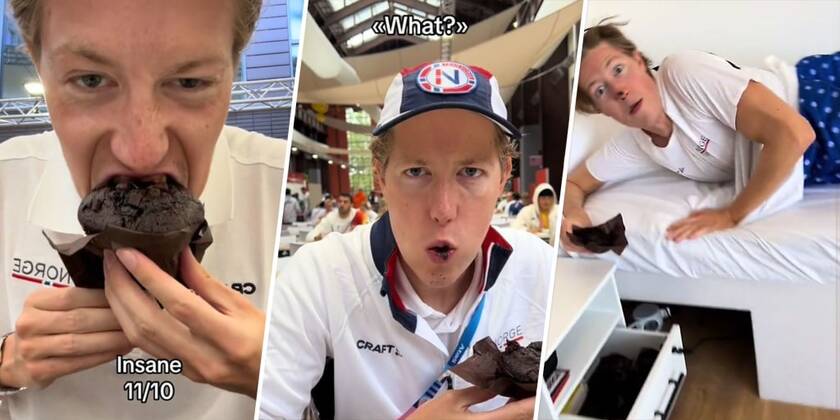
The Norwegian swimmer nicknamed himself "Muffin Man" to express his fondness for this pastry.
Christiansen created a media frenzy, spreading the word about the best Olympic cake and turning it into a "hot trend," inspiring many other athletes to create review videos about the dish.
What is this "new internet obsession" that Olympic athletes are so captivated by?
French pastries are among the most delicious and exquisite in the world, well worth trying at least once in a lifetime. Muffins are a type of pastry originating from the romantic country of France. Originally called Moufflets, they use savory fillings (vegetables, bacon, etc.) and sweet fillings (jams, fruits, nuts, etc.), and are often enjoyed for breakfast, as a snack, or as a gift for loved ones.
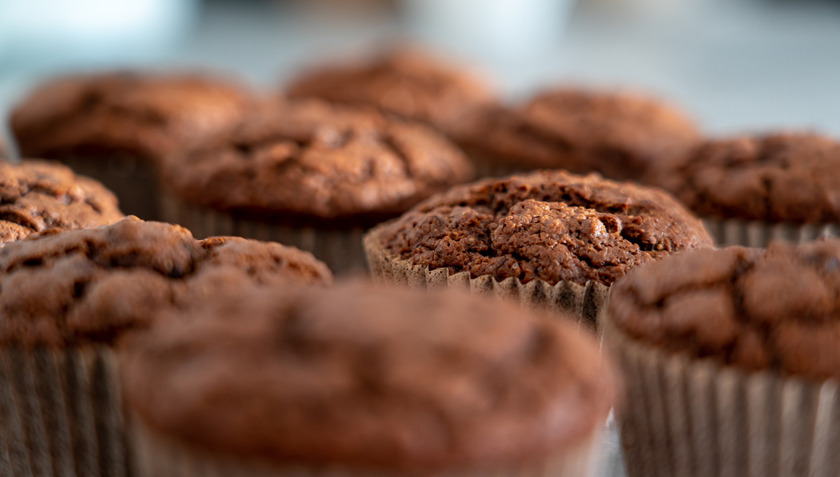
With its crispy outer shell and soft, smooth interior, each bite of this pastry offers pure satisfaction to the consumer.
In 19th-century England, in the late afternoon when people were accustomed to having a light snack, muffin vendors appeared with bells to announce their arrival, and from then on, this type of pastry became popular in the UK.
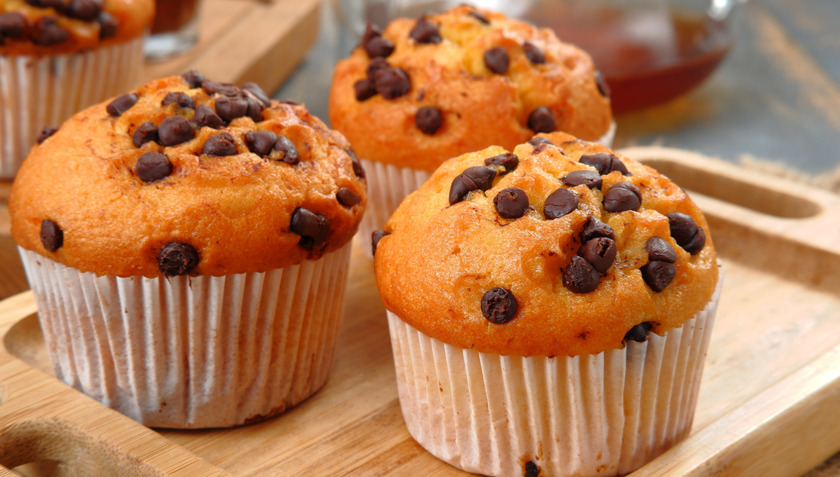
The image of muffin vendors has even entered literature, as exemplified by the writer Jane Austen.
Making muffins doesn't take much time because there's no need to proof the dough, and unlike bread, you don't use yeast; instead, you use baking powder or baking soda, just like with cakes. The method for making muffins is also quite similar to making cupcakes, simply mixing the ingredients together and baking.
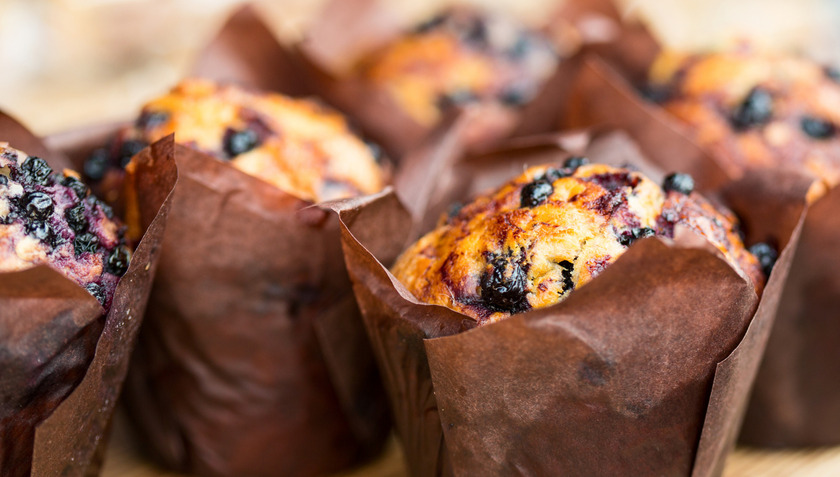
A "real" muffin might be plain, topped with sweet sauce, sprinkled with breadcrumbs, or mixed with nuts and dried fruit.
Muffins are primarily made of flour and don't require the time-consuming process of proofing dough or using yeast like bread. Instead, they use baking powder and baking soda, similar to making mozzarella, which are then mixed with the filling ingredients, poured into molds, and baked.
A "real" muffin might be plain or topped with sweet sauce, sprinkled with breadcrumbs, or mixed with nuts and dried fruit. The image of muffin vendors has even entered literature, with Jane Austen mentioning one in her novel, *Persuasion*. In England, children even share a nursery rhyme about muffin vendors and play games based on it.