VI
VI


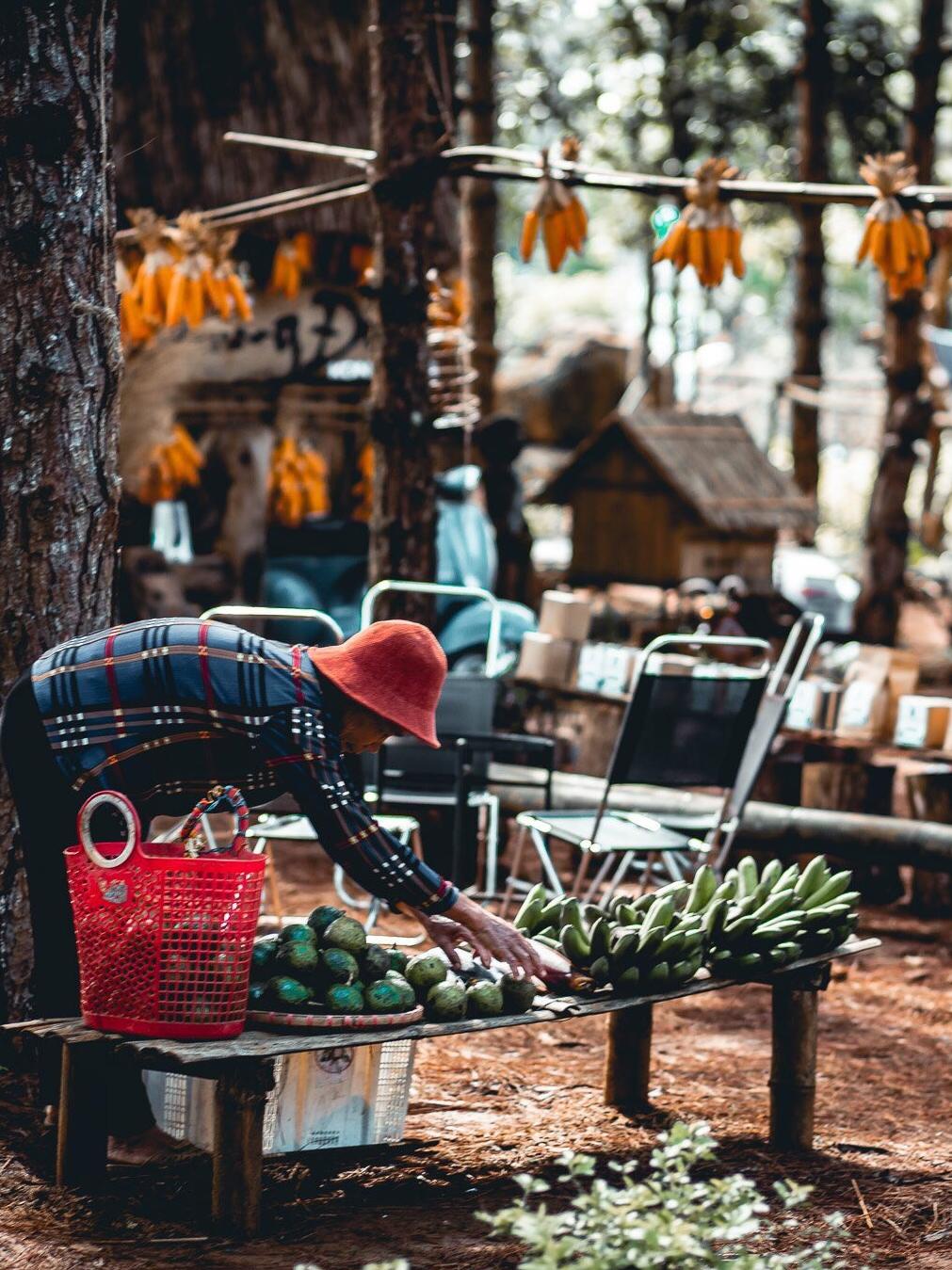
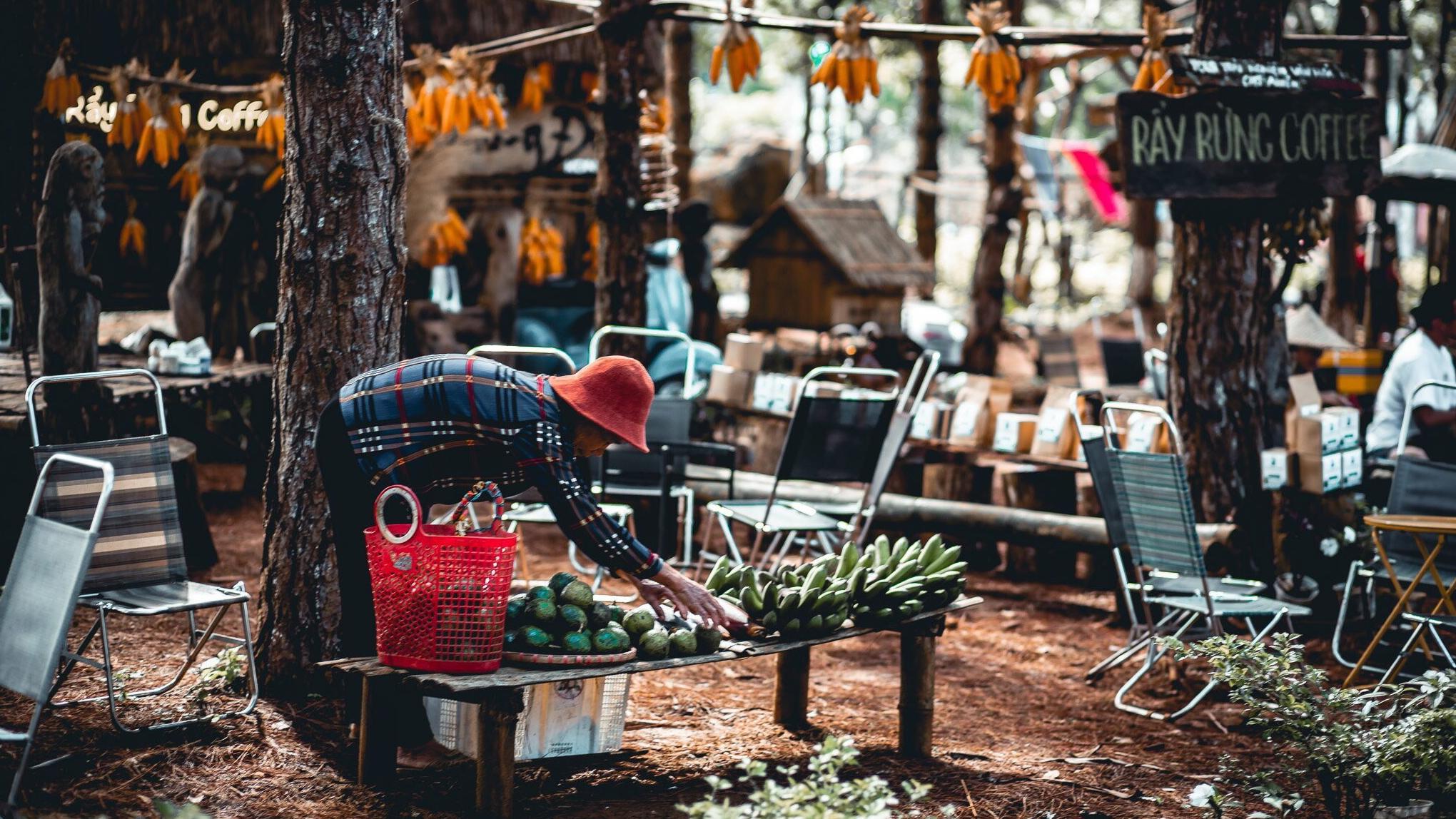
We visited the Mang Den market (T'Mang Deeng village market) on the second day of our trip. At first glance, it looked like a complex built for tourists to stay in, or like small restaurants inside a cluster of communal houses nestled among the pine forest. Only upon entering did we realize that these communal houses and thatched huts were actually stalls run by local people in Kon Plong district.

Entrance gate to the Mang Den (T'Mang Deeng) market.
Admittedly, the design of this market is very impressive. Almost all the materials used in its construction are natural or closely related to nature. The cutting down of trees and the impact on the surrounding environment for building these communal houses have been minimized. Therefore, even when crowded, it feels cool and pleasant to walk in because you are in the shade of the pine hills. Furthermore, the businesses here – representing nine communes and the town of Mang Den – are all using environmentally friendly, biodegradable plastic bags.

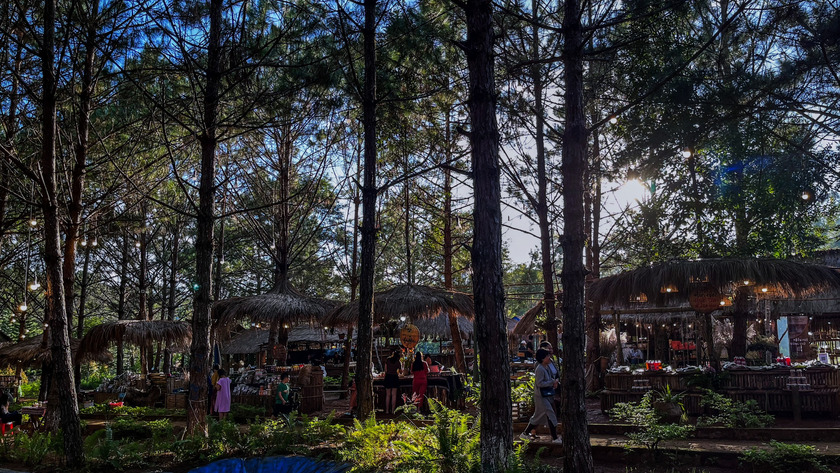
The atmosphere in the market felt like that of a community-based ecotourism resort.
Speaking to Travellive, Tran Nhut Huy (24 years old, Vinh Long), currently in charge of communications for the T'Mang Deeng Market, said: "Initially, it was difficult to encourage the villagers to participate in the market, but we tried to mobilize them to build and develop stalls together, creating a chain of tourism products that visitors can experience when coming to Mang Den. Unsold products are collected and reused, ensuring that the villagers' costs are covered while maximizing the use of clean and safe supplies."
A PLACE WHERE FRESH AND DELICIOUS PRODUCE FROM THE HIGHLANDS AND MIDLANDS CONVERGE
The T'Măng Deeng market unfolds before our eyes, offering a myriad of delicious dishes attractively displayed, along with the intoxicating aroma that permeates the entire pine hill area. The market takes place on weekends in the pine hill area, on Hung Vuong Street in Mang Den town. Stepping inside, we felt more like we were entering a community tourism area than a typical market, warmly welcomed by the people of Kon Plong district. There are up to 30 stalls from communes, towns, and organizations and individuals in the district, selling OCOP products, clean agricultural products, specialties, and traditional craft products.


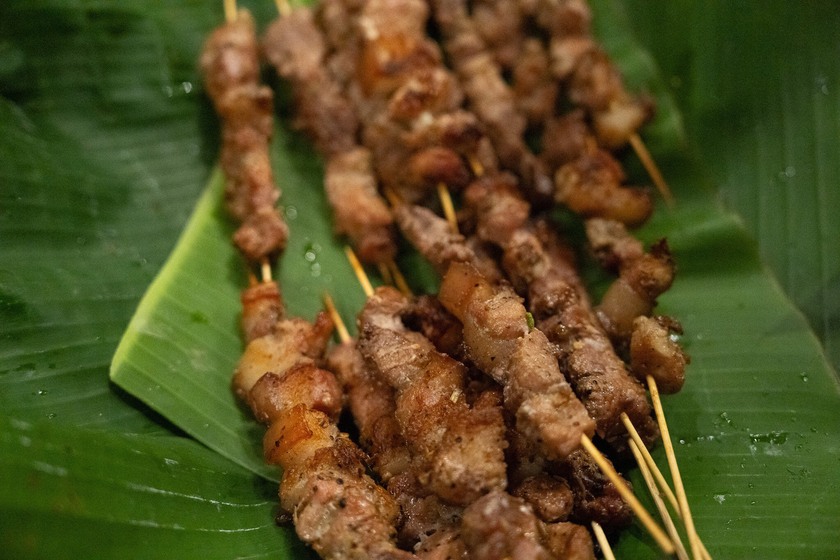
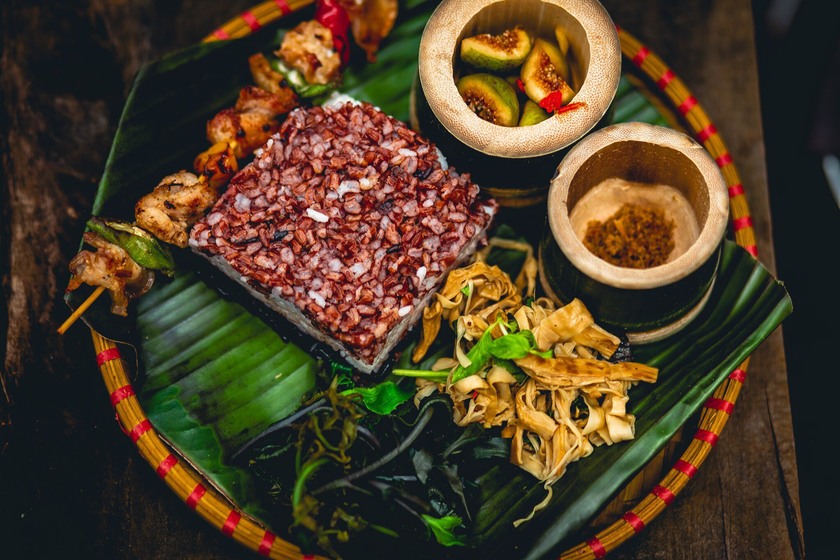
A place where delicious food comes together.
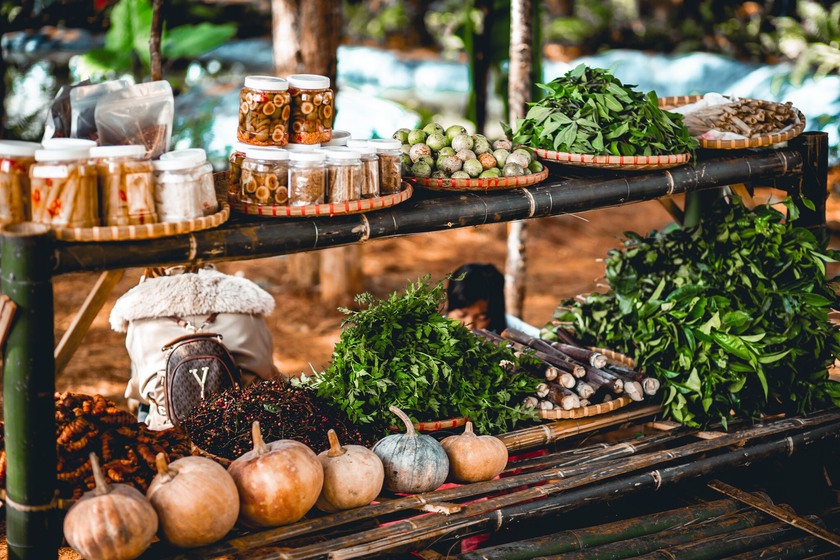
along with safe local produce.
Surprisingly, despite only being open for a month, this market feels like it's been around for a long time due to its well-organized and meticulous operations. From the construction of the traditional longhouses and the arrangement of stalls to the welcoming of visitors and the experience of trying the goods, everything is systematic and well-organized. The further inside you go, the more you're drawn in by the cheerful, bustling atmosphere and the intoxicating aroma of food mingled with the captivating scent of the mountains and forests.

The people of Kơ Nia island worked tirelessly over a large fire, the smoke billowing up in a very impressive sight.

Mang Den market in the afternoon.
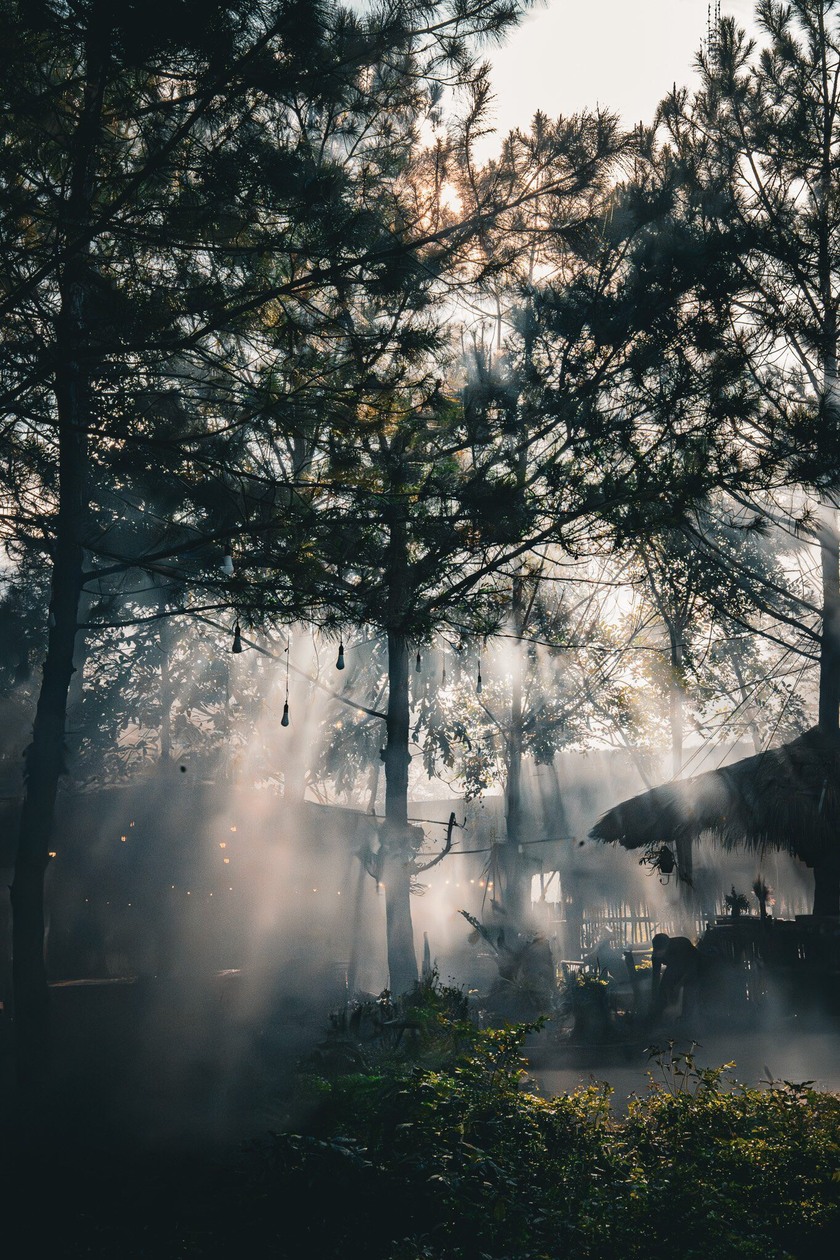
Smoke drifted in streams, mingling with the rays of sunlight streaming through the pine trees.
On one side, the women were busily roasting sweet potatoes and cassava... On the other side, the ladies were enthusiastically roasting kơ nia nuts, the smoke rising in a thin, fragrant wisp that drifted in the sunlight. While we were gazing in wonder, we were "drawn in" by the hospitable hostess. She brought out a basket of freshly roasted kơ nia nuts and offered each of us a handful. Kơ nia is a characteristic nut of this region, purely natural and safe for health. We slowly savored the nuts, which had a distinctive, rich, nutty flavor unlike other well-known nuts like macadamia or almonds... Suddenly, we felt a warmth in our hearts amidst the genuine, generous atmosphere on a cool afternoon in the highlands.
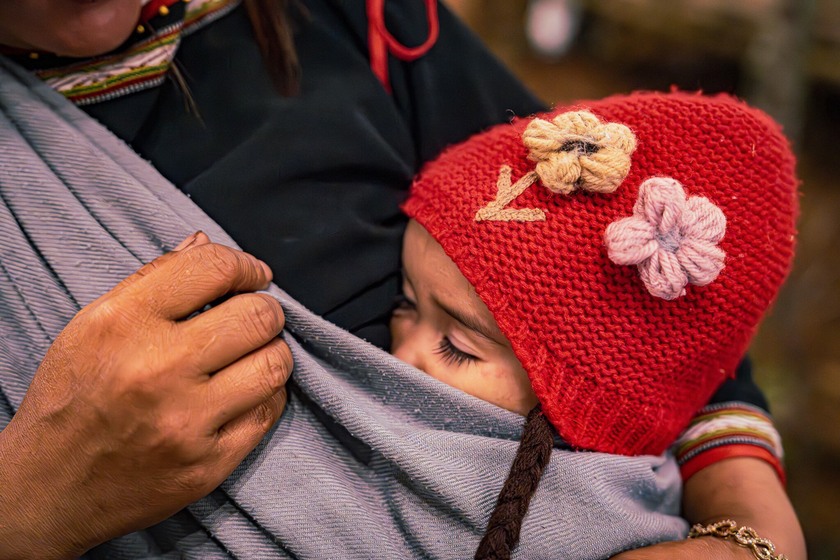
The baby is sound asleep in the carrier.
THE MEETING POINT OF TRADITIONAL CULTURAL VALUES
Not only is it a place where tourists can buy local specialties and safe, clean products, but it's also a place where they can enjoy cultural performances. "Currently, performances of traditional music, gong music, and Xoan dances by local people are presented during festivals. In the near future, there will be performances showcasing the rich cultural identity of local artisans," said Tran Nhat Huy.
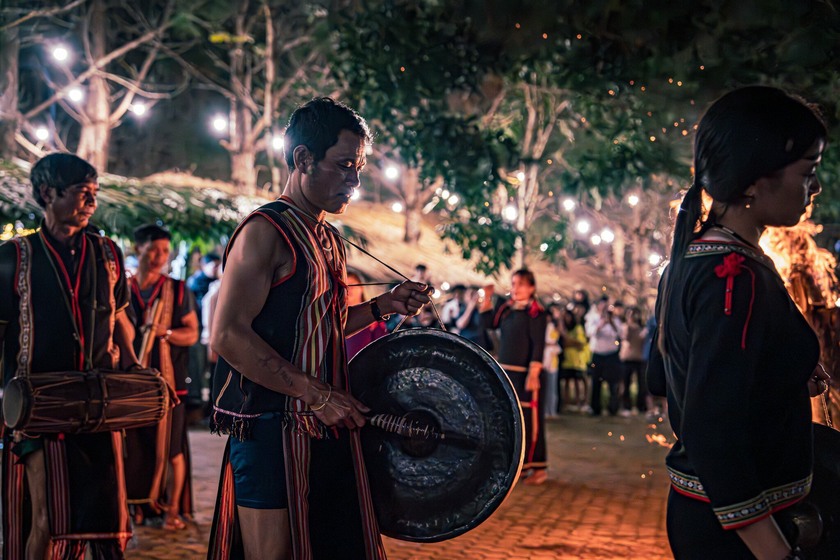
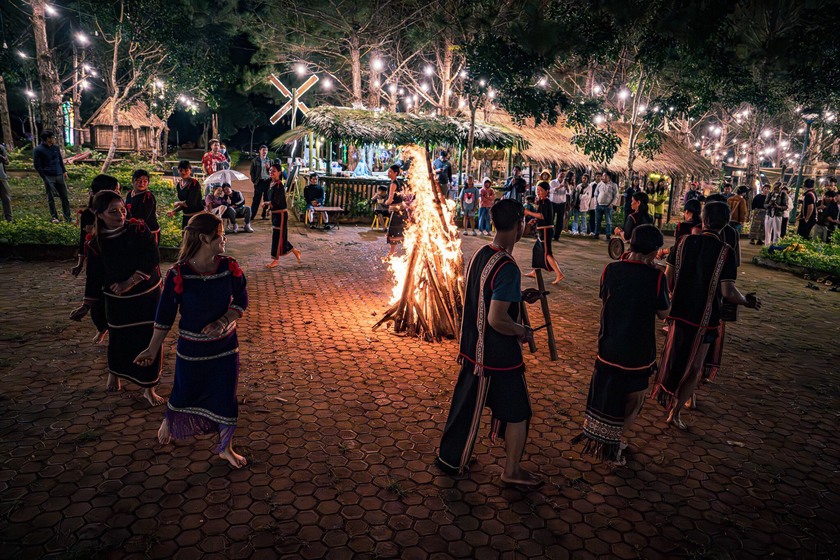
Cultural performances and gong dances will become increasingly popular at the Mang Den market.
Furthermore, the T'Măng Deeng market is also a place where traditional crafts such as basket weaving, loincloth making, and brocade weaving are revived. Tourists visiting and strolling around the market can also see locals diligently and meticulously making brocade products. In addition, you can interact with the local culture, participate in folk games, and try your hand at making traditional cakes and weaving fabrics.
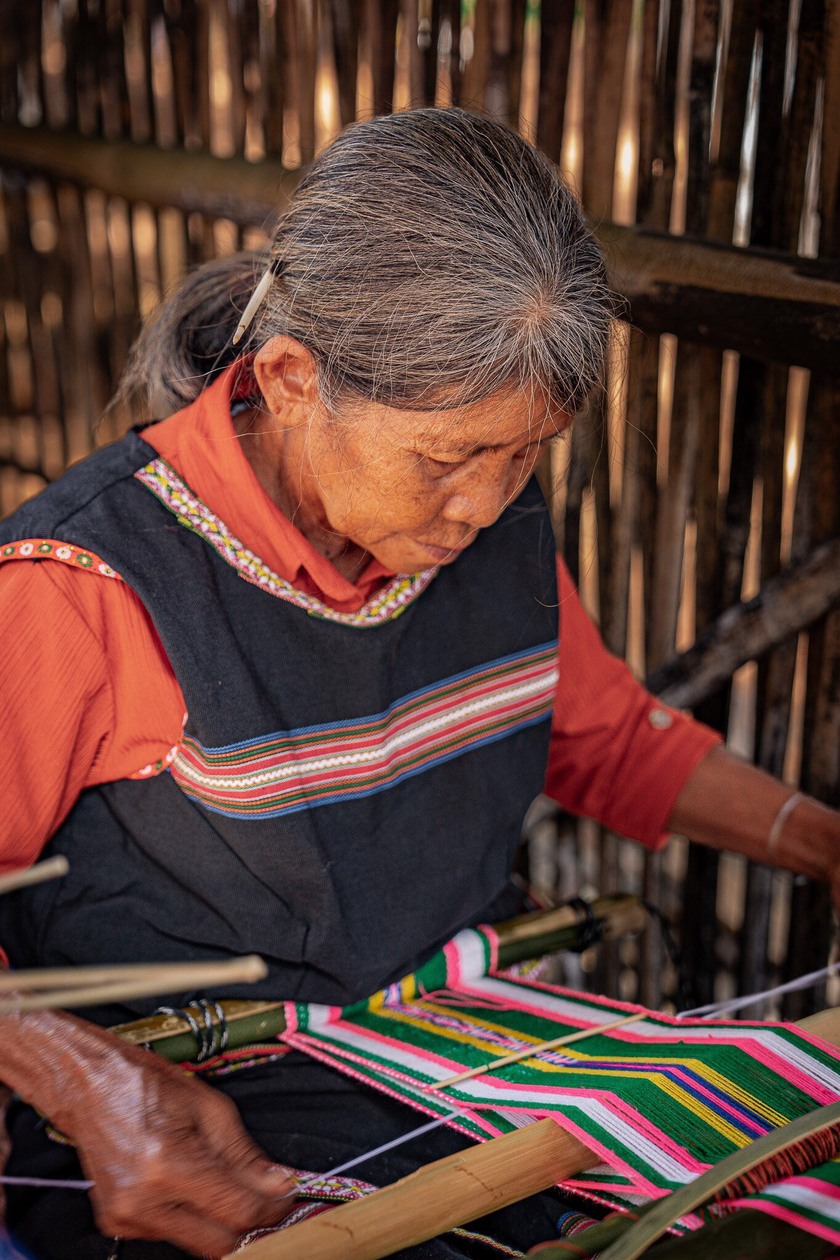
An elderly woman is carefully weaving brocade at the market.
Discussing the development direction in the near future, Huy said: "In the next 1-2 years, the market aims to diversify its offerings with characteristic products such as food, medicinal herbs, green agricultural products, as well as handicrafts linked to ethnic cultural identity such as brocade weaving and loincloths... In addition, there will be more workshop venues within the market, connecting with major festival events. For example, in January 2024, we will collaborate with the Mang Den Adventure Sustainable Series race as a relay and finish point."