VI
VI


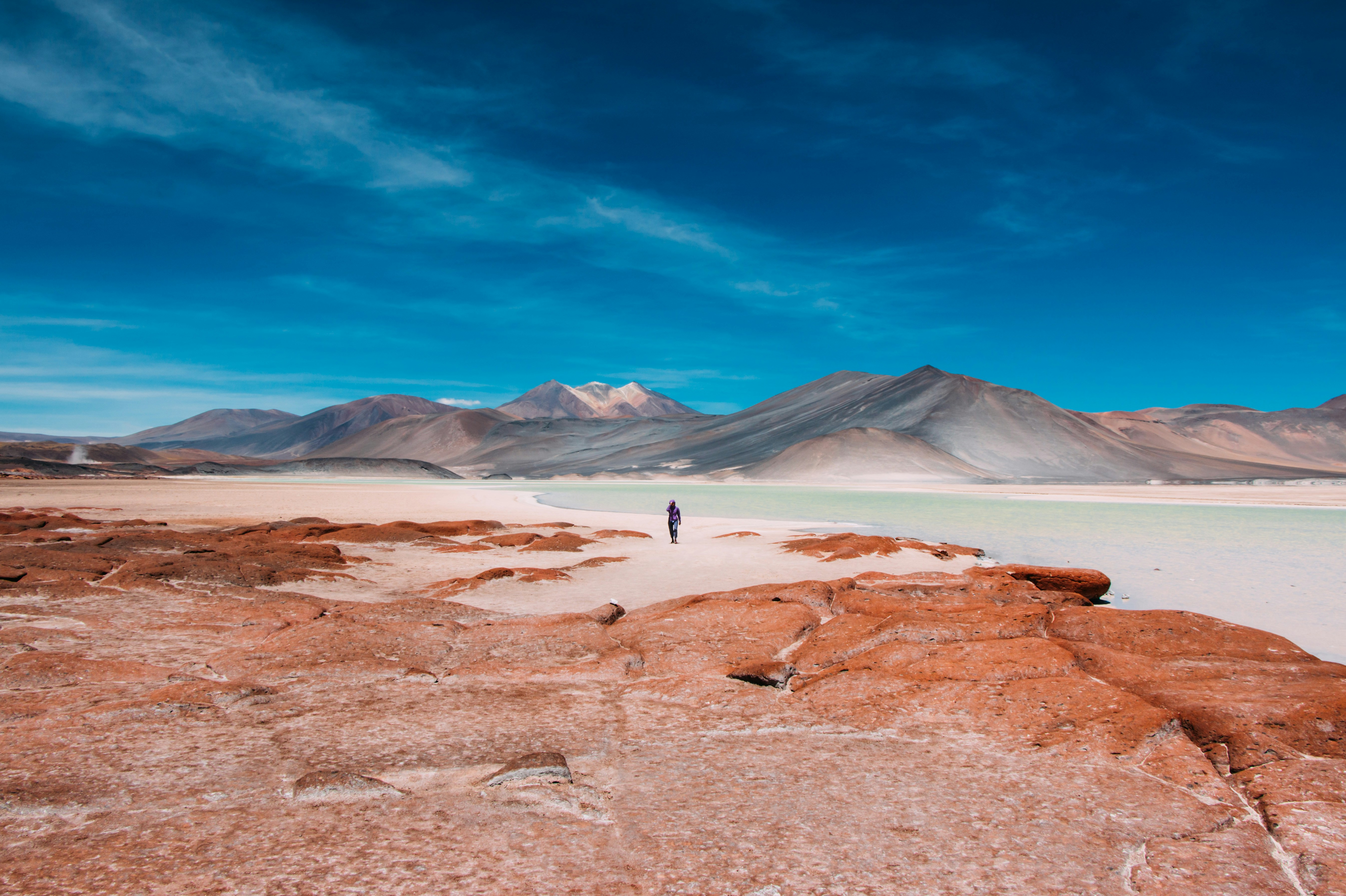
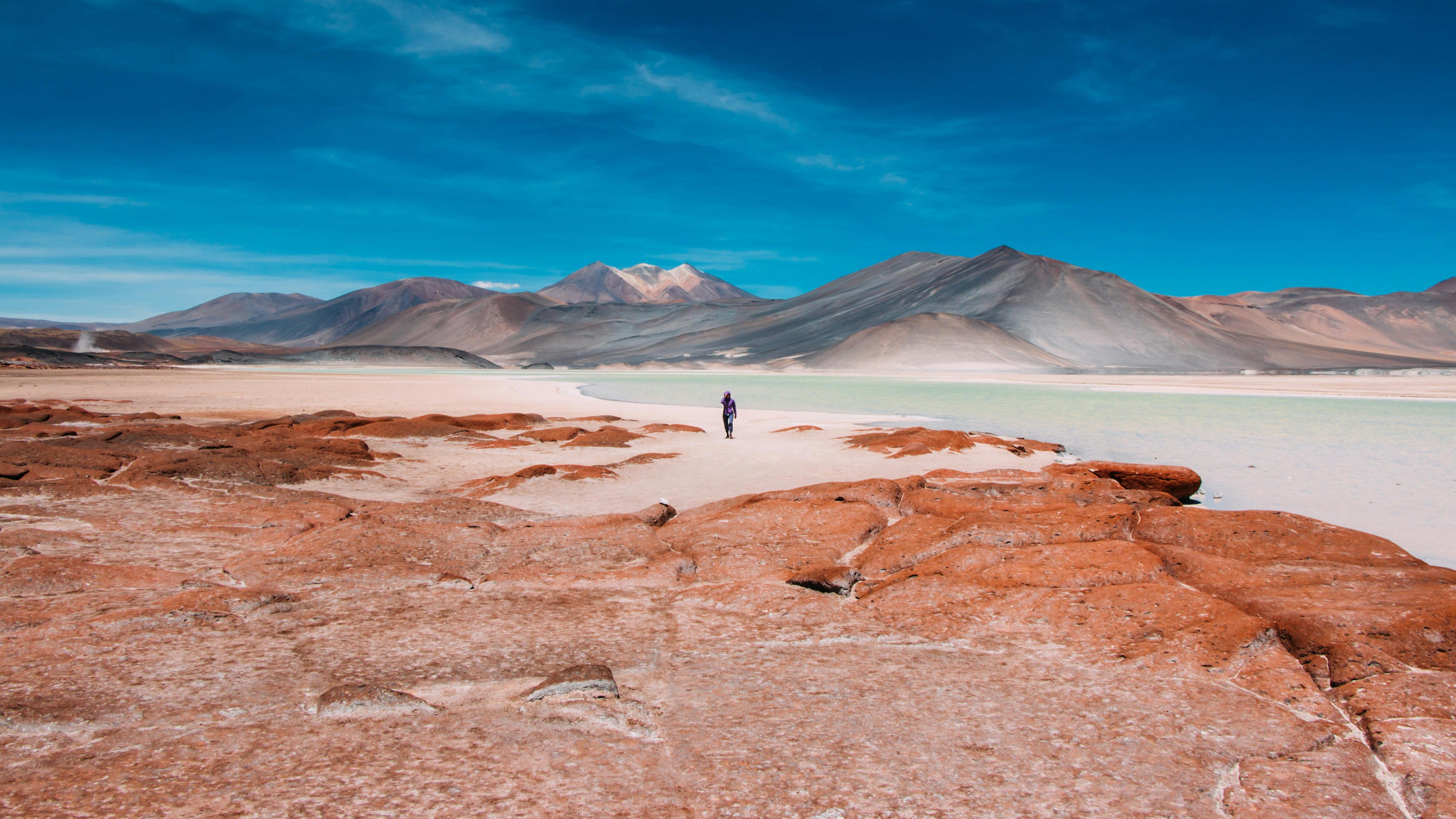
The sunniest spot on Earth is Altiplano in the Atacama Desert, a barren plain near the Andes Mountains in Chile that receives as much sunlight as Venus. Despite often being cold and dry, this sun-drenched region, situated at an altitude of 4,000 meters, gets more sun than places closer to the equator or at higher altitudes.
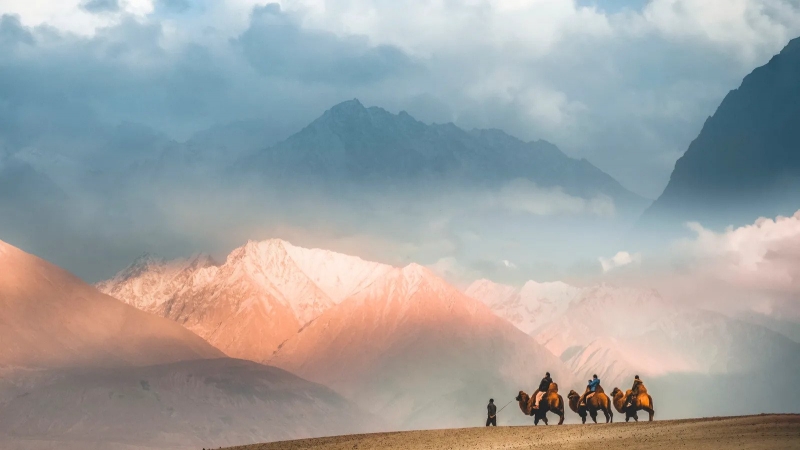
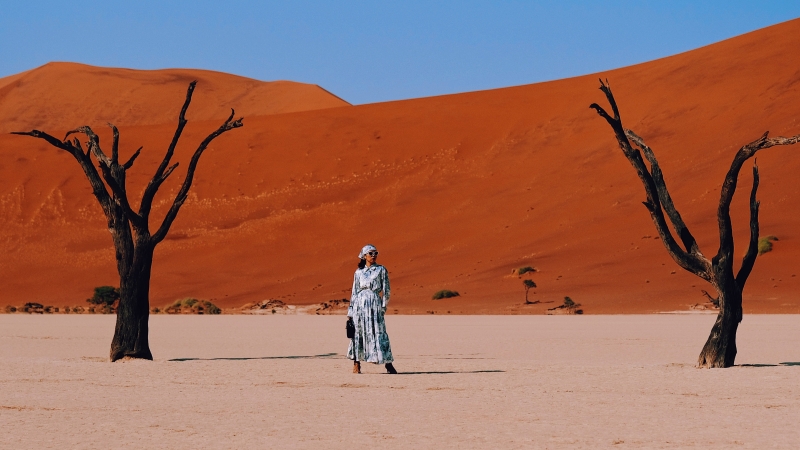
VERY LITTLE RAINFALL FOR HUNDREDS OF YEARS
The Atacama Desert is located in northern Chile and a small part of southern Peru. It lies between the Andes Mountains and the Pacific Ocean, 960 km south of the Tropic of Capricorn. The Atacama Desert is unique due to its distinctive terrain of rocky and volcanic hills and sprawling sand dunes. This desert rises to an altitude of 3,200 meters above sea level and covers an area of 181,300 square kilometers.2.
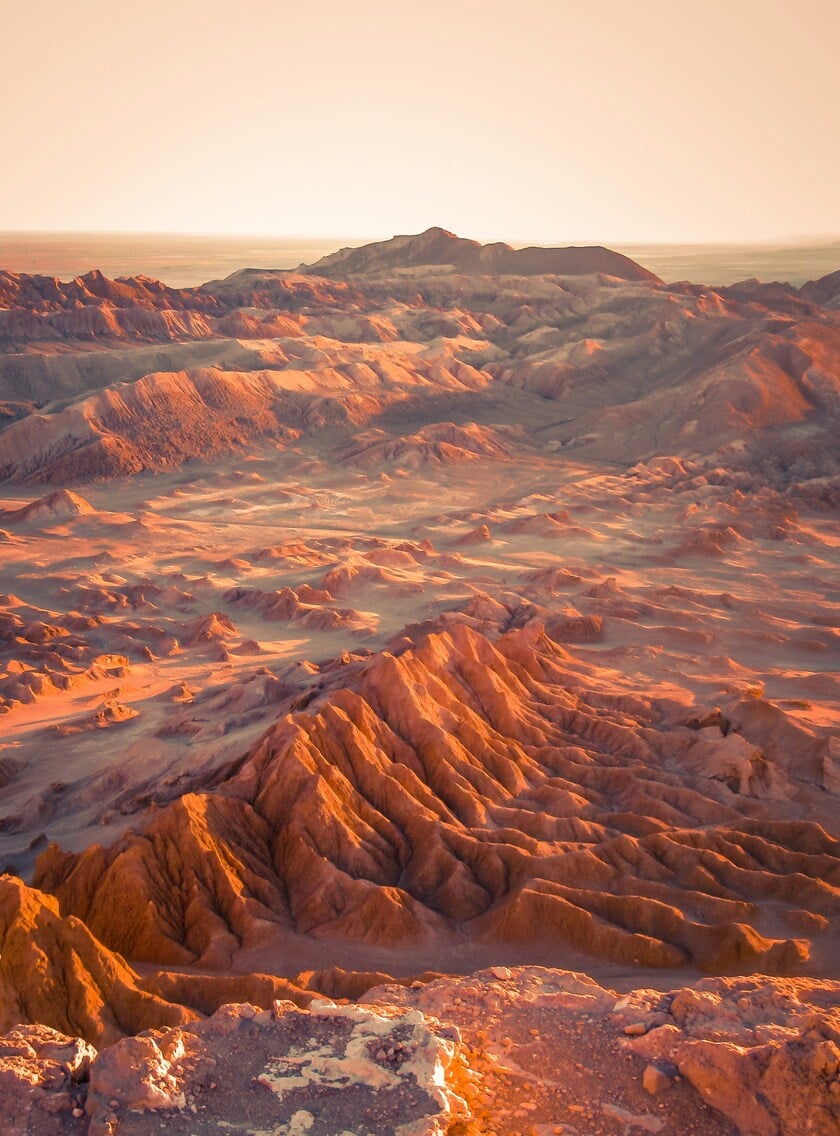
There are areas in the Atacama Desert where rainfall is as low as 3 mm per year.
The Atacama Desert is special for many reasons. It is the oldest desert on Earth, the driest beyond the polar regions, and possibly the clearest place to observe the night sky. The Altiplano in Chile is also notable for its solar radiation, the amount of light energy emitted from the sun to Earth. Scientists have measured a world record level of 2,177 watts/m² in this plain.2For comparison, radiation in the uppermost layer of the Earth's atmosphere is approximately 1,360 watts/m².2.
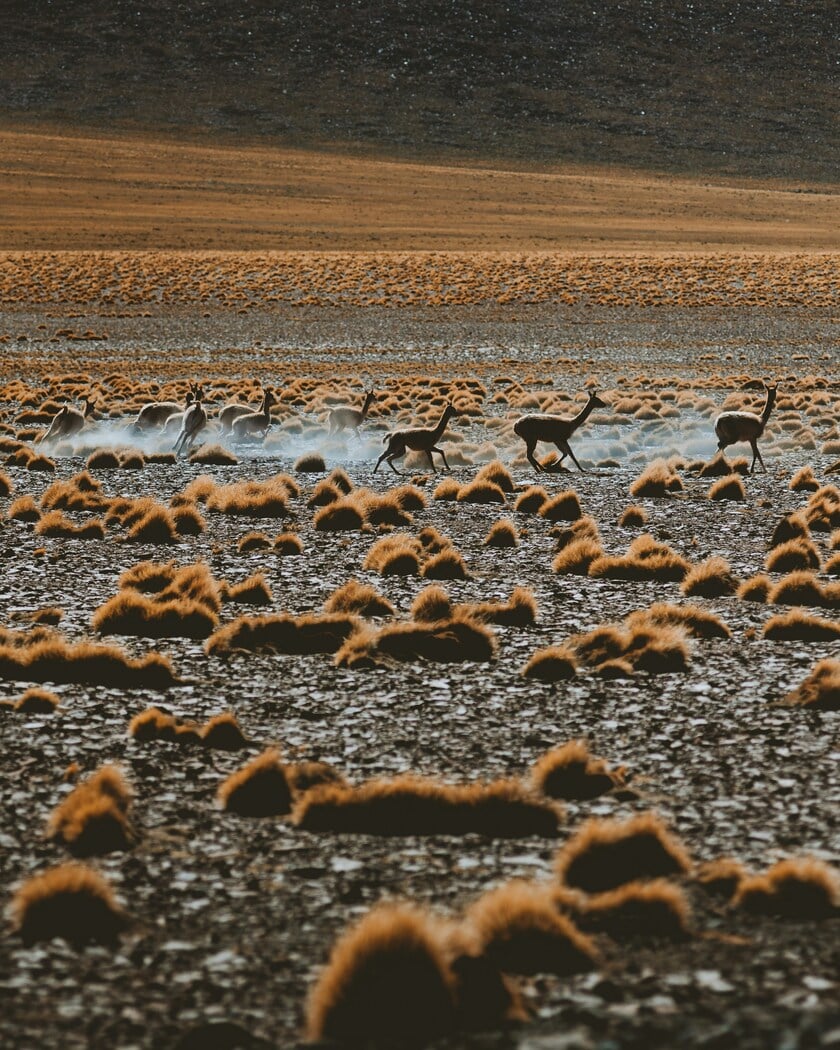
This is the oldest desert on Earth.
According to scientific analysis, from 1570 to 1971, the Atacama Desert received very little rainfall. In fact, some areas never experienced a single drop of rain. This resulted in the Atacama Desert being extremely arid. However, other areas of the desert received abundant rainfall, creating a diverse ecosystem.
Arica, a city located near Chile's Atacama Desert, has one of the driest climates in the world. With an average rainfall of only about 0.761 mm per year, the Atacama Desert has also endured periods without rain for 500 years.
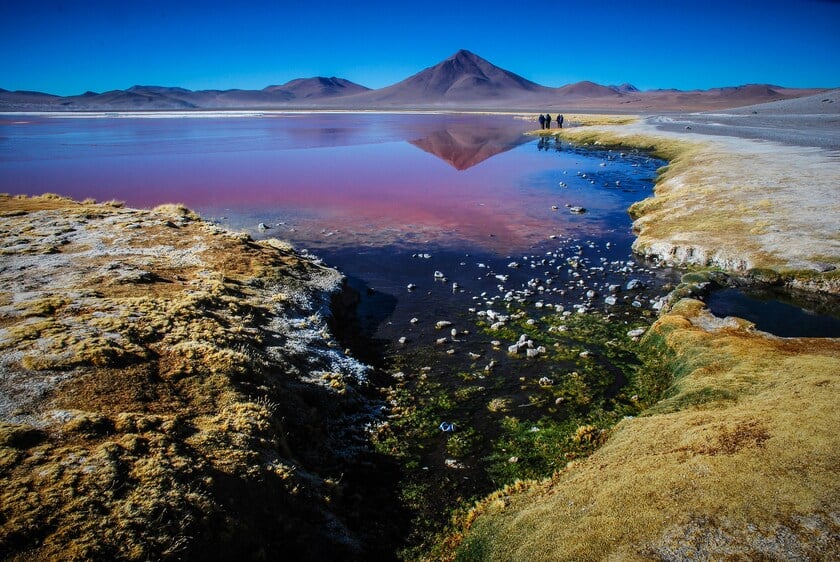
According to scientists, there are three main reasons for the scarcity of rainfall in the Atacama Desert.
According to scientists, there are three main reasons for the scarcity of rain in the Atacama Desert. First, the desert is blocked by the Andes Mountains, causing the Foehn effect. This phenomenon causes clouds to release large amounts of rain onto the mountain slopes, resulting in clouds having little water left to produce rain once they cross the desert. Second, the Humboldt Current carries cold water from Antarctica to the coasts of Chile and Peru, reducing evaporation and making it difficult for rain-bearing clouds to form. Third, there exists a high and wide volcanic plain called the Altiplano. The southern part of the Altiplano draws moisture from the Pacific Ocean, while the northern part prevents storms from the Amazon region from entering Chile.

MARS-LIKE TERRAIN
Scientists have discovered similarities between the soil found in the Atacama Desert and that on Mars. Therefore, this desert is used by NASA (National Aeronautics and Space Administration) to test equipment and robots intended for Mars. It has also been used to film many Hollywood movies related to space travel.
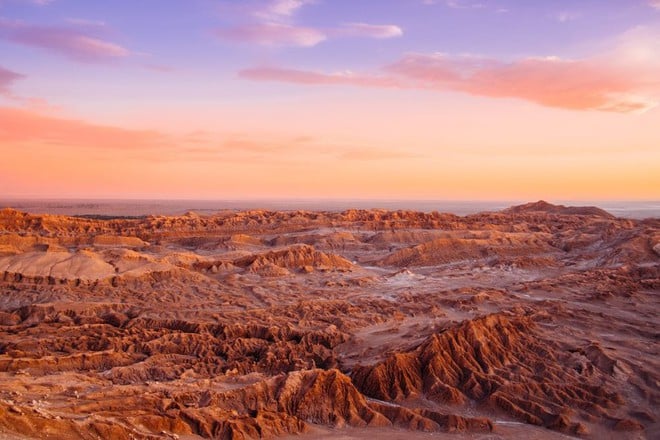
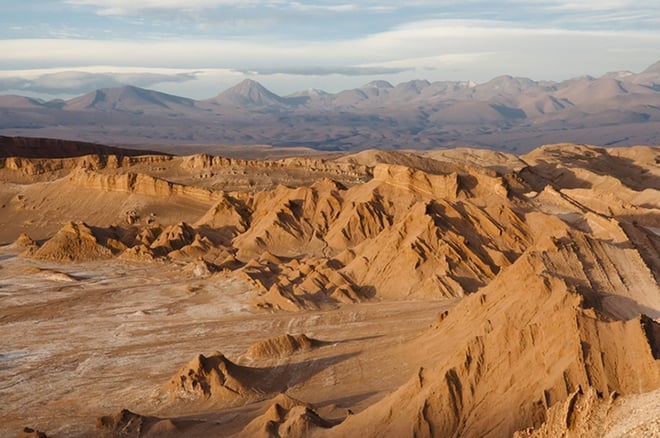
The terrain of the Atacama Desert has many similarities to Mars.
Scientists have discovered that the terrain of the Atacama Desert closely resembles that of Mars. It has also been used as a testing ground for devices and robots that NASA has sent to Mars. According to a study published in the journal Geology, the Atacama Desert was the site of a comet impact approximately 12,000 years ago. The impact was so powerful that it created massive sheets of silicate glass, which still exist today.
Glass found in the Atacama Desert contains many fragments of the minerals cubanite and troolite.
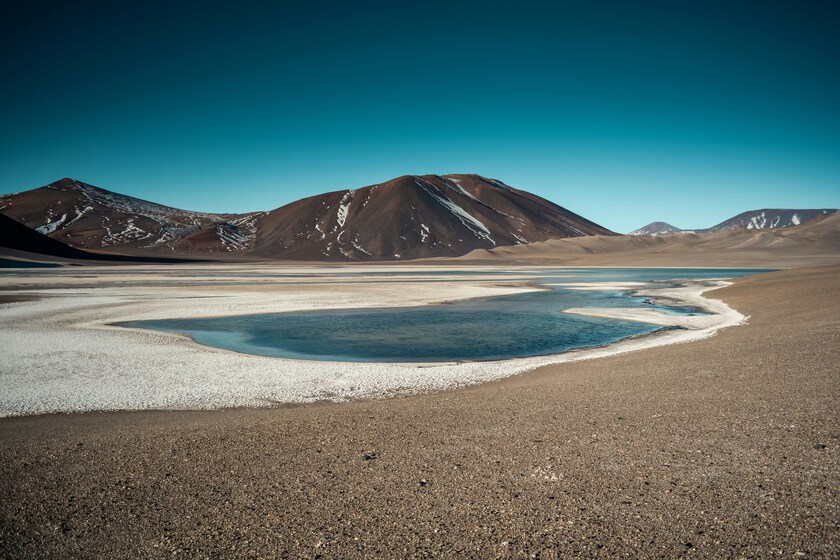
The glass found in the Atacama Desert contains many fragments of minerals commonly found in meteorites that have fallen to Earth. Specifically, these minerals are cubanite and troilite. The minerals in this glass resemble the particles collected by NASA's Wild 2 comet sampling mission. Scientists believe that the minerals in the Atacama Desert are remnants left behind after a comet similar to Wild 2 exploded over the desert, melting the sand.
THE BEST PLACE TO OBSERVE THE NIGHT SKY
For stargazing enthusiasts, the Atacama Desert is considered one of the best destinations to admire the magnificent night sky. Each year, it boasts over 300 nights of clear skies, creating ideal conditions for observing planets, stars, and meteoroids. Notably, the Atacama Desert is also home to one of the world's largest telescopes.
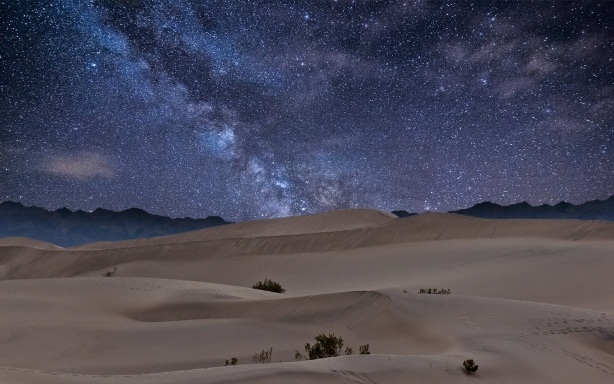
Deserts are known to be some of the most beautiful places in the world for stargazing.
Not only is there virtually no light pollution, but the low cloud cover and high altitude above sea level result in exceptionally sharp images seen through the telescope's optical tubes. Therefore, this desert is also home to one of the world's largest telescopes.
With its immense height and vast area, this region offers an incredibly spectacular view of the universe, attracting astronomers and tourists alike who wish to explore the boundless beauty of the cosmos.
A PLACE WHERE OVER 1 MILLION PEOPLE LIVE
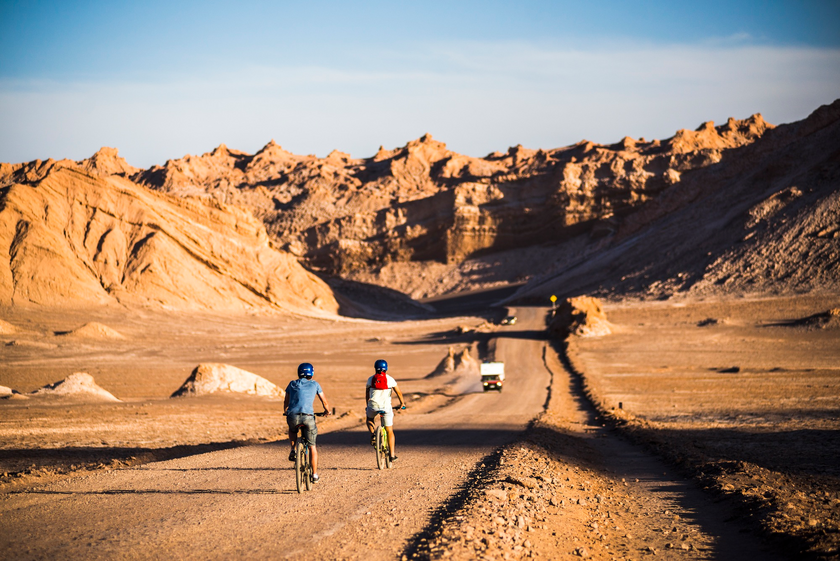
According to local historical records, humans have inhabited this area for thousands of years. The Atacama Desert is a remarkable example of the harshness of nature. Despite its barrenness and severe water scarcity, over a million people, through perseverance and ingenuity, have chosen to live in the coastal cities, fishing villages, and oase towns of this desert. This is a testament to the resilience and strength of human will, as they have found ways to adapt and survive in such a harsh environment as the Atacama Desert.
Local people have discovered a unique method of water storage.
In fact, after living in the Atacama Desert for a long time, the local people discovered a unique method of water storage. They used dense nets to collect water from underground aquifers formed by melting snow in the Andes Mountains. The water was then piped to individual households.
Accordingly, Arica is a port city located next to the Pan-American Highway (the world's longest highway, according to the Guinness Book of Records). In addition, the thriving fruit industry in the nearby Azapa and Lluta valleys also contributes to attracting people to live and work there.