VI
VI


Tran Dang Dang Khoa is no longer an unfamiliar name in the backpacking community. He has made his mark with his journey conquering the world on his motorbike with license plate number 63. Starting on June 1, 2017, he traveled over 33,000 km across 30 countries on 3 different continents. Currently, his journey continues, exploring many new lands.
Recently, on his personal page, Tran Dang Dang Khoa shared a picture of all the luggage he packed for a round-the-world motorbike trip. It looks like a lot, but it's actually quite a lot; it looks like little, but it's actually quite complete. There are no standards for packing for travel, but let's see what this guy from the 80s generation always brings with him when he's in a foreign land.
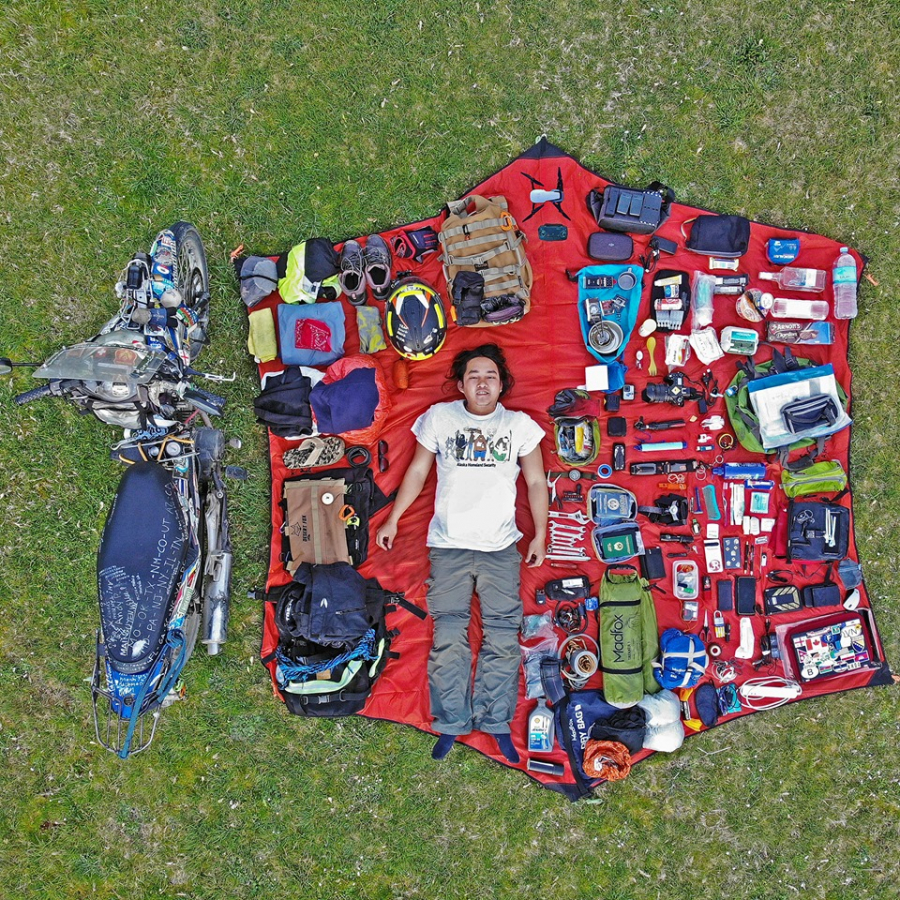
Tran Dang Dang Khoa, a man born in the 1980s, stands beside all his gear for his round-the-world motorcycle trip.
Motorbike
The first piece of luggage that must be mentioned is the motorbike – Khoa's companion on all his journeys around the world.
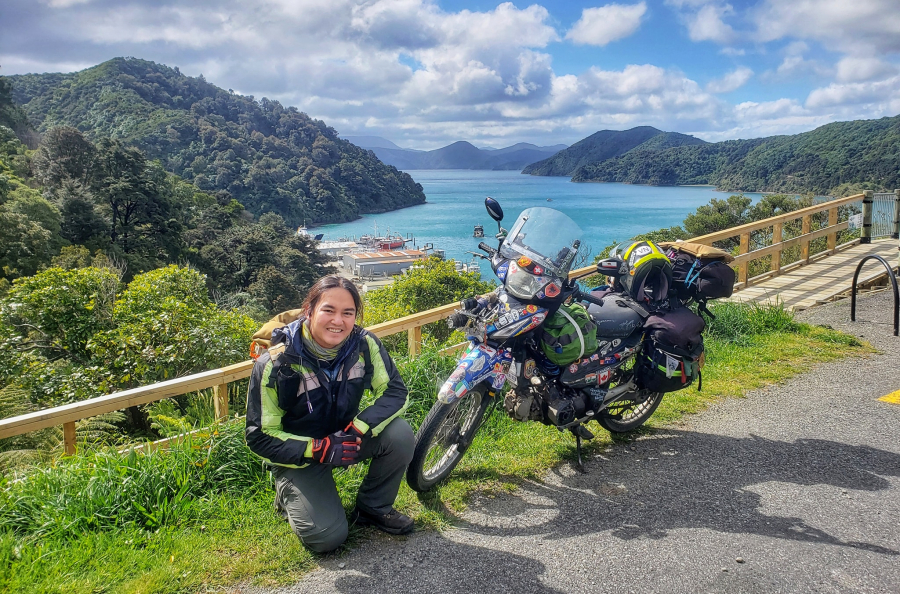
A portrait of Tran Dang Dang Khoa, a man born in the 1980s, and his motorbike in Picton, New Zealand, in early September.
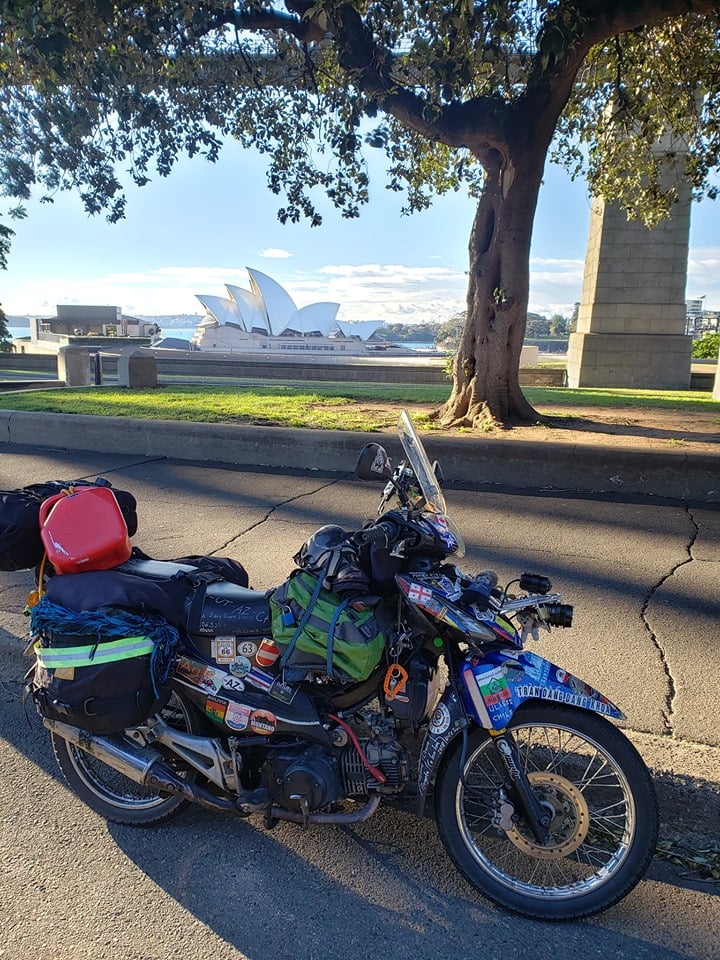
The motorbike Khoa used on this trip was a 2008 Wave. Many people advised him to buy a new one, but he refused. "This is the first motorbike I bought, it's been with me through so many ups and downs, and no matter what happens, it will always bring me home safely." The young man, born in 1987, said he spent over 11 million VND upgrading parts and repairing the engine.
Identification documents
Passports, visas, entry and exit stamps, driver's licenses, travel insurance, vehicle registration papers… are crucial items for any trip abroad, so they are always prioritized for safekeeping. Khoa's experience is to make multiple photocopies and keep them in his backpack and car trunk, while the originals are kept in a small bag tucked inside his innermost layer of clothing.
Photo: Facebook Tran Dang Dang Khoa
All his documents were carefully wrapped in waterproof plastic bags. This habit helped him a lot, especially during his trip to Greece. While driving on the highway leaving Athens, it suddenly started raining. Because he was in the middle of the highway, he couldn't stop. Thanks to his prior preparation—his documents were securely stored in waterproof bags and his backpack was always covered with a raincoat—only he got wet; his documents remained dry.
Cash and ATM cards
Money is especially important when traveling to unfamiliar places. On his trip, Khoa carried two Vietnamese bank cards and one foreign bank card. Thanks to this, he was still able to withdraw money in India even though one card was blocked (ATMs in India only accept 4-digit PINs, while international cards in Vietnam have 6 digits).

Khoa also divided his ATM cards and cash into several places on his person, in his backpack, and hidden in his car so that he would have money for self-defense in case of theft or robbery.
Personal items and multi-purpose tools
These items take up the most space in Khoa's backpack. Because he's traveling alone and a long distance by motorbike, he's equipped himself with many items so he can quickly fix problems on his own in case of an emergency.
His personal belongings included: various types of clothing (for riding a motorbike, sleeping, hiking, and swimming); shoes; gloves (summer gloves, winter gloves, repair gloves); various types of scarves; sunglasses; hats (woolen hats, baseball caps, hiking hats, helmets)... In addition, there were basic items such as: toothbrush, needle and thread, water bottle, comb, cotton swabs, dental floss,...
Khoa and his motorbike, along with all his tools, traveled around the world.
Khoa's multi-purpose gear included: a tent, sleeping bag, tarp, repair tools, spare parts and inner tubes, a pump, a spare fuel tank, a compass, a rescue whistle, various types of flashlights, spare keys, a padlock, ropes, fishing hooks, a mini saw, a water filter, and all kinds of knives... Everything was neatly packed into Khoa's backpack, like a miniature supermarket.
In addition, his backpack is always stocked with medicine and first-aid supplies. This "mobile medicine cabinet" is kept in a place where it can be easily accessed. Notably, he also keeps his general health check-up results in it, so that in case he loses consciousness, local medical or rescue personnel will know his blood type, medical history, drug resistance, and other personal health parameters…
In addition, there are cooking utensils, pots and pans, spoons and chopsticks, cooking alcohol, and some food items such as snacks, tea, coffee, and drinks...
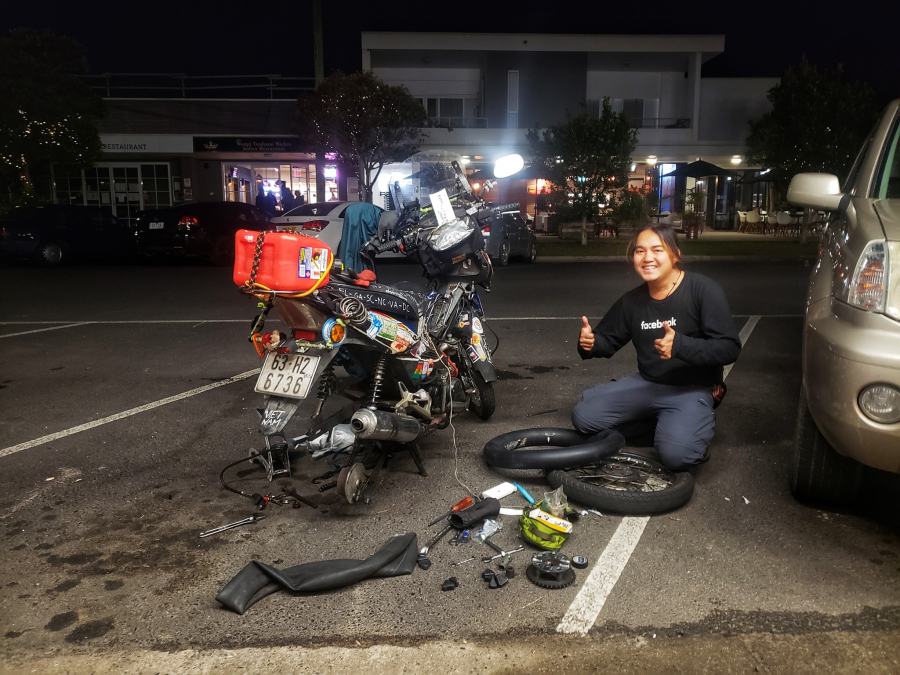
Khoa also works as a mechanic, using the tools he brought from his hometown.
Technology devices
Khoa brought three phones: a smartphone for communication and taking photos, and a basic phone to use as a GPS navigation device mounted on the front of his bike. He also carried a spare battery, switched off and kept in his backpack, just in case he lost the other two.
Khoa's secret is to have readily available emergency numbers for police and rescue services in various countries, hotlines for Vietnamese people abroad, travel insurance hotlines (1800 599998), and ISOS International Rescue (84838 247123). He also set up an Emergency Call feature on his lock screen, so that in case of an accident or unconsciousness, he can call these hotlines without unlocking the phone.
The male traveler also installed medical first aid apps, offline maps, and used Google Maps' new location sharing feature so that anyone he shared his location with would always know his current whereabouts or when they last saw him.
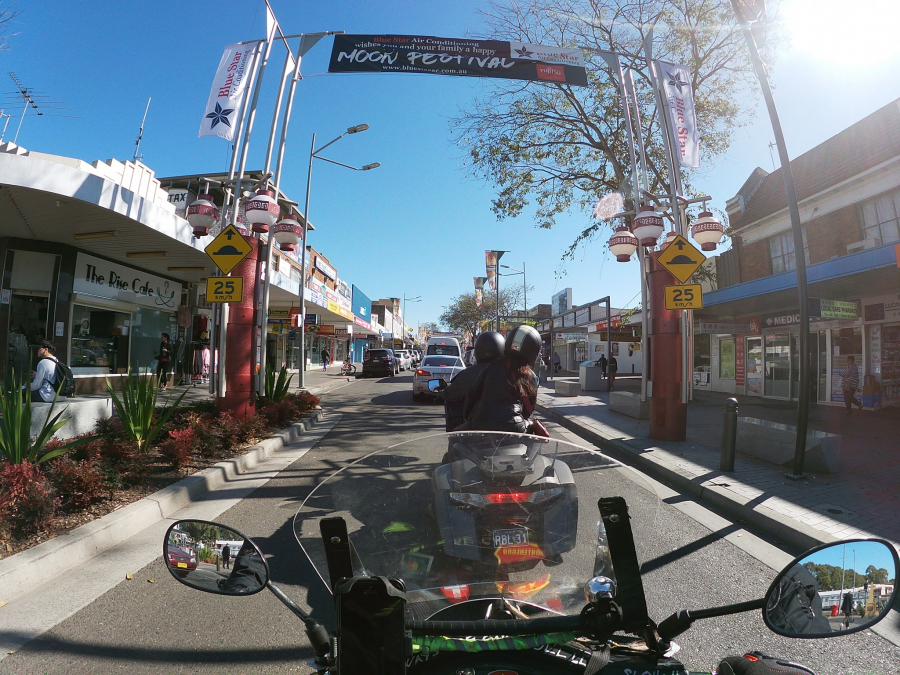
The technological devices he carried helped him capture beautiful images of the places he visited.
Offline maps are incredibly useful and practical, saving Khoa many times when his car broke down on the road. He used it to find the nearest village, find temporary accommodation, locate a repair shop, or find someone to help. Thanks to this app, he could also save the locations of guesthouses, hotels, and parking spaces so he could wander around a strange city and still know where to go.
Besides phones, laptops, cameras, tripods, memory cards, USB drives, and various types of batteries, these are also indispensable devices on Khoa's round-the-world trip. These technological devices serve both to preserve memories through photos and videos and as a means of communication, connecting him with others, so that those who care about him and follow his journey know where he is and that he is safe.