VI
VI


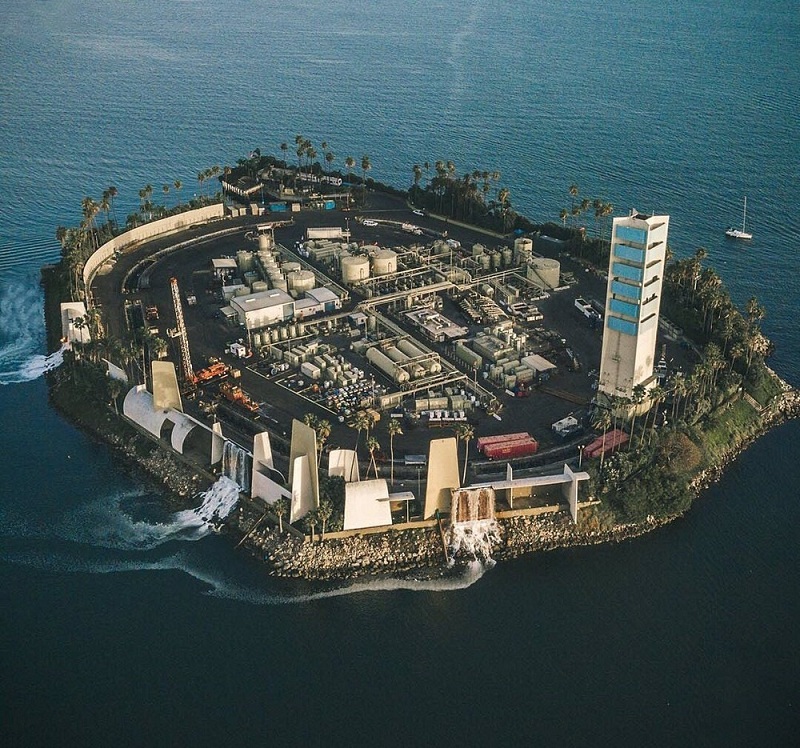
Disguising industrial infrastructure with an appearance that blends in with the natural environment is nothing new. The city of Toronto disguised a substation as a quiet little house for over a century. Similarly, major cities like New York, Paris, and London have hidden ventilation shafts and train tracks behind walls and fake buildings. These are often discovered by curious residents.
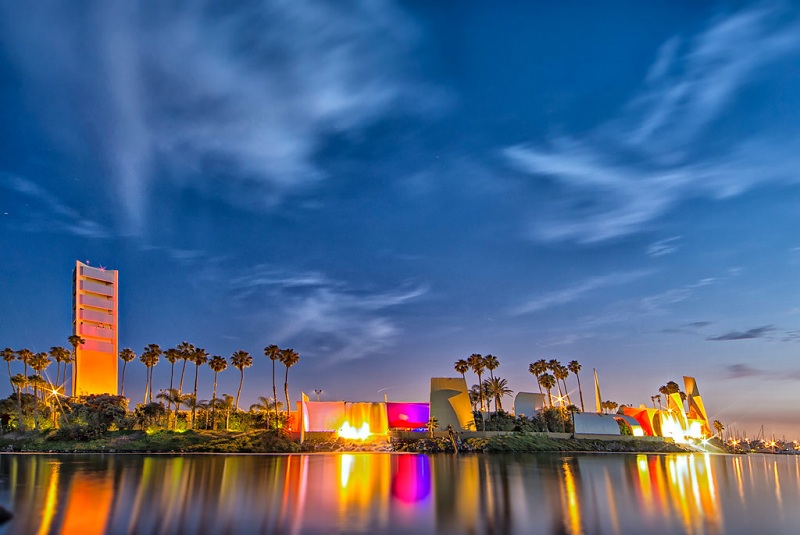
However, the construction of the Thums Long Beach islands is a public project. Yet, not many people know this because the islands are quite isolated from residential areas.
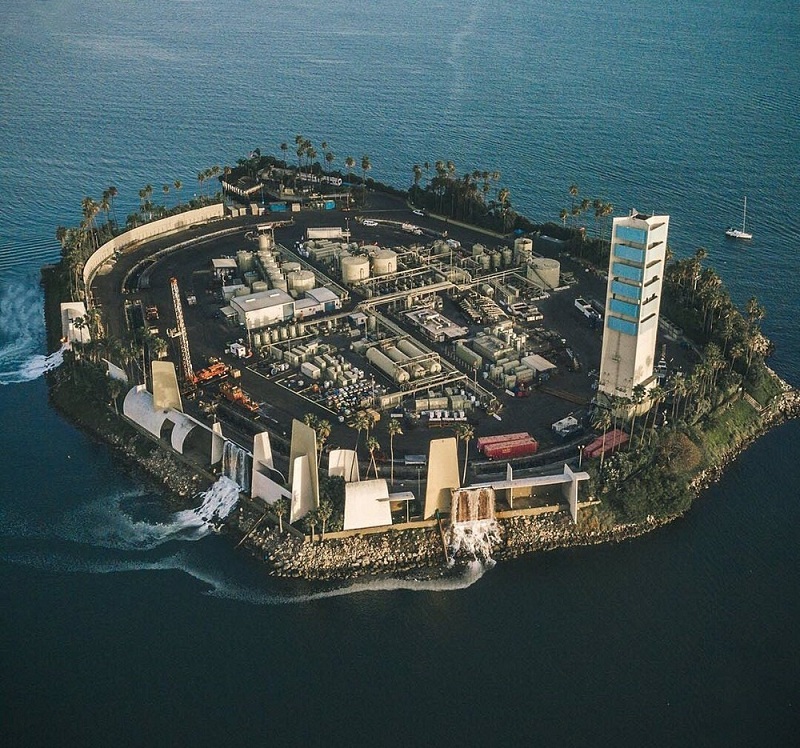

THUMS is an acronym for Texaco, Humble (now Exxon), Union Oil, Mobil, and Shell—five companies that formed a consortium to oversee drilling operations in San Pedro Bay. The islands were constructed in 1965 at an estimated cost of $22 million. More than 640,000 tons of cobblestone, some weighing around five tons, were transported from Catalina Island and used to build the island's perimeter, starting from the harbor, some 30-40 meters deep. The islands were then filled with sand dredged from the harbor bottom. The next step was landscaping and equipment installation.

When Long Beach voters put forward an ambitious proposal for offshore oil resource exploitation, part of the agreement was that the islands had to be designed as tropical islands, masking the actual oil drilling activities.
“The islands must blend in with the natural and local landscape, without detracting from the natural beauty of the harbor,” said Frank Komin, Executive Vice President of Southern Operations for California Resources Corporation, the company that currently owns the islands.
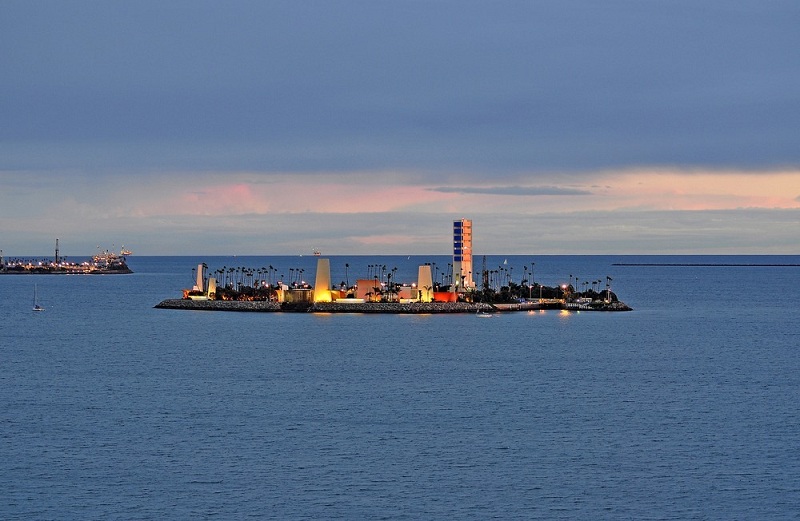
The islands were designed by Joseph Linesch, who also designed Disneyland. Palm trees are densely planted on the exterior. Concrete facades conceal the drilling rigs, also to block industrial noise from reaching nearby residents.
The Thums Islands were also renamed the Astronauts Islands in honor of four American astronauts who died while working for NASA—Theodor C. Freeman, Gus Grissom, Ed White, and Roger B. Chaffee. This was later related to Apollo 1, where the astronauts died in a fire accident on the launch pad.