VI
VI


Before becoming a "storyteller through travel," Nguyen Hoang Bao was a lecturer at the Faculty of Commerce and Tourism, Ho Chi Minh City University of Industry, with over 15 years of experience in the classroom. He holds a Master's degree in Business Administration and currently continues to teach as a visiting lecturer at several universities in Ho Chi Minh City.
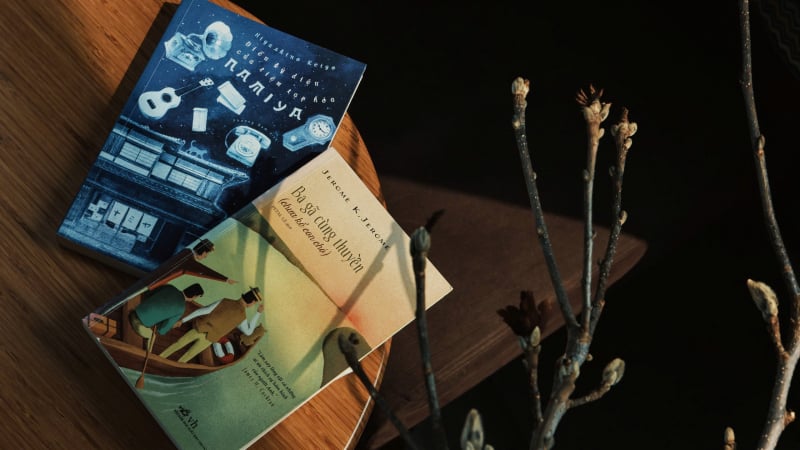

Beyond teaching, he also carries that spirit of learning out into the wider world. Starting in 2009, he embarked on his first journeys, gradually traveling through more than 125 countries, observing, documenting, and listening to the stories of different cultures. In 2016, he published *Solo Traveler* – a travelogue chronicling his journey along the Silk Road through the Middle East and Central Asia, where civilizations and human memories intersect.

Author Nguyen Hoang Bao in Ladak, India
Having traveled through more than 125 countries in over 15 years, Nguyen Hoang Bao still says he is simply on a journey to "find his true self." From the vast deserts of Central Asia to the tranquil cities of Europe, every step he takes is a lesson about the movement of the world and of the soul.
In a conversation with Travellive, author Nguyen Hoang Bao recounts what he calls a "silent homecoming" journey in his book "How Many Days Do We Have Left to Be Happy?", officially released in early November this year: from miles outside the world to miles within the consciousness, where people learn to listen to themselves.


What motivated you to leave your comfort zone and embark on a journey to visit over 125 countries around the world?
Over 15 years ago, the urge to understand the world through personal experience pulled me out of my comfort zone. I realized that a sense of security brings stagnation, while the world is vast and full of untold stories. Each trip is a silent dialogue with myself, where I learn to listen to the rhythm of others' lives and, through that, discover the true rhythm of my own.

The author travels to Siberia, one of the world's harshest, most icy regions.
When traveling through unfamiliar and sometimes harsh lands, what kept you going instead of stopping? Which part of the journey do you remember most?
What keeps me going is my belief in the power of experience and authenticity in life. I remember most vividly the cold, deprived days in Gyumri, Armenia, where I met Paolo and Maribel, people who sowed faith and hope from their own suffering. They made me realize that happiness doesn't lie in what we hold onto, but in what we dare to sacrifice for what is good. That journey opened up a profound insight into myself and the world: external difficulties are merely a veil to discover inner strength.


He once traveled along the Silk Road – a route connecting Asia and Europe. What led him to choose that journey as the subject matter for his first book, *Solo Journey* (2016)?
The Silk Road not only connected Asia and Europe, but also linked the past and present, people and memories. Amidst deserts, temples, and the people I met, I recognized resilience, hospitality, and the preservation of memory. That journey offered experiences of culture, history, and humanity—vivid pieces that I wanted to include in "Solo Journey," so that readers would see that every step is a story.


After traveling through hundreds of lands, when did he begin to feel a transformation within himself?
That moment came many years ago when I stood before the stone faces of Bayon – a symbol of Khmer culture in Cambodia. Each mysterious smile, each serene gaze seemed to touch directly into my consciousness.
I sat before the statues, letting the afternoon light shine through the layers of stone, and realized that traveling to distant lands doesn't change us. Only by observing ourselves, by touching our inner selves, can we truly embark on the journey of awakening.

The author is at the Bayon temple gate during his most recent visit!
When I let go of pain and invisible bonds, I found myself lighter, no longer a traveler searching, but an observer and empathizer of myself—an experience that was both a return and an inner awakening.
If the journey through 125 countries is a journey outward to see the world, then are the 17 spiritual lands a journey inward to look back at oneself?
My journey outward revealed the richness and diversity of the world, while my inner journey through 17 spiritual realms showed me the profound similarities within the human psyche. One is a picture of the world, the other a map of the soul. When placed side by side, I found that every path, whether external or internal, leads to one thing: understanding and loving oneself, and being in harmony with humanity.

The author travels to Morocco – one of the 17 spiritual lands on his journey of awakening.
What was so special about those 17 spiritual lands that made him truly feel "touched from within," as if he had just traveled a long distance but also returned home?
Each spiritual land is a mirror reflecting the memories, beliefs, and life experiences of its people. Standing before Sufi rituals in Türkiye, the Day of the Dead festival in Mexico, Tibetan monasteries, the majestic yet harsh natural landscapes of Baikal, or the Wailing Wall in Jerusalem, I see not only culture, but also inner life, resilience, love, and the power of healing. I travel far into the world, yet simultaneously return inward, touching my deepest self.


Looking back on that journey, do you recognize any "common denominator" among humanity?
Regardless of language, skin color, or religion, people everywhere seek happiness, peace, love, and meaning in life. I realize that the yearning for connection, understanding, and letting go of things that hurt oneself and others is the common thread that connects all of humanity.


Happiness is a shared aspiration and also the thread that connects humanity.
The book "How Many Days Do We Have Left to Be Happy?" is considered the culmination of a journey of awakening after years of wandering. So what emotions guided his pen?
I write from the stillness and experiences accumulated over years of wandering. Each line is a conversation with memory, with emotions "awakened" from solitude. I relive the pain, the astonishment, and the quiet joy to write them down as a melody of gratitude, awareness, and freedom.

This journey is a return, a place where I rediscover myself, touch upon dormant memories and values I thought were lost. At the same time, it's a rebirth, as I learn to breathe slowly, let go of things that don't belong to me, and be fully present in the moment. Happiness isn't far away; it's always within, waiting for us to stop, listen, and recognize it.