VI
VI


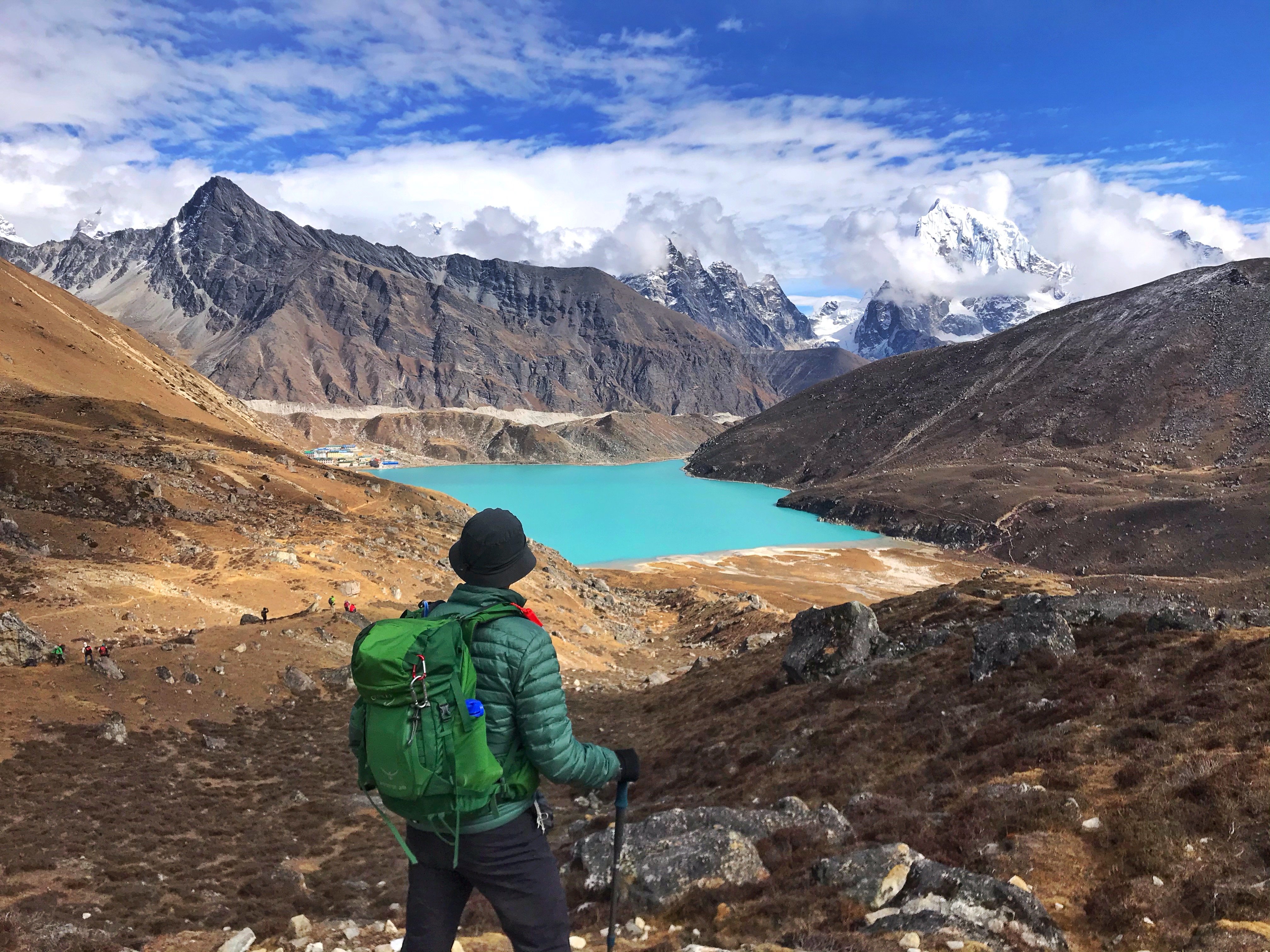
Located north of Everest, in the Khumbu region, lies one of Nepal's most beautiful scenic spots – Lake Gokyo. This azure lake is situated within Nepal's Sagarmatha National Park. A perpetual source of freshwater fed by glaciers, the Gokyo lake system is considered naturally vulnerable due to its location within an ecologically unstable area.
The trekking route to the lake is for those seeking a less-traveled trail than the famous Everest Base Camp route, but with breathtaking scenery. The route will take you up mountainous terrain, through areas where Tibetan yaks graze in the summer, and to the chain of turquoise Gokyo lakes.
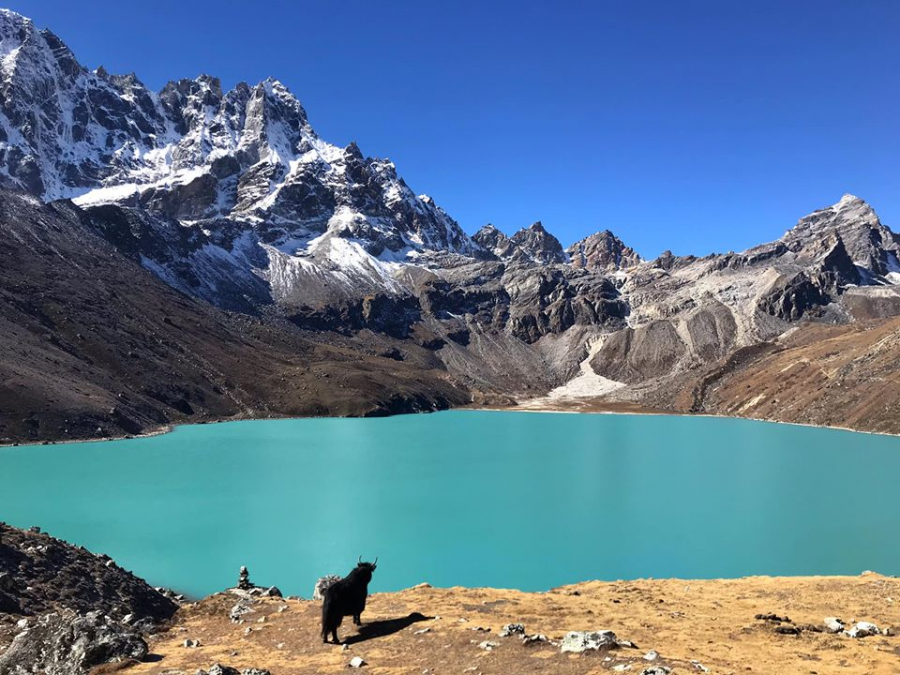
The Gokyo Lake system comprises 19 lakes spread across an area of 196.2 hectares. Lake Gokyo and the village of the same name are located at an altitude of nearly 5,000 meters above sea level. This is the main lake in the system, covering an area of 42.9 hectares. The other five large lakes in the 19-lake system are: Thonak (the largest at 65.07 hectares), Gyazumpa (29 hectares), Tanjung (16.95 hectares), and Ngojumba (14.39 hectares).

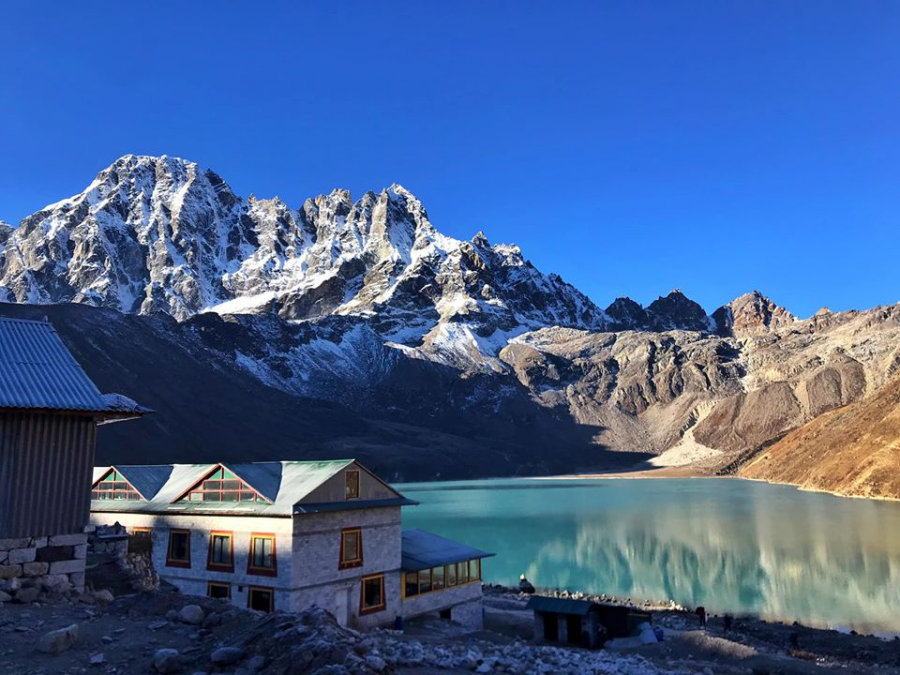
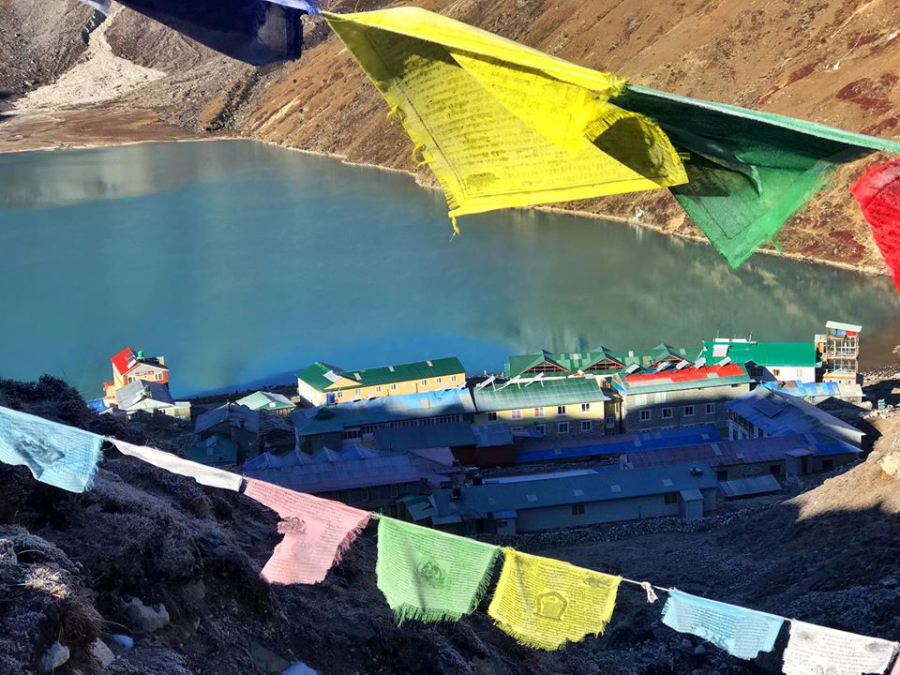
The village of the same name is located on Lake Gokyo.
Travel blogger Thien Nguyen's trekking group, after crossing the Renjo La Pass, stayed for two nights by Lake Gokyo to feast their eyes on the magnificent natural scenery before continuing their journey to Gokyo Ri, Gokyo Fourth, and Gokyo Fifth. Upon crossing the Renjo La Pass, a mesmerizing expanse of blue unfolds, but it takes a full three hours of trekking along a steep, rocky path to reach the destination. "Everything was truly worth the effort. The lake is a stunning blue with crystal-clear water, and the village by the lake is filled with guesthouses offering views of the lake. In the distance, the snow-capped mountains reflect their image – it's absolutely breathtaking!" shared Thien Nguyen.
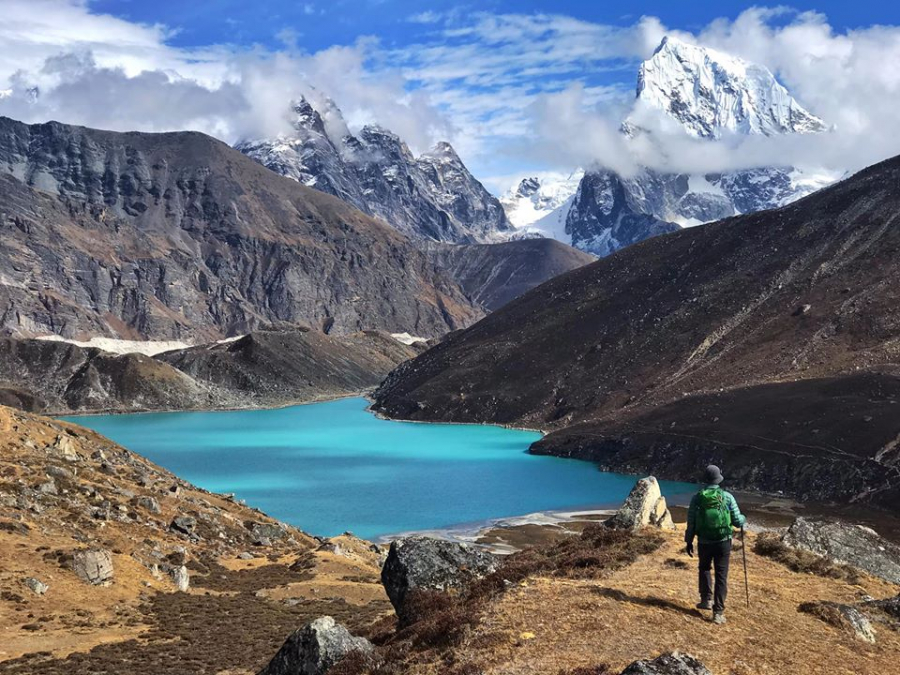
"Everything was truly worth the effort," shared Thien Nguyen.
Lake Gokyo is a hidden gem of the Everest Range. To fully explore the lake, visitors must pass through the Everest Base Camp and the town of Namche Bazaar, home to the Sherpa people. Thien Nguyen chose a challenging route that crosses three majestic Himalayan passes: Renjo La (5,360 m), Cho La (5,420 m), and Kongma La (5,535 m). However, there is a more manageable route that combines the Everest Base Camp and Lake Gokyo in one trip, only climbing Cho La. It would take approximately two to three days to reach the valley with the icebergs floating lazily on the surface of Lake Gokyo.
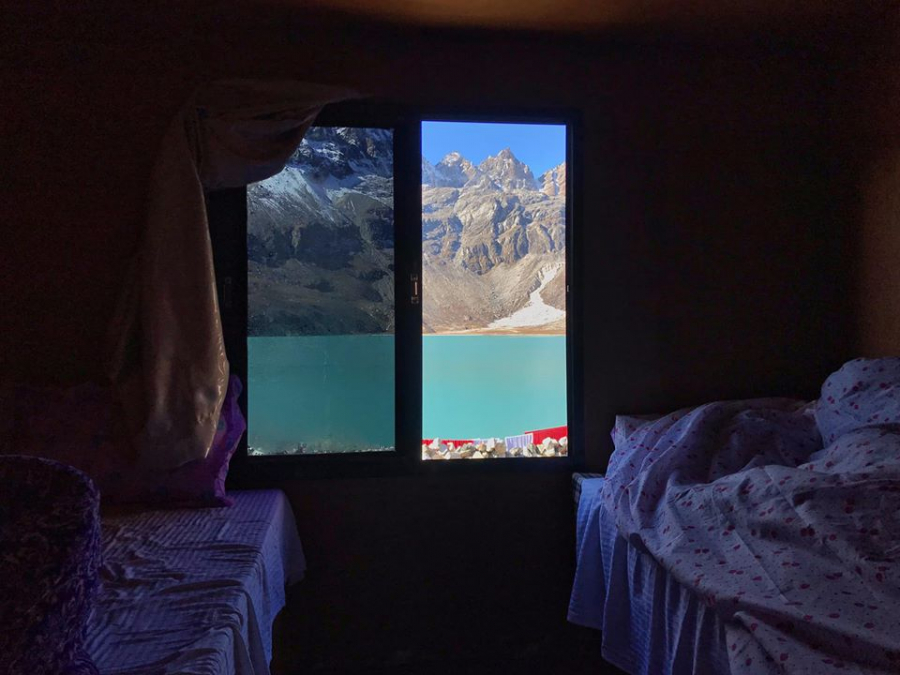
The small house by the lake offers a picturesque view.
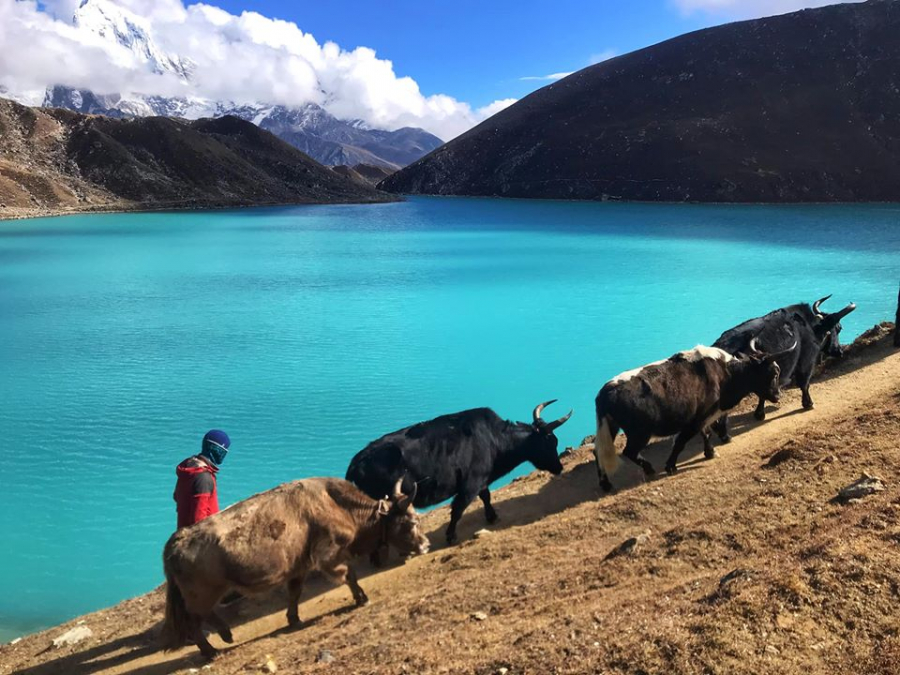
Thien Nguyen's group spent two days at a small lakeside guesthouse, enduring the biting cold but warmed by the hospitality of the owners. "I loved waking up early to gaze at Lake Gokyo, like a mirror reflecting the fresh, shimmering rays of the morning sun. In the evenings, I'd stroll along the lakeside through the mist, watching the yaks leisurely wading by... Everything felt so gentle and unhurried, following the rhythm of the mystical Himalayan mountains slowly drifting by," he recalled, a breathtaking scene of nature unfolding before his eyes.
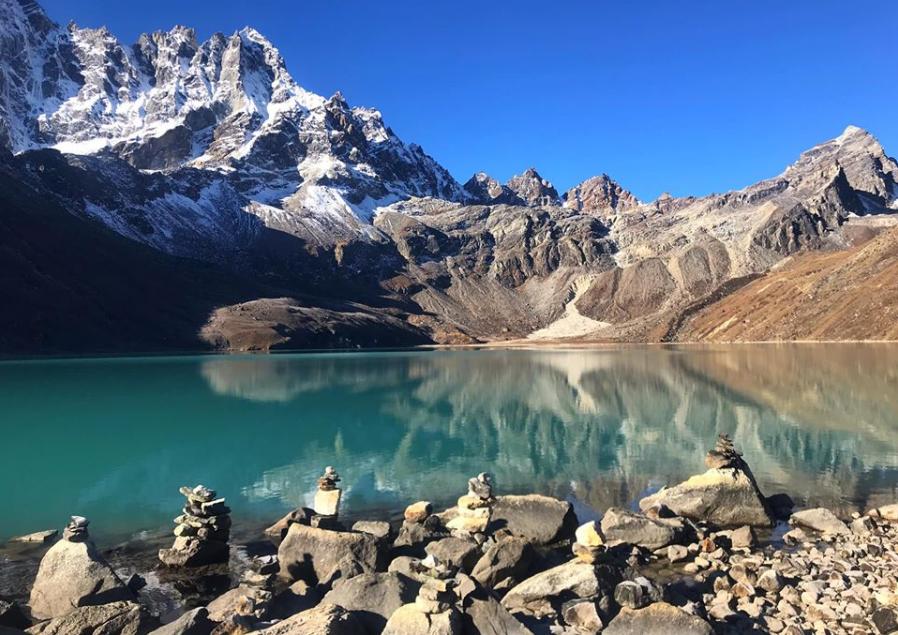
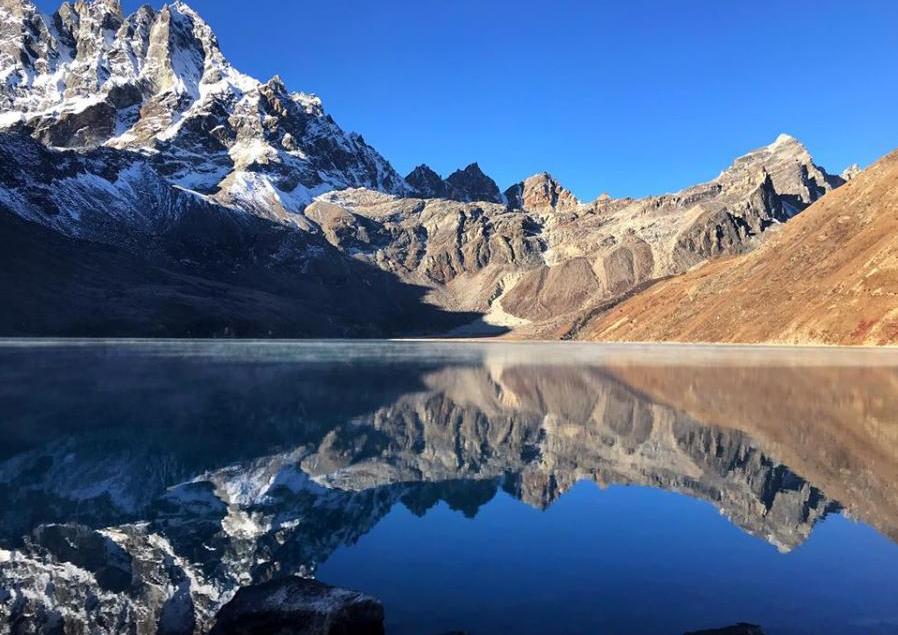
The rays of the new day's sun spread a golden glow.
On average, about 7,000 tourists visit Lake Gokyo annually to admire its enchanting scenery. Lake Gokyo holds sacred significance in Hindu culture as it is revered as the abode of the serpent god Nag Devata. Every August, devout Hindus come here to bathe in the lakes during the Janai Purnima festival.