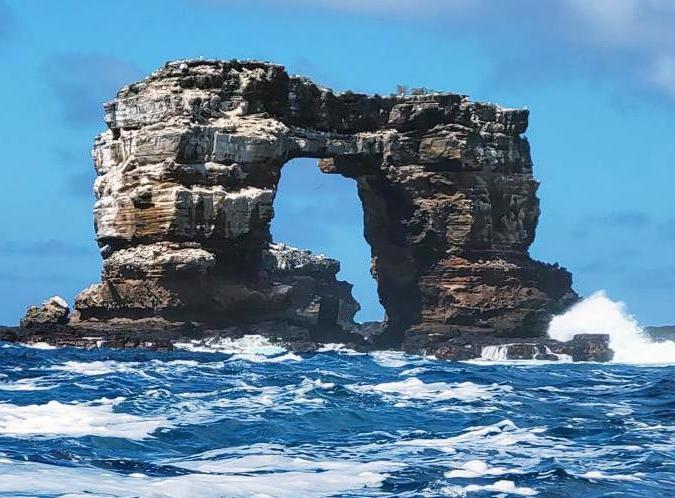
Darwin's Arch is a famous landmark on the Galapagos Islands (Ecuador), named after the renowned biologist Charles Darwin. However, images of the arch are now only a memory due to its collapse caused by natural erosion.
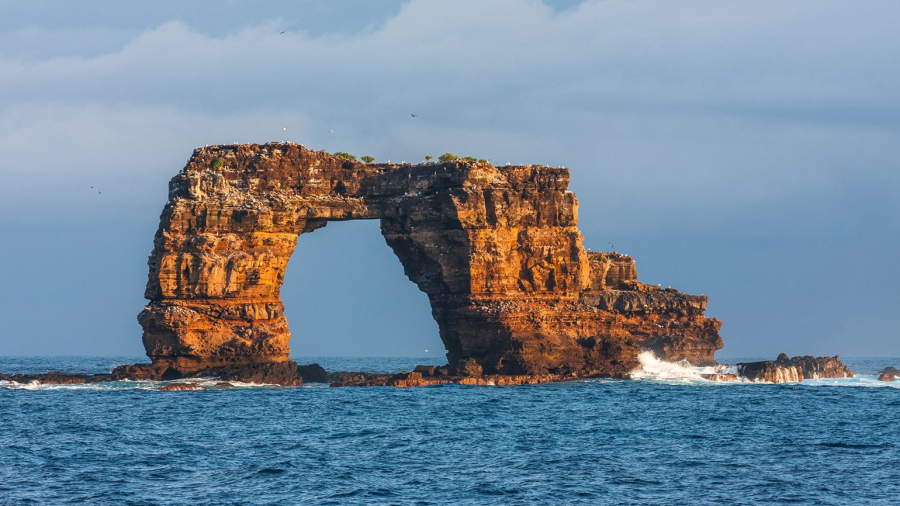
Darwin's Arch is a natural rock formation located in the northern part of the Galapagos Islands and is named after the famous biologist and father of the theory of evolution, Charles Darwin. He studied birds in the Galapagos in the 19th century, and this research made a significant contribution to Darwin's theory of evolution.
Photo: Internet
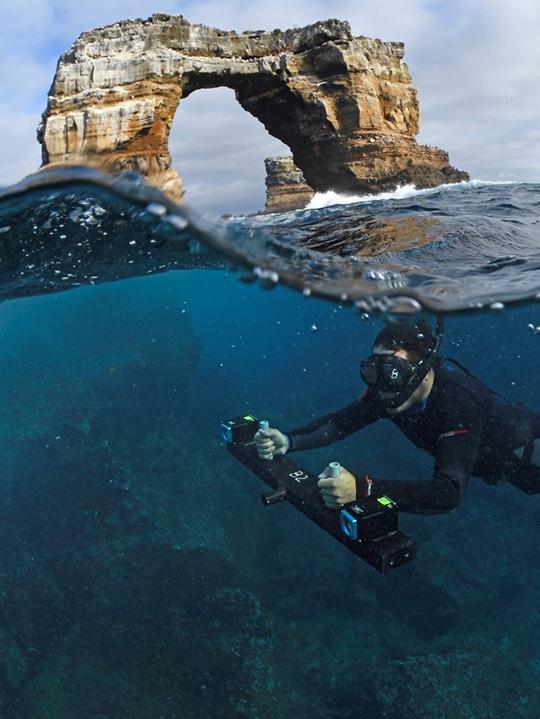
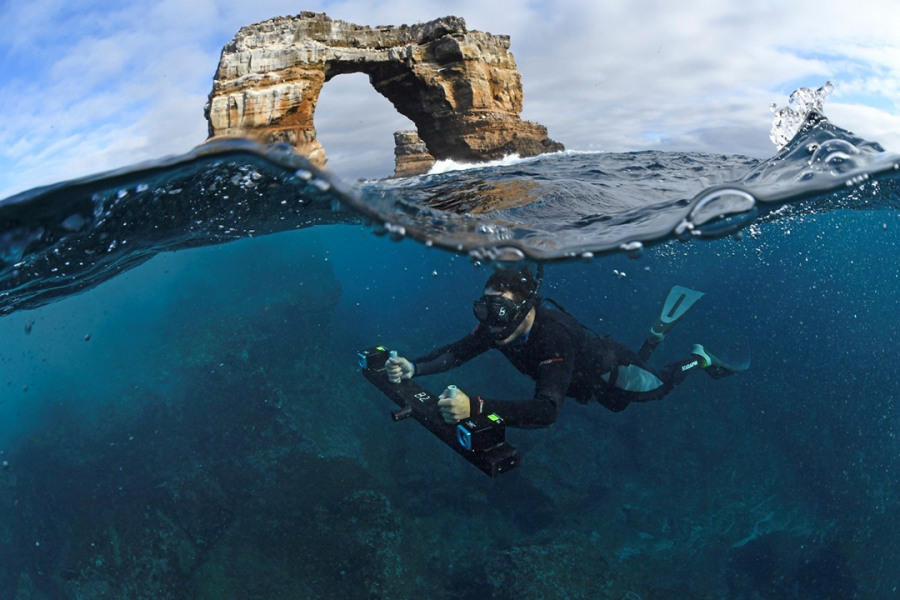
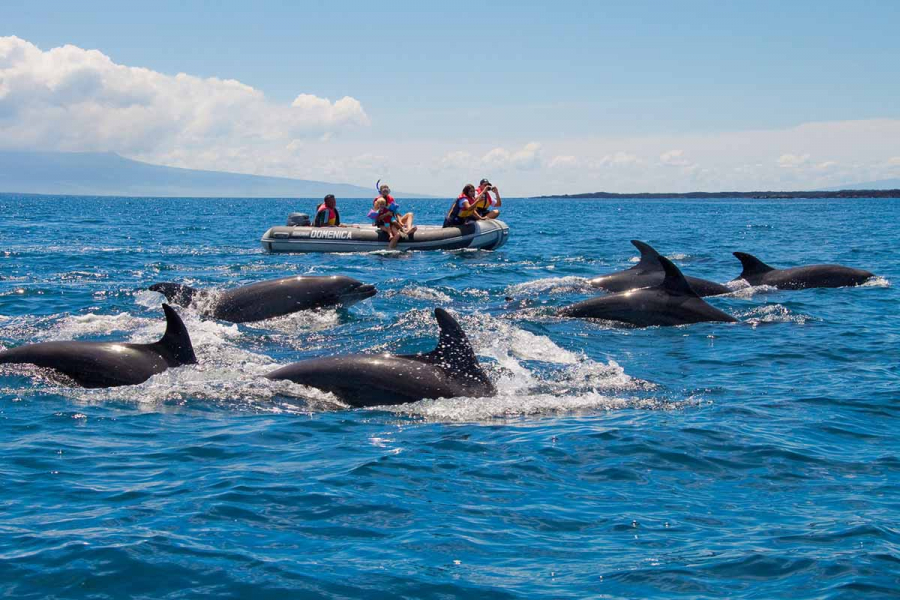
The waters around Darwin's Arch are considered a world-class diving spot, attracting many visitors. Galapatours introduces Darwin as a diving destination where visitors can observe hammerhead sharks and whale sharks. In addition, divers can swim with green turtles, stingrays, dolphins, and schools of other colorful fish.
Photo: Thomas Peschak
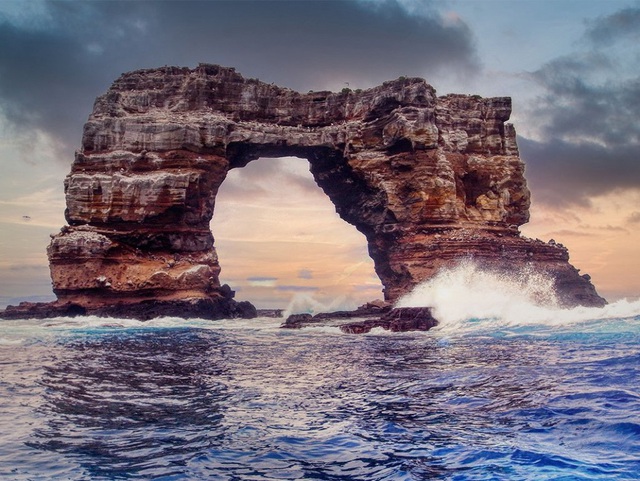
Whether large or small, the shape of Darwin's Arch leads many to believe it's a man-made creation. However, it's entirely the result of natural rock movement over thousands of years, with no human intervention whatsoever. With its impressive beauty, this site has attracted many visitors from around the world and has appeared in numerous famous photographs.
Photo: Internet
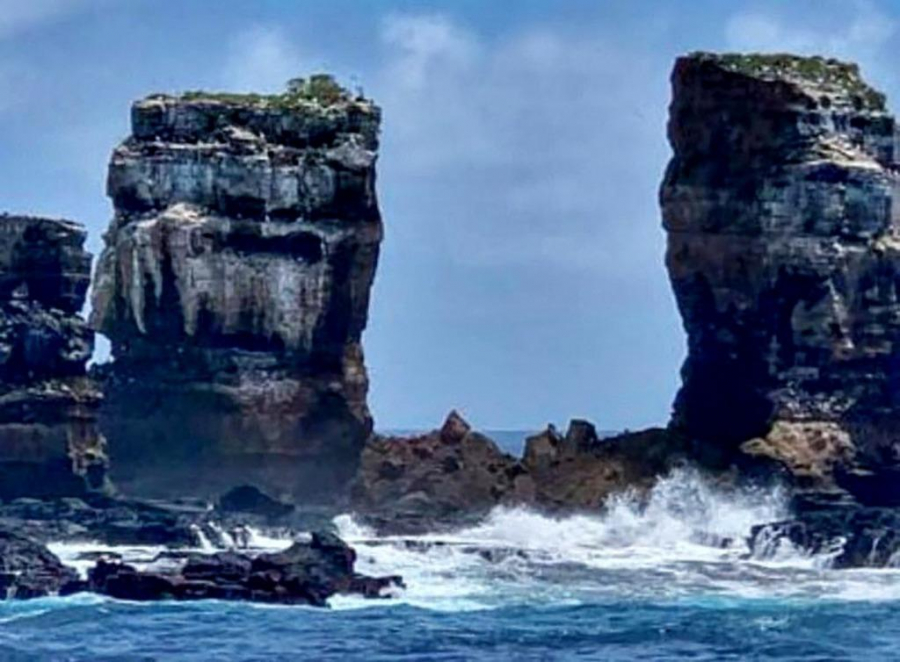
However, on May 18th, the Ecuadorian Ministry of Environment announced that the famous Darwin Arch had collapsed. The report from the Ministry indicated that the collapse was due to natural erosion. Images released by authorities show that only two stone supporting columns remain of the Darwin Arch.
The scuba diving website Scuba Diver Live reported that several tourists on a diving trip witnessed the collapse firsthand. No tourists were injured in the incident.
The collapse of Darwin's Arch has saddened many. According to Jen Jones, a member of the Galapagos Nature Conservation Fund, this is sad news for the organization. “The collapse of the arch shows how vulnerable our world is. While there is little we can do to stop geological processes like erosion, we can make efforts to protect the island’s marine life,” she said.
about the Galapagos Islands
Located approximately 1,000 km off the coast of Ecuador, the Galapagos Islands boast a unique flora and fauna unlike anywhere else on Earth and are part of a biosphere reserve. The archipelago comprises 234 islands, inlets, and rocky mountain ranges. Four of them are home to around 30,000 people.
In 1978, the Galapagos Islands were recognized as a World Heritage Site by the United Nations Educational, Scientific and Cultural Organization (UNESCO). The islands also inspired the British researcher Charles Darwin to discover the theory of evolution in the 19th century. Considered one of the most beautiful islands on the planet, the Galapagos boast a unique ecosystem, isolated from the rest of the world. Besides its diverse marine ecosystem, the Galapagos are also famous for another unique natural landmark: Darwin's Arch.

 VI
VI