VI
VI


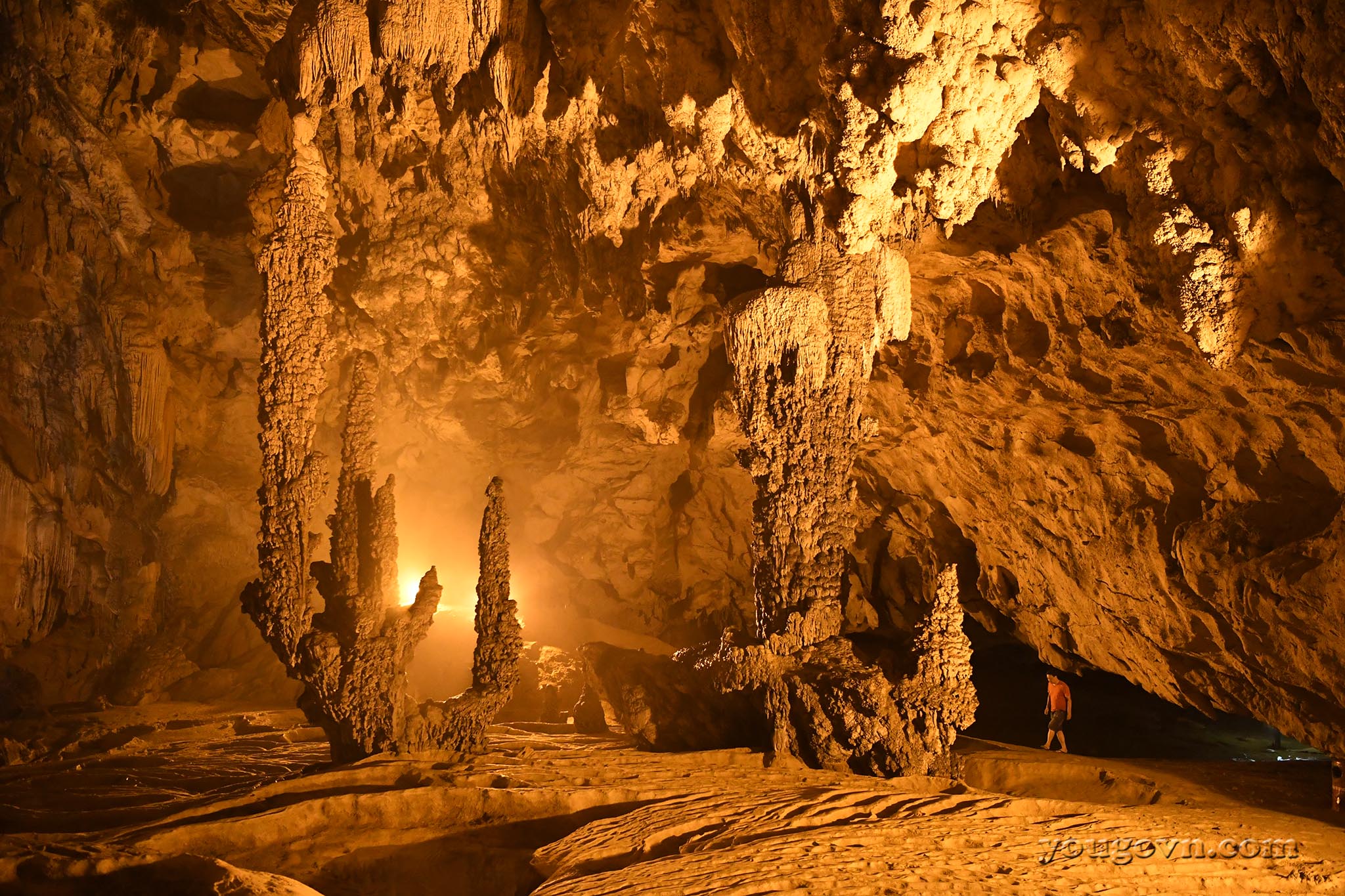
Nguom Ngao Cave, in the Tay language, means "tiger cave." It's so named because in the past, many tigers lived inside. Another theory suggests that because the water inside flows very swiftly, producing sounds similar to a tiger's roar, it was called Tiger Cave. The cave is located in Dam Thuy commune, Trung Khanh district, Cao Bang province. Formed approximately 300 million years ago and discovered in 1921, it is now considered one of the most beautiful caves in Vietnam.

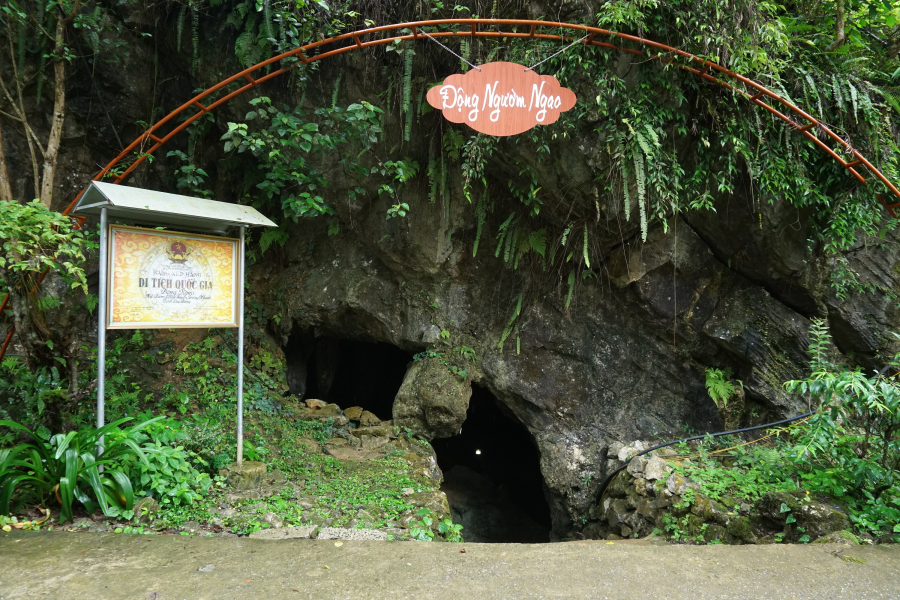
Entrance to Ngườm Ngao Cave
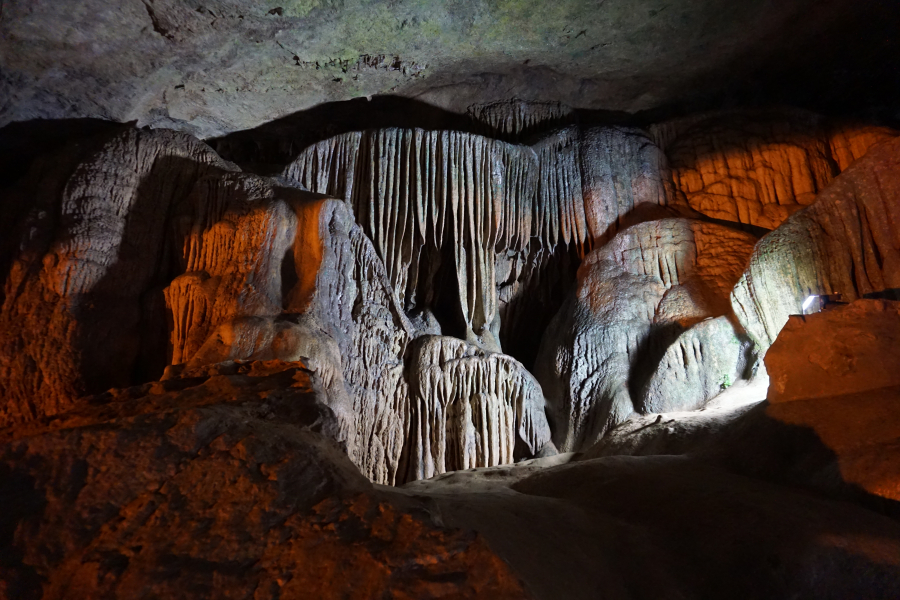
Ngườm Ngao Cave is approximately 2,144 meters long and features numerous stalactites and stalagmites. To facilitate tourism, the cave management has installed many lights so that visitors can clearly see the stalactites and stalagmites.
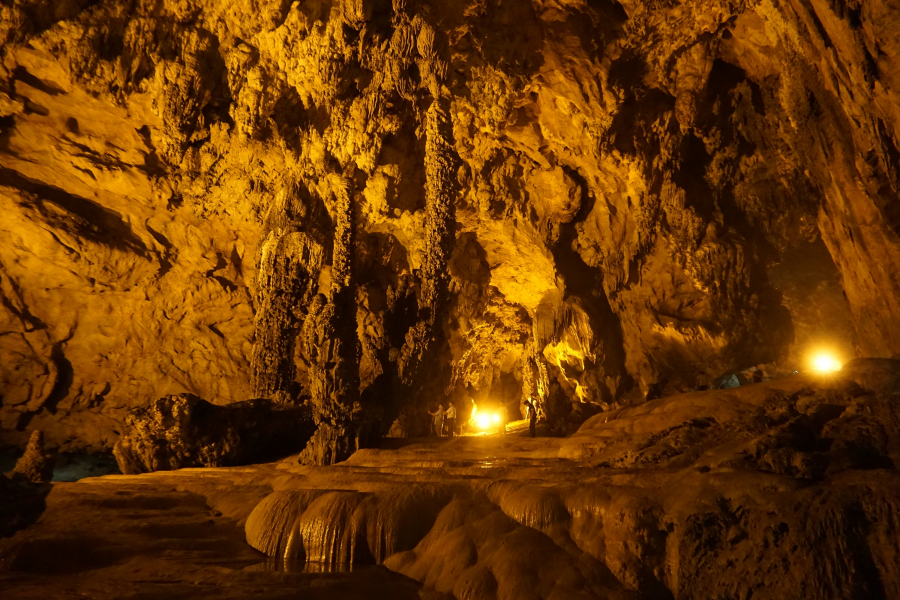
The cave is divided into several sections, each with its own name depending on its formation. This is the "Four Pillars of Heaven" section, with stone pillars resembling those supporting the sky, next to a tall cactus.
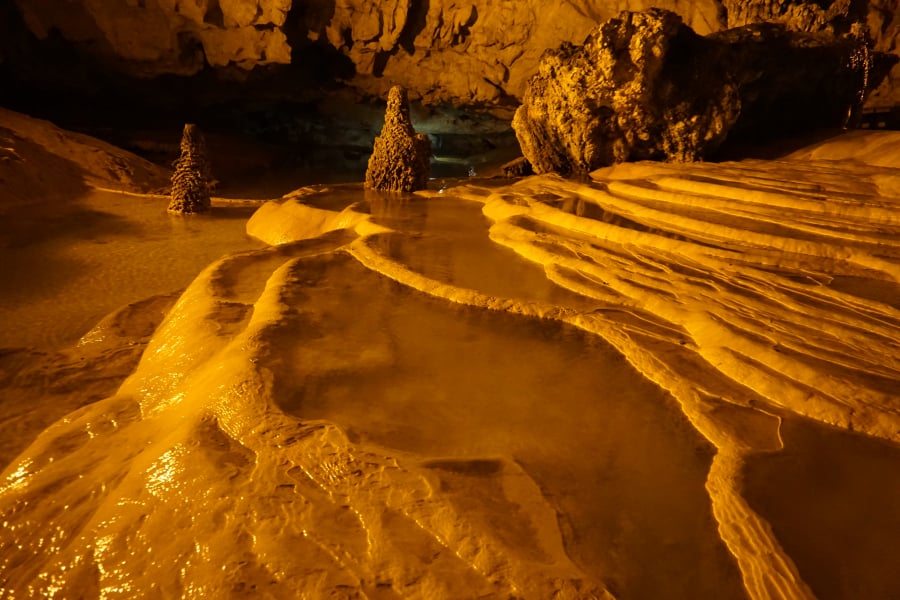
Below the "pillar supporting the sky" are many "terraced fields". This area is most beautiful during the rainy season, when water cascades down from the stalactites, giving visitors the impression of a waterfall inside the cave.
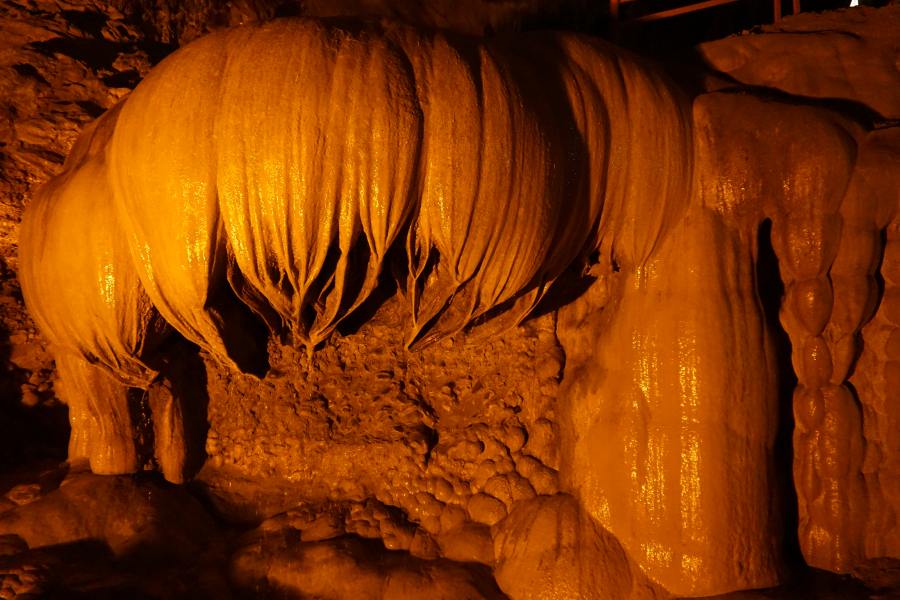
The highlight of the cave is the "inverted lotus pedestal". During the rainy season, water from the stalactites flows down into the "lotus pedestal," and then down the "lotus petals," transforming the place into a breathtakingly beautiful scene.
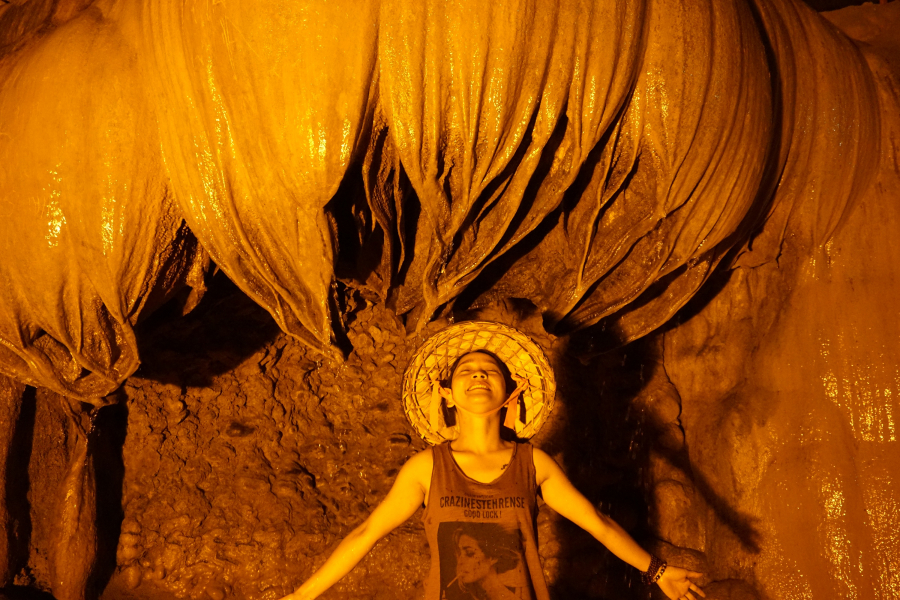
The most beautiful time to see lotus flowers is during the rainy season, from June to the end of August.
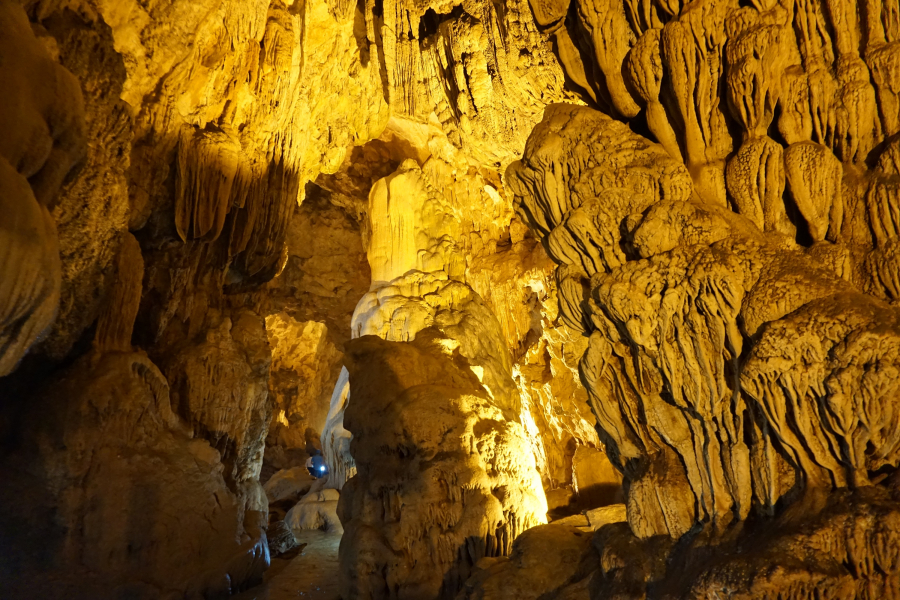
Continuing from the lotus platform along the path inside the cave, visitors will see the "silver tree". It's called the silver tree because the stalactites here shimmer like silver.
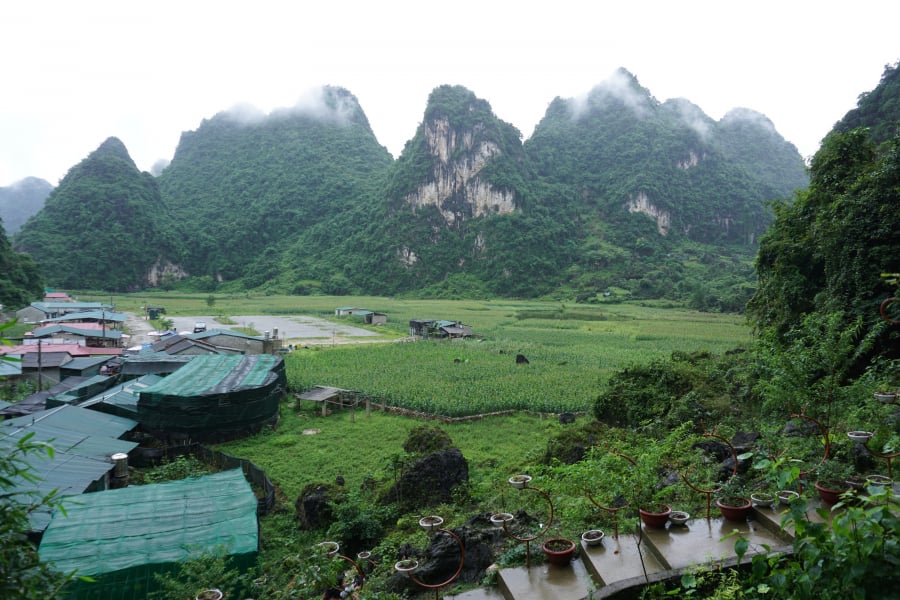
Passing past the silver tree, visitors will see the exit of Ngườm Ngao Cave. The outside space is open and airy, with high mountains, and below is a souvenir shop run by the Tay ethnic people.
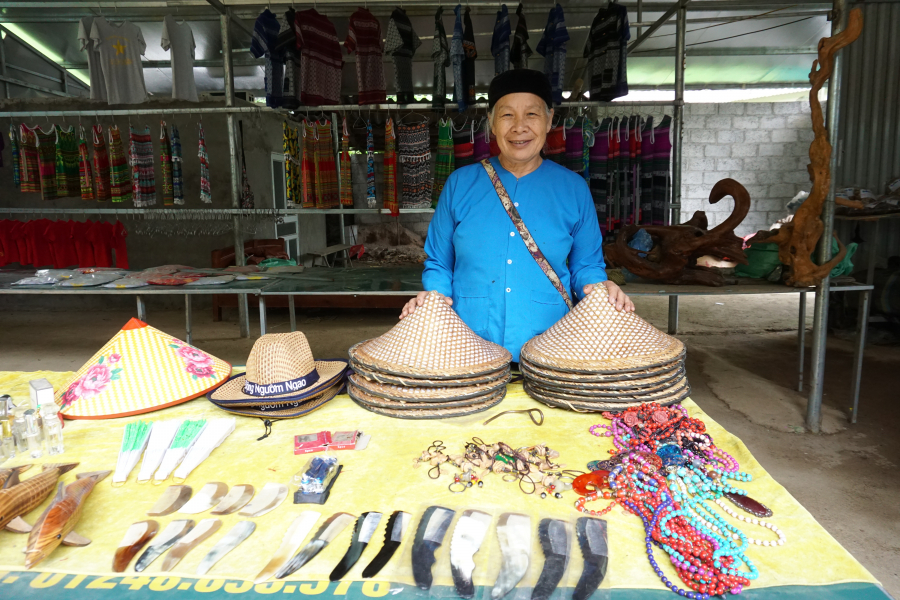
The people in the cave often sell souvenirs such as combs, silver coins, Tay and Nung hats, conical hats, Buddhist prayer beads, ethnic clothing, and even traditional Eastern medicine.
"Tiger Cave," also known as Ngườm Ngao Cave, is the largest cave in the Northeast region of Vietnam. When visiting Bản Giốc Waterfall in Cao Bằng, tourists shouldn't forget to stop by Ngườm Ngao Cave to admire this magnificent cave.

Huynh Kien


SHARE THIS ARTICLE

RELATED ARTICLES