VI
VI


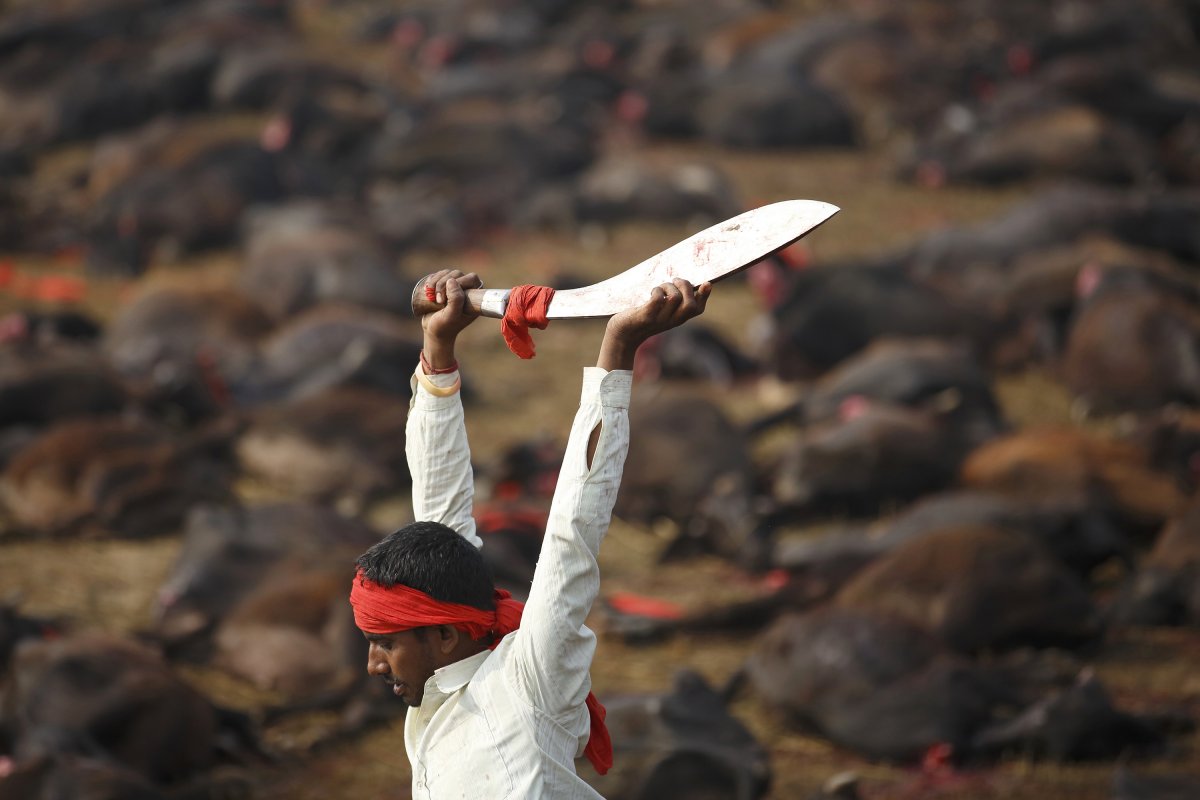
In the final days of November, millions of Hindu devotees flock to a temple in the village of Bariyapur in southern Nepal, near the Indian border, to participate in the Gadhimai festival. According to the people of Nepal, Gadhimai is the goddess of strength. The sacrifice is held every five years and lasts for two days. Devout followers believe that sacrificing animals will appease the goddess of strength and bring them good fortune and prosperity.
According to local authorities, the annual sacrificial ceremony attracts around 2.5 million devotees. The ritual begins at dawn, when people use all their strength to decapitate thousands of unfortunate animals and throw their heads into a pit as offerings. The carcasses are then given to butcher shops for collection.
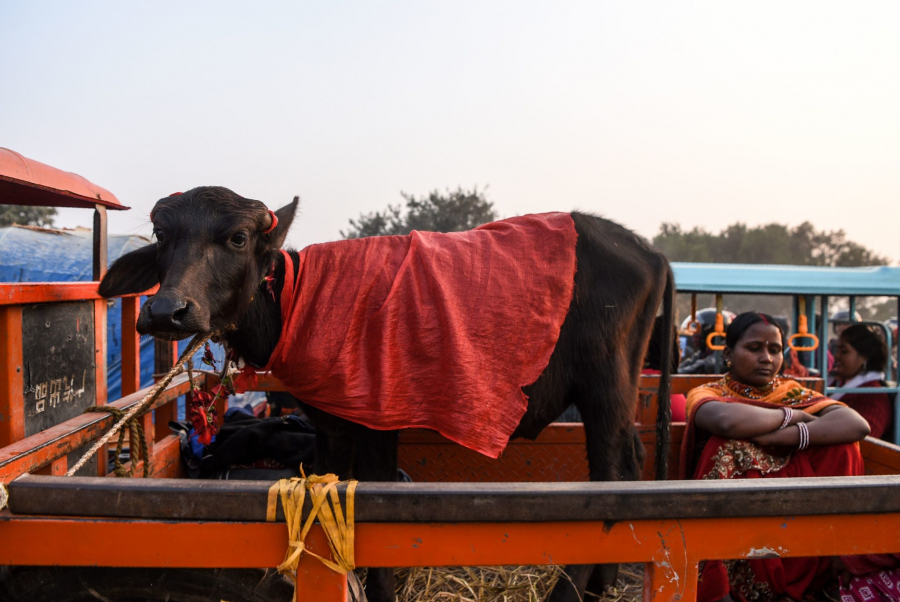
Hundreds of thousands of livestock are brought to the sacrificial ceremony every five years.
According to statistics, in 2009, over 200,000 animals were killed during the two days of the festival. On the first day of the festival in 2014, 6,000 buffaloes and over 100,000 goats, along with other animals, were killed. The sacrificial festival ended on the second day, resulting in the deaths of another 100,000 animals, bringing the total number of animals killed to a record 250,000. This is the festival with the highest number of animal deaths in the world.

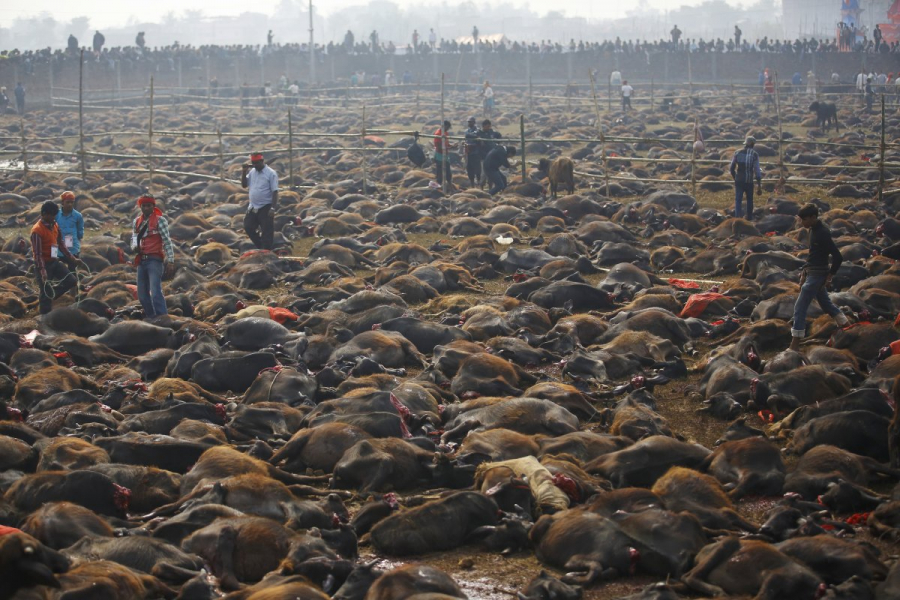
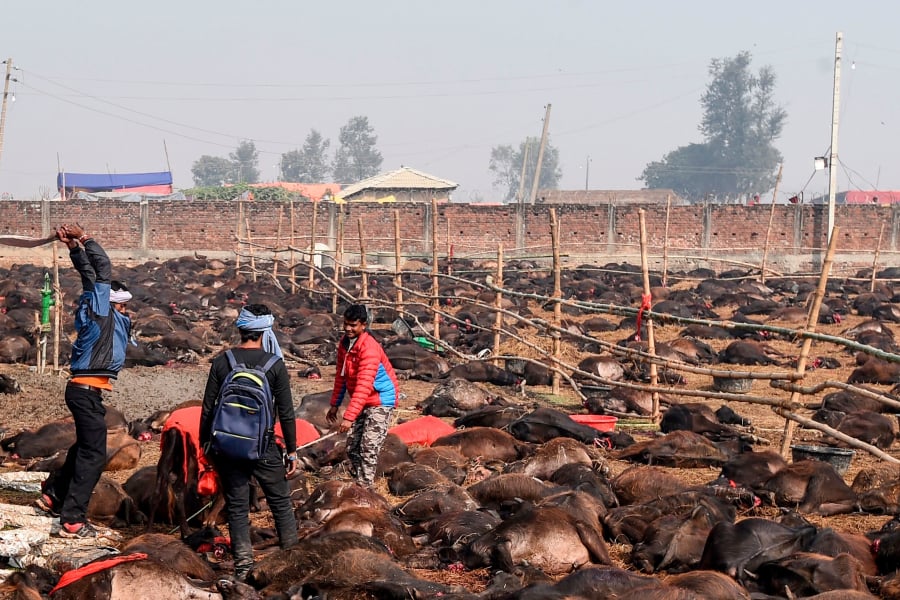
The animal rights organization PETA has strongly opposed and criticized this festival for many years. PETA describes it as a cruel and barbaric act, and one of the world's largest animal sacrifices. Many other animal rights activists also come here to urge people to visit the temple, pray for peace, and end the slaughter of animals.
However, many Hindu devotees disagree with this view, and the scale of this year's festival is even larger than five years ago. A local official stated that this is a ritual expressing the faith and beliefs of devout followers of their religion. This issue is quite sensitive, and the local authorities cannot intervene for fear of infringing upon the people's freedom of religion.
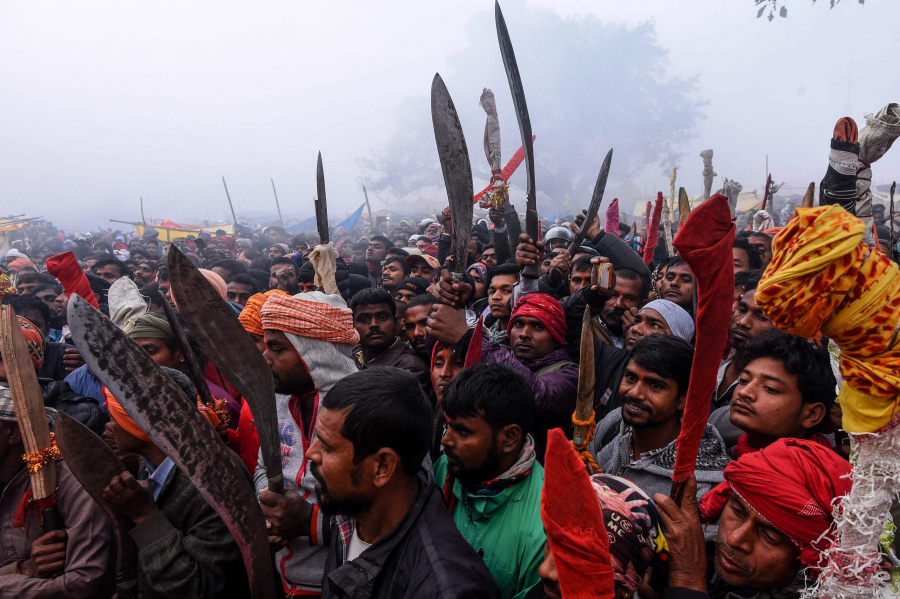
All believers share the same faith.
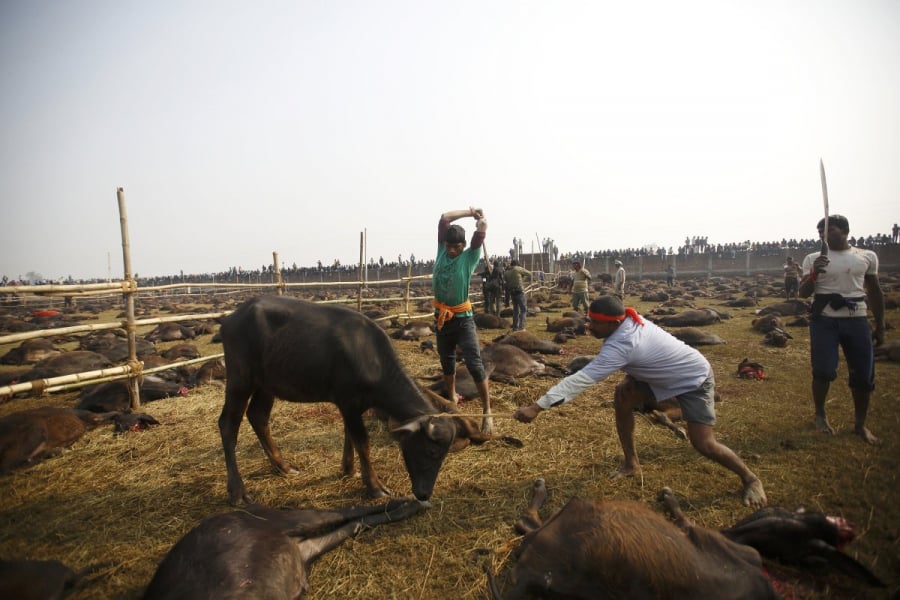
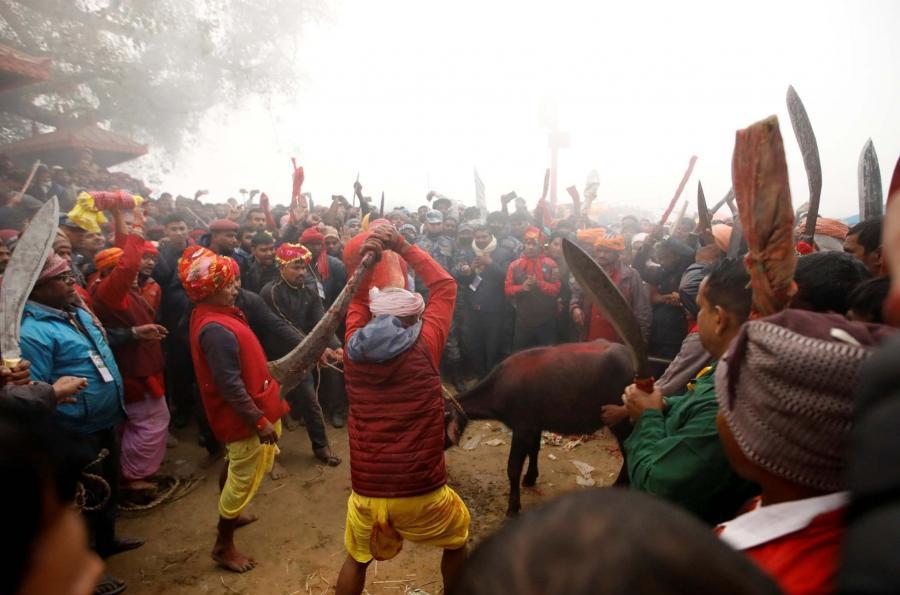
The temple management declared a ban in 2015, and a year later, the Supreme Court of Nepal ordered an end to the sacrificial festival. However, these orders to cease the practice seem to have had no effect on the devotees' decision. And this year – 2019 – the festival resumed on the evening of December 2nd.
The priest Mangal Chaudhary, who serves at the temple following a 10-generation family tradition, said: “I cannot comment on whether the temple supports the sacrifice or not, but in any case, the number of attendees is increasing.”
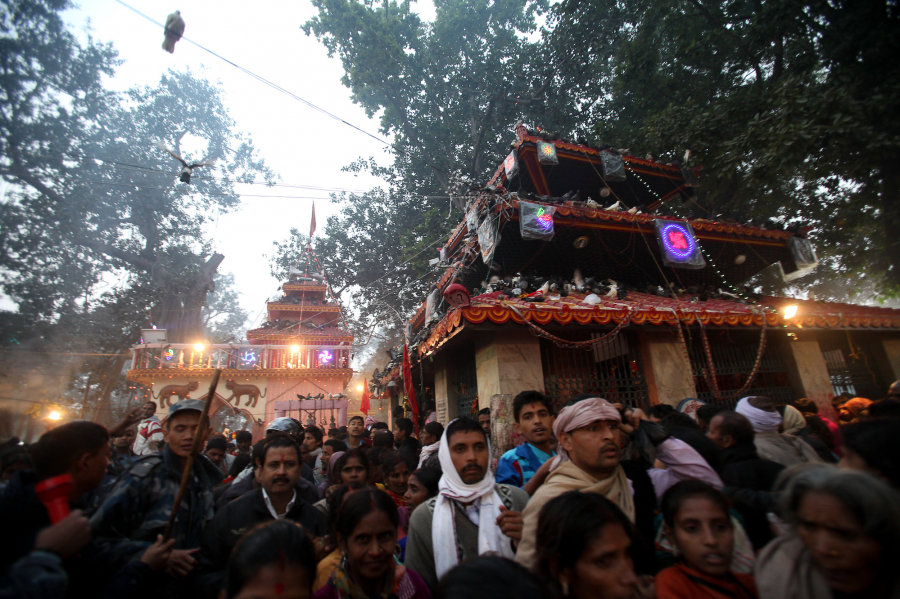
An estimated 2.5 million devotees attend annually, and this number is increasing each year.
According to legend, the first sacrificial ceremony in Bariyarpur was held centuries ago, when the Hindu goddess Gadhimai appeared in a prisoner's dream and asked him to build a temple for her. Upon waking, the prisoner's shackles were removed, and he was able to leave prison. The man then built the temple and offered animal sacrifices as a token of gratitude.