
 VI
VI


After touring the entire complex on a boat trip along the Laguna Lang Co canal, we decided to stop at Banyan Tree Lang Co – a place that captivated both my companion and me. From the very first steps leading up to the reception area, a large, meticulously crafted bronze lotus sculpture immediately enchanted us. The reception area is designed like a traditional four-bay house embracing a central courtyard. The courtyard features a spacious lotus pond. Stepping to the other side, you can enjoy a panoramic view of Lang Co's crescent-shaped bay.
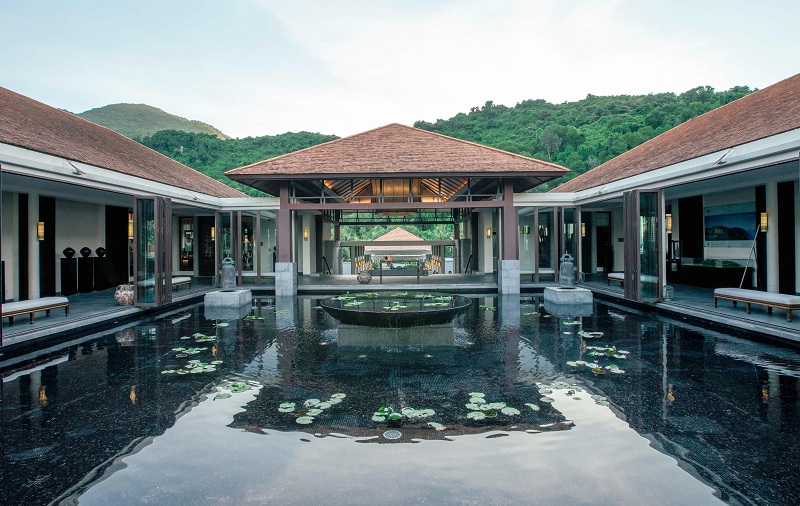
The serene beauty of the lotus pond.
Laguna Lăng Cô is inspired by the artistic heritage of ancient Vietnamese dynasties, most notably the lotus-shaped lacquerware arranged in the mountain villas with expansive views of the Cảnh Dương sea. Lacquer is one of Vietnam's classic art forms. Initially, lacquer appeared in mother-of-pearl inlaid boxes, silver-inlaid clogs, couplets, and other items belonging to the royal family. Later, it gradually became a means of expressing Vietnamese culture as well as the soul of the artist. Vietnamese lacquer paintings differ significantly from other Asian lacquer crafts thanks to the early artists of the Indochina School of Fine Arts in the early 1930s. They explored other materials such as eggshells and seashells, combining them with various pigments, silver leaf, gold leaf, mother-of-pearl, etc., and elevated the lacquering technique to a new level. Paintings can be painted and then sanded down multiple times before the image is visible, because for the paint to dry, the painting must be kept in an airtight, high-humidity drying cabinet, and to see the image in the painting, the paint layer must be sanded away.
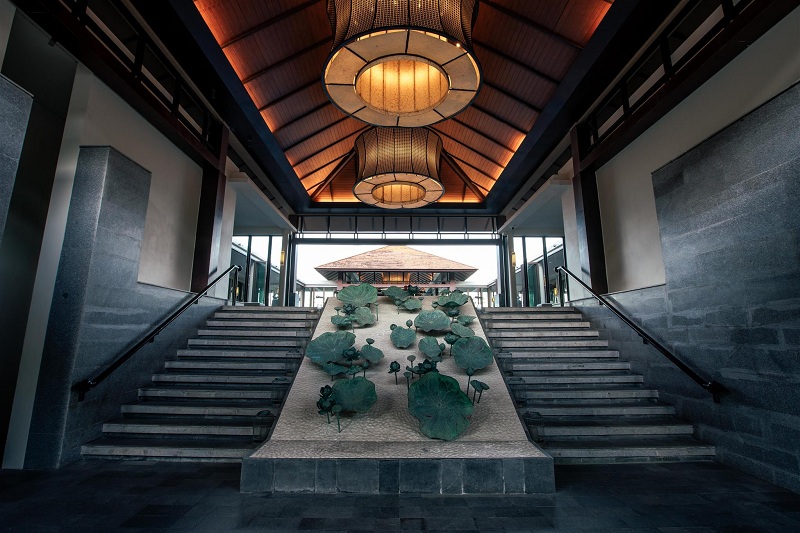
Lotus flowers are present in every space of Banyan Tree Lang Co.

The lacquer paintings of lotus flowers in these rooms always possess a strange allure. Perhaps it's partly because the lotus holds special significance, representing the national soul and essence of Vietnamese culture, and partly because it's depicted using such a distinctly Vietnamese medium. Painting lotus flowers isn't easy; without careful observation, one can easily make small mistakes, such as misrepresenting the lotus veins… Because the lotus veins only begin to separate towards the outer edge of the leaf, not immediately from the center. The painter also needs to understand the meaning of the different lotus colors to convey their message: white represents purity and serenity; red represents love and compassion; purple represents the Buddha's teachings on awakening; blue represents wisdom and knowledge; and pink symbolizes love, the compassionate lotus of the Bodhisattva. Painting a lotus flower is like recreating a human life, silently and powerfully rising up, simply "near the mud but untainted by its stench."
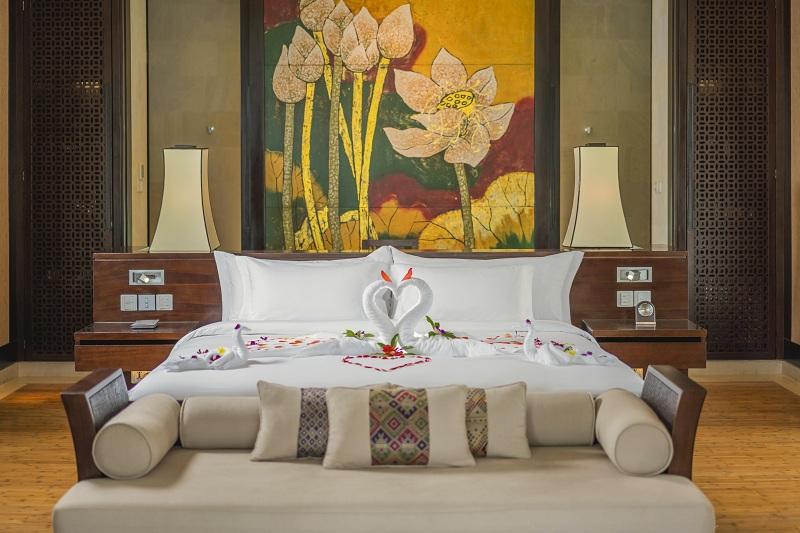
A lacquer painting of lotus flowers in Banyan Tree's bedroom.
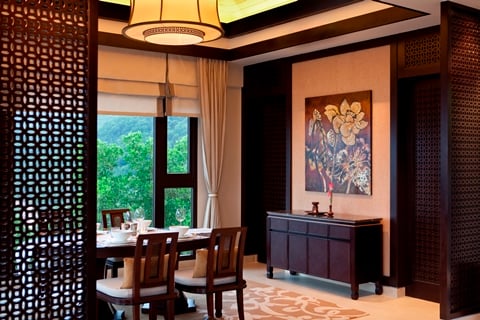
The lotus motif has infused Vietnamese spirit into this luxurious space.
Gazing at the exquisitely crafted lacquer paintings, listening to the gentle whispers of the simple lotus flowers, anyone who comes here can feel the serene atmosphere of nature, the peaceful beauty of enjoying the present moment, as tranquil as the poems of Lan Tu Vien:
When people are young
A simple young man – a little selfish.

Just need a job that provides a living wage.
Someone to love
And short weekend trips
When we were young
What a pure life!
Sadness is also lovely.
That's certainly true, when we look back later."
Excerpt from "When People Are Young" - Lan Tu Vien
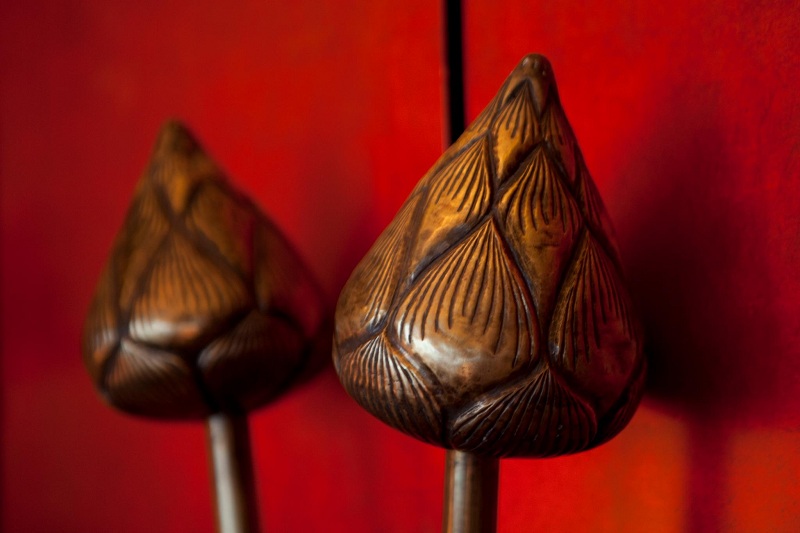
Visit Banyan Tree Lang Co and listen to the whispers of the lotus flowers.
For more information about Laguna Lăng Cô and Banyan Tree Lăng Cô, please visit www.lagunalangco.com.






.jpg.jpg)


.jpg.jpg)






