VI
VI


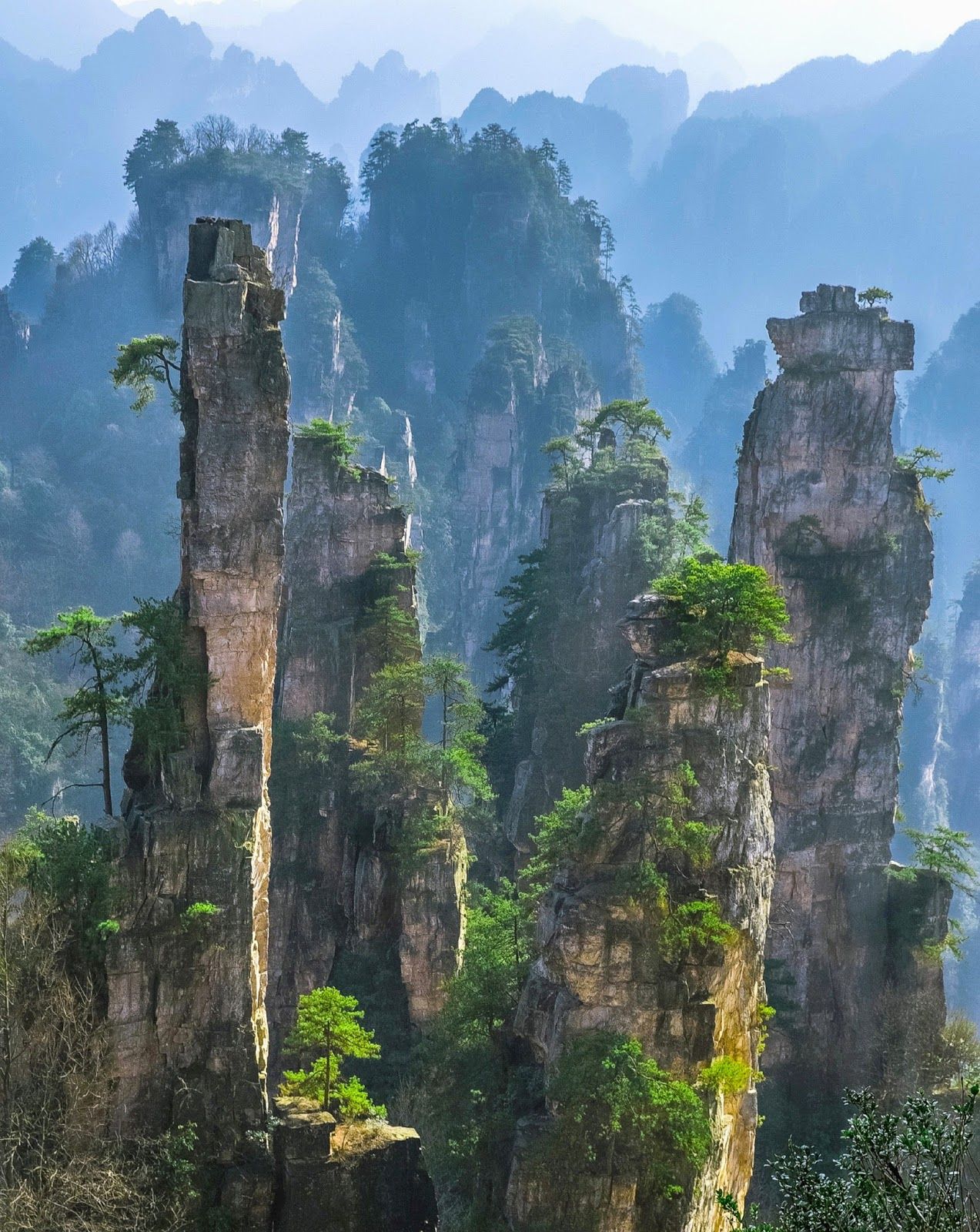
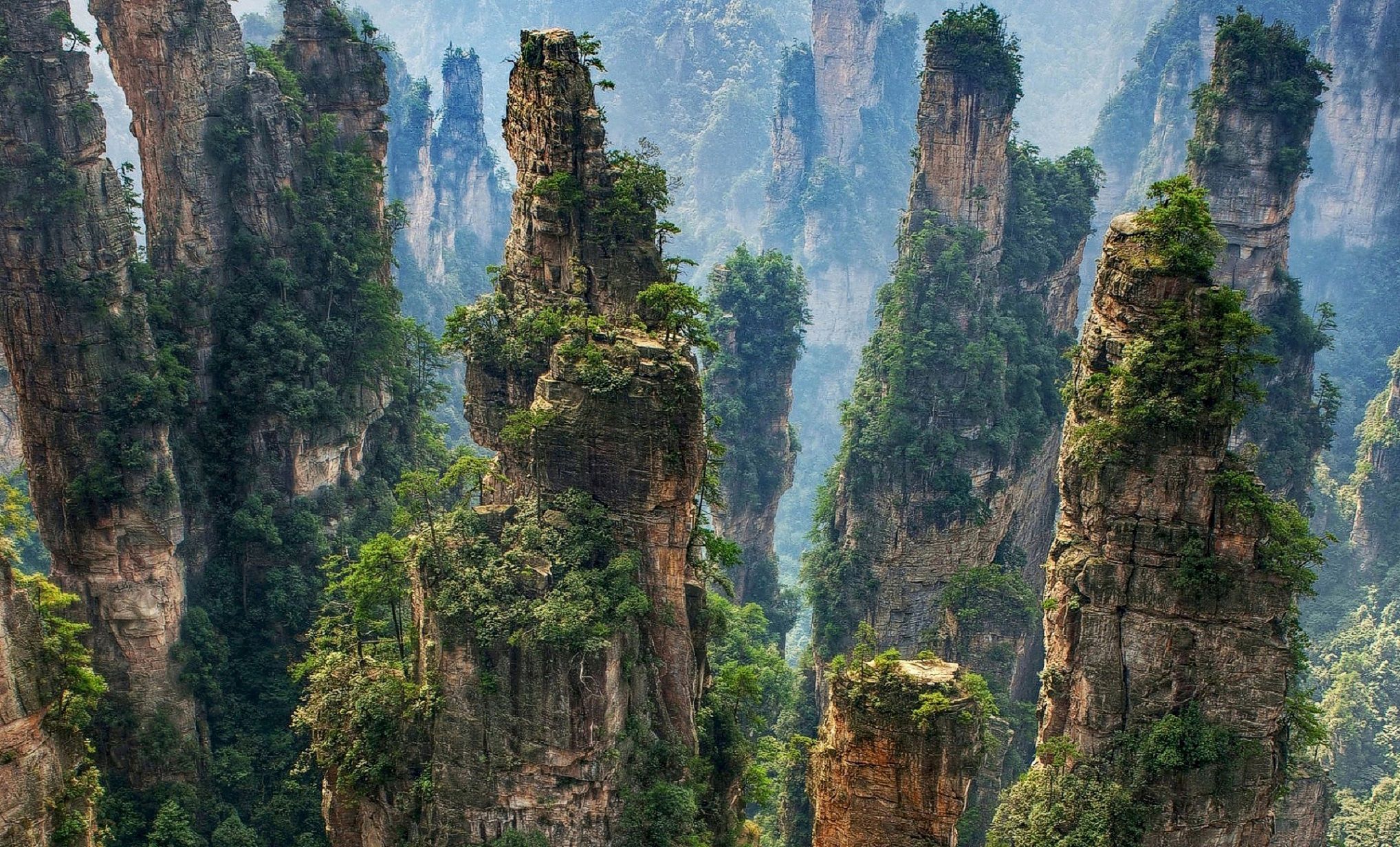
Zhangjiajie, located in northwestern Hunan Province, China, lies between the elevated areas of Yunnan and Guizhou provinces and the low-lying area of Dongting Lake. This unique setting has created a Zhangjiajie with breathtaking natural landscapes, from picturesque mountains and rivers to dreamy valleys, wild primeval forests, and towering sandstone cliffs.
Located about 45 minutes by car from the Zhangjiajie tourist center, Zhangjiajie National Park is a vast primeval forest covering approximately 4,810 hectares at an altitude of over 1000 meters above sea level. It was recognized as a UNESCO World Heritage Site in 1992 and a Global Geopark in 2004. With its humid subtropical climate, the area is covered in fog year-round, contributing to its ethereal beauty reminiscent of a mythical paradise.

The sandstone forest is the most famous scenic spot in Zhangjiajie National Park. This is a complex of towering, vertical rock formations that create an incredibly impressive landscape for visitors. There are approximately 3,000 rock pillars and cliffs with bizarre shapes, some reaching heights of up to 800 meters. Interspersed among these pillars and ravines is a system of caves, springs, and primeval forests, home to tens of thousands of temperate plant species. This is the result of complex geological processes involving multiple uplifts and subsidence of the Earth's crust, along with erosion and weathering.
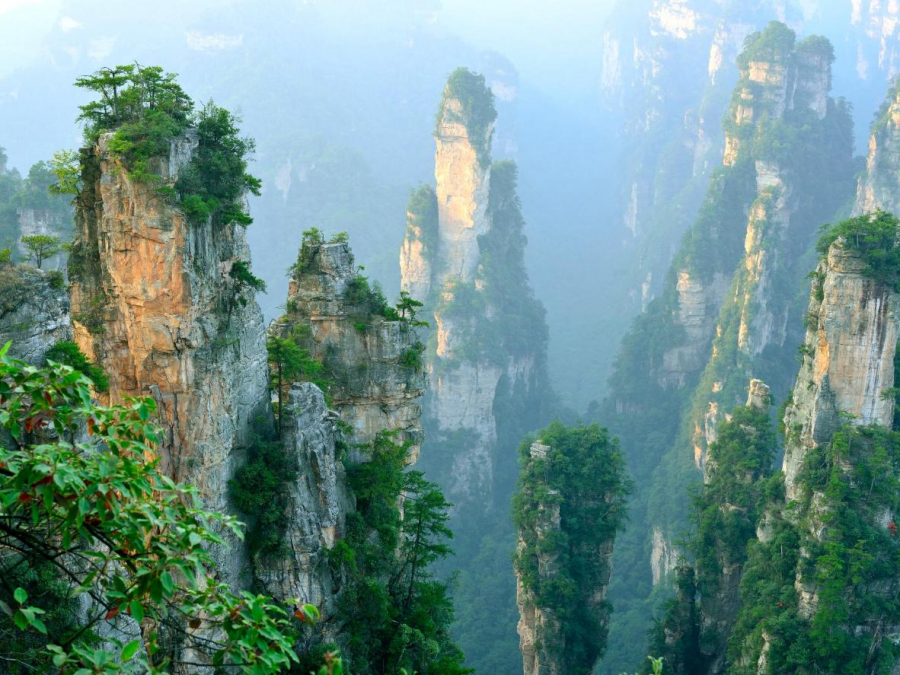
Sandstone forest in Zhangjiajie
With over 800 water sources from ponds, lakes, rivers, streams, and waterfalls, this area never experiences water shortages during the dry season. Here, visitors have the opportunity to relax on boats floating on Bao Phong Lake and admire the breathtaking scenery, resembling a landscape painting, with lush green mountains on both sides and the gentle sound of waterfalls cascading down the slopes.
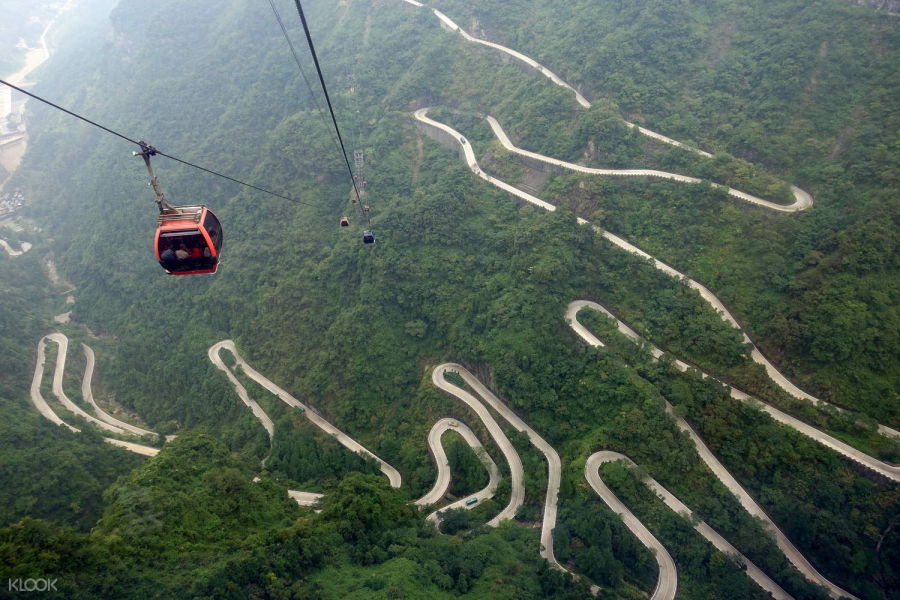
Tianmen Mountain
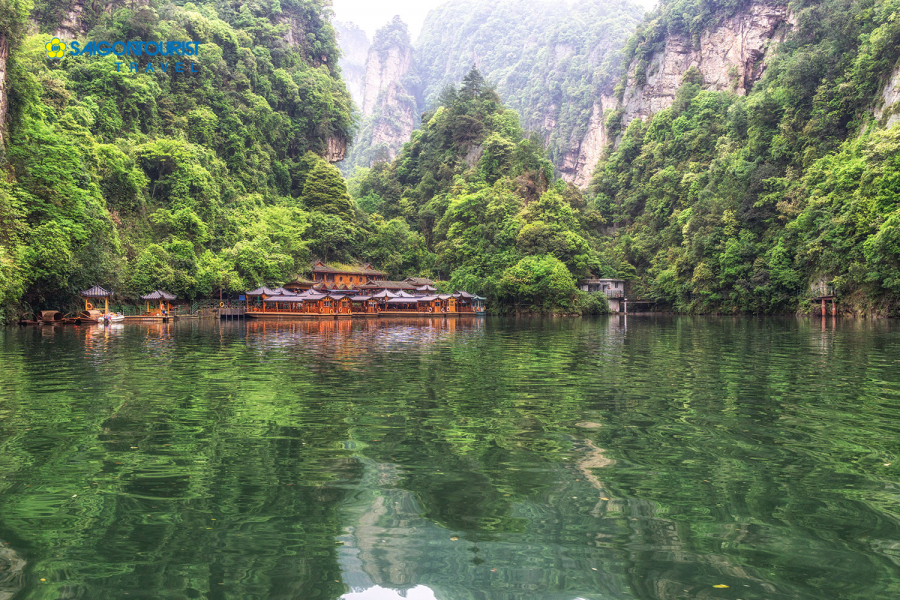
Ho Bao Phong
Furthermore, when visiting Zhangjiajie, tourists cannot miss Tianmen Mountain, one of the most unique mountains in the area. To reach the mountain, visitors must travel along an 11-kilometer winding road that is quite steep and increases in altitude from 200m to 1,300m with 99 sharp turns. Alternatively, you can take the cable car for the most complete panoramic view of the mountain. Upon reaching the foot of the mountain, you must continue to climb 999 steps to reach the Heavenly Gate.