VI
VI


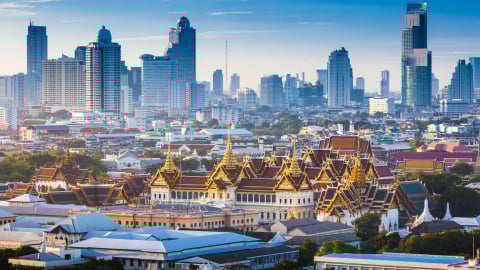
Iconic hotels along the Chao Phraya River and luxurious resorts nestled against limestone cliffs in the Andaman Sea, once dream destinations for the international elite, are now launching unprecedented discount campaigns. This is seen as a strategy to "fill the void" left by the negative impact of the Middle East conflict on international tourists.

The direct cause of this sharp price drop stems from instability in the Middle East, causing serious disruptions to vital air routes connecting Europe and Asia. Airspace closures and numerous flight cancellations have made travel to Thailand complicated, expensive, and risky for Western tourists – a key source of revenue for Thailand's high-end tourism. In just a few weeks since the conflict erupted, data shows that the number of visitors from European and Middle Eastern markets has dropped by as much as 16% compared to the same period last year.

Thailand's tourism industry is entering a challenging period as conflicts in the Middle East disrupt vital air routes, causing a sharp 16% drop in international visitors from Europe.
This decline is dealing a major blow to the ambitious 2026 target of the Tourism Authority of Thailand (TAT). With a goal of 37 million international visitors, an 11% increase compared to 2025, the tourism industry is facing a harsh reality: the actual number may not even reach 33 million. If this scenario occurs, it will be the second consecutive year that Thailand's tourism industry has recorded a decline in visitor numbers, directly threatening the post-pandemic economic recovery. As of mid-March 2026, the country had only received approximately 7.9 million visitors, primarily relying on traditional markets such as China, Malaysia, and Russia.
The most notable aspect of this price adjustment is the participation of major players in the 5-star hotel and ultra-luxury resort segment. These establishments, which previously had listed prices of nearly $1,000 per night, are now welcoming domestic guests and the expatriate community in Thailand with shocking discounts of up to 70%. At Mandarin Oriental Bangkok – one of the world's oldest and most prestigious hotels – room rates have now fallen below $300 per night, an unbelievable figure for top-class service including a private butler and luxurious breakfast.


As of mid-March 2026, the country had only received approximately 7.9 million tourists, primarily relying on traditional markets such as China, Malaysia, and Russia.
Not only in the capital Bangkok, but also in coastal resorts, similar deep price reductions are being recorded. A popular resort in Railay Beach, featuring unique two-story rooms built on former coconut plantation sites overlooking limestone cliffs, is now offering rooms from just $430 per night, nearly half the price before the conflict. Bill Barnett, CEO of the consulting firm C9 Hotelworks, noted that while the mass tourism segment has been hit hardest, even high-end customers – who are generally less price-sensitive – are changing their spending habits due to rising airfare costs and aviation security concerns.
This wave of price reductions is reminiscent of the dark period of the Covid-19 pandemic, when Thailand lost tens of millions of tourists. However, the 2026 landscape presents a new variable: supply pressure. After three years of strong price increases driven by post-pandemic tourism demand, the hotel market in Thailand, particularly Bangkok, is beginning to cool down due to the influx of new hotels. The oversupply coupled with weakening international demand has forced business owners to re-evaluate their pricing strategies.
Promotional offers with keywords like "affordable hotels for Thais" are flooding search engines and social media. Boosting staycations and attracting domestic tourists is seen as a short-term solution to maintain cash flow and retain staff. However, Thai officials have also warned about the long-term impact of rising oil prices, which will continue to push operating costs and airfares to unaffordable levels, eroding global travel demand in the near future.

This "massive price reduction" race is not only aimed at salvaging revenue but also marks a shift in focus towards the domestic market and the expatriate community to maintain economic recovery momentum in 2026.
Thailand isn't the only country using "massive discounts" to attract tourists. This trend is spreading to other major travel hubs around the world. In Dubai, many luxury hotels are also launching staycation packages specifically for local residents as long-haul international tourists show signs of slowing down. Global tourism businesses are scrambling to find alternatives, boosting promotion of nearby destinations and optimizing costs to adapt to a volatile world.
Although deep discounts typically only occur during the rainy season (May to October), the scale and timing of the current campaign demonstrate the hotel operators' responsiveness to the headwinds of the times. While the target of 37 million visitors is becoming increasingly distant, the shift towards domestic and expat tourism is proof of the resilience of Thailand's tourism industry. Clarity in pricing strategy and a commitment to maintaining professional journalistic quality will be key to Thailand retaining its position as Asia's leading "holiday paradise," even in the most challenging times.