VI
VI


People often tend to explore the soul of a new land through the silent artifacts in museums, archaeological sites, or iconic architectural structures. However, in Guatemala, a country located in the heart of Central America, to truly connect with its indigenous culture, the journey must begin in its markets.

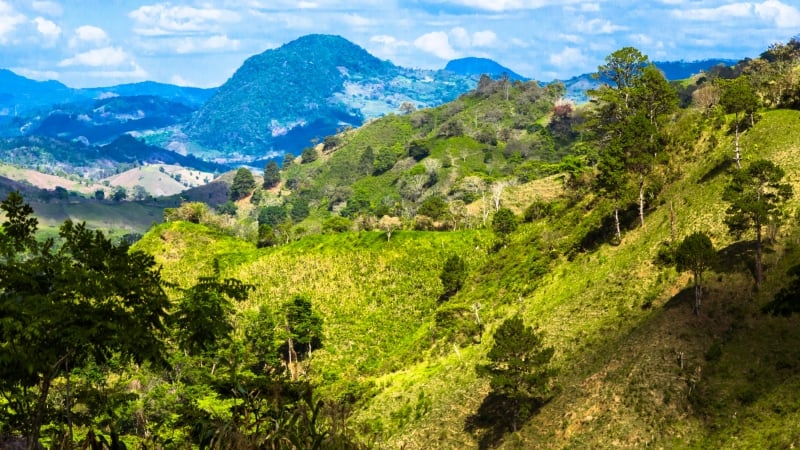
Spanning across windswept highlands, the local market served more than just a place for trading and exchanging goods. For centuries, this space existed as a cultural center of community life, where the Maya met, where traditional crafts were preserved, and where ancient spiritual practices continued to flow seamlessly into contemporary life.

The daily life of the Guatemalan people is depicted in a simple, rustic way, amidst the resilient spirit of an ancient civilization.
Seen from above, Guatemalan markets appear as a giant palette, where the boundaries between daily life and ancient heritage are completely blurred. It's a vibrant microcosm, brimming with color from the traditional clothing of the indigenous people, stalls selling tropical fruits and local herbs, exquisite pottery, and the melodious sounds of various Mayan dialects interwoven throughout the city.
While markets in neighboring Mexico often exude a vibrant, festive spirit, the highland markets of Guatemala possess a more profound and authentic atmosphere. It's a unique space where history isn't frozen, but continues to be written by the very breath of everyday life.
Where color becomes a living heritage
In the high mountain regions of Guatemala, visitors will encounter periodic markets that operate exactly as they have for hundreds of years. From remote villages high in the mountains, indigenous people descend into the valleys, carrying meticulously handcrafted textiles, baskets of corn, fragrant bags of coffee, fresh flowers, or traditional handicrafts to trade.
The allure of these markets lies not in their grand scale or modern commercial features, but in how each corner transforms into a living museum showcasing Mayan culture.

The most striking visual impression for anyone who sets foot here is the explosion of color. There's the proud crimson on the huipils – the traditional, intricately hand-embroidered short-sleeved blouses worn by Maya women. There's the deep cobalt blue on the woven shawls, and the vibrant yellow of the large clusters of chrysanthemums sold for ceremonial purposes.
Interspersed within that space are the warm, earthy brown hues of the soil, the rustic wood of the furniture, and the ethereal white smoke rising from copal incense. Each vibrant strip of brocade hanging in the stalls is not just a product for sale, but a way for the Maya to preserve their cultural memories, recording historical symbols through every stitch and thread passed down through generations.
In this space, art is not isolated behind the rigid glass of a museum. It is present in everyday life, in the calloused yet incredibly skillful hands of women diligently weaving, or in the simple pottery passed down through generations. The traditional clothing they wear is not simply warm attire, but a defining characteristic of each community, a cherished heritage.
It is this multi-layered nature and continuous interconnectedness that elevates Guatemalan markets beyond their ordinary function of buying and selling, transforming them into an inseparable part of the collective cultural memory of the Central American region.

The stalls were adorned with vibrant, hand-embroidered brocade fabrics.

Guatemalan markets resemble a harmonious blend of colors stretching from the past to the present.
Ancient civilizations existed in silence.
What gives Guatemalan markets their unique cultural depth and makes them the most distinctive is the natural intermingling of daily life activities and ancient religious rituals.
In many highland markets, most notably Chichicastenango – one of the oldest and most famous markets in the world – the sight of local people burning copal incense, respectfully praying, or performing spiritual rituals unfolds peacefully alongside the bustling stalls of vegetables and fabrics.
The thick smoke of copal incense, carrying the pungent scent of natural resin, gently envelops the weathered stone steps of the Santo Tomás church. Here, the church steps are not merely a pathway, but a place for performing spiritual rituals originating from the ancient Mayan civilization, before being harmoniously blended with Catholic influences after the Spanish colonial period. Fresh flowers are arranged in large clusters, murmured prayers in the local language mingle with the sounds of bargaining and trading, creating a sacred space that is both sacred and practical.
In Guatemala, the spiritual world has never been separate from social life. It is deeply rooted in how people treat each other when buying and selling, when meeting, or when maintaining customs that have existed for centuries. Therefore, exploring the markets here is not simply a sightseeing trip or souvenir shopping. It is a rare opportunity for researchers and tourists to observe how an ancient civilization quietly survived, adapting flexibly to the times while never losing its original identity.
Amidst the constant movement and assimilation trends of the modern world, that resilient originality has become a distant luxury – something that makes the Guatemalan market space a timeless and beautiful tapestry of Central American highlands, spanning from past to present.