VI
VI


Egypt was the first African country I visited. From Cairo, my journey took me across the Sahara Desert, with its strange Black and White Deserts, then down the Nile River through Luxor, Aswan, and to Abu Simbel. The further I traveled, the more I was haunted by a question: why did one of humanity's most brilliant civilizations originate in a land where most of the area is desert?

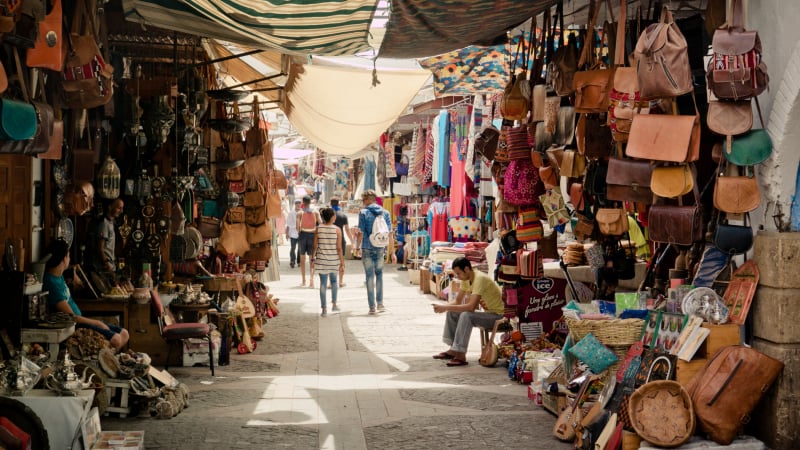
Amidst that harsh natural environment, the Egyptians not only survived but also built pyramids, temples, and a civilization that continues to amaze the world more than five thousand years later. I believe that the strength of this nation is forged from the very land where people have learned to transform adversity into motivation to survive, create, and thrive.
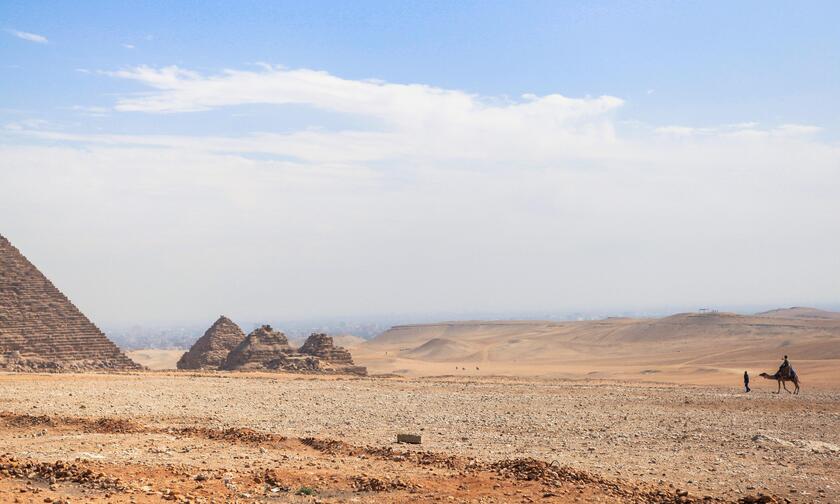
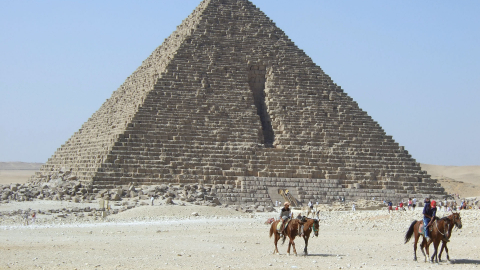
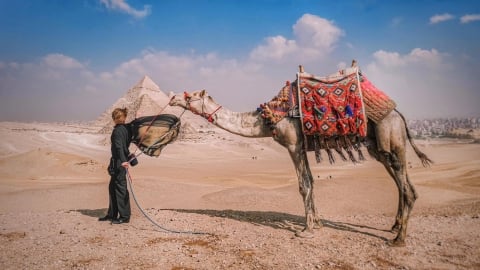
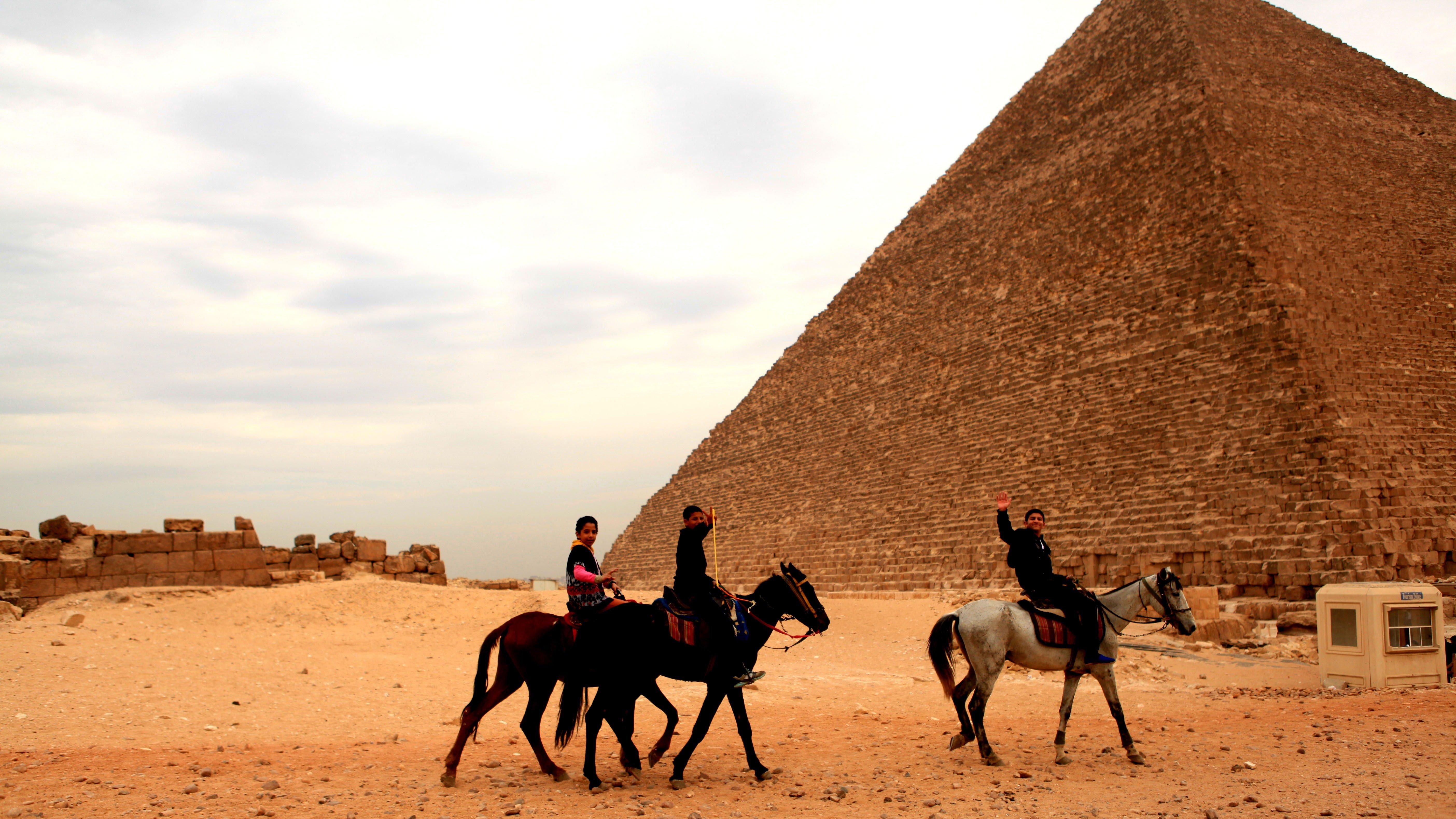
Most of Egypt's territory is desert.
The desert, where adversity begins.
Leaving Cairo, I didn't head straight towards the Nile River but chose the opposite direction, venturing deeper into western Egypt. The further I went, the more the green of life receded, giving way to a world almost entirely made of rocks, sand, and sky. The Black Desert appeared first, with its hills covered in dark basalt rock, as if they had just stepped out of another planet.
Not far away, the White Desert presents a stark contrast. For millions of years, the wind has patiently eroded the limestone formations, creating countless bizarre shapes, from giant mushrooms and white sails to statues where nature is the sole artist. As night falls, in the vast, unlit expanse, I gaze at the star-filled sky and feel more acutely than ever the insignificance of humanity before nature.
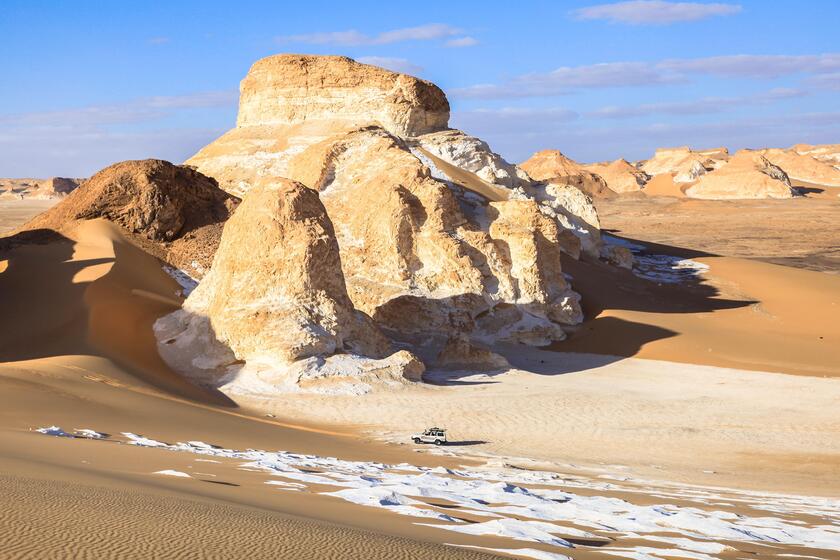
Wind-sculpted rock formations in the White Desert.
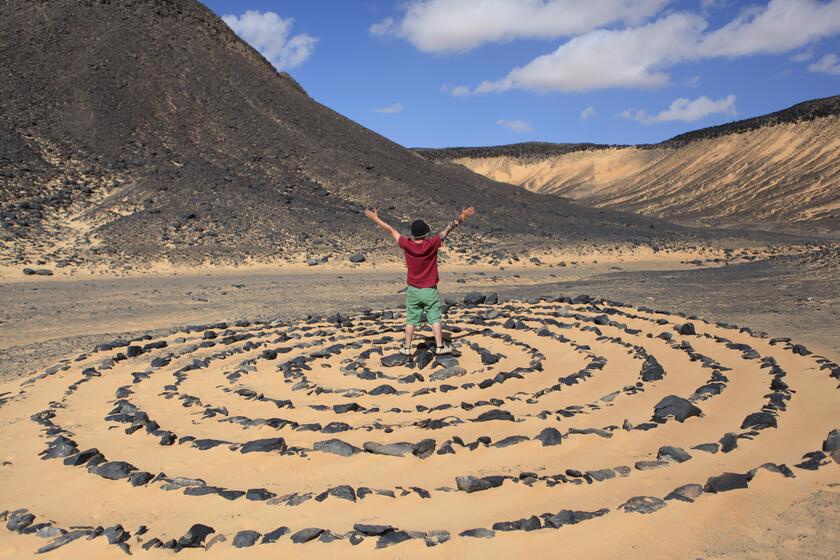
Stone circle in the middle of the Black Desert
Egypt is nearly ninety percent desert, with very little rainfall, making its living conditions far harsher than anywhere else in the world. Yet, it became the cradle of one of humanity's earliest civilizations. The answer seems to lie within the immediate scene: When nature is scarce, humans are forced to adapt. When life becomes fragile, every water source, every fertile piece of land becomes invaluable.
It was precisely this adversity that forged in people the will to organize, the ability to observe, and the desire to conquer their living environment. Before seeing the pyramids or ancient temples, I think the first lesson Egypt taught me began in the desert itself: the harshest environment creates the most resilient life.
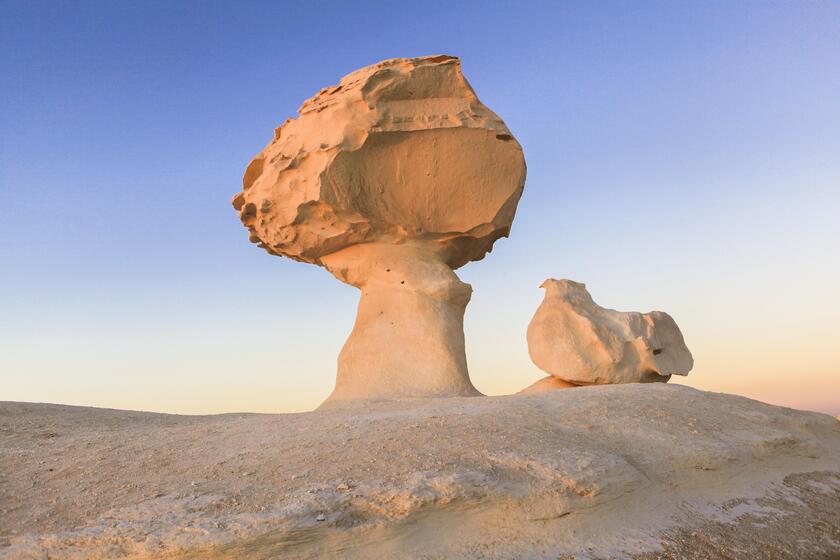
A symbol of the White Desert, where wind and time have sculpted enduring forms, much like the Egyptian people themselves.

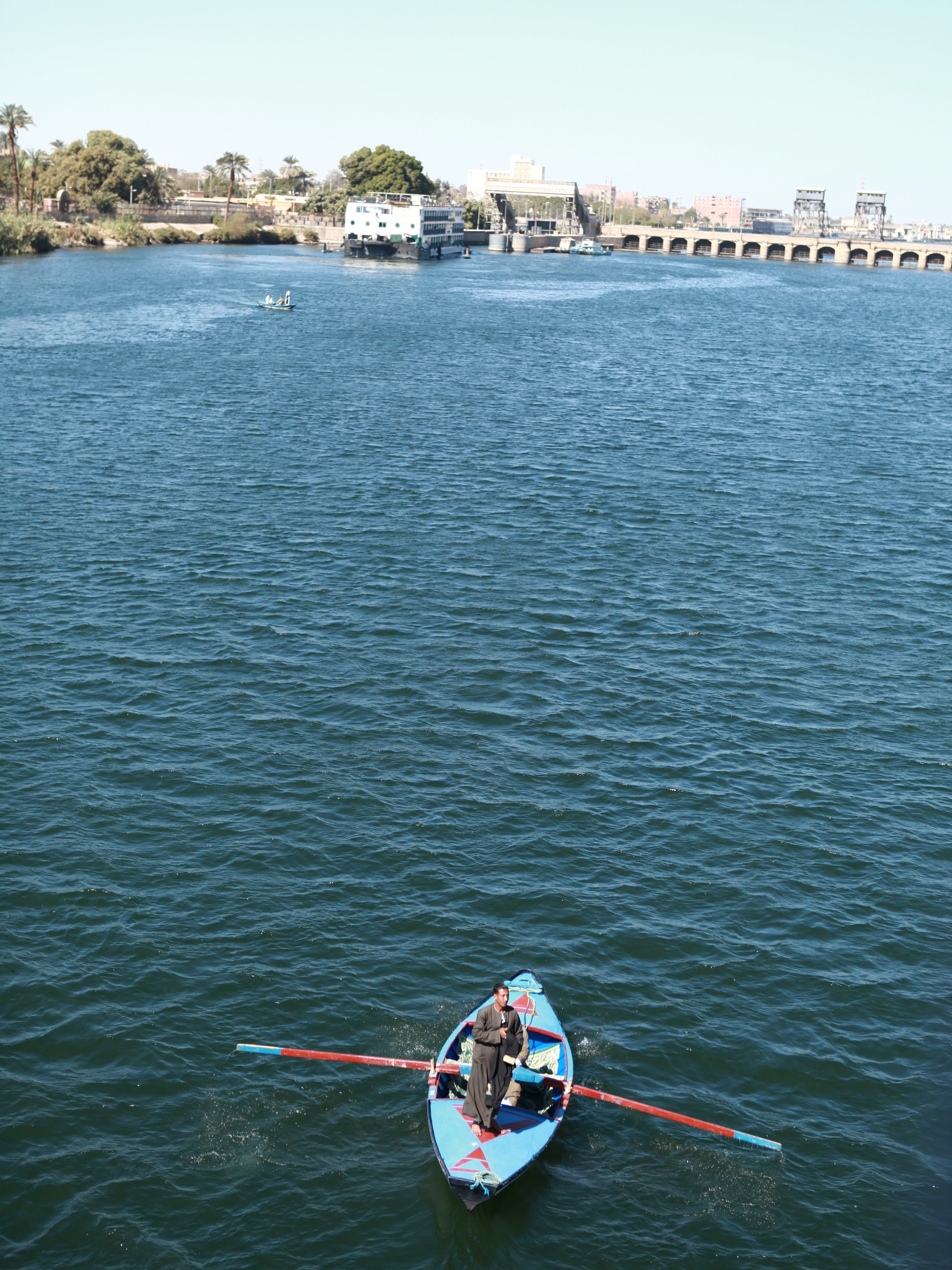
Along the Nile River, where civilization found its lifeblood.
Leaving the desert, I boarded a cruise ship sailing down the Nile from Aswan to Luxor. In just one day, the scenery changed almost completely. On both banks of the river were green fields, palm trees, small villages, and children running and waving as the ship passed. A little further in the distance, the yellow of the desert still lingered, a reminder that life here only lasts along the narrow stretch of the river.
Therefore, the Nile is not simply a river. It's like a boundary between life and desolation, between the possibility of survival and the harshness of nature. The ancient Egyptians didn't build their civilization in the desert, but along this river. Each flood season brought with it fresh silt, sustaining people for thousands of years.
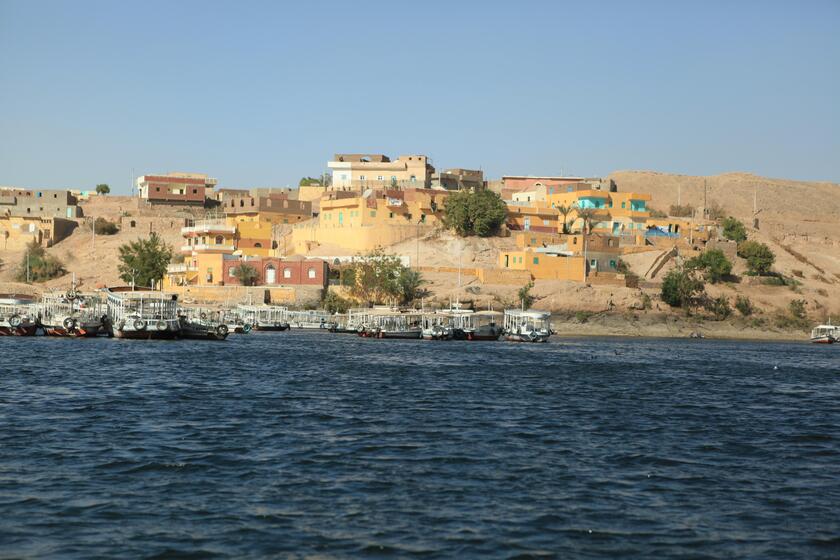
The Nile River, the lifeblood of Egyptian civilization.
But the Nile River provided more than just water. It also forced people to learn how to measure flood seasons, dig irrigation canals, divide land, organize communities, and observe the sky to predict planting times. Many achievements in astronomy, mathematics, and engineering in ancient Egypt gradually emerged from these very needs.
The more I gazed at the tranquil river flowing past the cruise ship's window, the more I realized that what shaped Egyptian civilization was not just a gift from nature, but also the way people transformed that fragile gift into the foundation of an entire civilization.
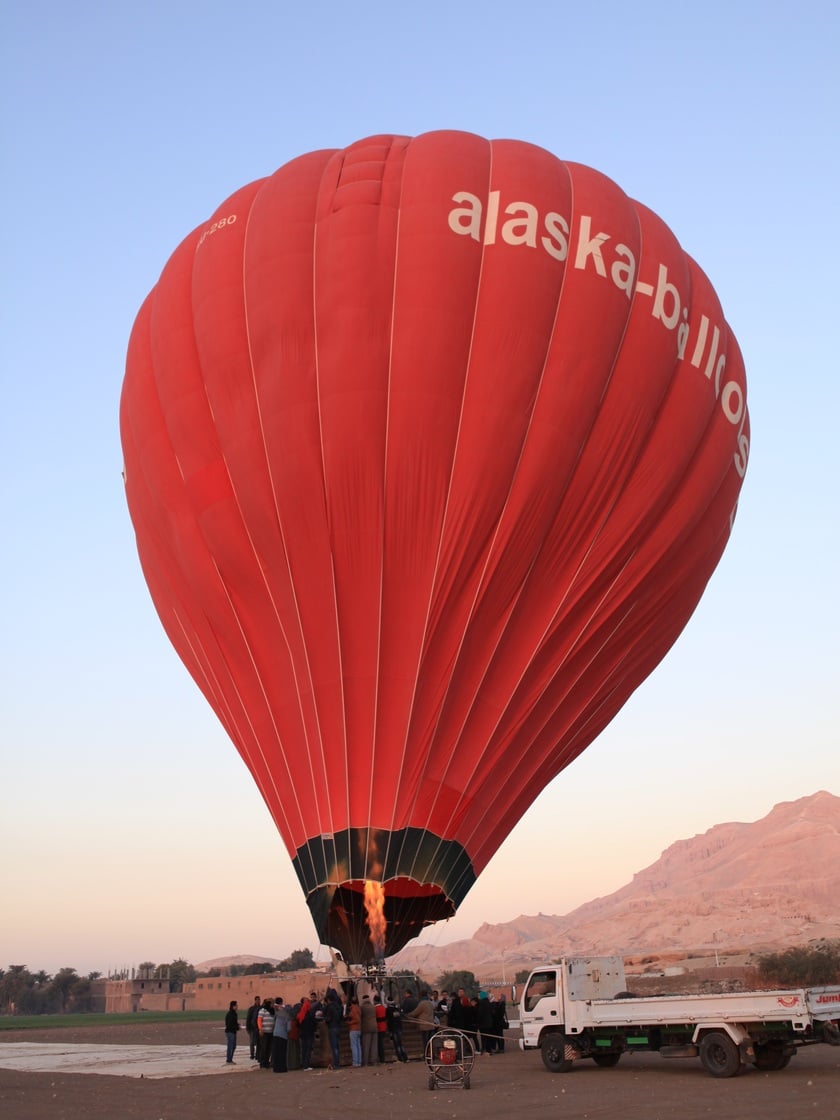
Hot air balloons watch the sunrise in Luxor.

The Tanoura dance on the Nile
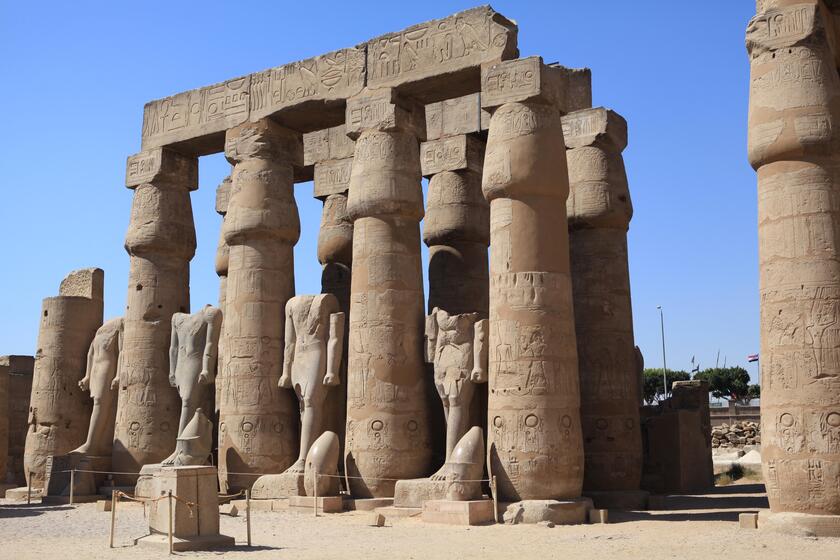
Luxor Temple, a testament to the civilization along the Nile River.
Abu Simbel, when people refuse to accept defeat in the face of adversity.
The ship docked in Aswan before I continued my journey to Abu Simbel, a temple located near the Sudanese border, in a desert region almost completely isolated from the rest of Egypt. From afar, the four colossal statues of Ramses II loomed majestically amidst the endless yellow of the sand and rocks. These statues, over twenty meters tall, have silently gazed towards the Nile River for more than three thousand years, like guardians of the memory of an entire civilization.
I used to think the most amazing thing about Abu Simbel was that ancient people could build such a massive structure in this harsh environment. But then I realized the real wonder lies in another story.
In the 1960s, when the Aswan Dam was built and Lake Nasser gradually formed, the entire Abu Simbel temple faced the risk of being submerged. Instead of accepting the loss of this heritage, the Egyptians and the international community cut the temple into thousands of stone blocks, moved each part to higher ground, and reassembled it almost intact. This was one of the largest conservation campaigns in human history.
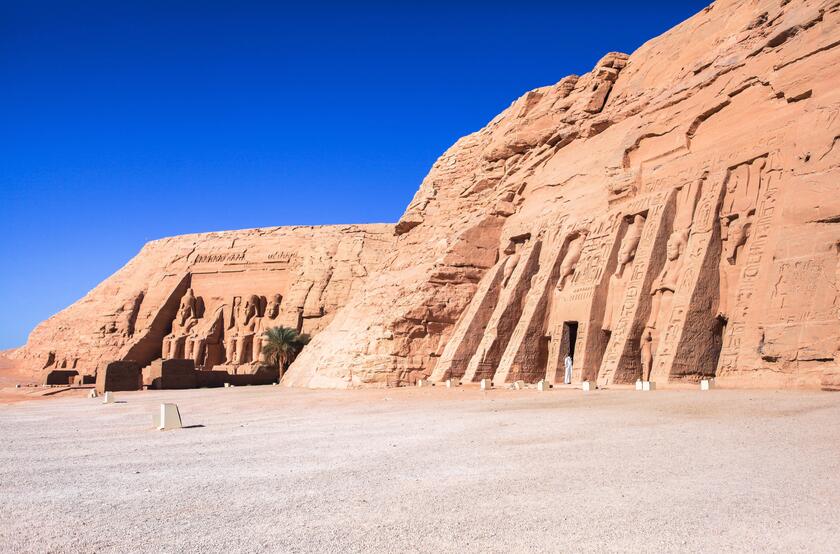
Abu Simbel, the temple built by Ramses II over 3,000 years ago, was then moved block by block from the bottom of Lake Nasser by the whole world, a feat accomplished twice by humankind.
Abu Simbel today is two marvels in one structure. One marvel was created more than three millennia ago, and the other was created by modern man. Both tell the same story: the Egyptians always faced challenges, but never chose to surrender.
The World Cup and the spirit forged in adversity.
Egyptian football is progressing towards the 2026 World Cup, continuing a spirit that has long been ingrained in this land. Egypt is not a world football powerhouse, nor does it possess wealthy leagues or a top-tier training system. But it is the most successful team in Africa, having won the Africa Cup of Nations multiple times.
This isn't a story of superior conditions, but a story of perseverance. Like the Nile River flowing through the desert for thousands of years, Egyptian football has patiently nurtured its aspirations through generations. They may not always win, but they always know how to rise after defeat. Therefore, for me, the World Cup is not just where Egyptians bring football to the world, but also where they carry a part of their own history.
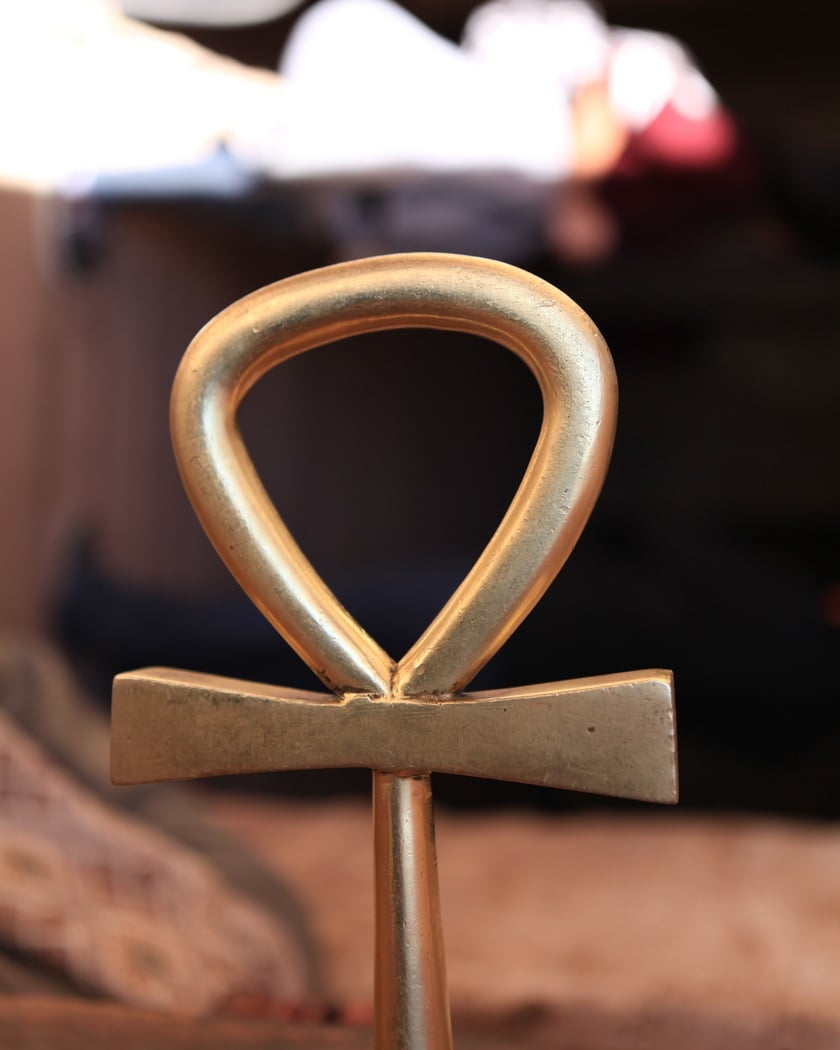
The Ankh key – an ancient Egyptian hieroglyph symbolizing eternal life, divine power, and rebirth.
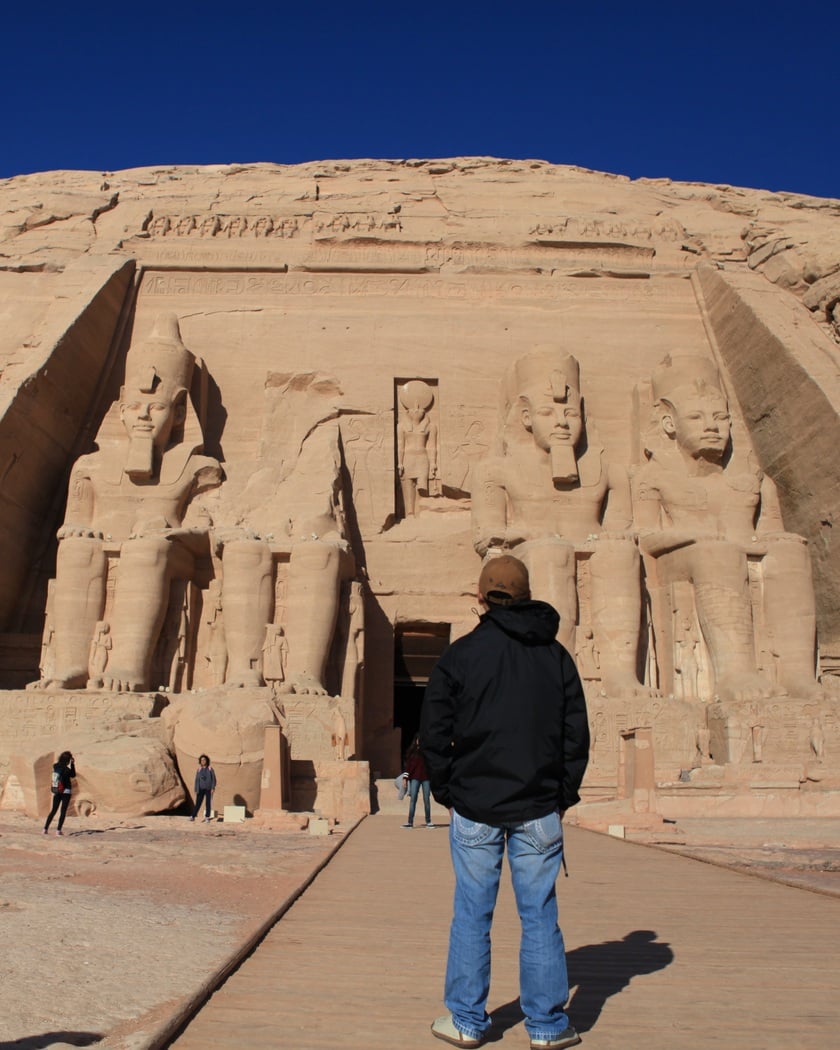
The author stands before four colossal statues of Ramses II at the Abu Simbel temple.
Seeing the Egyptian flag appear on the World Cup pitch, I thought not only of football but also of the Nile River, of Abu Simbel, and understood that the strength of a nation lies not in what nature bestows, but in how they overcome adversity. For Egypt, adversity has never been the end. It is always where every story begins.
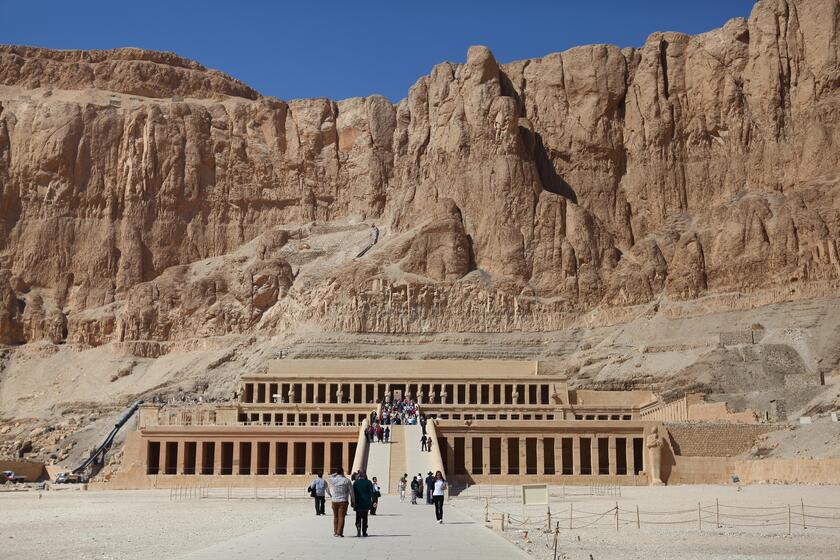
The Valley of the Kings, where the Pharaohs of the New Kingdom rested within the mountains for over three thousand years.