VI
VI


Ramadan is one of the most important holidays for over 1.8 billion Muslims worldwide. Ramadan begins at the start of the new moon, the ninth month of the Islamic calendar, and therefore does not have a fixed date according to the Gregorian calendar. In 2022, Ramadan began on April 1st and ended on May 1st.
Legend has it that many years ago, a merchant named Mohammed, while traveling in the desert, received a message from Allah and became a preacher. Muslims subsequently chose September each year as a time for repentance and purification of the soul, expressing gratitude to the Prophet Mohammed and practicing the noble teachings he left for humanity.
They believe that during Ramadan, the gates of heaven open and the gates of hell close, and all sins are forgiven. Days 1-10 of Ramadan are considered days of prayer to receive "Allah's mercy," days 11-20 are considered days of "Allah's forgiveness," and days 20-30 are considered days of prayer to "avoid going to Hell." During this month, believers often get up at night to read the Quran and go to mosques more often than usual.
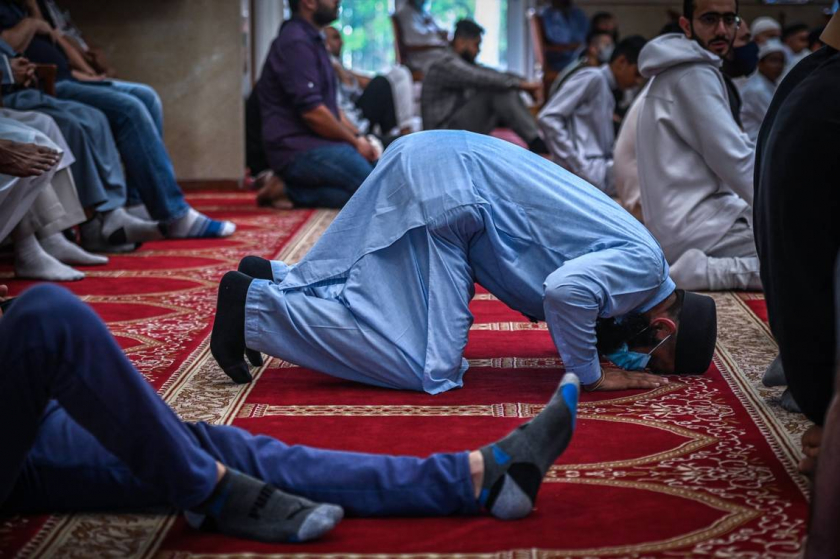
Muslims begin Ramadan 2022 in Miami, USA.
During this time, all Muslims must fast, one of the five pillars of Islam. In addition, during Ramadan, they must fulfill other obligations such as making charitable donations, praying five times a day, and undertaking a long pilgrimage to Mecca. Generally, there are not many differences in how Ramadan is celebrated between countries.
Fasting from dawn to dusk.
One of the rituals that Muslims are required to observe during the month of Ramadan is "Sawm"—abstinence from eating, drinking, smoking, and sexual activity between sunrise and sunset, in order to show compassion for the poor and hungry, to cultivate self-restraint, and to resist temptation. However, Muslims do not consider this a mandatory rule; on the contrary, they see it as a way to train their spirit and body.
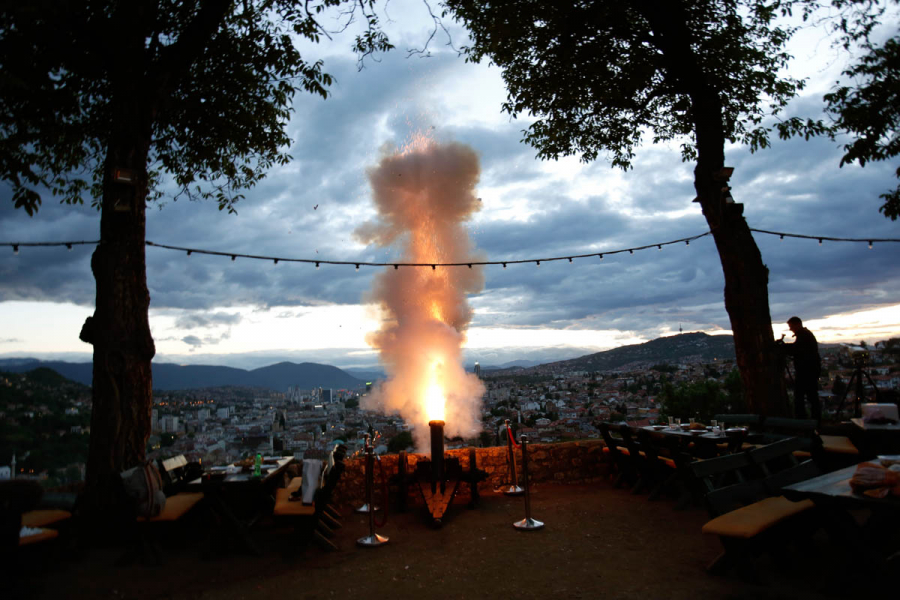
Sarajevo, Bosnia, fired cannons to signal the end of the day's fasting period.
However, there are exceptions, such as the sick, the elderly, children, pregnant women, and breastfeeding mothers, who may not need to follow this rule if fasting is harmful to their health. Additionally, believers traveling abroad where Islam is not the state religion are not required to fast, but they can make up for it later.

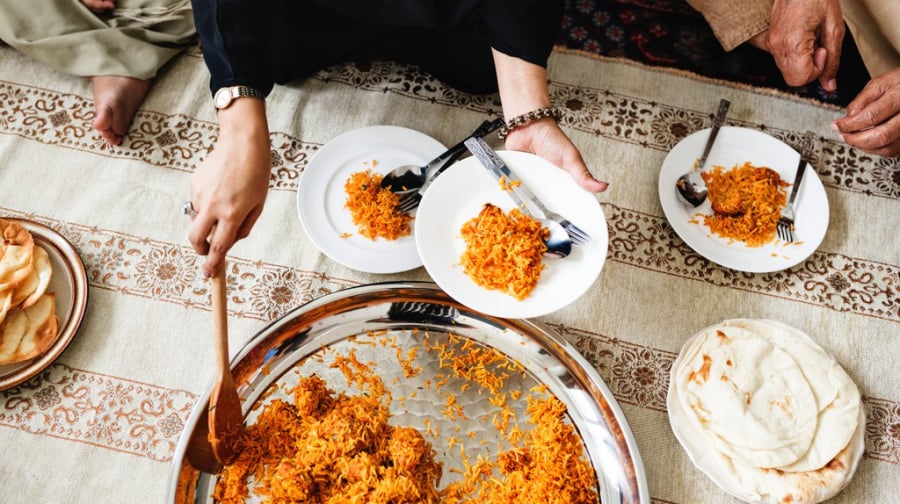
A simple iftar meal in Dubai
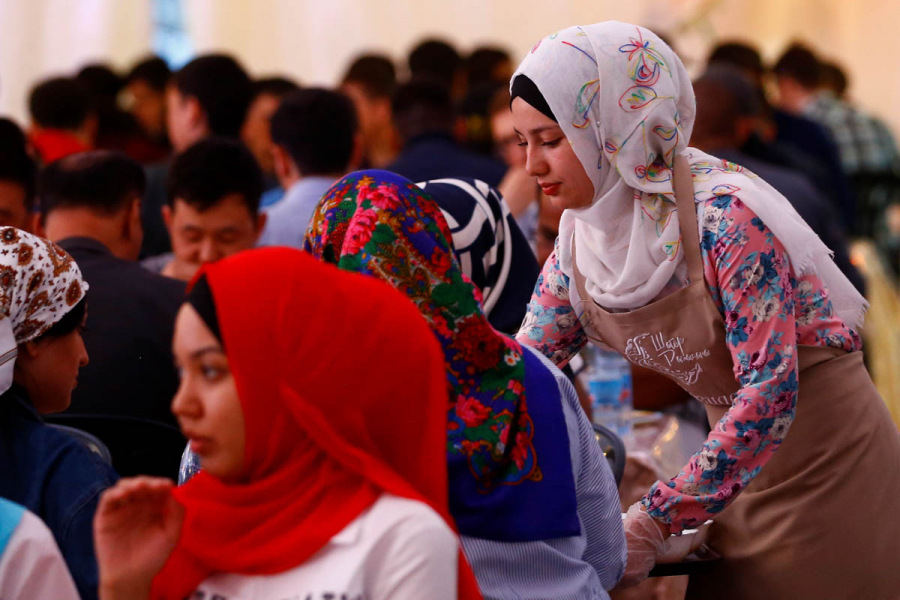
Muslims share their first supper of Ramadan at Victory Park near the Islamic memorial mosque in Moscow, Russia.
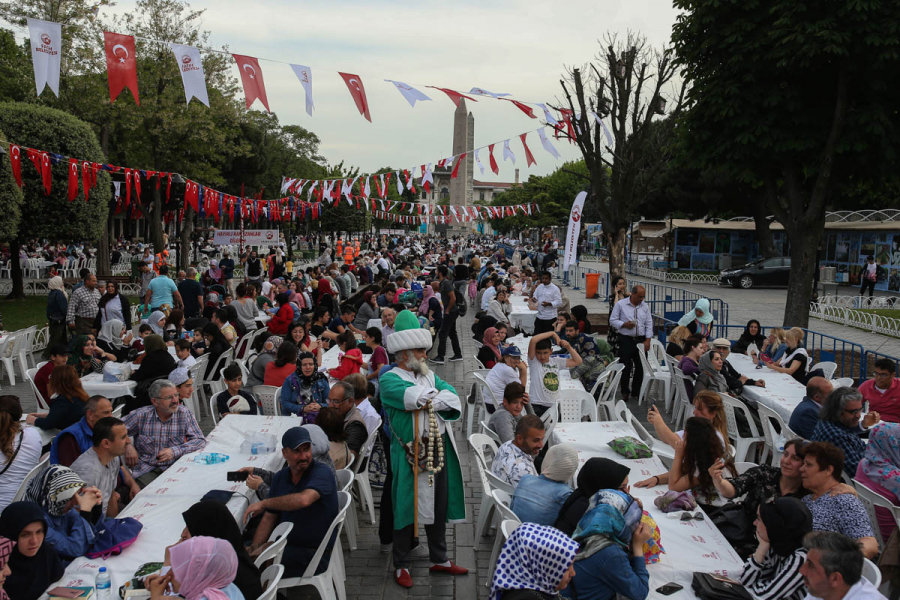
Traditionally, worshippers gather for dinner during the month of Ramadan in the Sultanahmet district of Istanbul, Türkiye.
Although Muslims fast all day, this does not mean they have fewer activities during this month. On the contrary, it is a month with many festivities and spiritual activities. Friends often visit and eat together at sunset with feasts called "iftar" to conclude the day's fasting.
For well-off families, this was a lavish feast, with large quantities of various foods to provide energy. After eating and drinking, people celebrated until late at night. Around 2 or 3 in the morning, someone on each street would carry a small drum, walking slowly and beating it in a five-beat rhythm, shouting loudly to wake everyone up to prepare and eat breakfast, called "suhoor," before sunrise, thus beginning another day of fasting.
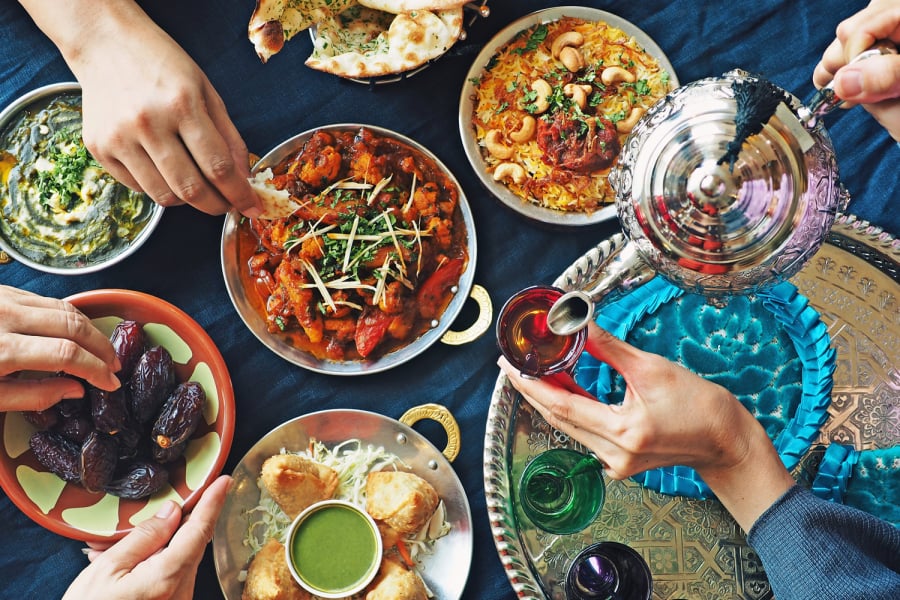
Irregular eating habits, coupled with attempts to eat large meals at night for energy, have caused Muslims to gain weight rapidly this month.
After the end of Ramadan, there is another major three-day festival with lots of food and gifts. That is the festival.Eid al-FitrIt's an occasion for everyone to express gratitude, let go of the past year's shortcomings, and live together in unity and solidarity in the coming year.
In each country or region, the rituals of Eid al-Fitr have different cultural characteristics, but they still follow certain common rules of the Muslim community.
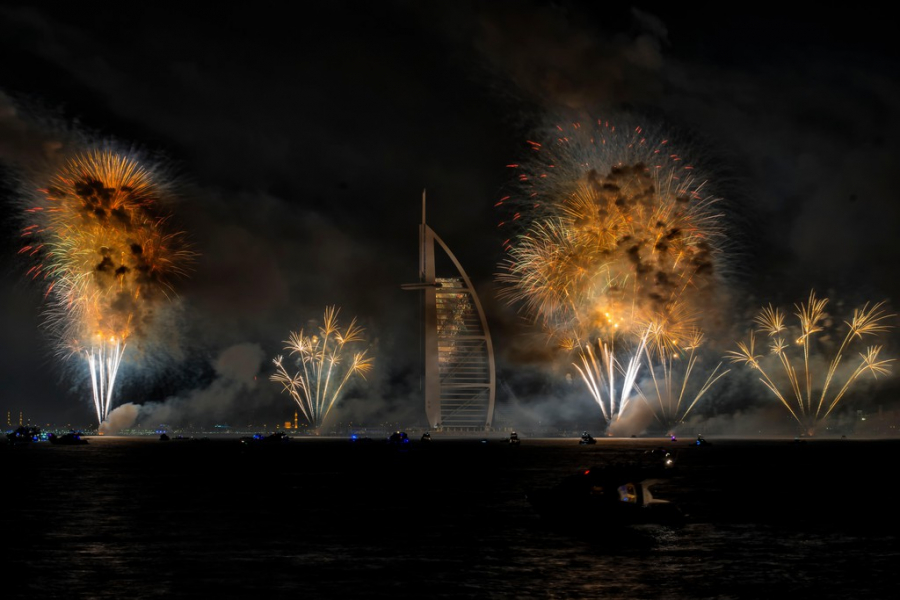
UAE sets off fireworks to celebrate Eid ul-Fitr.
Mandatory charity work
The Ramadan tradition also emphasizes the concept of "Zakat"—volunteering and helping the poor—which is done through acts of charity and almsgiving, or more practically, cleaning up garbage. These are all mandatory for Muslims. Wealthy people often share basic food items such as tea, sugar, oil, and rice with the poor.
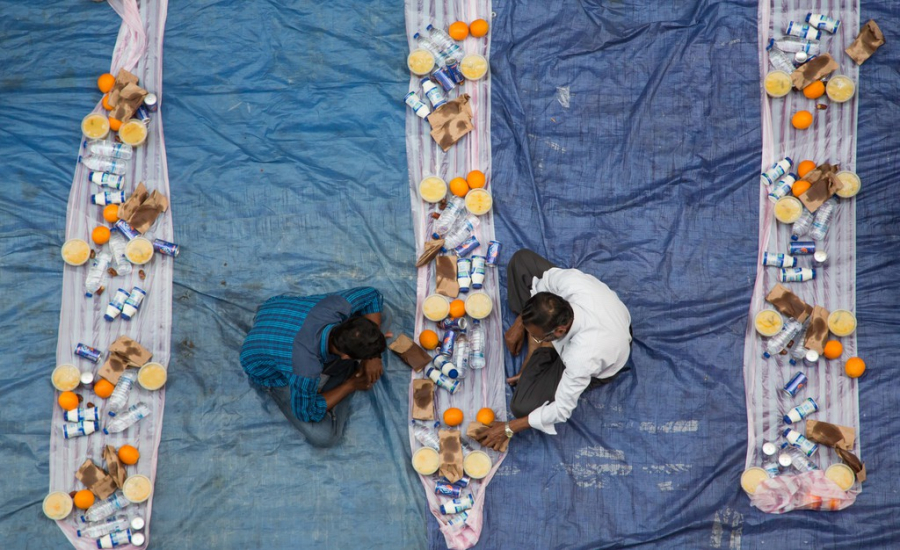
Charity food in Deira, Dubai
Every afternoon throughout the month, mosques distribute free meals in gardens or on wide sidewalks, welcoming all the poor from everywhere. Around 5 p.m., the poor, bringing their children, arrive at these gathering points and sit at tables in an orderly manner. After the mosque loudspeakers broadcast the prayer: "There is no god worthy of worship except God (Allah), and Muhammad is His Messenger," everyone begins to eat.
Pray five times a day.
And even though they had fasted all day, and delicious food was laid out before them, no one would touch it until they had finished their prayer.
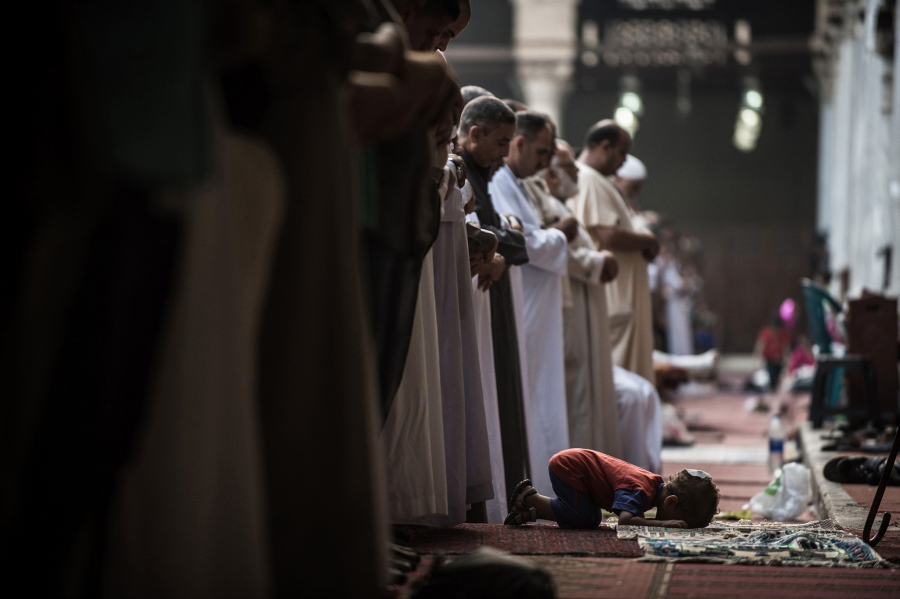
Egyptians pray during the Eid al-Fitr festival.
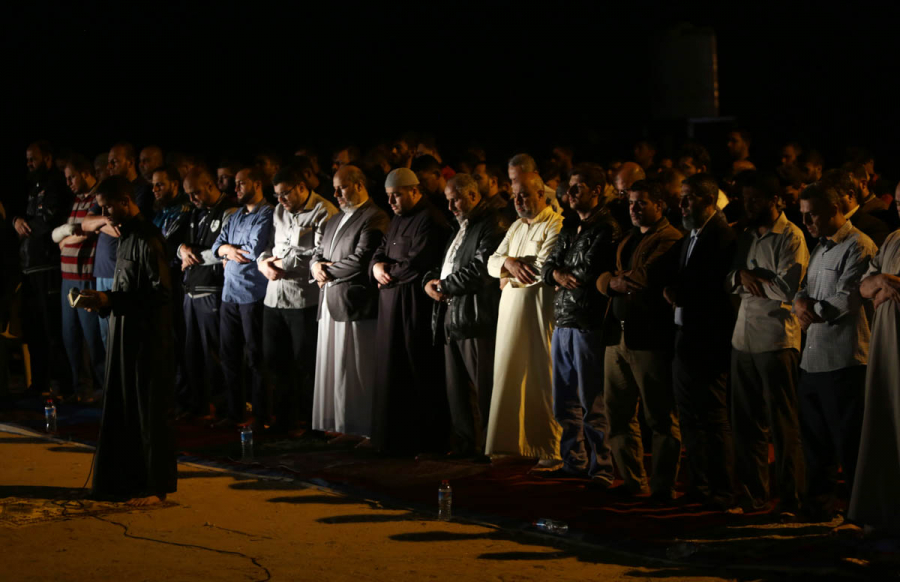
Palestinians pray together on the first night of Ramadan outside a protest camp near the Israeli border in eastern Gaza.
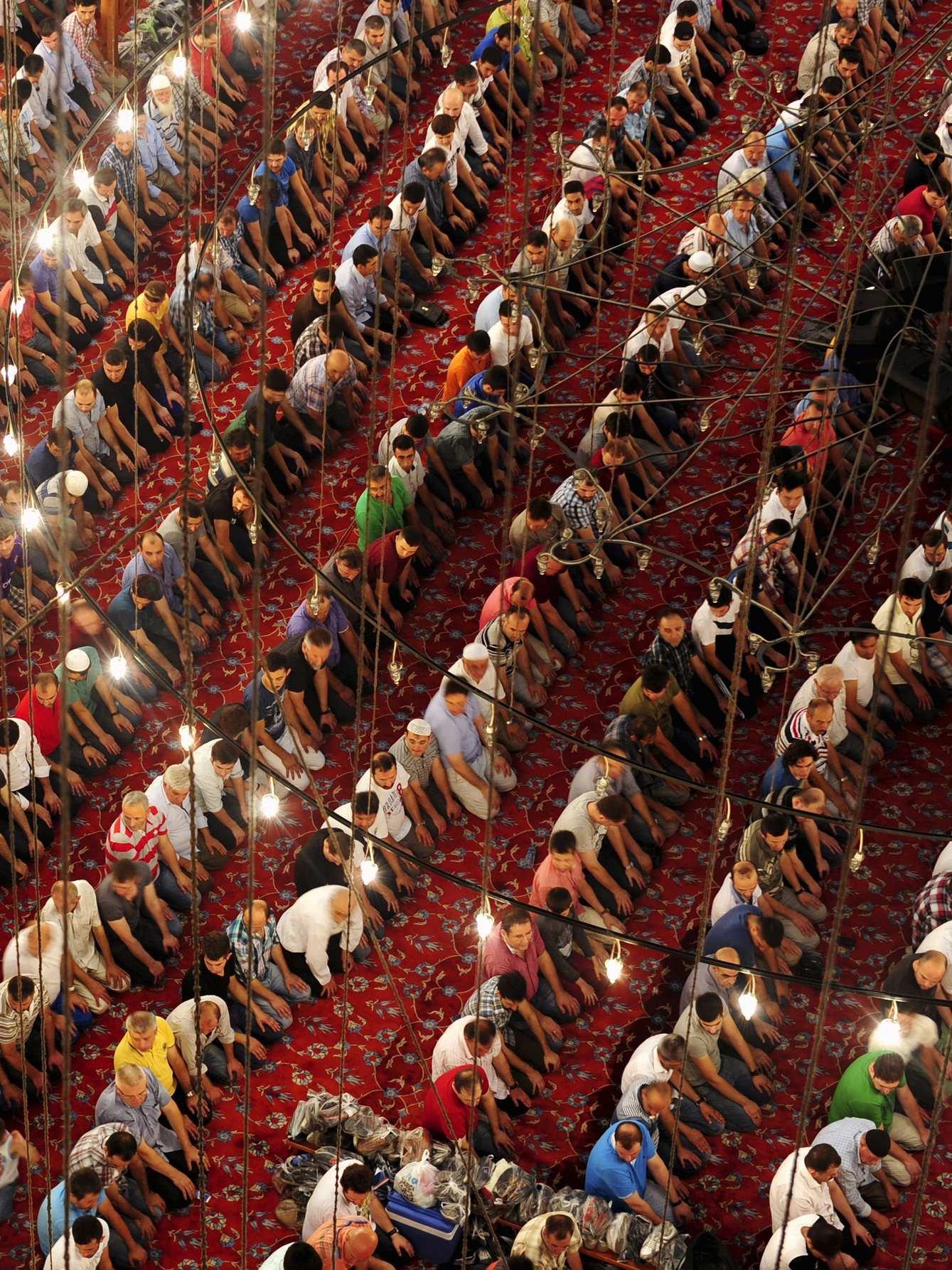
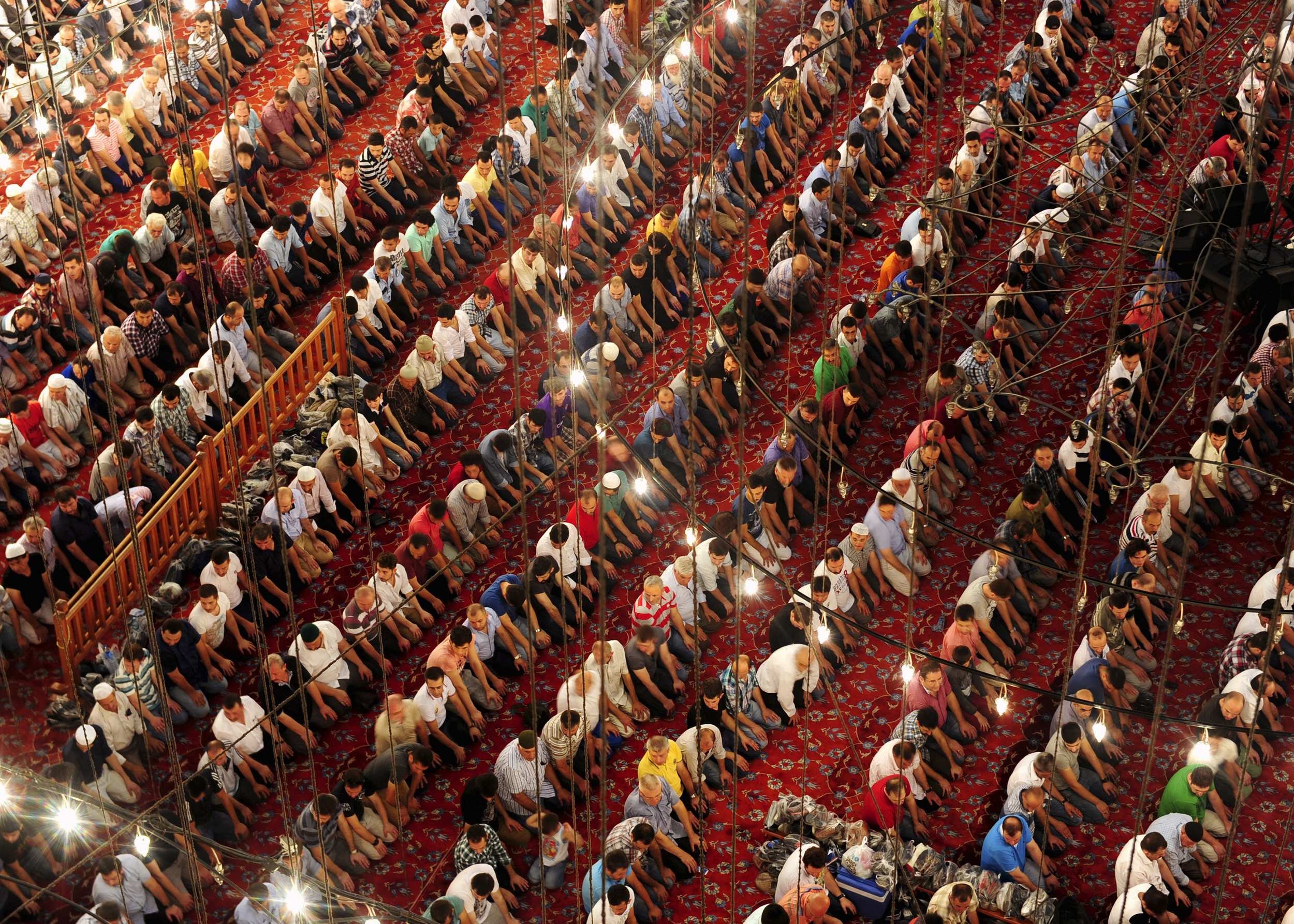
Muslims are required to pray five times a day, called "Salat," at dawn, noon, midday, sunset, and evening. They can pray anywhere—at school, work, home, or outdoors—but must follow the prescribed rituals. Before praying, they must be in a state of mental and physical purity. First, they must rinse their mouths, then wash their faces, necks, hands, and feet. This prayer ritual is meant to remind believers of the right way of life. Islam is also considered the religion that mandates the most frequent prayer of the day.
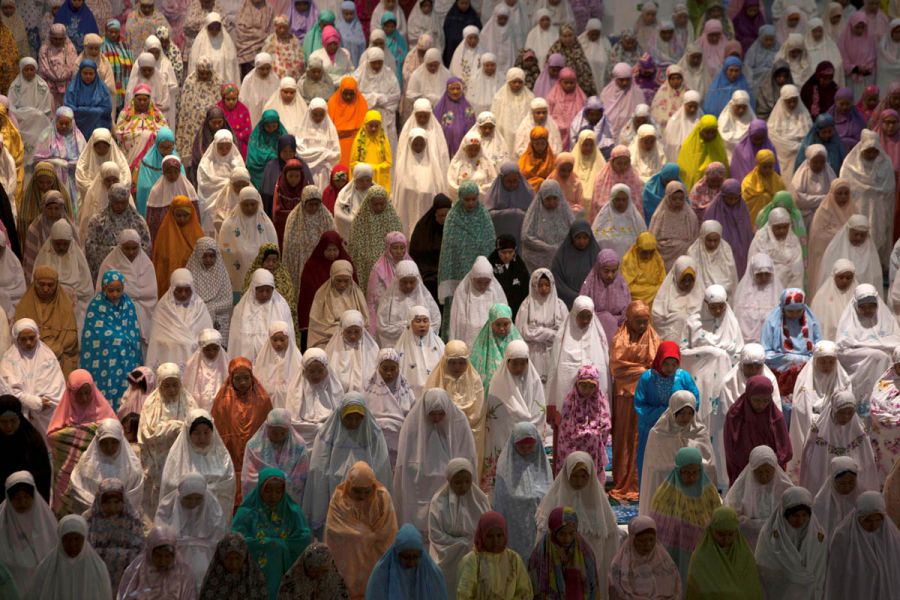
Worshippers gather to pray at the al-Akbar mosque in Surabaya, East Java, Indonesia.
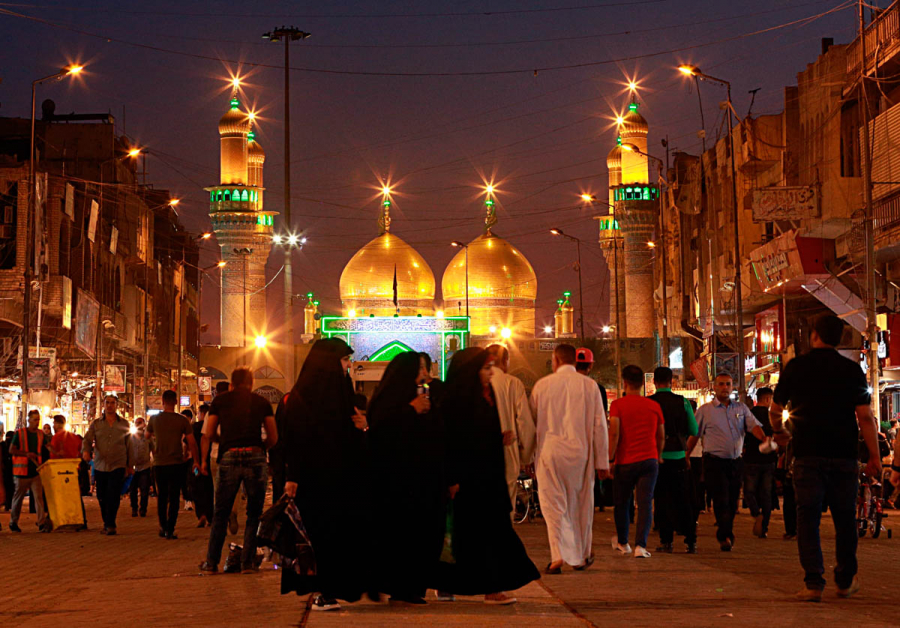
Shia worshippers gather near the golden shrine of Imam Moussa al-Kadhim in Baghdad, Iraq.
The prayer service includes reciting passages from the Quran, kneeling on a mat, and touching foreheads to the ground, signifying reverence for God. During the prayer, worshippers must face Mecca, the spiritual center of Islam, where the Ka'bah, the Great Mosque, houses the Black Stone. Believers say that when the Prophet Mohammed ascended to Allah, the stone wanted to follow, but Mohammed refused, leaving it suspended in place.
A long pilgrimage to the holy city of Mecca.
The final ritual is the "Hajj," the pilgrimage to Mecca (in Saudi Arabia). This is one of the world's largest pilgrimages and a religious obligation that every adult Muslim must perform at least once in their lifetime. The pilgrimage expresses reverence for God and takes place in the twelfth month of the Islamic calendar.
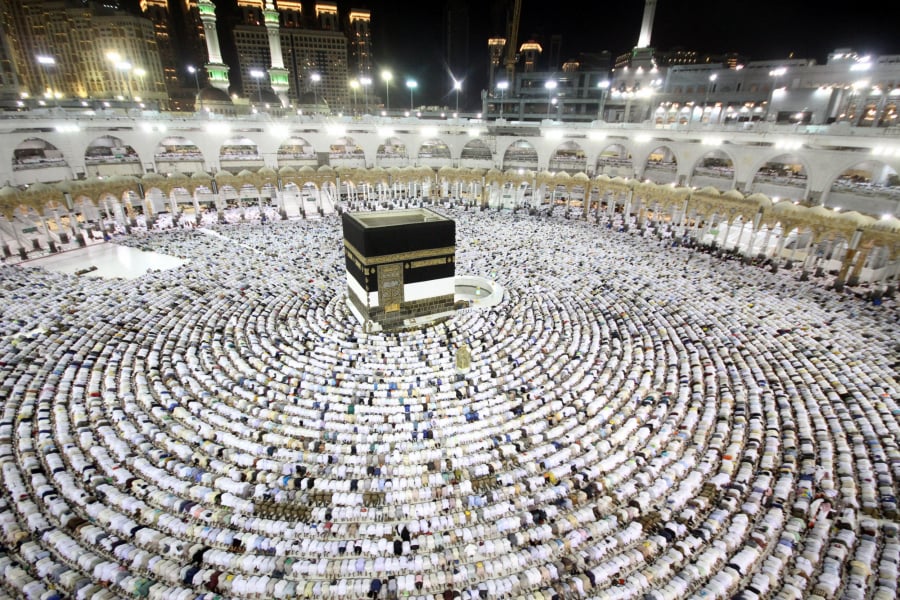
Pilgrims travel to Mecca during the Hajj week.
The pilgrimage typically lasts five days and is governed by strict rules, such as pilgrims wearing simple white robes, refraining from cutting their nails, shaving their beards or hair, wearing jewelry or perfume, damaging crops, or killing animals. All of these symbolize the belief that all people are equal before God, while also demonstrating unity and cultivating humility in believers. They must cast aside vanity to seek forgiveness, guidance, and salvation for their souls. Eid al Adha, the festival of sacrifice, marks the end of the ten-day pilgrimage.