VI
VI


From simple passions
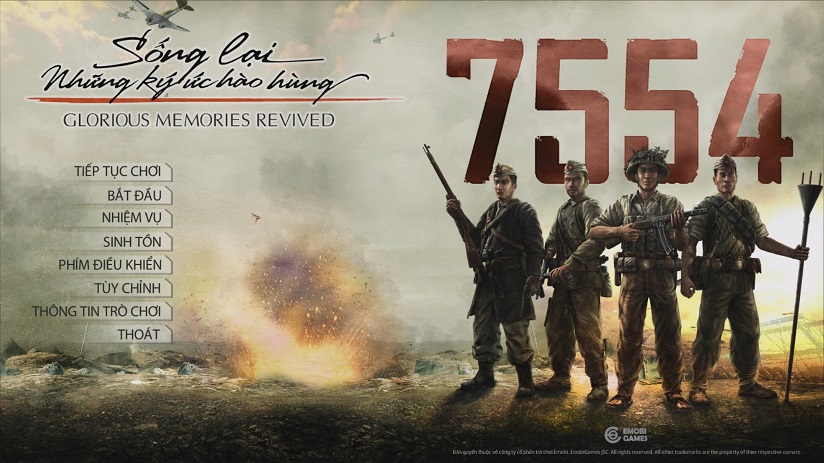
I remember around 2010-2011, games exploring Vietnamese history, such as Thuan Thien Kiem and 7554, began to appear, especially 7554, which the producer spent 17 billion VND to develop and received some positive feedback. However, in a context where history was still just a mandatory subject in school for many, these games failed to retain gamers from a gaming perspective in general, and had to be phased out early due to lower-than-expected revenue.
Source: Internet
While stemming from a shared love of history and a desire to create a purely Vietnamese brand, these games perhaps missed their opportunity. They appeared too late technologically – when many international games had already established a strong foothold in the gaming community – but too early in terms of content, as they had not yet formed a large and vibrant community of people who were passionate about, interested in, and engaged in discussions about national history.
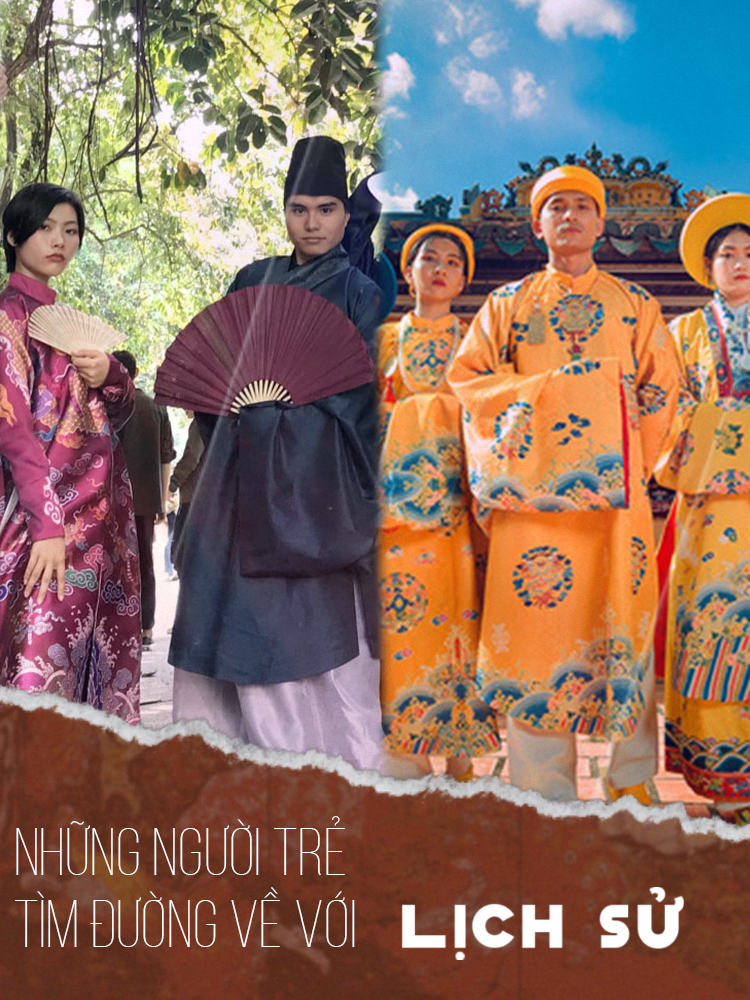
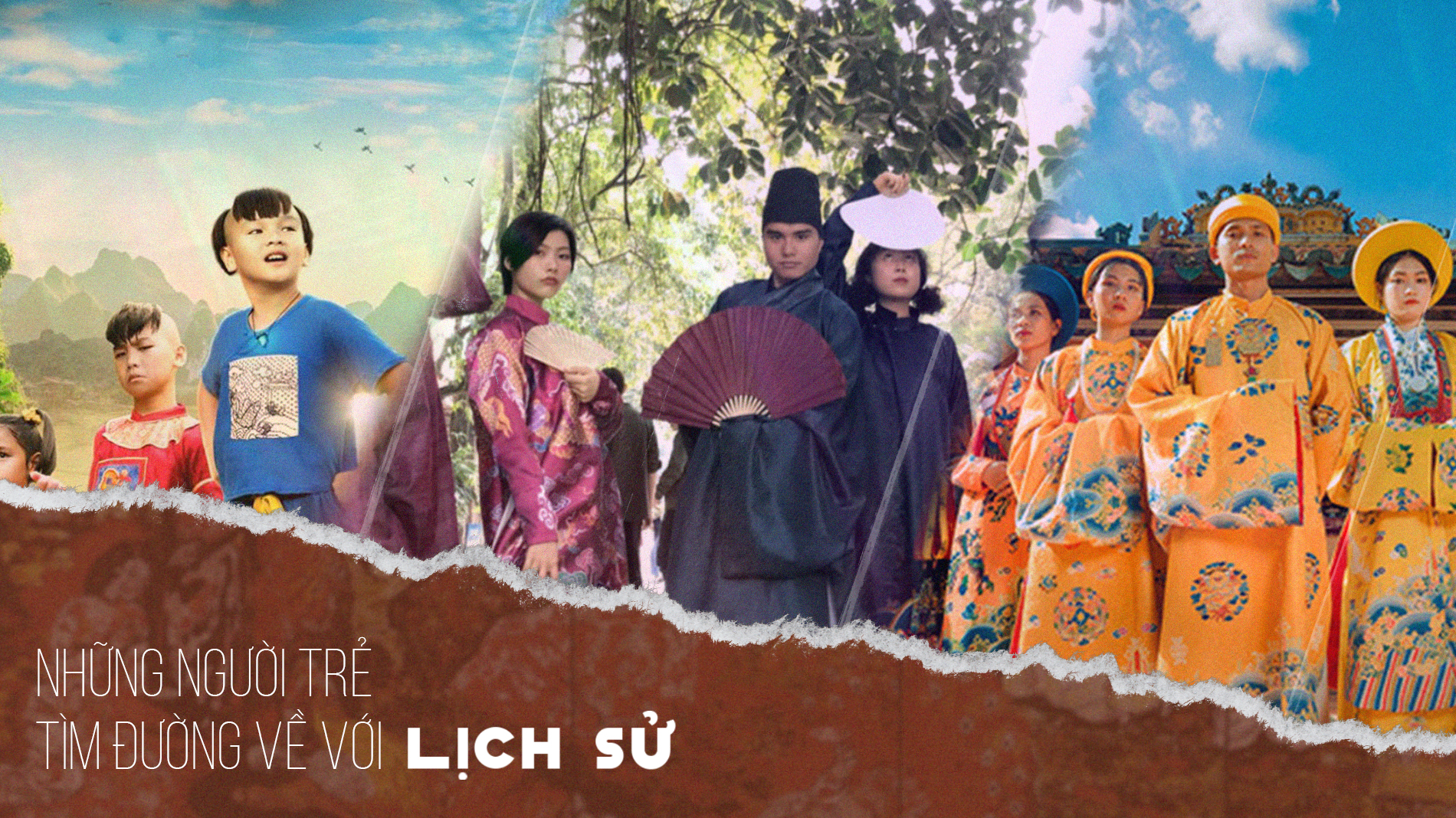
Three years later, at the end of 2014, the seeds for a community of young people who love history began to sprout, with the emergence of this group.Ancient Vietnamese StyleOn Facebook, the group originated from a group of young people passionate about learning about ancient Vietnamese culture and wishing to recreate the artifacts of ancient Vietnam. Today, it has nearly 150,000 members.
According to Ngoc Huyen, one of the founding members of the group, they initially met on a forum for people who loved ancient culture and enjoyed drawing traditional costumes. From the costumes, they began to want to learn about the customs, traditions, and daily life of ancient Vietnamese people. To promote their first project more widely, they decided to open a group on Facebook with the name they still use today: Dai Viet Co Phong (Ancient Vietnamese Style).
Logo of Dai Viet Co Phong
The name Đại Việt itself is full of hidden meanings. "Đại Việt" was the name of our country for most of its history, from the time it gained independence after a thousand years of Chinese rule until it was changed by the Nguyễn dynasty, the last monarchical dynasty. Although it played an extremely important role in shaping Vietnamese culture that continues to this day, the Đại Việt period in the high school history curriculum is only depicted through a series of battles against foreign invaders, historical milestones, and heroes… but the spiritual life of the Vietnamese people at that time, how they interacted culturally, and how society developed are rarely explored. This dryness, conveyed through statistics and lacking personal connection, has made history a "nightmare" for many generations of students.
Develop content to spread awareness.
After numerous failed attempts due to a lack of documentation, experience, and qualified personnel, the Dai Viet Co Phong group finally achieved satisfaction by unveiling a Le Dynasty-style áo giao lĩnh (traditional Vietnamese tunic) with tailoring techniques closely resembling what existed hundreds of years ago. Naturally, with its unusual appearance never before seen in the general history curriculum, coupled with the familiarity of the áo dài (long dress) or áo tứ thân (four-panel dress), the product immediately sparked debate. Some were annoyed by the similarities to the clothing of their northern neighbor, China. Others were surprised and intrigued, finding ancient Vietnamese clothing more diverse than they imagined and no less impressive than the beautiful costumes they were used to seeing in Chinese, Korean, and Japanese films.

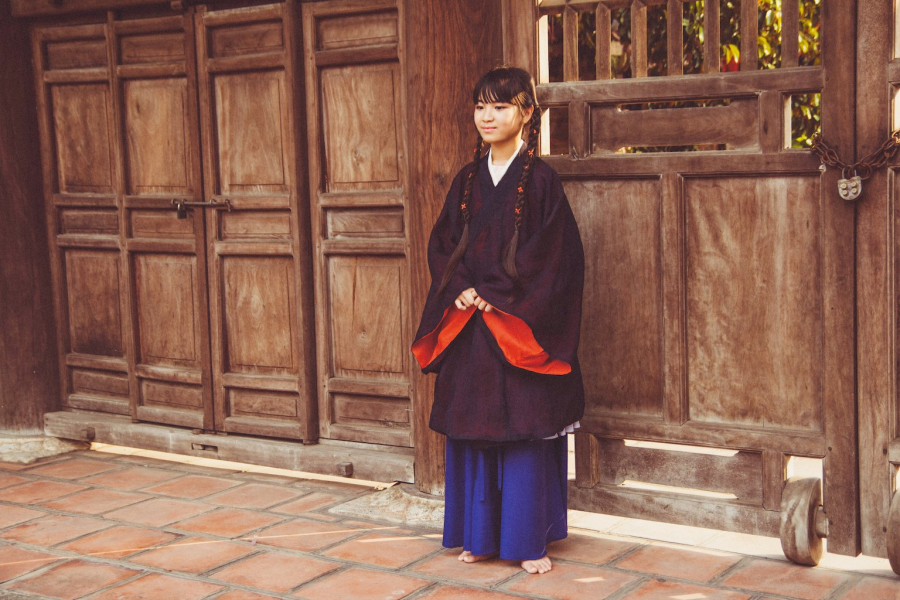
The cross-collared robe of Dai Viet Co Phong
Starting with the costumes of the Le Dynasty, the community began to explore more of the costumes of the Ly, Tran, Mac, Trinh, and Nguyen dynasties. From styles and colors, they delved deeper into patterns and motifs. A member of the group at the time, artist Cu Minh Khoi, participating in a historical film project, realized how difficult it was to find ancient patterns for Vietnamese costumes. Because no one had paid attention to this, the internet was flooded with Chinese patterns, or those influenced by traditional Vietnamese theatrical costumes. Therefore, in 2015, the group launched the "Dai Viet Patterns" project through crowdfunding. Surprisingly, they successfully raised funds. Overcoming obstacles with field trips to various regions, visiting ancient temples and pagodas, museums, and consulting with experts, the project ultimately produced 250 vector patterns showcasing Vietnamese cultural characteristics, opening doors for creative individuals and promoting Vietnamese culture.
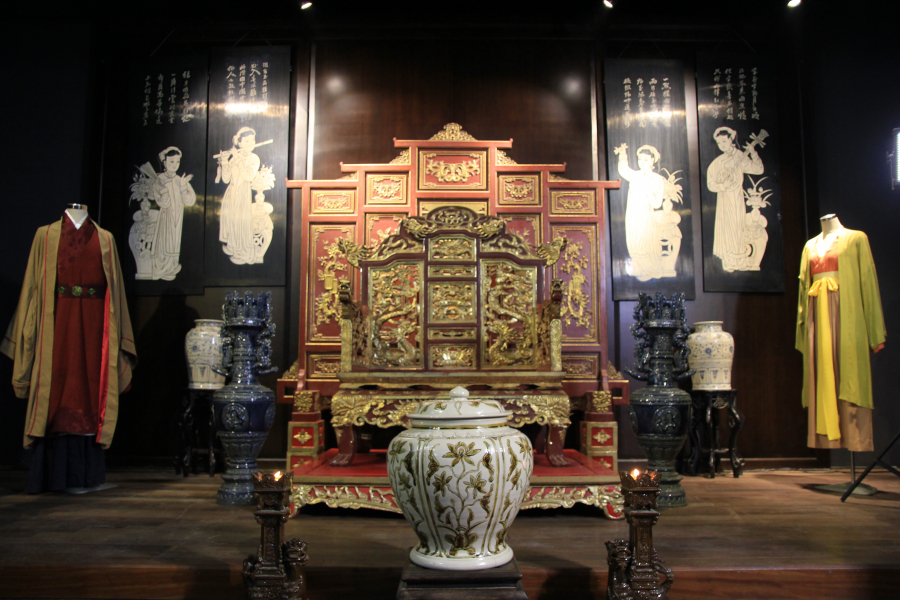
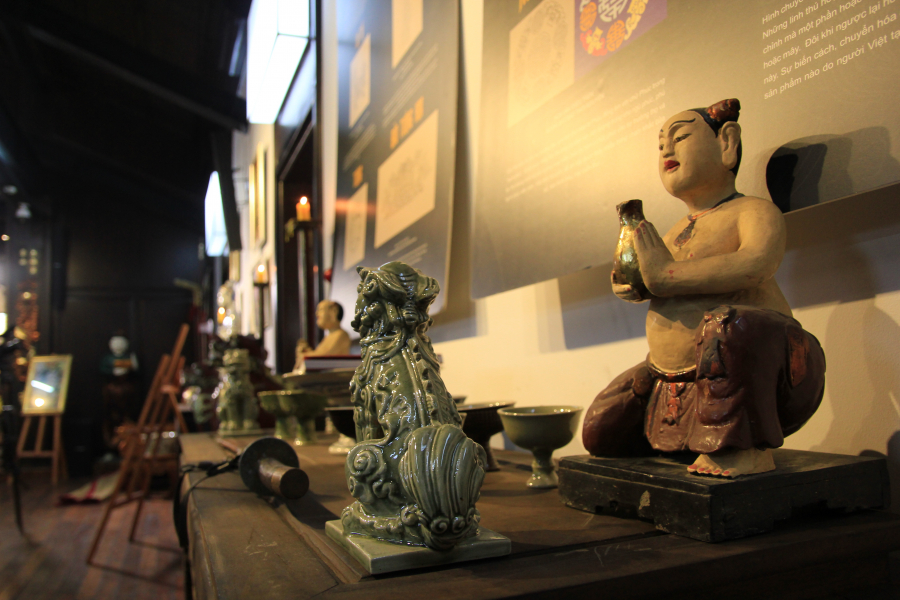
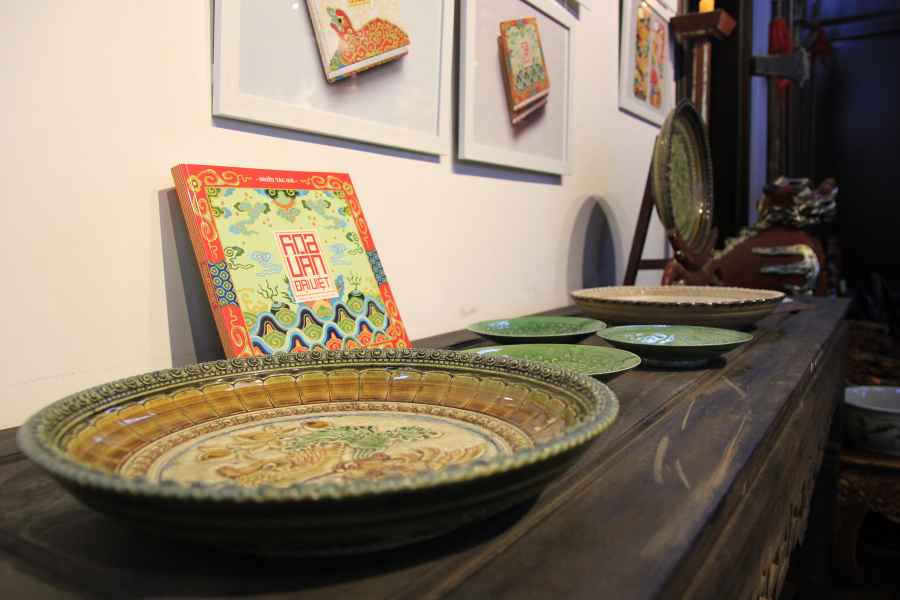
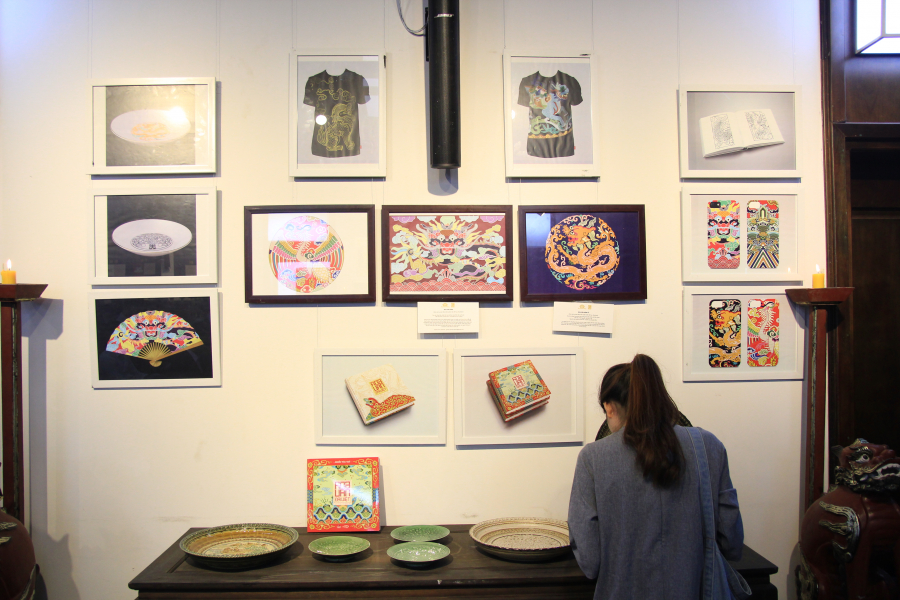
During the launch event of Dai Viet Hoa Van
The increasing number of questions and discussions, with their growing depth, laid the groundwork for the emergence of many other pages and groups from the Dai Viet Co Phong community. These include:Thu Phat Thanh Daiwith photo series themed around recreating an ancient atmosphere,The Empresses and Consorts of Thien Nam Throughout HistorySpecializing in the subject of the imperial harem of Vietnamese dynasties.Bac Ha Trading PostRegarding customs and lifestyles in Northern Vietnam,Dai Nam Meeting HallRegarding customs and identity of the South,Excerpts from the ChapterQuoting beautiful literary works from history, etc.
Some history enthusiasts with artistic talents have combined these two skills to create fan pages with timely historical content and artwork that appeals to young people. For example...DainamballUsing images of balls symbolizing each dynasty to tell historical stories, orMr. HoangWith a central character being a Vietnamese king along with many other members of the royal family illustrated in an endearing way, it tells stories about the history and rituals of the royal court and the nation.
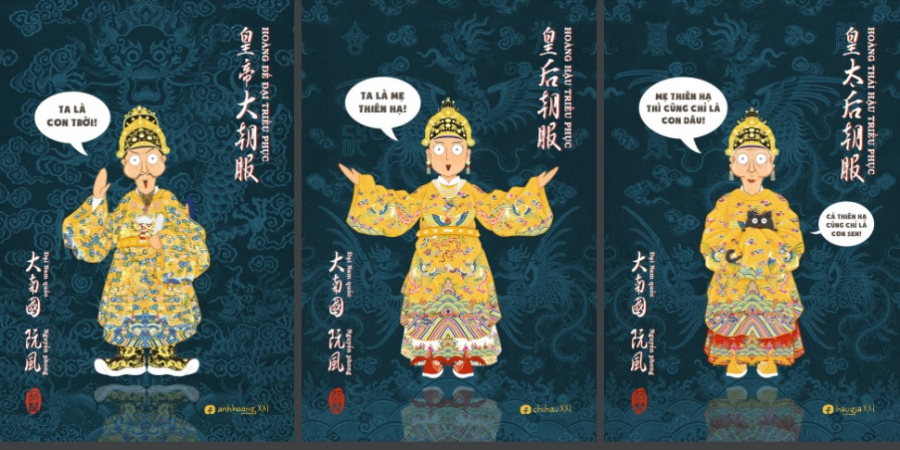
Some of the personalities from the Anh Hoang fanpage.
Others, perhaps strong storytellers, have used their knowledge and words to present short historical narratives in the style of novels or television dramas. Notable names include Pham Vinh Loc, Dung Phan, and the "Lac Ngam Nhan Gian" fanpage. In their stories, historical figures have personal lives, thoughts, and actions, all recreated before the reader's eyes through a personal lens, reflecting the storyteller's unique personality. Simply put, they have infused history with a bit of drama, and we can all see how drama captivates television viewers.
Thus, alongside pages and groups about traditional battle history, fan pages about culture and rituals have emerged, creating a diverse ecosystem for learning about history, ranging from topics to approaches.
Critical thinking leads to improvement.
Pham Vinh Loc, as listed above, is a name that attracts a large readership, even just through his posts on his personal Facebook page. Loc's way of recounting Vietnamese history reminds people of how they were once fascinated and captivated by the Romance of the Three Kingdoms, Water Margin, and The Fire Phoenix Liao Yuan… It's interesting, but it's also very easy for the storyteller to lose control and "derail" from the track of truth. After the initial warmth with admiring comments, the attraction increases, followed by more comments challenging the author's perspective. That's when we know that those who were inspired by history are no longer simply recipients as they were at the beginning. They have done their research and developed their own perspectives.
The controversy intensified when writer Pham initiated the board game project "Su Ho Vuong" and brought it to the Shark Tank program. The idea of "modernizing" and "improving" Vietnamese historical figures with Japanese manga art style failed to convince the judges and received a large wave of opposition online. Regardless of the outcome, Loc's efforts have somewhat broadened interest in history, prompting young people, besides those interested in history, to discuss the topic further.How can we spread history? What are the limitations in promoting history?
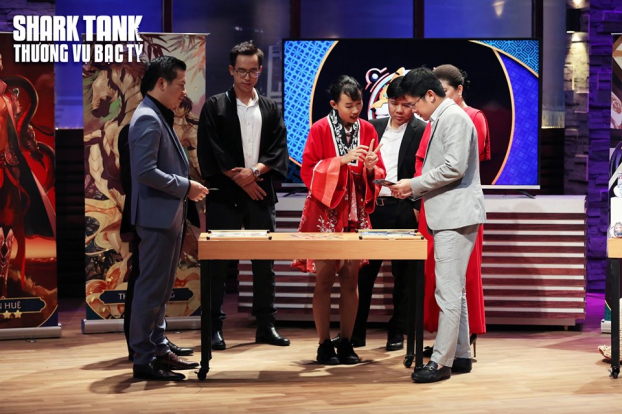
Pham Vinh Loc and his partners are seeking funding on Shark Tank.
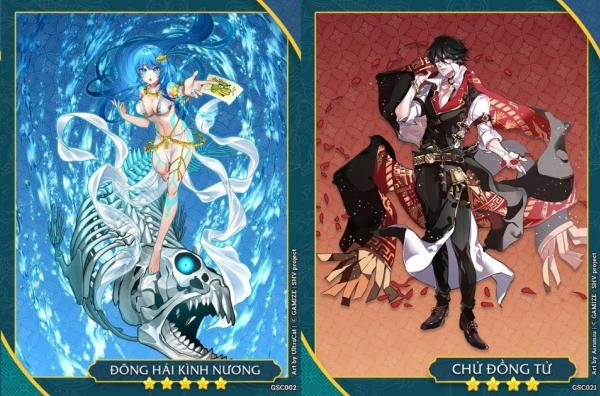
The Guardian King board game project
Over 10 years ago, the film "Ly Cong Uan - The Road to Thang Long" was approved for production and was expected to be released during the 1000th anniversary of Thang Long - Hanoi. However, after much controversy and fear, the film was shelved until today. The controversy stemmed from the film's excessive reliance on Chinese settings and crew, and the fear that its release would be met with opposition due to these foreign elements. The initial signs of opposition in the press at the time showed that these fears were well-founded. At that time, Vietnamese audiences, with their limited understanding of high school history and their long exposure to Chinese historical dramas, could hardly have a positive view of the film. However, recently, on the occasion of the 1010th anniversary of Thang Long - Hanoi, the film's producers revealed some excerpts on social media platforms and received overwhelmingly positive feedback. This is the result we can see when interested people, thanks to the social media environment, have had time to learn about and debate each other.
From framing all historical illustrations of Vietnam within the traditional ao dai dress, recent illustrations have shown more exploration, bringing images back to their true historical periods, such as the 50th anniversary edition of Linh Nam Chich Quai published by Kim Dong Publishing House or the long-running animated series "Aspiration for the Nation" on VTV1. Many film investors are also boldly investing in film projects using costumes from the Ly-Tran-Le dynasties despite concerns about controversy, such as "Trang Quynh," "Karma: Past Life Lover," and "Tao Quay"... The Nhat Binh ao dai, the attire of noblewomen of the Nguyen dynasty, is increasingly appearing in personal photo shoots, leading the trend of tailoring and renting traditional costumes with names like Dong Phong, Y Van Hien, V-Style, and Great Vietnam... Maps and Vietnamese civilization have also appeared in many major international games such as Civilization 6 and Age of Empires II. All of this demonstrates that the audience interested in and knowledgeable about history is large enough.
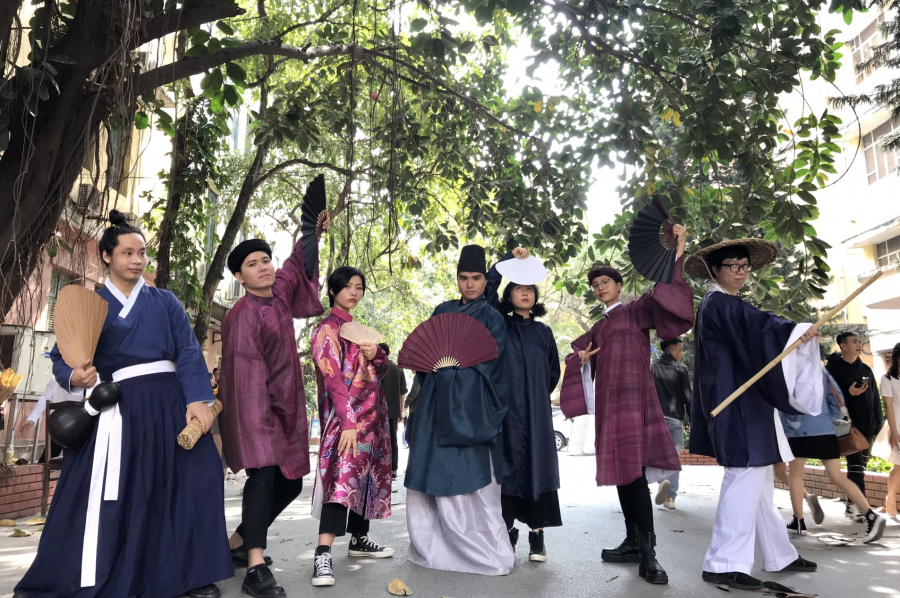
Traditional costumes from the Le and Nguyen dynasties at a school festival at Dong Phong - a tailoring workshop opened by young people.
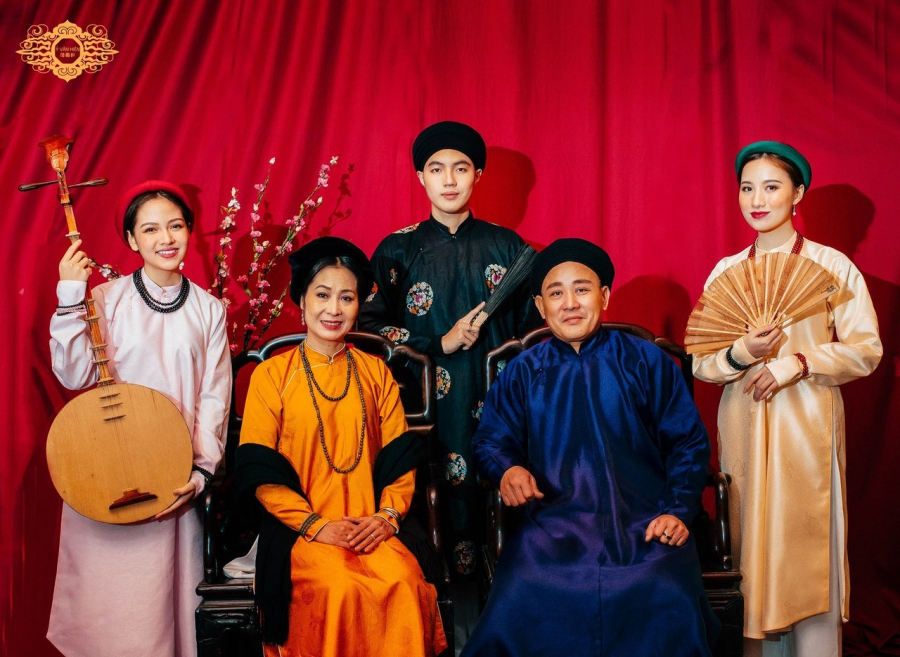
The Y Van Hien brand is loved by many young people, older adults, and famous artists.
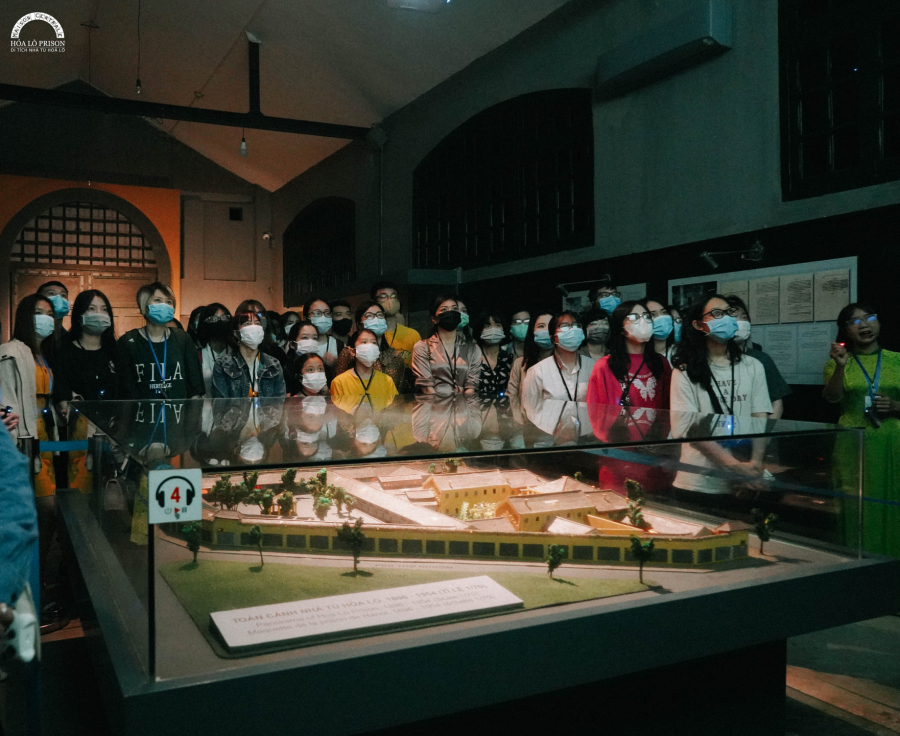
A tour of Hoa Lo Prison (Hanoi)
Under the management of a team of young admins, the fanpage ofHoa Lo Prison Historical SiteSince around the end of 2020, it has become a social media phenomenon. With simple yet surprising and witty content, readers are inspired and their perspective on a revolutionary historical site, traditionally associated with suffering and endless lectures about war, has completely changed. Each post receives comments from people inviting others to visit. This demonstrates that young people with fresh thinking, passion, and aspirations are challenging traditional methods of teaching and learning history. However, with many limitations in terms of finance and authority, how far will the reach of this wave of young historians extend? Hopefully, it will be enough to awaken the major media outlets, education administrators, and cultural leaders.