VI
VI


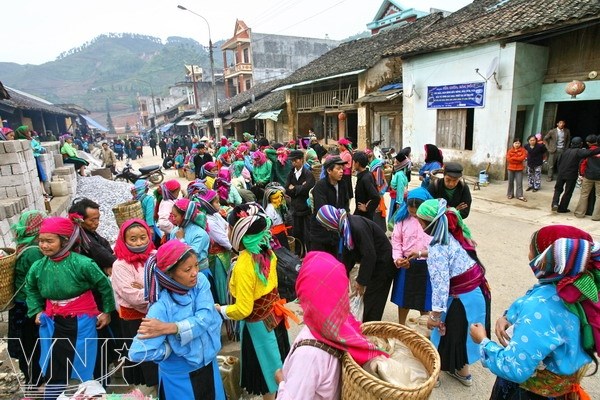
Located at an altitude of over 1,000 meters above sea level, the ancient town of Dong Van emerges from the mist with a strangely ethereal and mystical charm. Compared to the ancient towns of Hoi An and Hanoi, Dong Van is not the oldest, nor is it the largest in scale. However, it possesses unique characteristics and reflects the distinct identity of the inhabitants of this rocky plateau region.
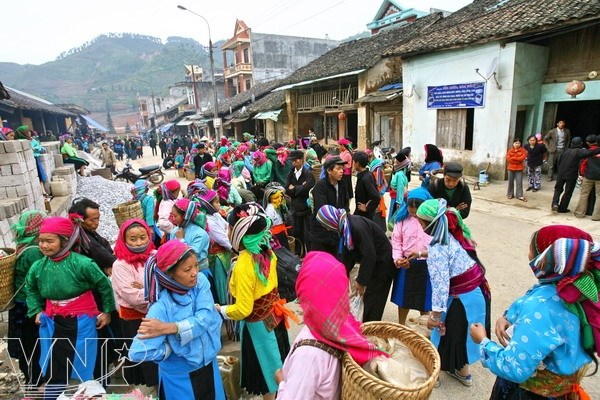
The old town of Dong Van is bustling with activity and vibrant with the colors of traditional brocade fabrics.
Unique architectural structures, such as the market, are constructed from meticulously carved stone slabs. The imposing and sturdy market district, nestled in the heart of the plateau valley, stands out as a striking feature.
The Dong Van Market, built between 1925 and 1928, stands majestically on the Dong Van rocky plateau. Opposite the market, a row of closely spaced houses stretches along small roads winding along the mountainside, forming a cluster of houses nestled amidst the plateau's landscape.
Tiled roofs, stone floors, and earthen walls are what one can see of the traditional architecture and construction of the local people. Inside the houses, the pillars are made of ironwood, and the patterns on them are elaborately carved.

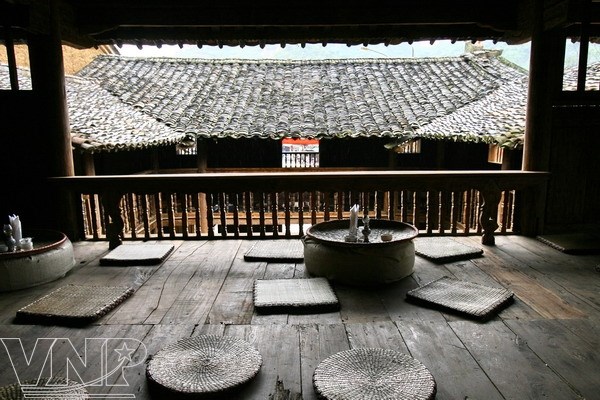
An old house in the old town of Dong Van.
Sitting inside the house, admiring the artistic talents of the mountain people, feels like being immersed in a living space that is both simple, rustic, and yet very poetic.
Viewed from above, the old town, with approximately 18 houses over 100 years old, runs along the market, creating a harmonious blend of mist and jagged limestone mountains. Many of these old houses were completed by local craftsmen and artisans from Sichuan (China) in the early 20th century, shaping the basic appearance of the Dong Van Old Town today.
Overall, the architectural style of Dong Van Old Town shows a blend of traditional local architecture and Chinese architecture. The residents of the old town make a living through farming and petty trading; life is still difficult, yet on Sundays and during Lunar New Year holidays, every house in the town hangs lanterns.
The sound of young men and women returning to the market, the laughter, the sounds of flutes and singing created a festive atmosphere for the entire neighborhood.
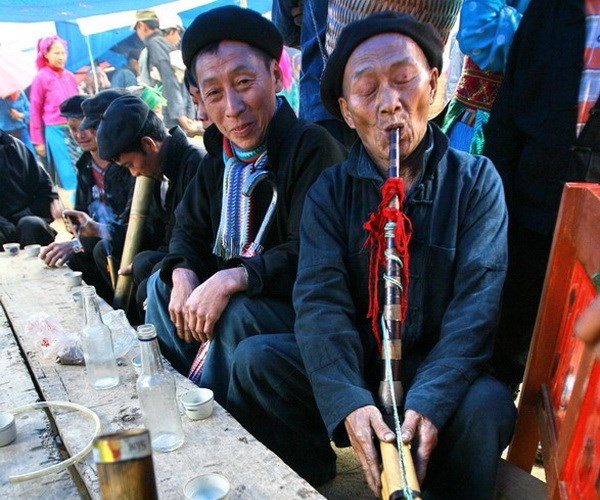
Improvising with the Hmong flute
Tourists are amazed and delighted by the singing, the vibrant colors of life, and the local products such as brocade fabrics, flutes, and honey displayed in front of each house, enticing them to stroll around and shop.
The cluster of old town streets, with its distinctive architecture and cultural life, is like a brushstroke by a talented artist on a vast canvas of stone.