VI
VI


Corn - the golden grain of the rocky mountains
In recent years, due to limited land and rocky terrain, rice cultivation has been difficult, making corn the staple crop of the Mong ethnic group in Tuyen Quang province. Corn kernels are present in daily meals in many forms such as men men (corn porridge), corn cakes, and corn porridge. Corn pho was born from the need to make the most of readily available ingredients, while also opening up a new direction for highland cuisine.

Hand-rolled corn noodles are dried on bamboo racks before being sliced into strands.
Unlike traditional pho made from rice, corn pho is made from local field corn – a type of corn with a high starch content, firm kernels, and a fragrant aroma. After harvesting, the corn is dried, the kernels are separated, soaked in water, and then ground into a fine powder. The process of making the noodles requires considerable experience, as corn flour is harder to bind and more prone to breaking than rice flour. The cook must adjust the water ratio, temperature, and cooking time so that the noodles are not too thick but still have the right chewiness.


The chef manually makes the corn noodles in a steamer, a process that requires high skill because corn flour is more difficult to bind together than rice flour.
"To make pho entirely from corn, it's essential to use unprocessed corn from the highlands. Corn from the lowlands won't work," said Nguyen Ha Vinh, adding that he buys the ingredients directly from local Hmong people.
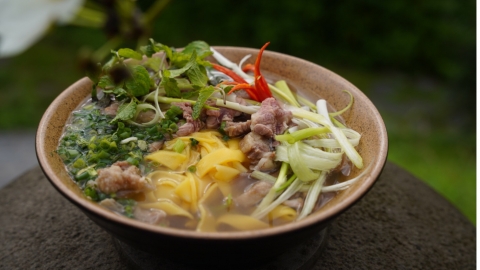
The finished product consists of rice noodles with a natural light yellow color, a slightly rough surface, and a mild corn aroma. When dipped in hot broth, the noodles soften but do not become mushy, retaining their characteristic elasticity.
A bowl of pho, two culinary traditions intersect.
While the noodles themselves bear the distinct mark of the highlands, the broth reflects the fusion of mountain and lowland cuisine. Corn pho broth is typically simmered from beef bones for many hours, with added cinnamon, star anise, cardamom, and roasted ginger to create a subtly sweet flavor and delicate aroma.


Compared to Hanoi pho, which has a clear and light flavor, corn pho broth is usually richer to balance the nutty taste of the corn noodles. Commonly served with meats include beef brisket, flank, or thinly sliced cooked beef. Some restaurants also use buffalo meat, a familiar ingredient in the highlands, to create a richer and firmer flavor. The accompanying vegetables are simple, mainly scallions and cilantro. The bowl of pho isn't elaborate in appearance, but it's full of flavor.
The taste of experience
For locals, corn pho is not a luxury dish but a warm breakfast on cold days. For tourists, it's a culinary experience associated with a sense of discovery. Each bowl of corn pho costs between 35,000 and 80,000 VND, a price considered reasonable for the food scene in Ha Giang.


A steaming bowl of corn pho with golden noodles that have the natural sweetness of corn, a broth infused with the aroma of cinnamon and star anise, and succulent beef.
In the chilly weather of Tuyen Quang, sitting in a small, highland-style restaurant and enjoying a steaming bowl of corn pho, diners can easily appreciate the sweetness of the corn, the richness of the meat, and the warmth emanating from the broth.


Many people who try corn pho for the first time are surprised because the noodles aren't as soft and smooth as rice pho. However, this very difference is what makes it unique. The mild, nutty flavor of the corn makes the dish more filling, suitable for the cold climate and the strenuous work of the highlands.
Local dishes become tourism products.
With the desire to create more dishes from corn kernels, in 2024, Mr. Nguyen Ha Vinh, the owner of a corn pho restaurant near the Ha Giang Museum (Ha Giang 1 ward), researched and purchased the production rights from Quan Ba commune. Building on that foundation, the restaurant continued to innovate and perfect corn-based dishes, including not only pho but also rice rolls, men men (corn porridge), and more, serving customers all day long.

The restaurant's interior is decorated with elements that evoke H'Mông culture.
Corn pho is gradually becoming considered one of the "new representatives" of Ha Giang cuisine, alongside thang co, au tau porridge, and buckwheat triangular cakes. According to culinary experts, the value of this dish lies not only in its flavor, but also in the story of its ingredients and the cultural context behind it.
Despite its growing popularity, many corn pho makers still maintain traditional methods to preserve its flavor. They believe that if completely industrialized, the pho noodles would lose their natural corn aroma and rustic charm.
More than just a variation of pho, corn pho is a testament to the adaptability and creativity of Vietnamese cuisine. From corn grown on rocky soil, the people of Ha Giang have created a dish that adds a unique color to the regional culinary map.