VI
VI


Nowadays, many restaurants feature a fusion style, combining traditional and modern elements, or European and Asian cuisine, vegetarian and natural options, etc. This is because young people (who account for a significant portion of food spending, over 30%) are eager to explore new and exciting culinary experiences. Dishes are often cooked more simply but presented attractively, creating a sense of art. Chefs add a touch of flair to the dishes, eliminating monotony.
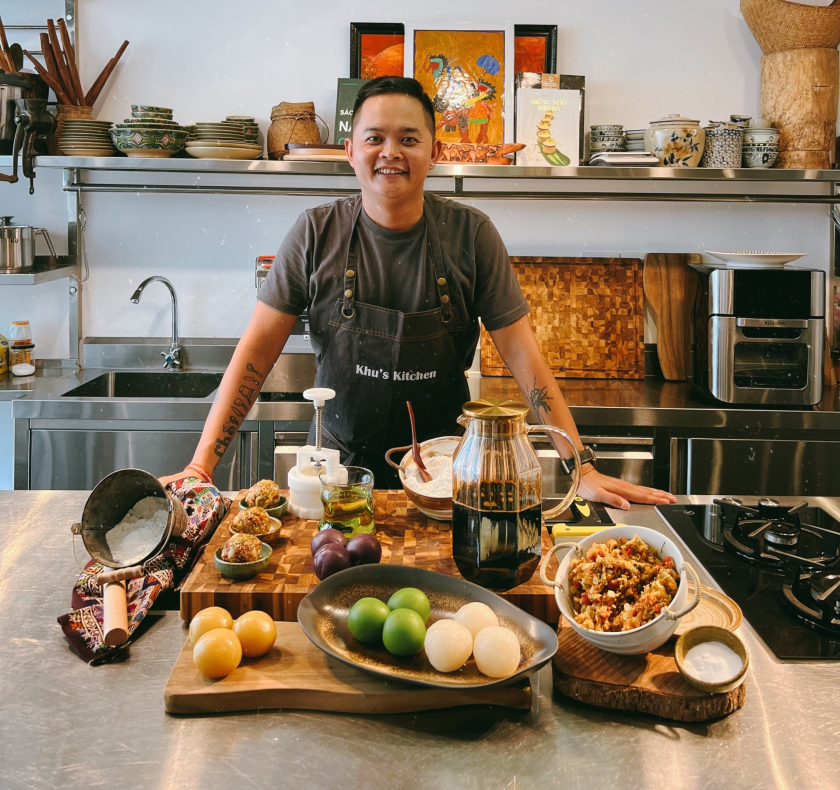
"To create an innovative dish, we need to remember the formula: retain 80% of the original recipe's value and add 20% variation."
“First, we must understand the origin of the dish and its ingredients to see if they harmonize when combined, avoiding combinations of spices that could affect health. Because there are many incompatible food combinations. To create a modernized dish, we need to remember the formula: retain 80% of the original recipe's value and add 20% variation. That's how you create a modernized combination,” Chef Nguyen Van Khu further shared. Below are three not-too-complicated dishes that the chef is very proud to share with the audience.
Braised Iberico pork cheek with quail eggs
Ingredient:
- Iberico Pork Cheeks 400g
- Fried quail eggs (12-15 eggs)
- 30g caramel sauce, 70g fish sauce
- 4g MSG, 1-2g black pepper
- Filtered water 600g
- Green onions and chili peppers for garnish.
Making:

- Boil the quail eggs until cooked, peel them, wash them thoroughly, and then fry them until golden brown.
- Cut the meat into bite-sized pieces and stir-fry in oil until browned. Then add fish sauce and caramel sauce, stir well until the flavors are absorbed, and finally add water and simmer over low heat for about an hour.
- Season to taste, add the fried quail eggs and cook for 10 minutes, then remove from heat and place on a plate. Garnish with some chopped scallions and chili peppers, and you have a very appetizing dish that goes well with rice.
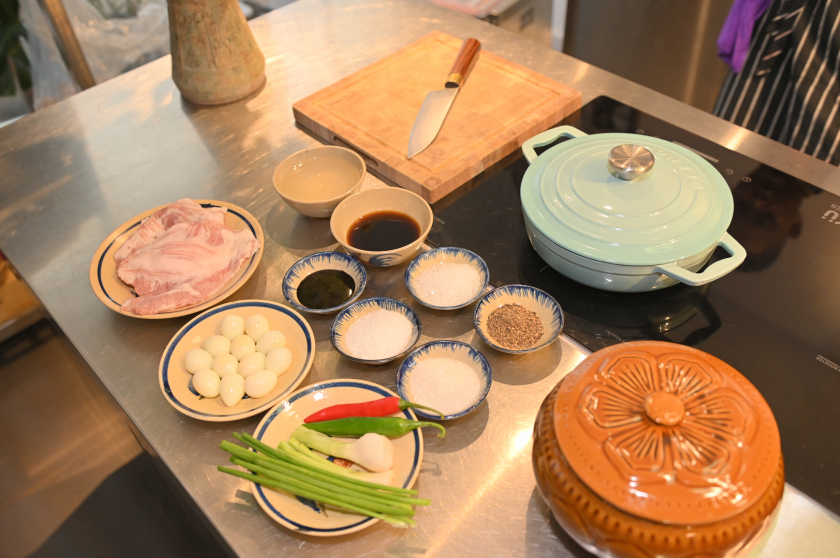
Ingredients for the dish "Iberico pork cheek braised in soy sauce with quail eggs".
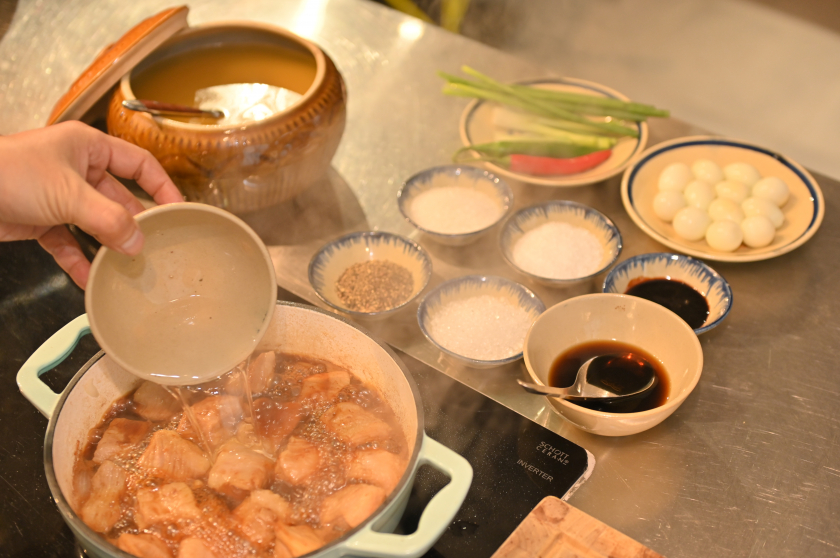
The process doesn't need to be complicated, but it does require careful attention.
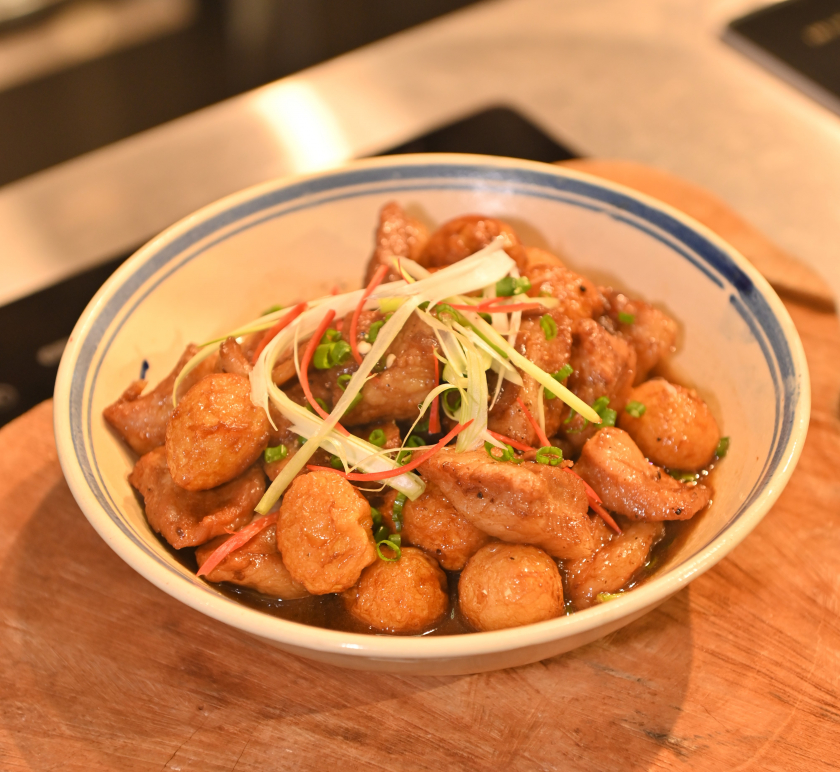
The finished dish is visually appealing and goes perfectly with rice.
Grilled abalone with scallion sauce
Ingredient:
- Abalone, 10-12 large pieces
- 80g fresh onions, sliced; 80g red onions, thinly sliced.
- 150g pork fat
- 1 gram of pepper, 2 grams of sugar, 2 grams of MSG, 15 grams of fish sauce
- 20g finely chopped water spinach, 10g scallions, 1/2 finely chopped chili pepper.
Making:
- Sauté the lard with shallots and fresh onions for 10-12 minutes, then add the seasonings and stir well. Next, add the chopped scallions and Vietnamese coriander, and a little chopped chili. The sauce is now complete.
- Clean the abalone by scrubbing off any black parts, then remove it from its shell, discarding the dirt. Next, score the surface and spread the scallion and dill sauce over it, then grill until cooked through. Remember to brush on more sauce while grilling.
- Arrange on a plate and then enjoy.
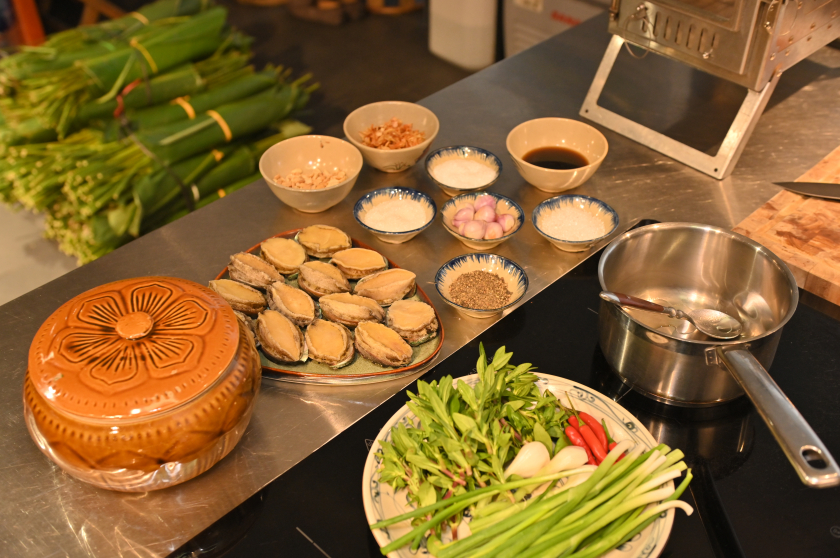
This dish requires finesse, from the ingredients to the cooking method.
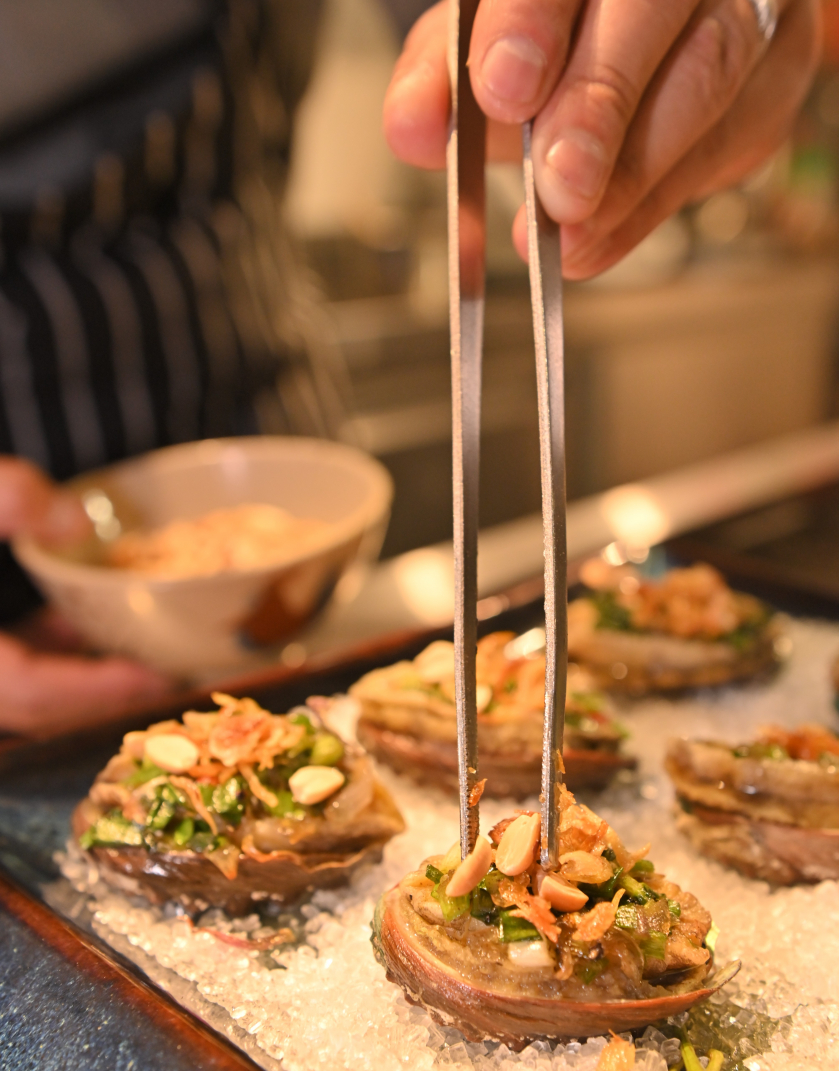
Even in the final step, the chef still needs to be careful.
Fried Hidasan beef marinated in five spices
Ingredient:
- Hidasan Beef 250g
- Onion, garlic, lemongrass, chili 30g, soy sauce 10g, oyster sauce 10g
- 2g sugar, 2g MSG, a little five-spice powder
- 2g finely ground chili powder, 1-2g salt, 60g crispy frying batter.
Making:
- Crush the onions, garlic, chili peppers, and lemongrass until finely minced, then add all the seasonings and mix well. Cut the beef into bite-sized squares and marinate for 30 minutes.
- Next, coat the beef slices evenly with the batter, then fry them slowly in oil until cooked through. Avoid letting the oil get too hot, as this can burn the outer batter.
- Remove from the oil and drain, then serve with pickled vegetables and a dipping sauce of fish sauce, garlic, and chili.
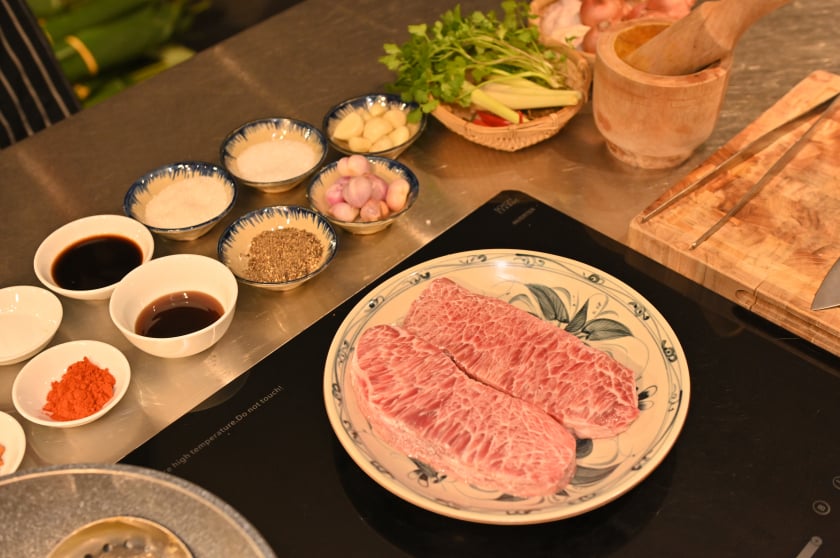
The last dish was also the most appealing.
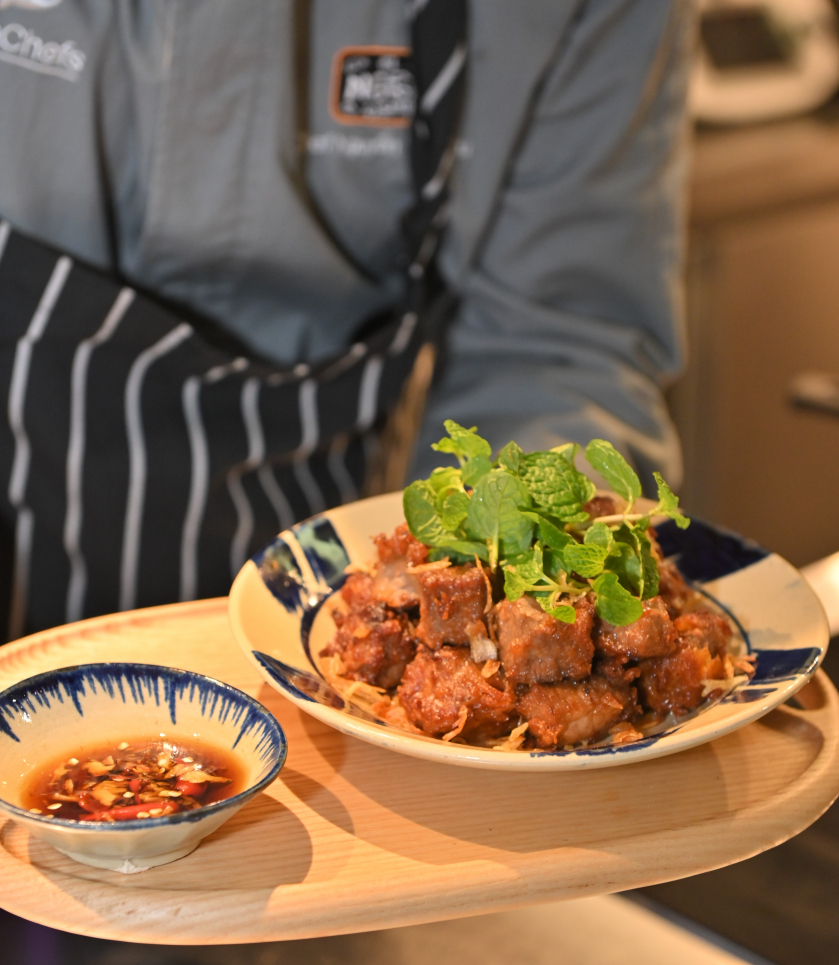
When Japanese ingredients combine with Vietnamese flavors.
“New combinations will help prevent everyday dishes from becoming boring. Try using familiar everyday spices and adding a few variations from countries like China, Thailand, Japan… to your dishes. The food becomes richer and gives you a different experience. But whether you are passionate about European, Asian, vegetarian, or fusion cuisine… for Vietnamese people, the flavors of Vietnam will always be the most beloved,” chef Nguyen Van Khu further shared.