VI
VI


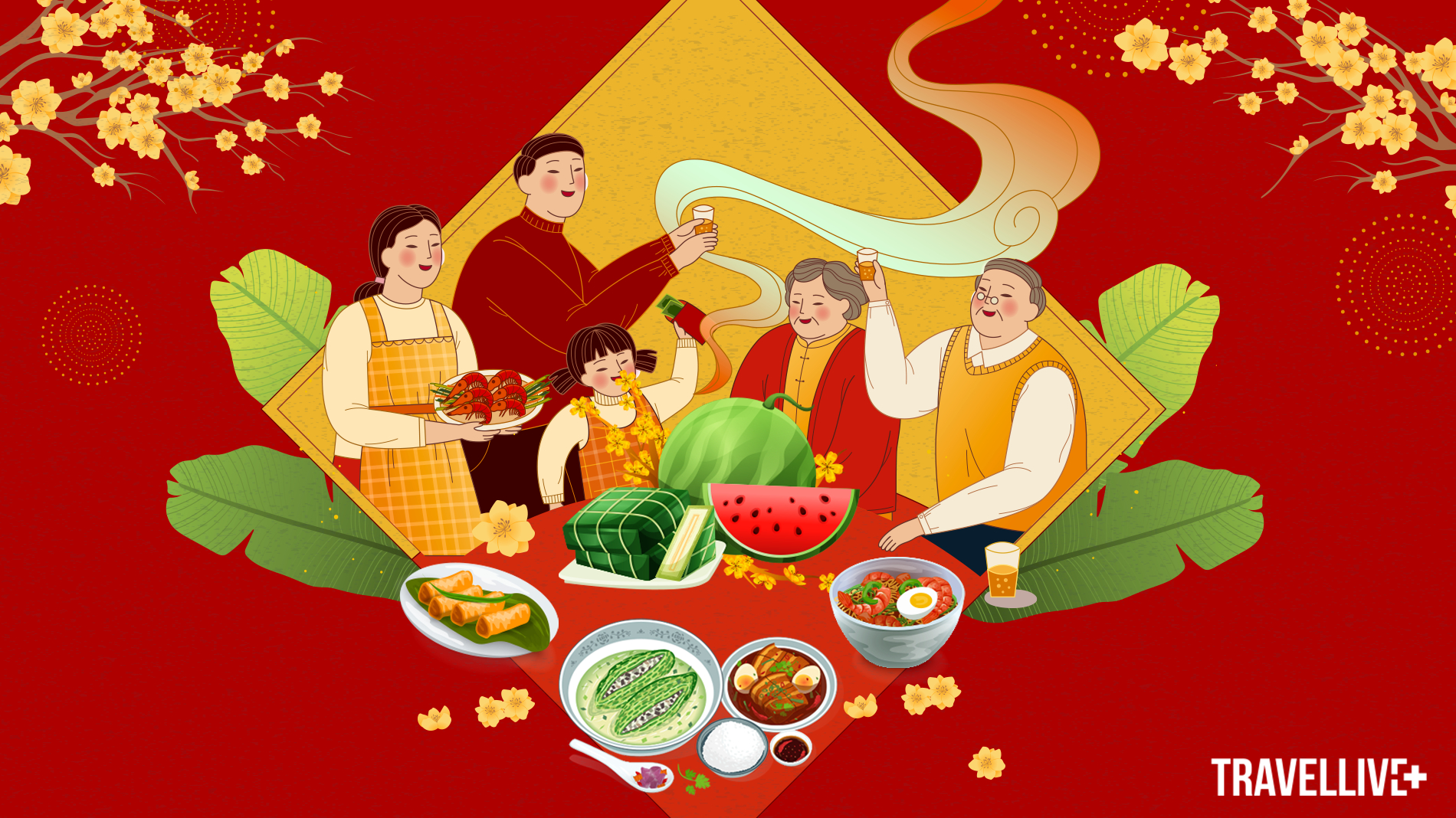
Lunar New Year is a time for family reunions, a time when every person far from home eagerly counts down the days until they can return to gather around the dinner table and celebrate the new year in a warm and happy atmosphere with their family and loved ones.
Traditional Tet (Lunar New Year) cuisine is a highly diverse, rich, and distinctly Vietnamese cultural feature. Besides sticky rice cakes (banh chung), pickled onions (dua hanh), and the five-fruit platter, each region boasts its own unique specialties. Depending on the region and customs, the Tet feast will vary in scale, reflecting local traditions and featuring many special and appealing dishes.
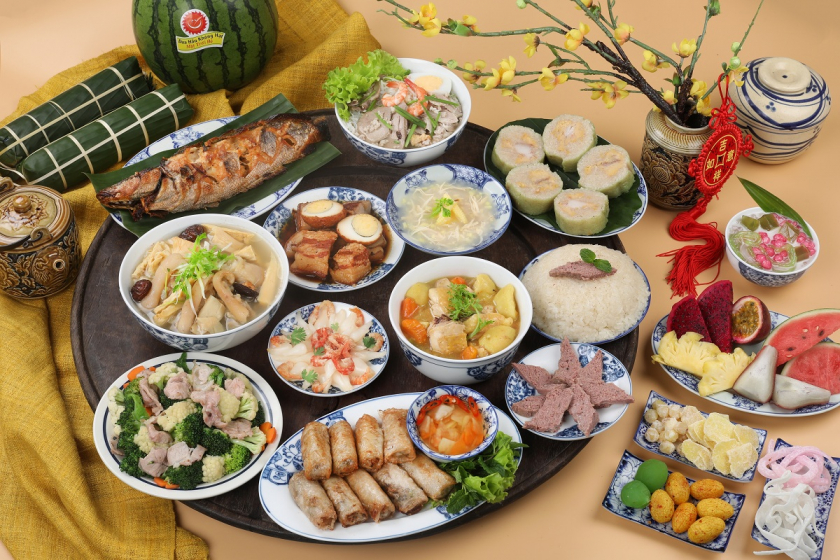
Vietnamese cuisine during Tet (Lunar New Year) features countless specialties from all three regions.
North
Traditional Tet meals in Northern Vietnam always emphasize presentation and showcase a subtle, skillful, and harmonious combination of soups and dry dishes, meat and vegetables, and especially nutritious dishes.
To enrich the menu during the early days of spring, people choose many dishes such as: Sa Pa forest shiitake mushrooms, dried bamboo shoots, upland rice (Tuyen Quang), Vu Dai village braised fish (Nam Dinh), Quang Ninh squid cake, Thanh Hoa fermented pork sausage, Uoc Le pork sausage (Hanoi), Dong Tao chicken (Hung Yen)... making the Tet feast increasingly abundant.
First and foremost is the banh chung (sticky rice cake). This is an indispensable dish during Tet (Vietnamese Lunar New Year) because it has a long history in traditional Vietnamese cuisine. Banh chung is a harmonious combination of sticky rice, mung beans, mildly spicy pepper, and rich pork fat, creating a truly unique flavor. Skilled cooks will wrap it directly, but it's more common to use a square wooden mold to give the cake its attractive shape. Banh chung is continuously boiled for 8 to 10 hours to ensure the ingredients are fragrant and flavorful.
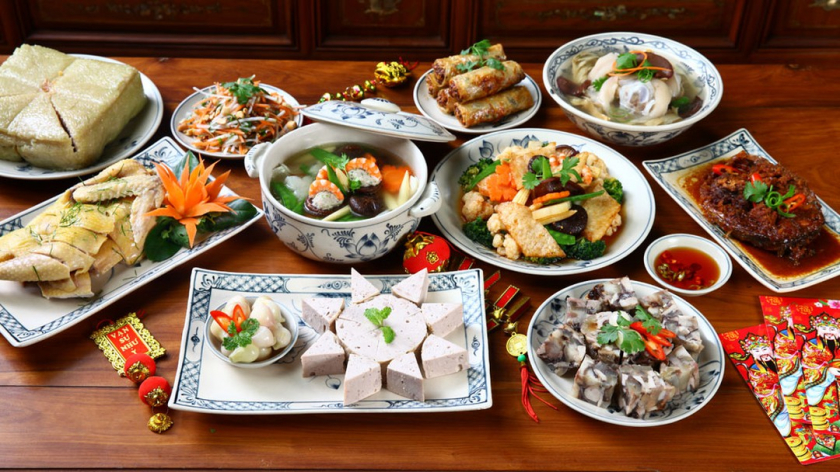
Traditional Tet meals in Northern Vietnam always emphasize presentation and showcase a refined, skillful, and harmonious combination of elements.
Next up is sticky rice with gac fruit. This is also an indispensable dish on the Tet (Lunar New Year) feast table of Northern Vietnamese families. Gac sticky rice is made from delicious glutinous rice, mixed with fresh gac fruit and coconut milk, then steamed. Once cooked, the sticky rice will have a beautiful and attractive bright red color. When eating gac sticky rice, you will feel the chewy texture of the glutinous rice, the richness of the coconut milk, and a hint of sweetness from the sugar. The meaning of gac sticky rice is understood from its color. Because it is red, it symbolizes Tet, the color of happiness, and the color of a lucky and prosperous new year.
Boiled chicken is a familiar dish that can be enjoyed anytime. However, it's indispensable during Tet (Vietnamese New Year) as it's offered to ancestors and on New Year's Eve in Northern Vietnam, symbolizing a wish for a prosperous and abundant year. According to ancient beliefs, chicken represents integrity and strength. Therefore, it's present at most feasts, not only because of its folk significance but simply because of its delicious taste and ease of eating. The bright yellow, tender, and fragrant chicken meat, dipped in a mixture of salt, lime, and chili, creates a familiar and comforting flavor.
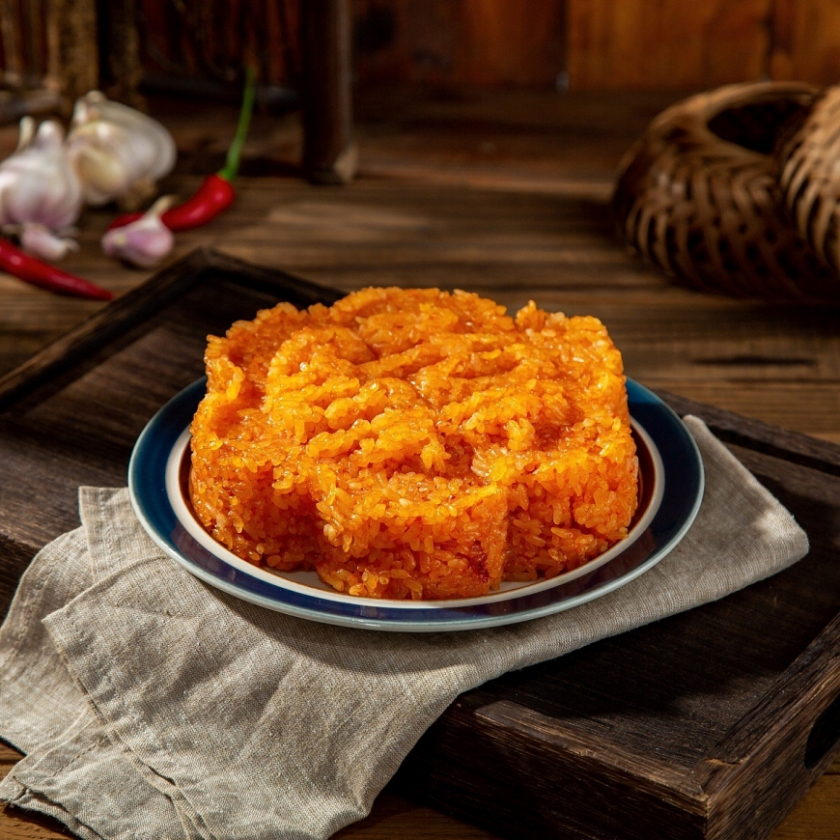
Sticky rice with gac fruit is a symbolic color of Tet (Vietnamese New Year), representing happiness and a lucky, prosperous new year.
Mentioning traditional Tet dishes in Northern Vietnam without including gio (pork sausage) would be a great oversight. This dish symbolizes "harmony within and peace without, blessings and prosperity filling the home," so it's often placed in the center of the dining table. The gio is made from pork, pounded finely in a stone mortar, then wrapped in a plastic bag and further wrapped in banana leaves before being steamed. These crispy, chewy, fragrant, and sweet gio slices are not only a favorite Tet dish but also make a great gift for friends and relatives.

Although still a very familiar dish in daily life, for people in Northern Vietnam, especially those from old Hanoi, fried spring rolls (nem rán) are an indispensable part of their Tet (Lunar New Year) feast. These spring rolls are golden brown and crispy on the outside, and filled with meat, wood ear mushrooms, and bean sprouts on the inside.
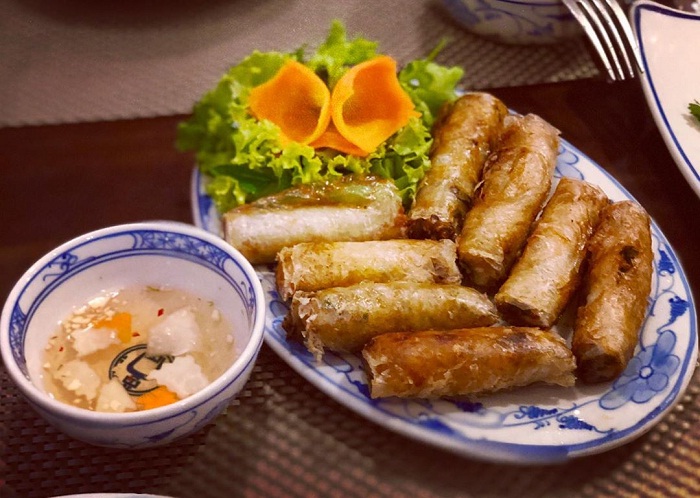
Crispy fried spring rolls
Northern Vietnam boasts a wide variety of delicious dishes, from exquisite delicacies to simple, rustic meals. Among them, pickled onions hold a particularly important place, enjoyed by many and always present on the Tet (Lunar New Year) feast table. This is why our ancestors used to say: "Fatty meat, pickled onions, and red couplets." The crunchy, slightly sour pickled onions not only provide a delicious taste but also aid digestion.
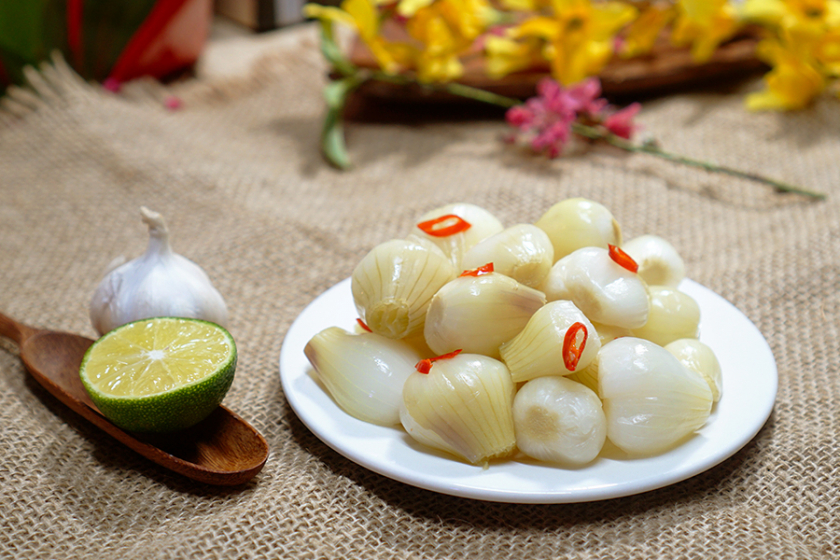
The mildly sour and spicy flavor of pickled onions is even more delicious when eaten with sticky rice cakes or frozen meat, making it incredibly appetizing.
Besides, jellied meat is a traditional, unique, and quintessential Vietnamese dish, especially popular in the North. It becomes even more impressive when served in cold weather. The jellied meat is delicious, soft, refreshing, and not greasy. It's often served with pickled onions and shallots. Jellied meat is usually made with pork trotters, ears, and skin, and is refrigerated until it solidifies, resulting in a smooth, white layer of fat on the surface. Before eating, take the jellied meat out, cut it into thin slices, or use a sharp knife to loosen the meat from the mold and invert it onto a plate to enjoy.
Central region
In Central Vietnam, familiar dishes for Tet (Lunar New Year) include banh tet (sticky rice cake), sour shrimp, gio bo (beef sausage), dua mon (pickled vegetables), marinated meat, banh to (rice cake), banh in (rice flour cake), nem chua (fermented pork sausage)... Among them, sour shrimp is a famous specialty of Hue.
Besides banh chung, banh tet is also an indispensable specialty during Tet (Lunar New Year) in Central Vietnam. Banh tet is wrapped in banana leaves instead of dong leaves like banh chung. It comes with two types of fillings: savory and sweet. The sweet version contains only mung beans, while the savory version includes pork. The cake is wrapped in a cylindrical shape, not square like banh chung from Northern Vietnam.
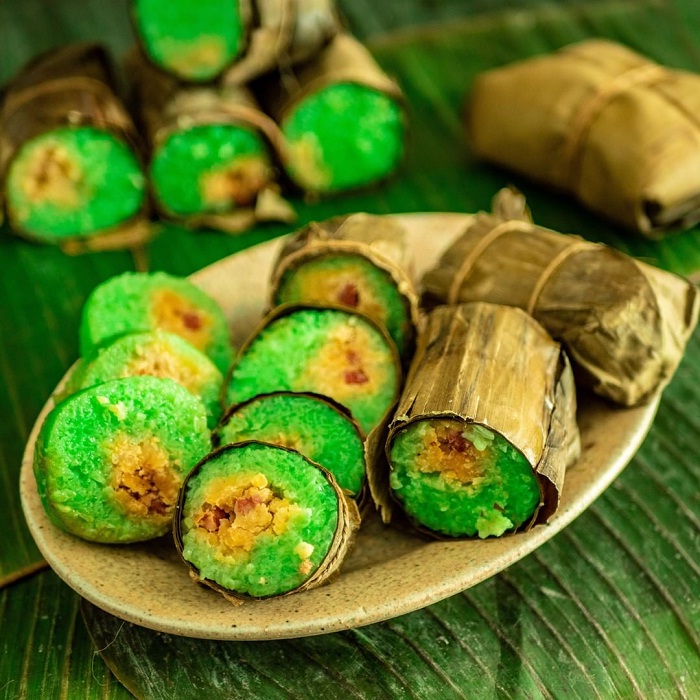
Central Vietnamese sticky rice cake wrapped in pandan leaves.
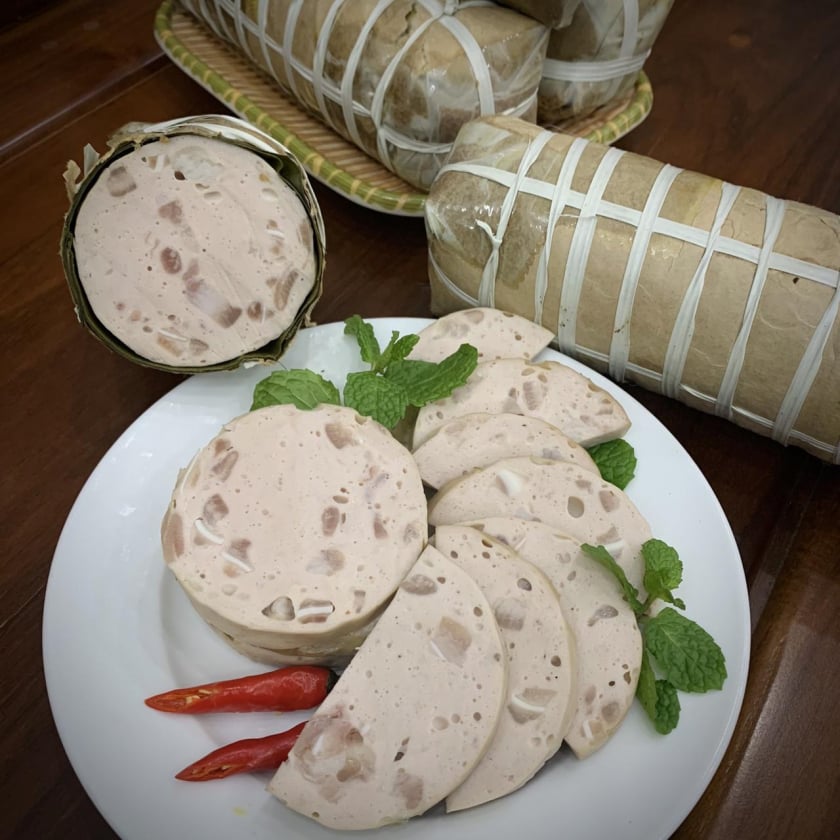
Beef sausage from Central Vietnam differs from that of Southern and Northern Vietnam in that it contains more black pepper, giving it a very fragrant aroma.
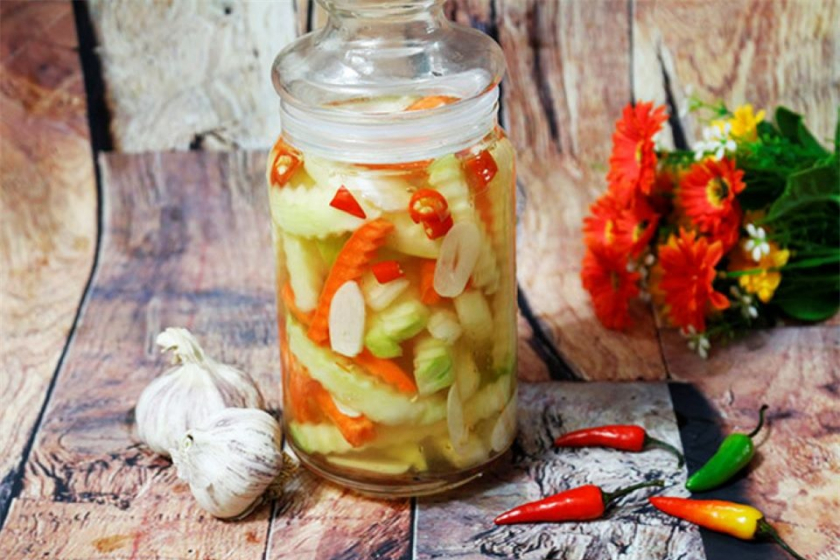
Pickled vegetables are also an effective way for people in Central Vietnam to combat food fatigue during Tet (Lunar New Year).
Pickled vegetables are an indispensable side dish in Central Vietnamese Tet (Lunar New Year) cuisine. They are also an effective way to counteract the richness of other dishes, often served alongside banh chung, banh tet, or rice. Pickled vegetables can be made from various root vegetables such as kohlrabi and carrots. Making pickled vegetables isn't difficult, but it requires careful and meticulous preparation to achieve a perfect result in terms of flavor, color, and crispness.
In addition, beef sausage is also an indispensable dish on the list of Tet (Lunar New Year) dishes in Central Vietnam. Central Vietnamese beef sausage differs from that of the South and North in that it contains more black pepper, making it very fragrant. Central Vietnamese beef sausage uses only beef, without adding any other ingredients to enhance the flavor, resulting in a very rich beef taste. A special feature is that the beef used to make the sausage usually has little fat to make the finished product softer.
Next is pork marinated in fish sauce. This is considered a specialty dish among the delicious Tet (Lunar New Year) dishes of Central Vietnam. For people in Central Vietnam, besides the sticky rice cakes (banh tet and banh chung) and pickled vegetables, a jar of pork marinated in fish sauce is a must-have during Tet. Without the sweet and salty flavor of this dish, the Tet meal seems incomplete. Pork marinated in fish sauce has a sweet and salty taste, and it pairs well with many different dishes.
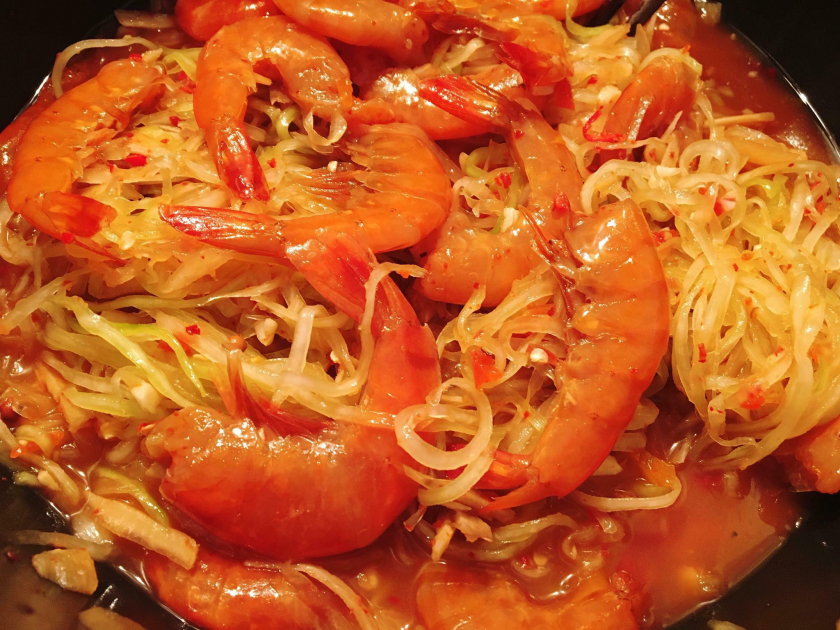
Fermented shrimp is a famous specialty of Hue.
It can be said that people in Central Vietnam love to use their specialties to make dishes for Tet (Lunar New Year). Sour shrimp is one such dish. This dish is mainly found in Hue. The sweet and savory taste of shrimp, the richness of pork, the spiciness of galangal, garlic, and chili... create an attractive dish that anyone who tries it once will remember forever.
Southern
During Tet (Vietnamese New Year), the offering trays or dining tables of people in Southern Vietnam feature many delicious dishes such as banh tet (sticky rice cake), braised pork, spring rolls, stuffed bitter melon, roasted pork, sausages, etc.
Southern Vietnamese bánh tét (sticky rice cake) is incredibly diverse. It's not just filled with pork and mung beans; it's also made in many variations such as vegetarian bánh tét (only black beans, grated coconut mixed with sticky rice); sweet bánh tét (with mung bean or banana filling); bánh tét with mixed fillings (dried shrimp, salted egg, sausage, shiitake mushrooms, etc.), and especially bánh tét wrapped in purple leaves, gac leaves, and five-colored bánh tét.
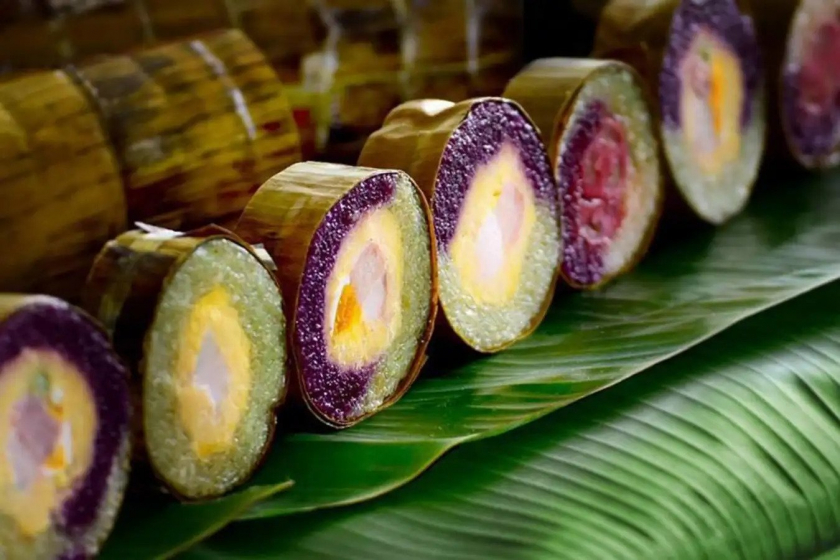
The visually appealing purple sticky rice cake (Bánh tét lá cẩm) from Southern Vietnam.
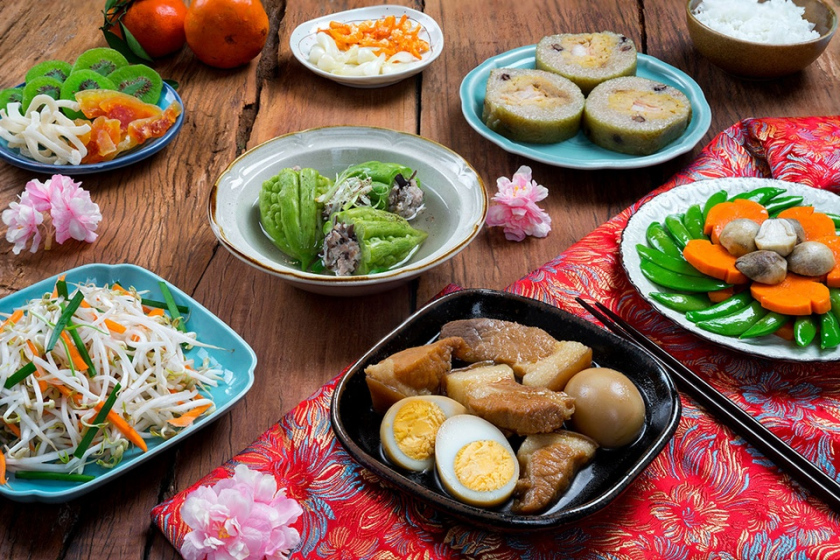
A traditional Southern Vietnamese meal during the Lunar New Year.
In Southern Vietnam, a pot of braised pork belly is an indispensable dish during Tet. The pork must be tender, glistening with fat, braised with duck eggs and young coconut water. Symbolizing perfect harmony, sweet happiness, and wealth, this rich, flavorful dish would be incomplete without it, making the Tet feast in Southern Vietnam lose its unique character.
Bitter melon stew with meat is also a signature dish these days. According to folk beliefs, bitter melon soup helps to let go of the hardships of the past year and welcome a prosperous future.
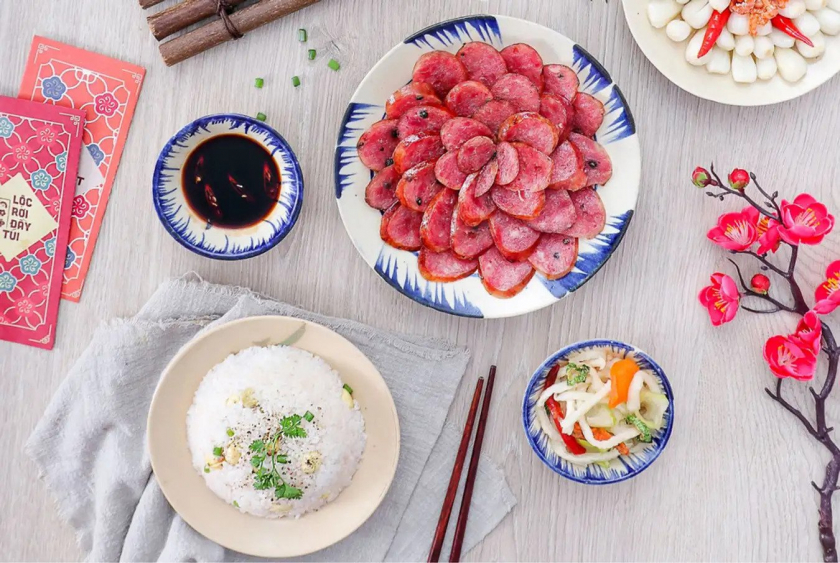
Sausage is also a popular dish among people in Southern Vietnam.
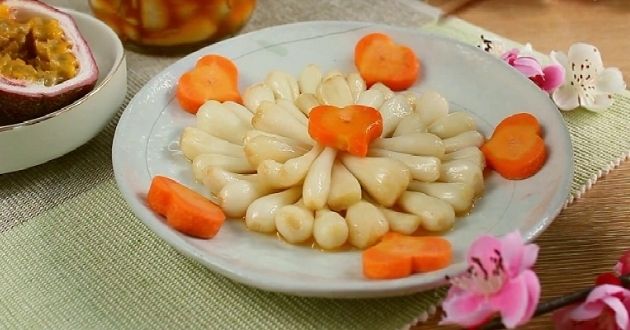
While the North has pickled onions and the Central region has pickled vegetables, the South also has pickled shallots to counteract the richness of other foods during Tet.
Sausage is also a popular dish among people in Southern Vietnam. The red color of fresh sausage symbolizes good luck. Therefore, every Tet holiday, the demand for sausage increases significantly. There are many types of sausage: from fresh, dried, lean, to shrimp, fish… and they can be prepared in many ways such as boiling, frying, or grilling before eating.
While Northern Vietnam has pickled onions and Central Vietnam has pickled vegetables, Southern Vietnam also has pickled shallots to counteract the richness of Tet meals. Shallots are white, small, and slightly longer than onions, and are often used in Tet feasts with the meaning that the new year will bring prosperity and business success.