VI
VI


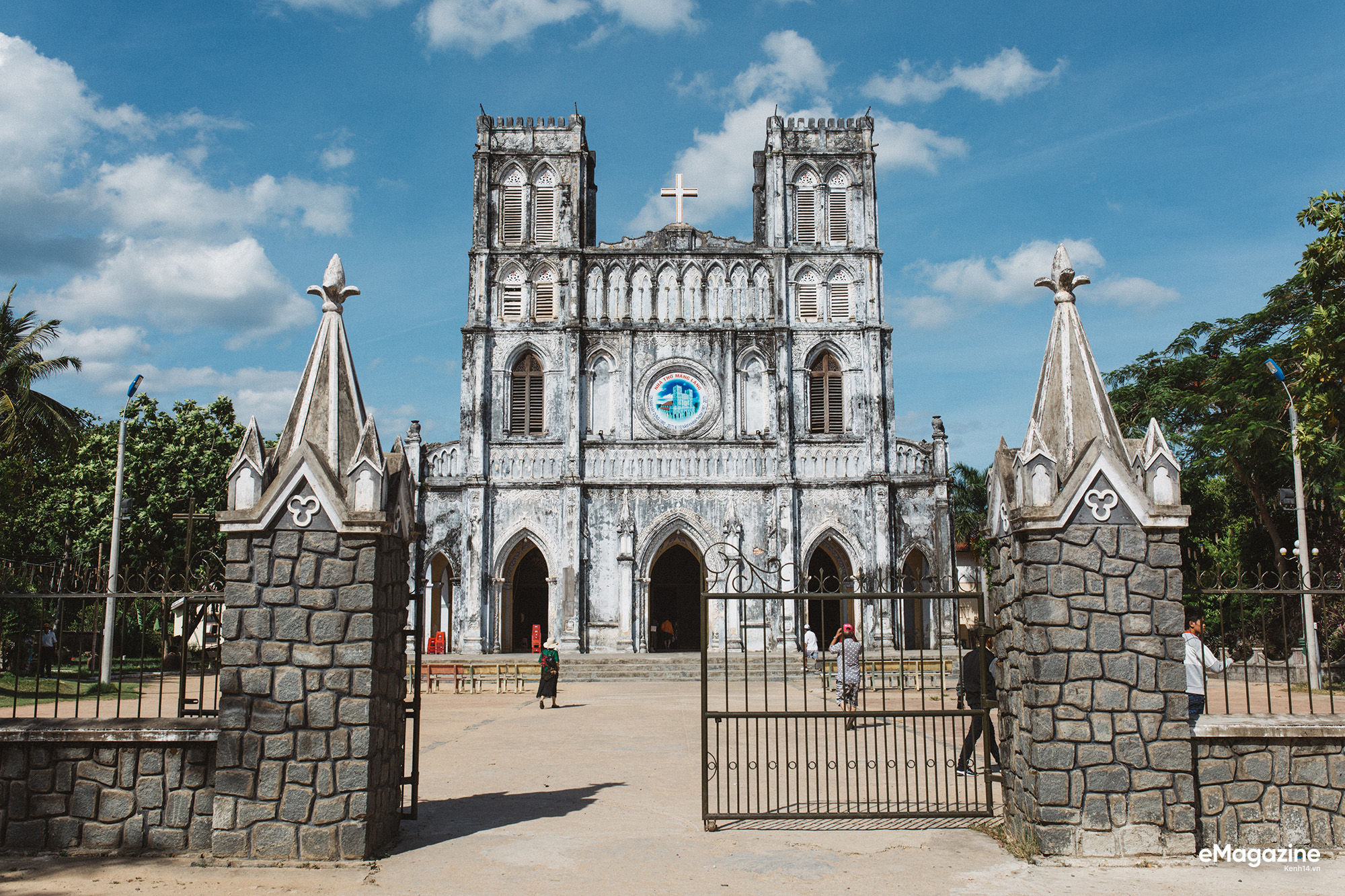
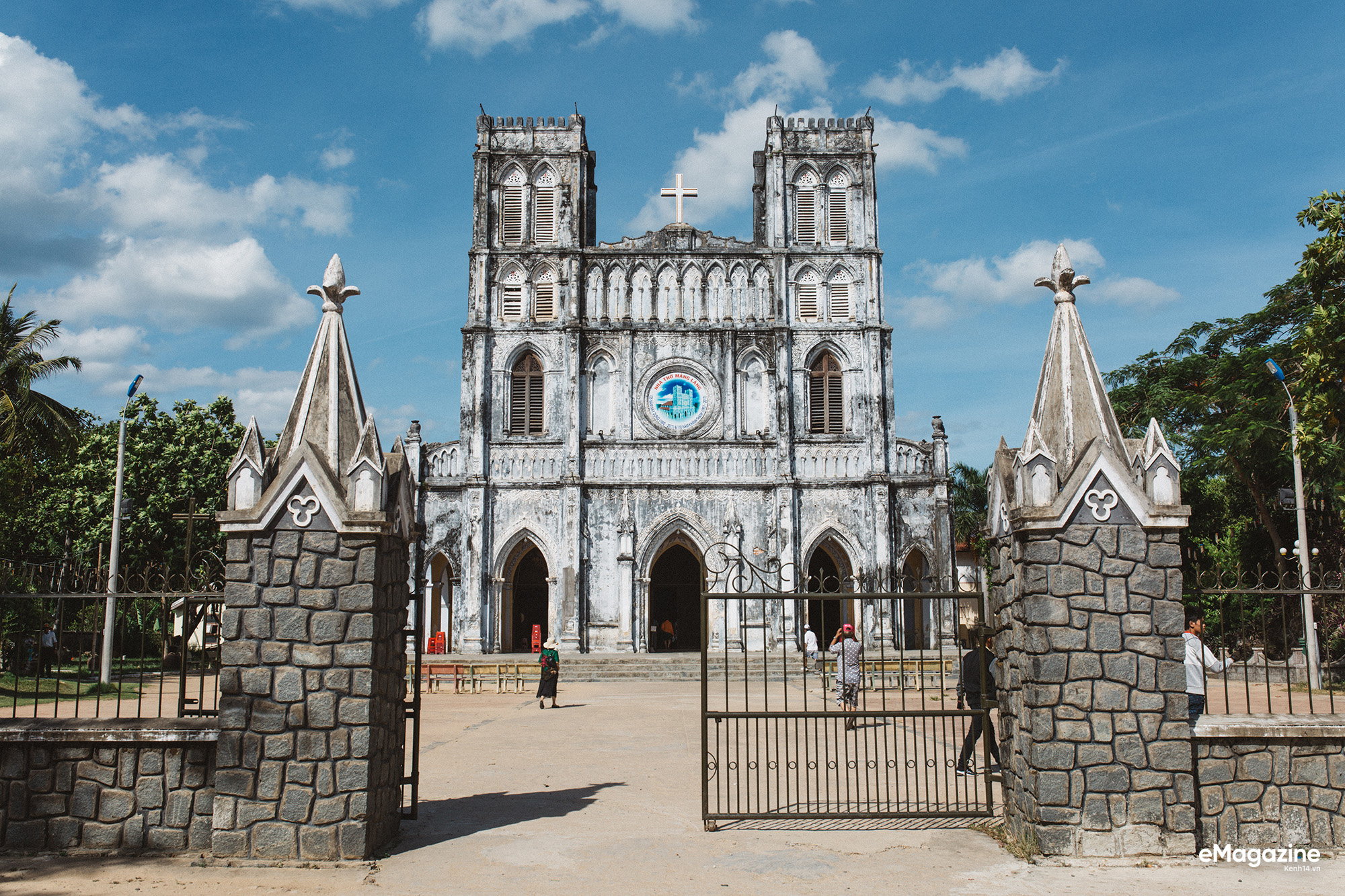
Located 35 km north of Tuy Hoa city, Mang Lang Church was built in 1892 by a Frenchman named Joseph de La Cassagne, also known by his Vietnamese name Co Xuan, the first priest of Mang Lang parish.
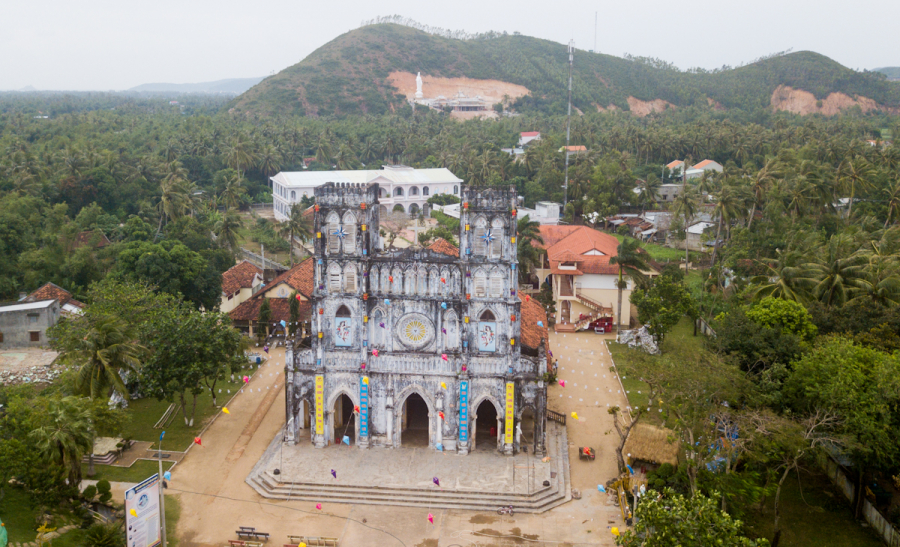
Mang Lang Church impresses with its 19th-century Gothic architectural style.
The church is situated on a 5,000m² plot of land, with a striking facade built in the Gothic architectural style, reflecting strong French artistic influences. On either side are two bell towers, and in the center is a cross covered in moss. The two side aisles of the church are designed in the shape of beautifully stylized bamboo shoots.
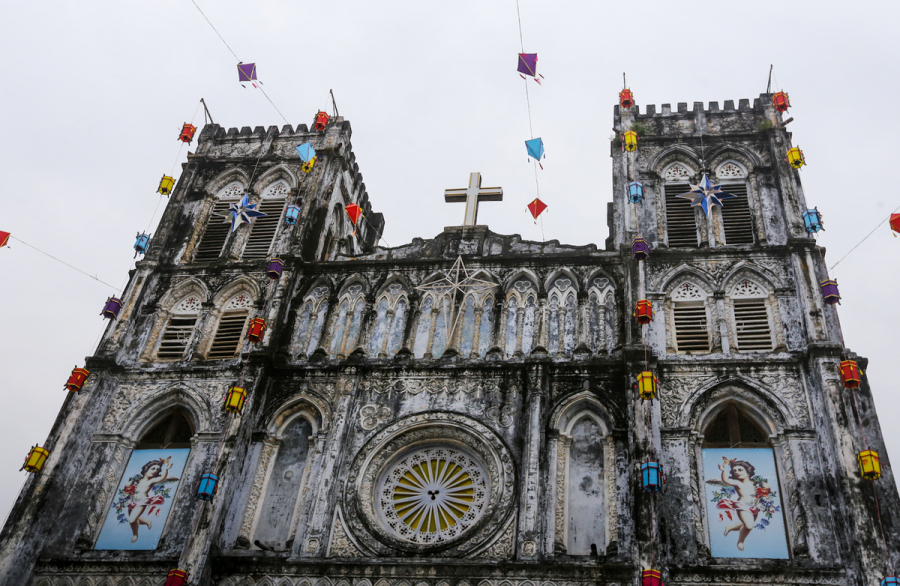
French artistic motifs decorate the church facade.
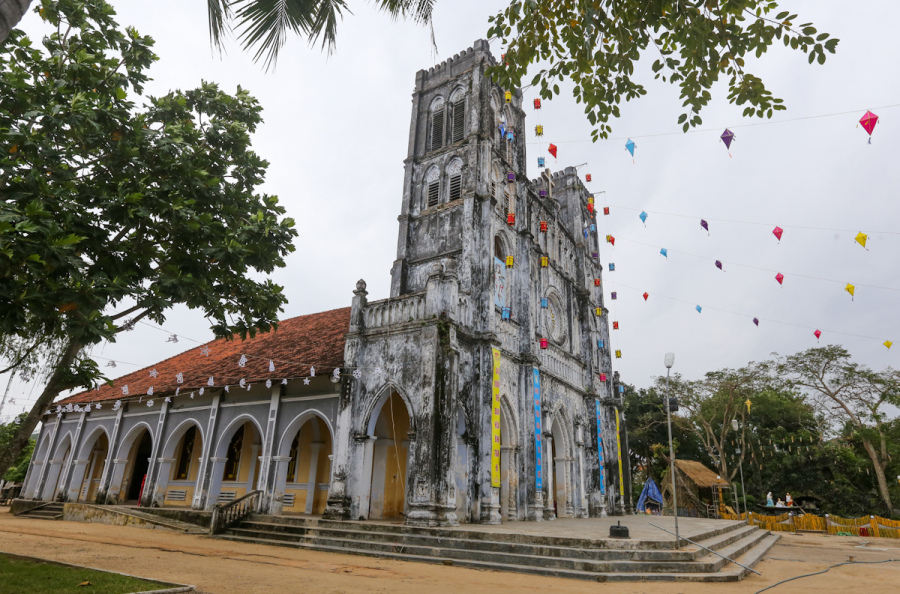
The two sides of the church's corridor are designed in the shape of stylized bamboo shoots.
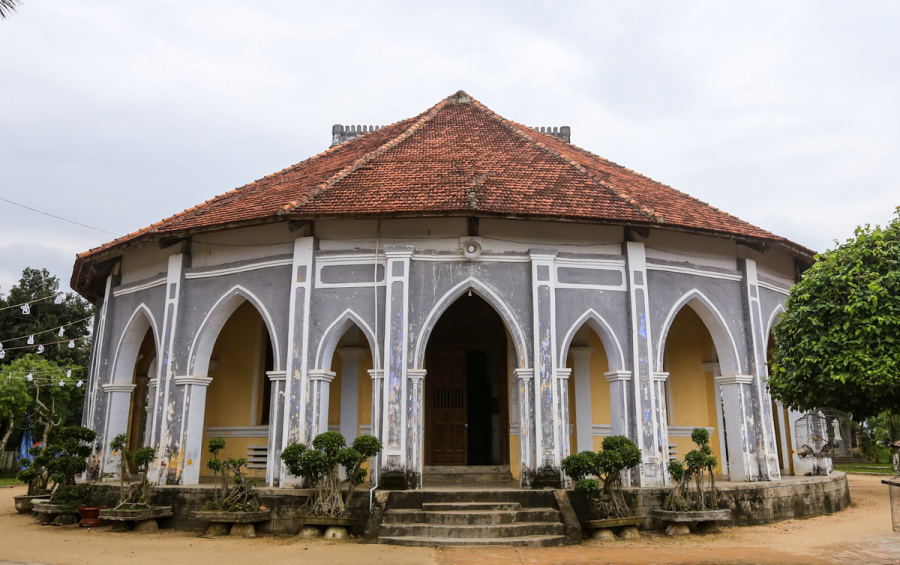
The back of the church is designed in the shape of a prism.
The entire church is situated in a spacious, shady area, shaded by lush greenery and rows of sturdy breadfruit trees. But it is the sanctuary inside that truly overwhelms you with its brightly colored windows, walls painted in a golden-brown hue, and a polished wooden ceiling adorned with antique lamps…

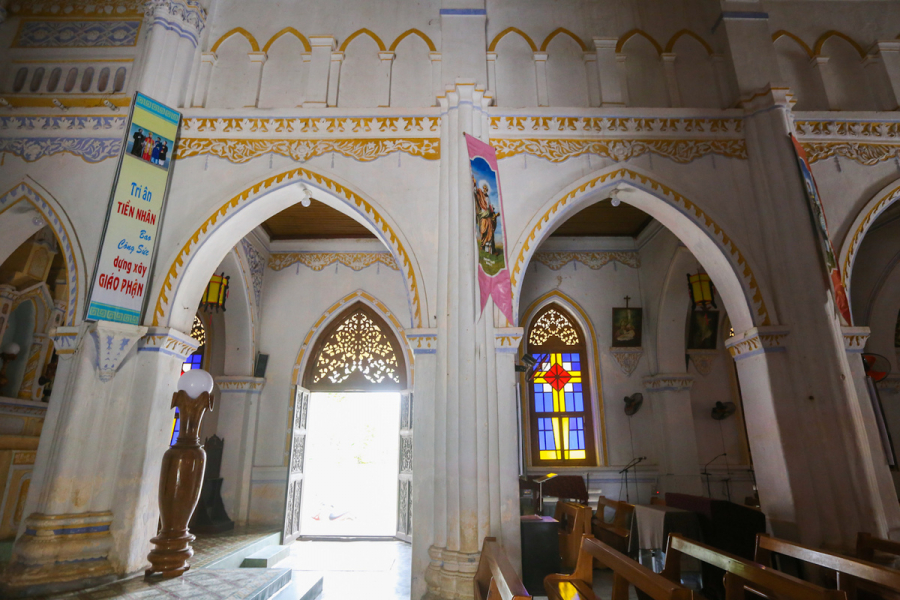
The cathedral as seen through the window.
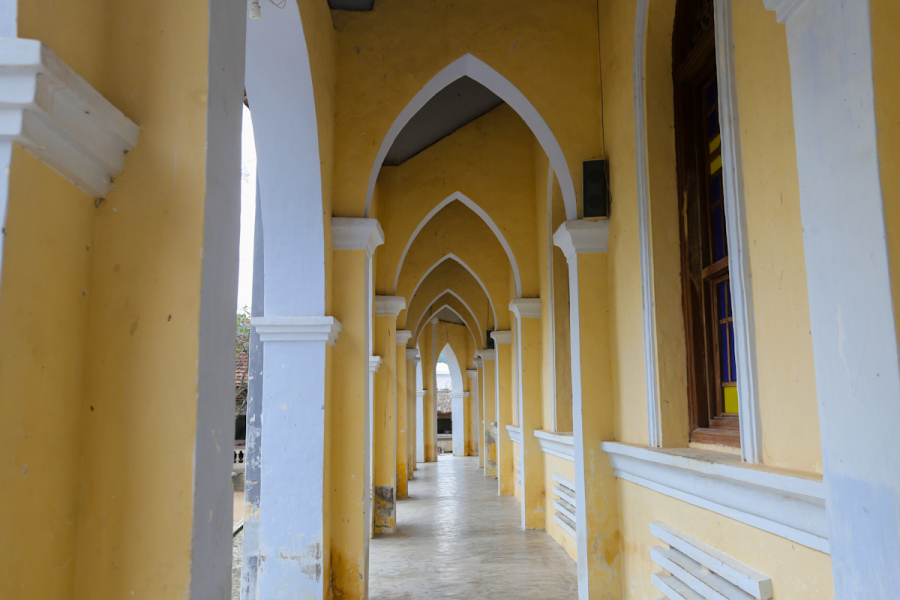
The arches in the hallway look like bamboo shoots.
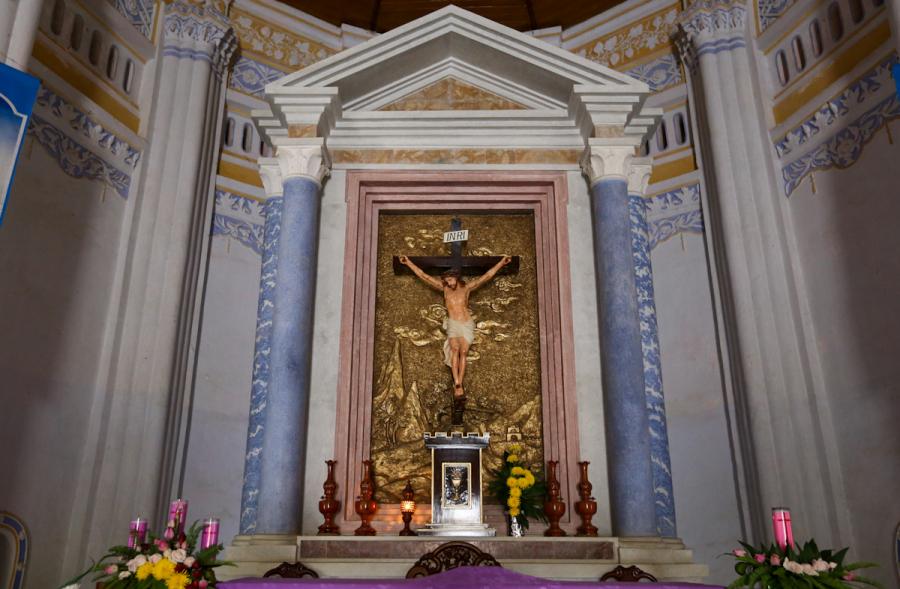
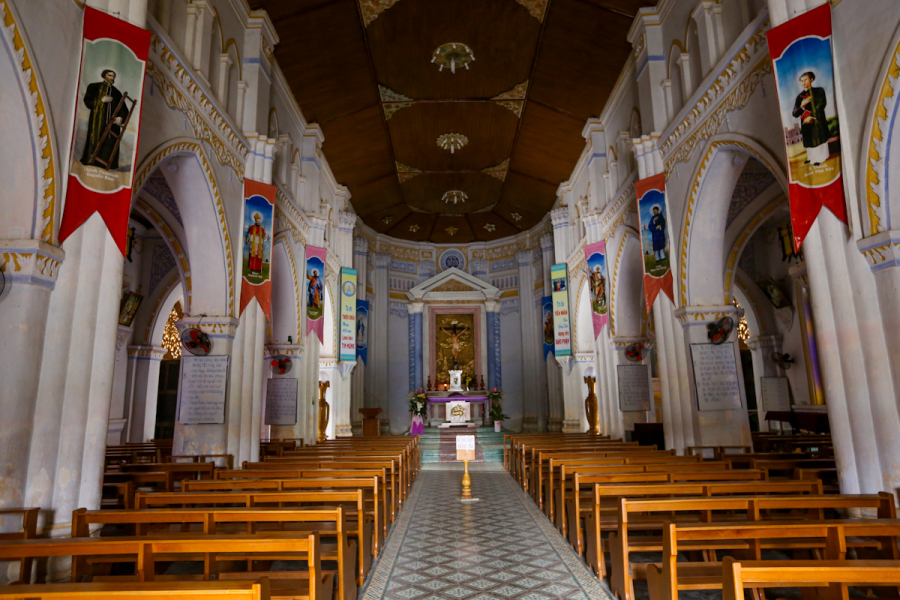
The cathedral, with its honey-colored hues, exudes solemnity.
The church space is always tranquil, with three wide-open doors allowing people to pray. Additionally, visitors can explore the unique cellar and the Andrew Phu Yen tradition room, which respectfully houses and exhibits all documents related to Blessed Andrew Phu Yen.
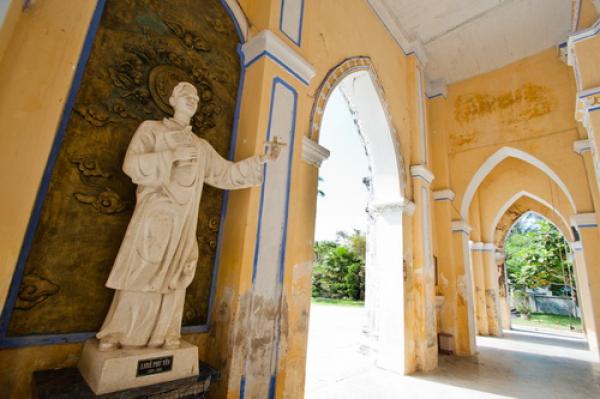
The statue of Andrew Phu Yen is placed in the church hallway.
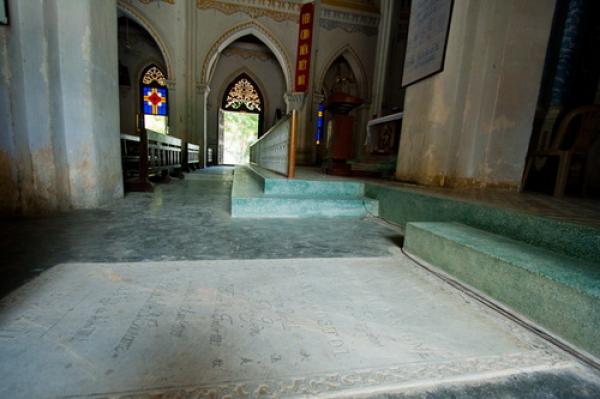
The stone tablet records the entire history of the church in French.
According to the elders in An Thach, more than 100 years ago, the An Thach area was sparsely populated and covered with forests, including a type of tree that grew abundantly, with wide canopies, oval leaves, and clusters of purplish-pink flowers called the "mang lang" tree. While traces of that mang lang forest no longer exist, the church at that time was named after this precious tree. In fact, the church still houses a round wooden table made of mang lang wood from its early days, with a diameter of 1.5 meters.
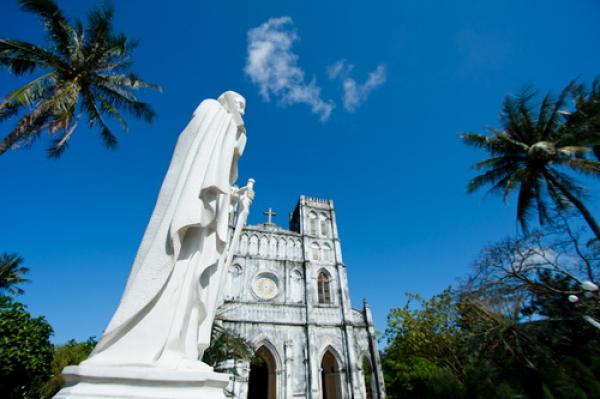
The statue of Joseph de La Cassagne stands in front of the church.
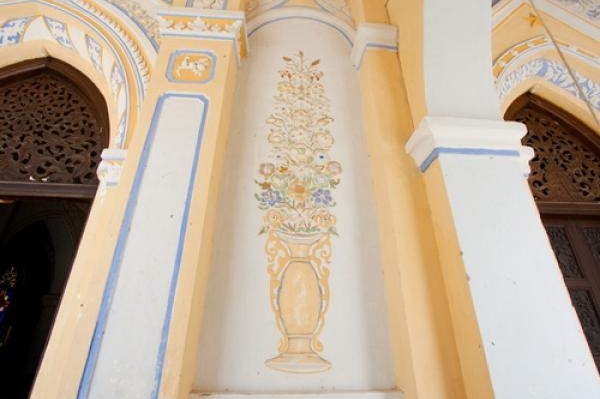
Unique vases are displayed in the corners of the walls.
The church is small but has a spacious, tree-lined grounds. Outside the grounds, there is an elaborately constructed underground chamber, topped by a lush green hill that highlights the exquisitely crafted sculptures.
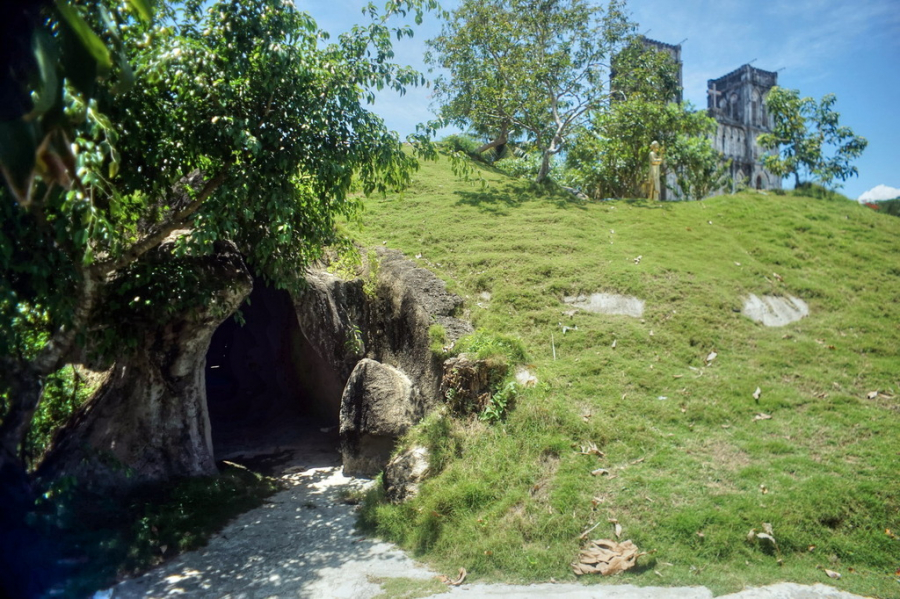
Entrance to the Grotto
Inside the crypt, also known as the "Cathedral Cave," is a structure recreating the story of Saint Andrew, and also houses several valuable artifacts such as: the first book written in the Vietnamese Quốc ngữ script, "Eight-Day Sermon," by Father Alexandre de Rhodes (also known as Father Đắc Lộ), printed in 1651 in Rome, Italy; and a set of round tables and chairs made from Mằng Lăng wood, dating back to the time of its construction, with a diameter of up to 1.5 meters...
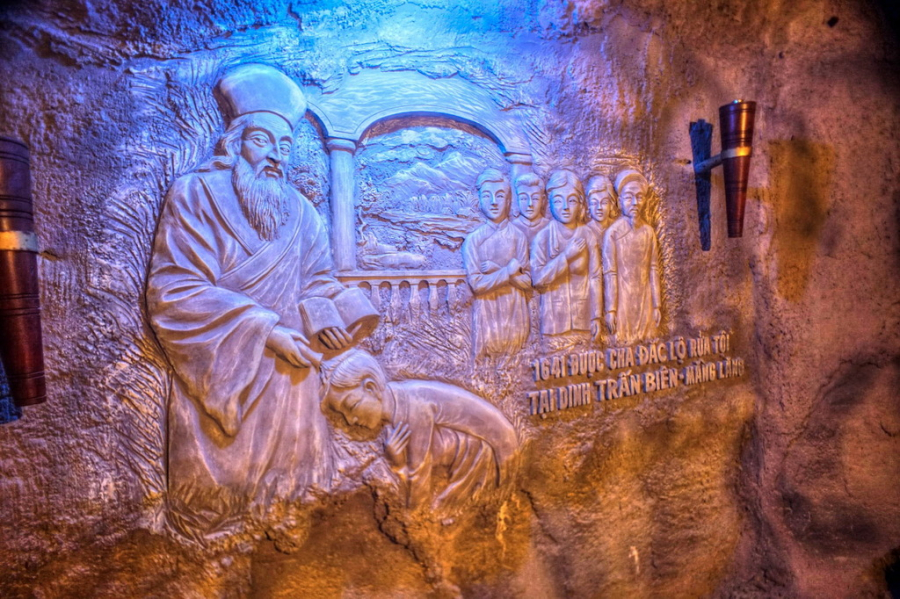
Inside the cave are exquisite sculptures.
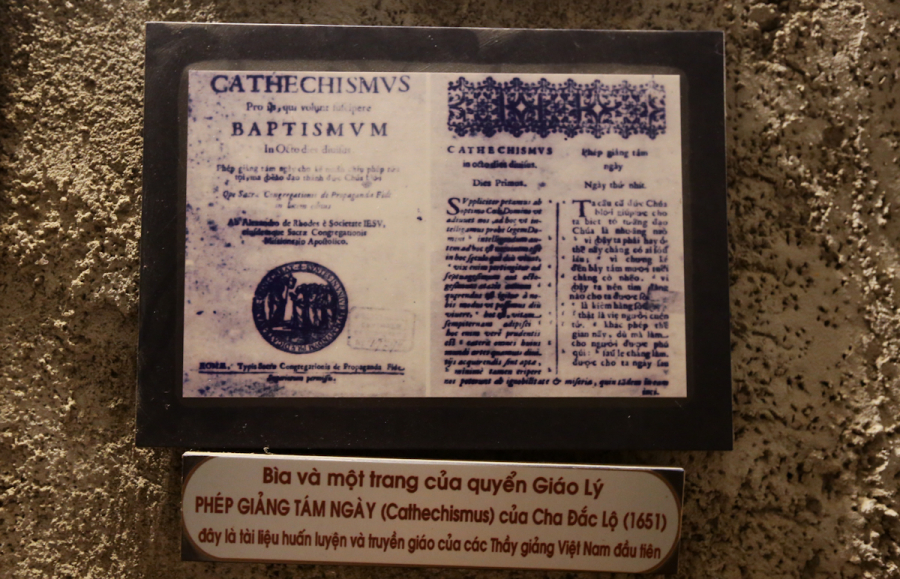
The cover and one page of Father Alexandre de Rhodes' catechism "Eight-Day Sermons".
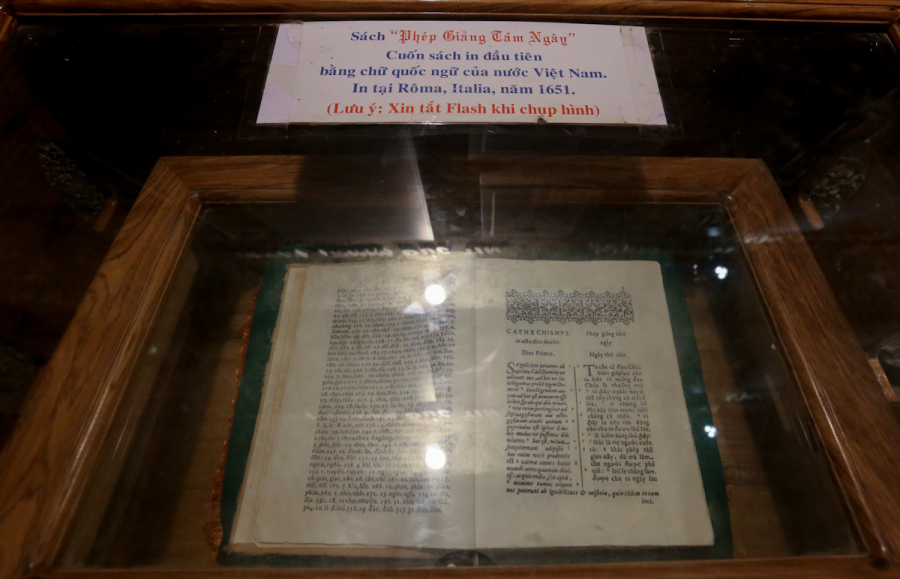
This is the first book printed in the Vietnamese Quốc ngữ script in our country.
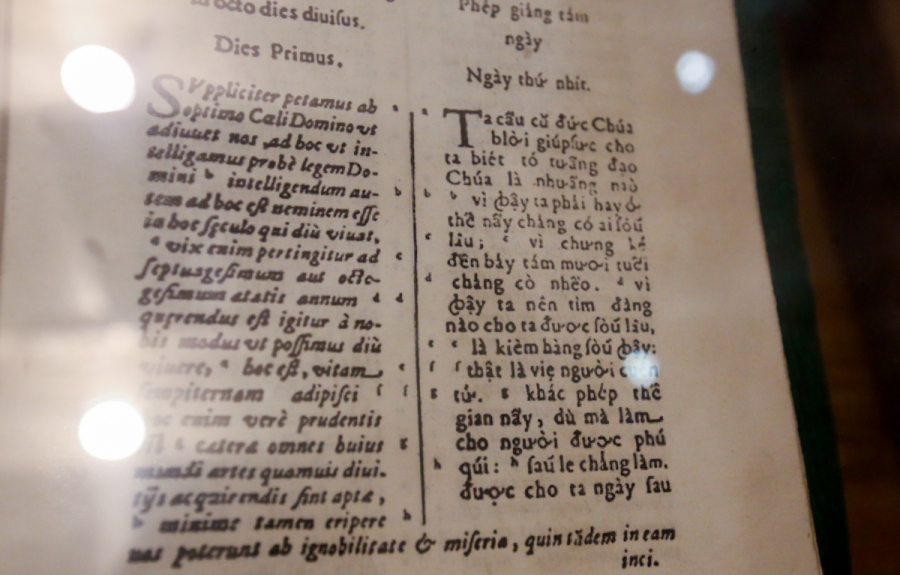
The book was printed bilingually in Latin and early Vietnamese script.
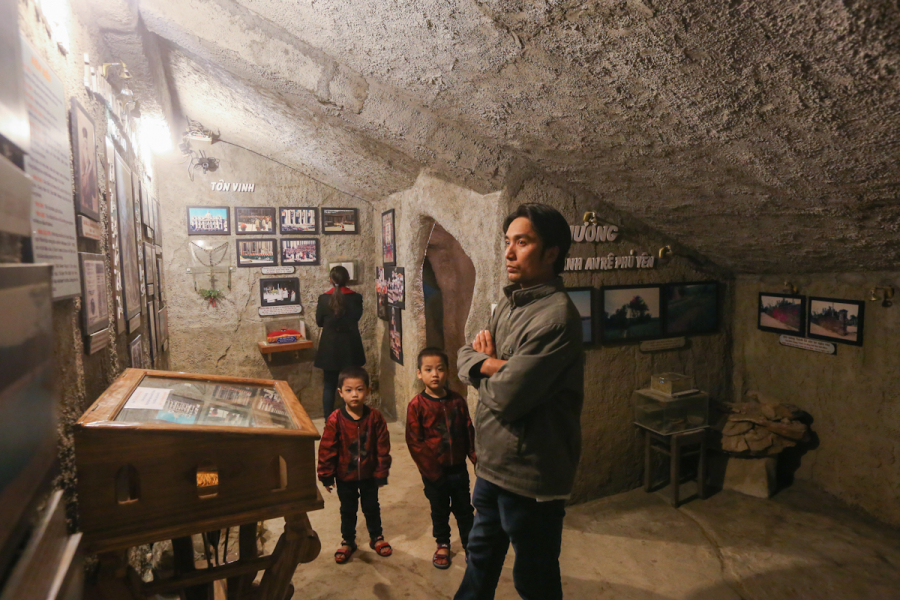
Tourists visiting the Sanctuary Cave.
Every weekend, Mang Lang is revitalized by parishioners attending Mass, the atmosphere stirred by the church bells and the echoing hymns, revealing the somewhat mysterious religious beauty of the ancient church. During the weekdays, Mang Lang stands tall and solemn, welcoming waves of tourists, the bells still ringing out as prayers for blessings upon all things. Even those who are not Catholic can visit, take photos, and appreciate the majestic and ancient beauty of the church. This is one of the must-see destinations in Phu Yen, alongside Ganh Da Dia and Hon Yen.