VI
VI


The Fujiyoshida city government has officially announced the cancellation of the 2026 cherry blossom festival at Arakurayama Sengen Park. This is seen as a stark warning about the tourism overload that is stifling the lives of local residents at the foot of Mount Fuji.
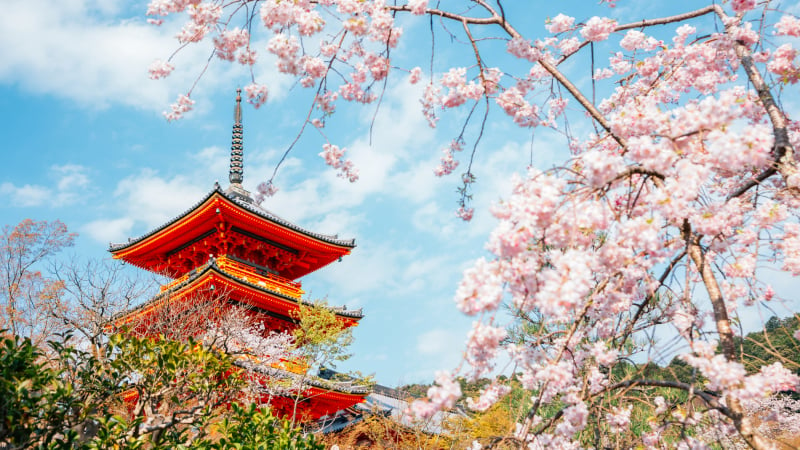
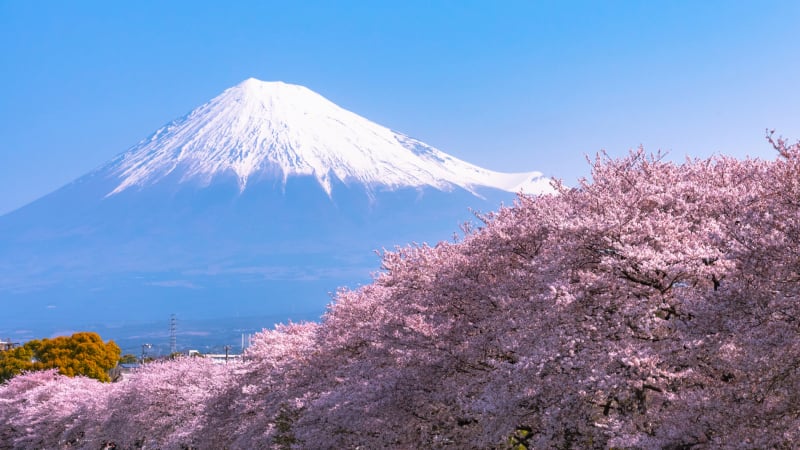
The decision was made after the Fujiyoshida city government in Yamanashi Prefecture carefully weighed economic benefits against the peace and tranquility of the community. According to Mayor Shigeru Horiuchi, behind the magnificent view of Mount Fuji reflected in the five-story pagoda and the vibrant cherry blossoms lies a sad reality: the lives of local residents are seriously threatened. He emphasized that canceling the festival is a measure to protect the environment from the uncontrollable influx of international tourists.

The surge in international tourists is the direct reason behind the Fujiyoshida city government's decision to cancel the 2026 cherry blossom festival in order to protect the living space of local residents.
Fujiyoshida was once a small, peaceful town, but the explosion of short-video platforms like TikTok, Instagram, and YouTube transformed it into a global media phenomenon. The image of the five-story Chureito Pagoda overlooking the snow-capped Mount Fuji became a coveted "check-in spot" for anyone traveling to Japan. This rapid rise to fame has led to severe tourism overcrowding in Fujiyoshida.

Although this is a major revenue-generating attraction, the mayor of Fujiyoshida affirmed that he is willing to sacrifice the benefits from the festival to prevent irresponsible behavior.
For the past decade, the cherry blossom festival at Arakurayama Sengen Park has been a magnet, attracting around 10,000 visitors daily, totaling nearly 200,000 each season. While this event generates enormous revenue for the local economy, the city's infrastructure has reached its limit. With the number of international visitors to Japan projected to reach a record 42.7 million by 2025 – a dramatic increase from the previous year's 37 million – hotspots like Fujiyoshida have become battlegrounds for cultural clashes and traffic congestion.

The dissatisfaction of the city's residents at the foot of Mount Fuji is not accidental. They face the prospect of streets being blocked by crowds of people, litter and cigarette butts scattered in residential areas. More seriously, the invasion of privacy has become a major problem, with many tourists trespassing into people's homes to find the perfect photo spot, even getting into arguments and heated disputes when reminded to do so.

Instead of focusing resources on organizing the festival, Fujiyoshida City will shift its budget to increasing the number of guides and security personnel in the spring of 2026.
Traffic safety issues, especially for children, are particularly serious. Parents in Fujiyoshida expressed deep concern that students no longer have a safe place to walk on the sidewalks because tourists gather to take photos, causing a loss of visibility and posing a potential accident risk. Core values of politeness and respect for local customs, which are a source of pride for the Japanese people, are being challenged by a segment of inconsiderate tourists, turning the cherry blossom season from a joyful occasion into a psychological burden for the community.

Images circulating on TikTok and Instagram have transformed Fujiyoshida from a peaceful town into an international tourist hotspot.

The city government acknowledges that canceling the festival does not mean that visitors will stop flocking to Arakurayama Sengen Park. Even without official events, the inherent appeal of Mount Fuji will still draw tens of thousands of people in the spring of 2026. Therefore, instead of allocating resources to organizing the festival, Fujiyoshida is shifting its budget to strengthening security forces and professional tour guides.
Plans for next spring include setting up more temporary parking areas to alleviate pressure on inner-city traffic, and deploying personnel at "hot spots" to regulate crowds and prevent violations of privacy. This is part of Japan's sustainable tourism strategy, which aims to balance economic development with preserving the quality of life for local residents.
Despite the cancellation of the festival, Arakurayama Sengen Park remains open to visitors. However, visitors are advised to prioritize public transportation (trains instead of private vehicles) to minimize congestion. Be prepared for stricter security checks and absolutely do not trespass into the residential areas surrounding the Chureito Tower.