VI
VI


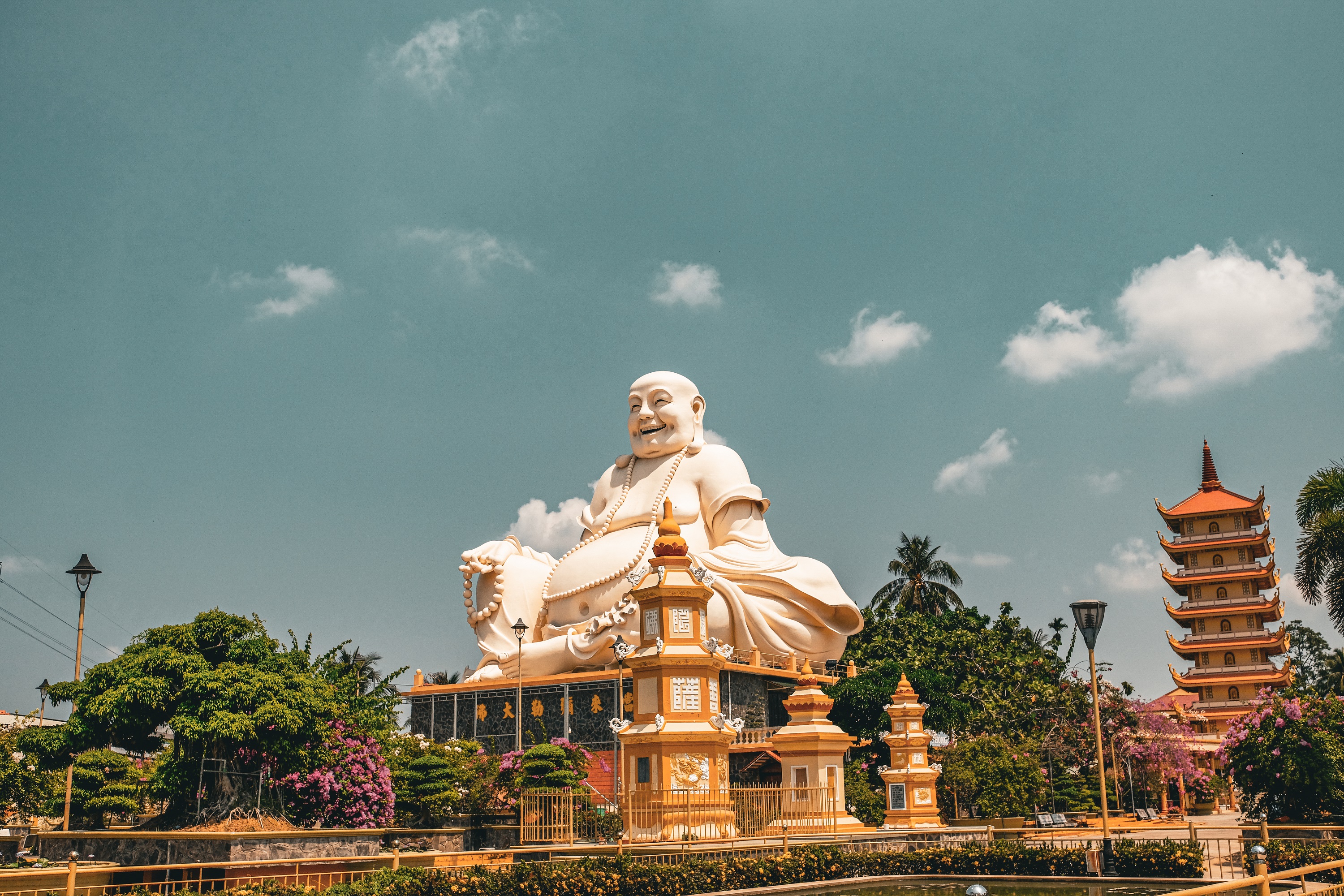
Tien Giang province is renowned for its many beautiful scenic spots that reflect the unique character of the Mekong Delta's orchards and waterways in the Southwestern region of Vietnam. In particular, there is a famous Buddhist site that visitors should not miss: Vinh Trang Pagoda – a unique temple showcasing a blend of Eastern and Western cultures.
The pagoda is located on Nguyen Trung Truc Street, My Tho City, Tien Giang Province. From Ho Chi Minh City, follow National Highway 1A to the center of My Tho City. Then follow Provincial Road 879 for about 3km to Vinh Trang Park, then turn left for about 300m to reach Vinh Trang Pagoda.
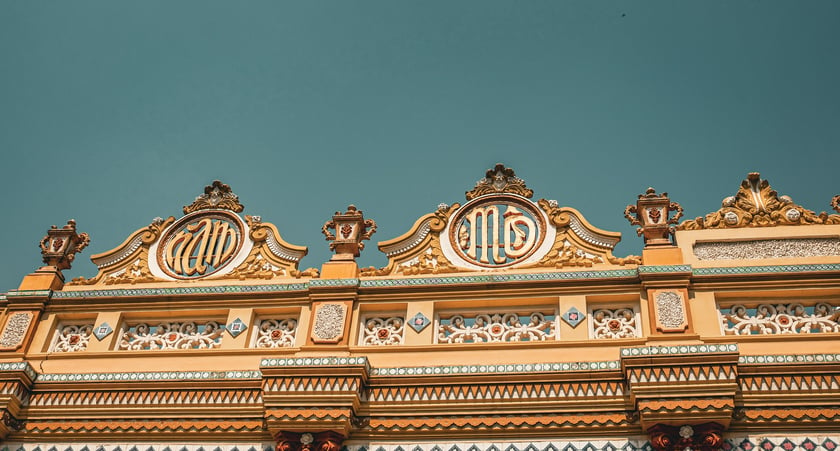
The first thing that impresses visitors from near and far is the temple's imposing scale and its exquisite architecture and decorations.
In front of Vinh Trang Pagoda are two magnificent and grand three-arched gates, built in 1933 in the style of ancient tower architecture. The special feature of these gates is the art of assembling ceramic pieces to illustrate Buddhist history in various shapes of dragons, unicorns, turtles, phoenixes, fisherman, woodcutter, farmer, shepherd, etc., which is extremely impressive and unique.

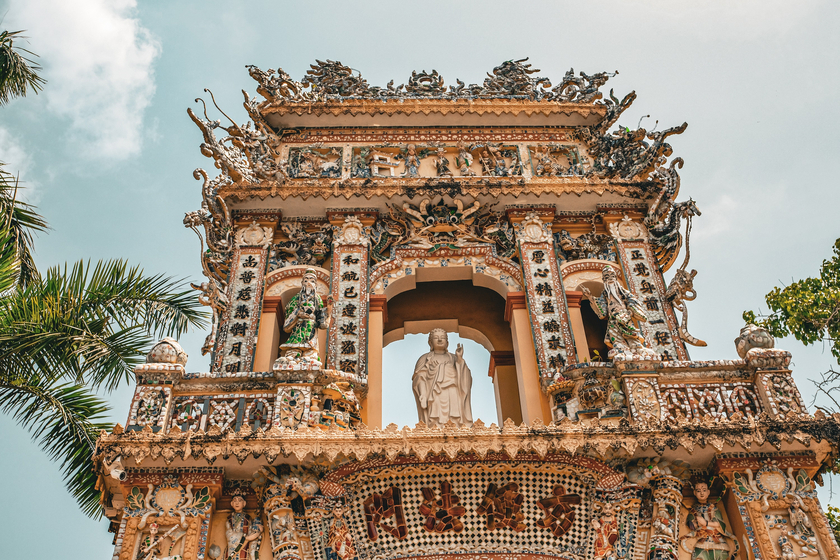
The triple-arched gate of Vinh Trang Pagoda.
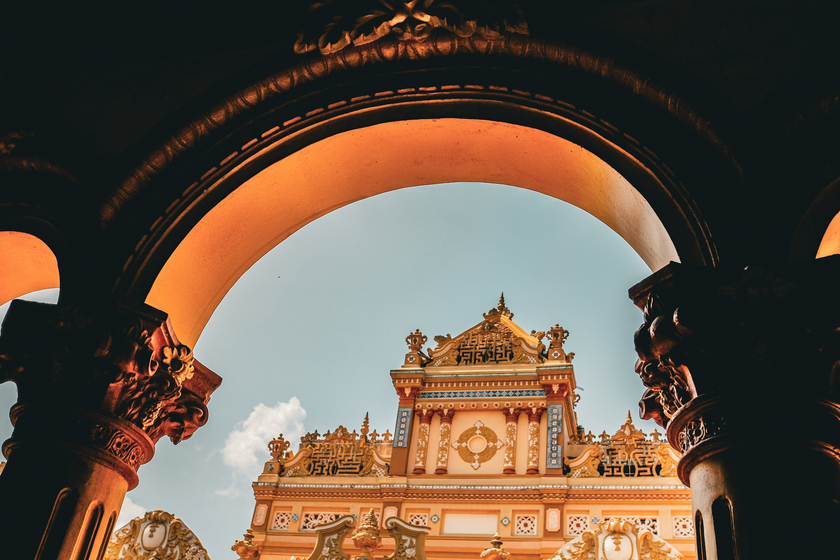
The archway is in the Roman style.
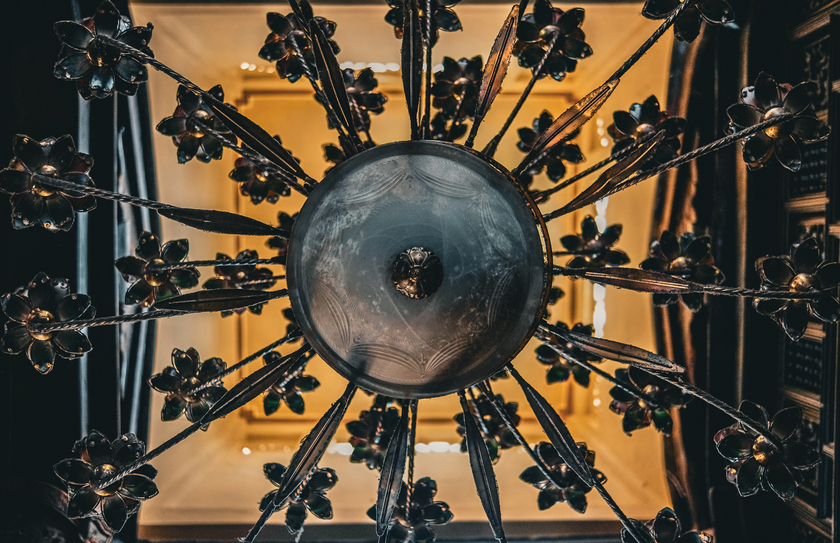
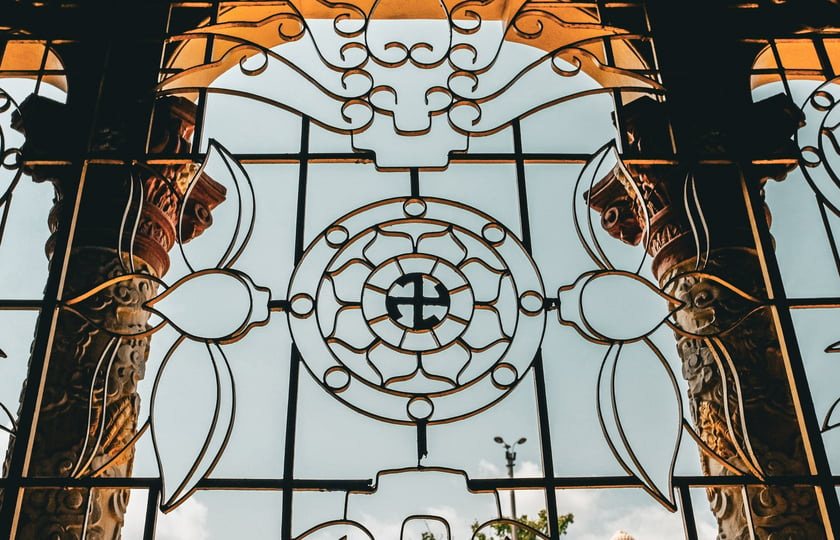
The decorative patterns on the windows and the chandeliers reflect cultural exchange.
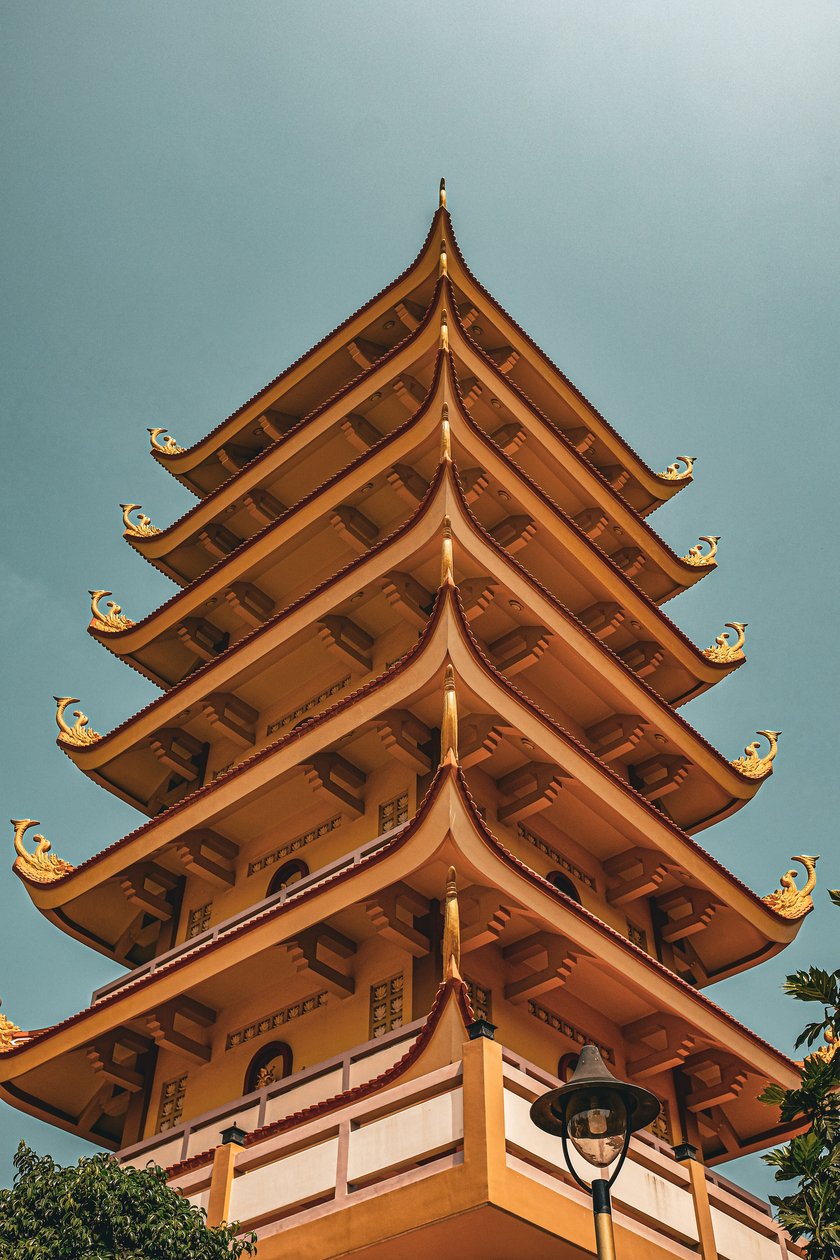
The bell tower in the grounds of Vinh Trang Pagoda.
The statue of the Buddha entering Nirvana began construction on February 15, 2012, was completed on February 15, 2013, and was inaugurated on March 26, 2013. The statue, designed in a reclining position, is 32 meters long, 10 meters high, and weighs approximately 250 tons. Its serene and peaceful facial expression evokes feelings of tranquility and serenity in all pilgrims and visitors.
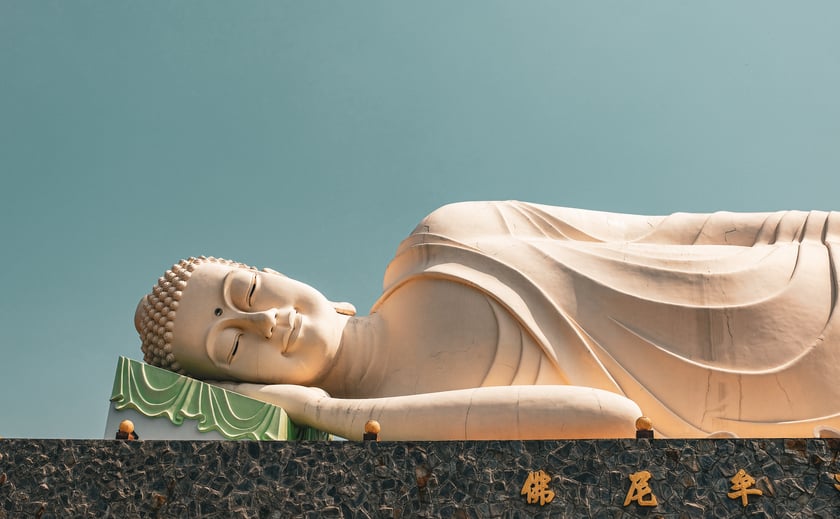
A statue of the reclining Buddha in a serene posture at the temple.
However, the core architectural style still retains strong Vietnamese traditions. Built in the shape of the Chinese character "國" (guo), it consists of four interconnected sections: the front hall, the main hall, the ancestral hall, and the rear hall. Specifically, on the front exterior of the main hall, visitors will see patterns in the style of the Renaissance, such as French wrought ironwork and Japanese ceramic tiles. You will also see familiar elements like ancient Chinese characters written in seal script and Vietnamese characters written in Gothic script.
About the author:Thinh, a writer specializing in cultural geography, currently lives and works in Ho Chi Minh City. Thinh is a storyteller, sharing his experiences through articles, photo series, and documentaries. His stories are personal reflections and experiences from his travels across the country.