VI
VI


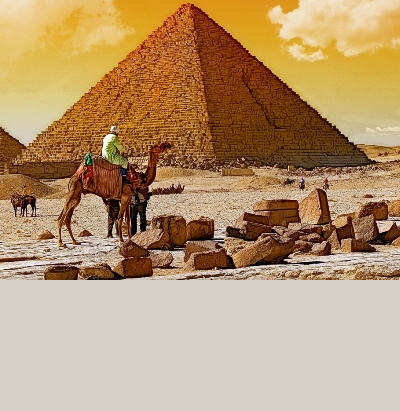
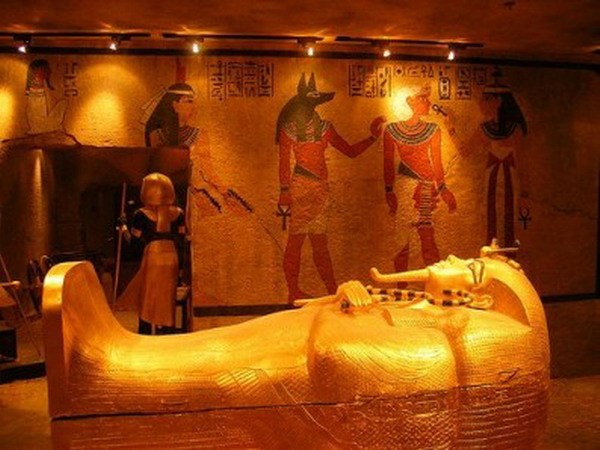
Illustrative image. (Source: worldreviewer.com)
Egyptian Antiquities Minister Mohamed Ibrahim said the two tombs belonged to Paser, who kept the military archives and was an envoy of the 20th Dynasty during the New Kingdom (1189-1077 BC), and Ptahmes, a military leader and custodian of the royal treasury under the Pharaohs Seti I and Ramses II.
According to Ibrahim, the discovery of these two ancient tombs made of limestone and brick is of great significance. Their layout and interior design provide further insight into the tombs of the New Kingdom period (1580-1080 BC).

Until now, ancient tombs discovered in Egypt have only shown two architectural styles: open-air, quadrilateral structures with flat roofs, and structures carved into the rock. However, these two tombs have a temple-like architecture with a pyramidal spire.
The aforementioned new discovery reveals the political relationship between Egypt and the Far Eastern countries at that time, as well as the importance of Sakkara, the burial site of the Pharaohs located near the ancient capital of Memphis during the Old Kingdom (2815-2400 BC).
Accordingly, although the capital had been moved to Luxor in Upper Egypt, Memphis remained the administrative capital and an important military center under the New Kingdom.
The restoration of the two aforementioned tombs and the burial site at Sakkara will help attract tourists to the site to explore the Old Kingdom tombs as well as the New Kingdom tombs, which have different shapes and architecture compared to the Pharaoh tombs at Luxor.
Archaeological team leader Ola El-Egezy said that the excavation of these two tombs began in 2012. However, archaeologists had known about Ptahmes' tomb before that through photographs and ancient documents.
In 1830, a French explorer took photographs of hunting scenes at this tomb complex. Since then, part of the tomb has been buried under sand, but most of the artifacts have been looted.
Some artifacts from this tomb are currently on display in museums in the Netherlands, the United States, Germany, as well as the Egyptian Museum in Cairo.
According to Ali El-Asfar, head of the antiquities department at the Ministry of Antiquities, although the construction of these two tombs is not yet complete, they are very special with their well-preserved decorative motifs and carved scenes.
These two ancient tombs are expected to be restored and opened to visitors starting in October.